 Save It
 The first time I made pho at home, I was chasing a memory of a small bowl from a corner restaurant in Ho Chi Minh City, where steam rose from the pot and mingled with the smell of charred ginger. I wanted to recreate that magic in my own kitchen without spending hours tending a broth, and this express version became my secret weapon for weeknight cravings. The trick isn't cutting corners—it's knowing which flavors matter most and letting them do the work.
I remember my partner watching skeptically as I poured boiling broth over paper-thin beef slices, expecting disappointment, then their eyes lighting up when they took the first spoonful and realized how alive the flavors were. That's when I knew this shortcut wasn't cheating—it was just smart cooking.
Ingredients
- Low-sodium beef or chicken broth (8 cups): The foundation of everything, so pick one with clean ingredients you'd actually drink straight.
- Onion and ginger: Charring these first (if you have 2 extra minutes) deepens the broth in ways that taste unhurried.
- Star anise, cinnamon stick, and cloves: These whole spices are non-negotiable—they bloom in the heat and fill your kitchen with warmth.
- Fish sauce, soy sauce, and sugar: This trio balances everything; the fish sauce whispers in the background but changes everything.
- Rice noodles (bánh phở): Flat ones are traditional and hold onto broth better than thin ones.
- Beef sirloin or eye round: Buy the best cut you can afford and slice it yourself when it's partially frozen—the effort pays off in texture.
- Fresh herbs (Thai basil, cilantro, mint): These aren't garnish; they're flavor partners that transform each spoonful.
- Bean sprouts, scallions, lime, and chilies: Let everyone choose what they add—this is where pho becomes personal.
Tired of Takeout? 🥡
Get 10 meals you can make faster than delivery arrives. Seriously.
One email. No spam. Unsubscribe anytime.
Instructions
- Build your fragrant base:
- Combine broth, onion, ginger, star anise, cinnamon stick, and cloves in a large pot and bring to a rolling boil. Listen for that moment when the spices wake up and perfume the air—that's when you know things are happening.
- Simmer and deepen:
- Reduce heat and let it bubble gently uncovered for 20 minutes, which lets the spices release their essential oils without boiling them away. This is your moment to do something else.
- Season to balance:
- Stir in fish sauce, soy sauce, sugar, and salt, then simmer 5 more minutes until the flavors meld into something greater than their parts. Trust your taste—adjust salt last.
- Strain for clarity:
- Pour the broth through a fine-mesh strainer, discarding the solids, and return the clear, fragrant liquid to low heat where it'll wait for you. This step makes the broth look restaurant-quality.
- Cook the noodles:
- Follow the package instructions while your broth rests, then drain and divide the noodles among four large bowls—this gives them room to absorb flavor.
- Arrange the beef:
- Layer thin slices of raw beef over the warm noodles in each bowl, spreading them so they'll cook evenly when the broth hits.
- The magic pour:
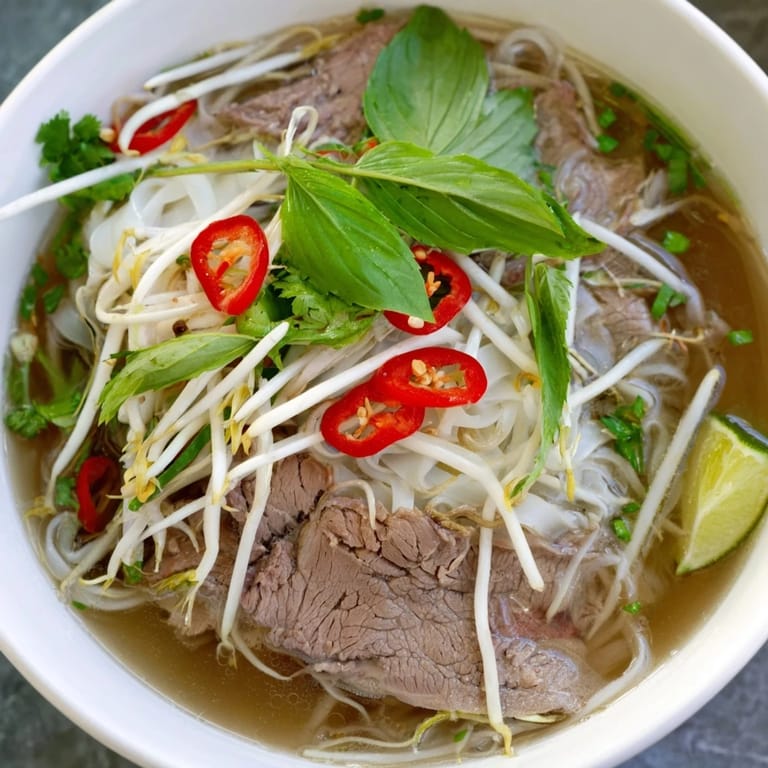
- Ladle the hot broth directly over the meat and noodles, watching the beef turn from raw to perfectly cooked in seconds. This is the moment everything comes together.
- Finish with herbs and brightness:
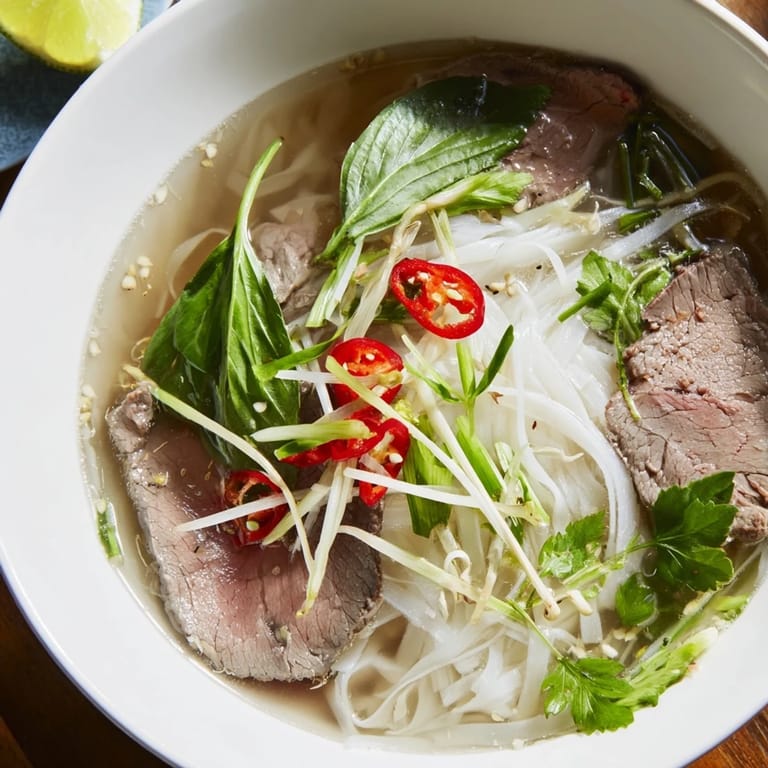
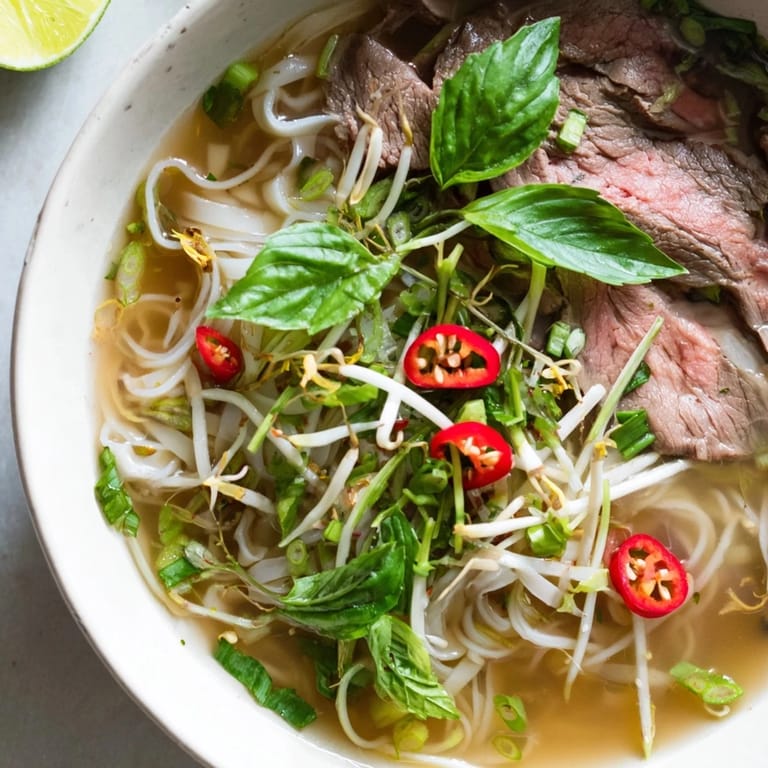
- Top each bowl with bean sprouts, basil, cilantro, scallions, and fresh chilies, then set out lime wedges, hoisin sauce, and sriracha for everyone to customize as they wish.
 Save It
 There's something quietly perfect about the moment everyone at the table is squeezing lime, adjusting their own bowl, and eating at their own pace—it feels less like serving dinner and more like everyone being a little bit in control of their own happiness.
Why This Works as an Everyday Recipe
Pho has a reputation for being complicated and time-intensive, but this version proves that respect for technique doesn't require all-day cooking. By using quality broth as your starting point and focusing on what actually matters—the spice bloom, the balance of flavors, the quality of fresh herbs—you get something that feels absolutely genuine. The 20-minute simmer is plenty of time for the spices to release their character, and your guests won't know you didn't spend the afternoon on this.
The Art of Building Your Own Bowl
One of the joys of pho is that everyone gets to be a little bit of a chef at the table, adjusting heat with chilies, brightness with lime, and richness with how much hoisin they drizzle in. Don't over-garnish the bowls in the kitchen—let people add what they actually want. I've learned that the person who loves cilantro might hate basil, and that's not just okay, it's the whole point of this dish.
Timing and Make-Ahead Magic
You can make the broth up to 2 days ahead and reheat it gently just before serving, which means the flavor-building part is already done when life gets busy. Cook the noodles fresh, slice the beef while your broth simmers, and arrange the fresh herbs on a board so assembly feels effortless when you're ready to eat. This is what makes pho such a smart dinner for people you want to impress without the stress.
- Prep all your toppings in small bowls before anyone sits down, so service is just assembly and conversation.
- If you can't find Thai basil, regular basil works fine—cilantro and mint do most of the heavy lifting anyway.
- Serve immediately after pouring the broth so the beef cooks perfectly and everything is at its best.
 Save It
 This version of pho proves that some of the best meals come not from tradition being followed exactly, but from understanding what tradition is really trying to do. I hope this becomes your go-to bowl when you want something that feels both comforting and alive.
Common Questions About Recipes
- → How long should the broth simmer?
Simmer the broth uncovered for about 20 minutes to fully infuse the spices and aromatics.
- → Can I substitute the meat with a plant-based option?
Yes, try tofu and use vegetable broth for a satisfying vegetarian variation.
- → What noodles work best for this dish?
Flat rice noodles, dried or fresh, are ideal as they absorb the broth and complement the tender meat.
- → How do I add more flavor to the broth?
Lightly charring onion and ginger before simmering enhances the broth’s depth and aroma.
- → What garnishes enhance this meal?
Fresh Thai basil, cilantro, scallions, bean sprouts, chili, and lime wedges add vibrant, fresh notes.