 Save It
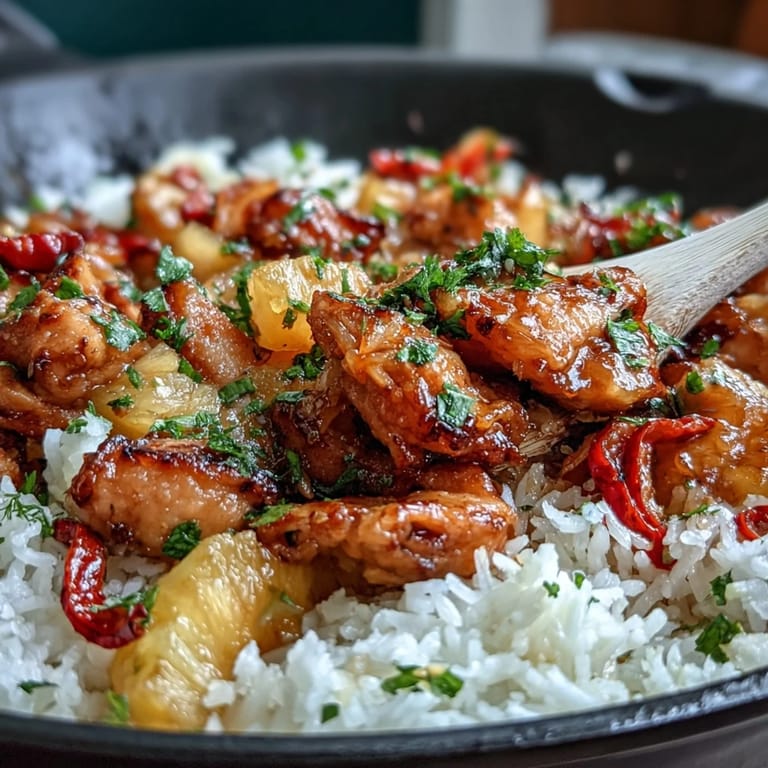
 There's something about the smell of garlic hitting hot oil that makes you pause mid-conversation, isn't there? One Tuesday evening, I was rushing through dinner prep when my neighbor stopped by, and within minutes, the aroma from this skillet had her asking what was cooking. What started as a simple weeknight solution became the dish I now make whenever I want to feel like I'm doing something impressive without the stress.
I made this for a small dinner party during summer, and what struck me most wasn't the compliments, but watching my friend who's usually skeptical about fusion cooking actually go back for seconds. She kept saying something about how the pineapple wasn't trying too hard to be fancy, just adding its own quiet sweetness to everything else. That moment taught me that simple, honest cooking often lands better than anything complicated.
Ingredients
- Chicken breast or thighs (1 lb): Thighs stay more forgiving if you accidentally overcook them, but breasts work perfectly if you cut them into even-sized pieces so everything cooks at the same pace.
- Long-grain white rice (1 cup): Rinsing the rice removes excess starch and helps each grain stay separate and fluffy instead of clumpy.
- Red and yellow bell peppers: The color matters here not just for looks but because different pepper colors have slightly different flavor notes, creating depth in the dish.
- Fresh pineapple chunks (1 cup): If using canned, drain them well and reserve the juice for your sauce because that concentrated flavor is liquid gold.
- Garlic and onion: These two are your flavor foundation, and mincing the garlic fine enough means it melts into the sauce rather than leaving chunks.
- Low-sodium soy sauce (1/4 cup): Low-sodium gives you control over the salt level, which matters when you're layering other flavors like honey and vinegar.
- Pineapple juice (1/4 cup): This sweetens the sauce without needing extra sugar and adds a subtle tropical note that makes people wonder what your secret ingredient is.
- Honey or brown sugar (2 tbsp): Honey dissolves more smoothly into the sauce, but brown sugar works too if that's what you have on hand.
- Rice vinegar (1 tbsp): The acidity cuts through the richness and keeps the dish from tasting one-dimensional.
- Sesame oil (1 tsp): A little goes a long way because sesame oil has a strong, toasted flavor that reminds your palate this is Asian-inspired.
- Vegetable oil (2 tbsp): Use a neutral oil with a high smoke point so you can brown the chicken without it burning before it cooks through.
- Chicken broth (2 cups): This is your liquid, so taste it first because some broths are already quite salty.
- Cornstarch slurry (optional): Mix it with cold water right before using so it doesn't clump, and it'll thicken your sauce beautifully in the last minute.
Tired of Takeout? 🥡
Get 10 meals you can make faster than delivery arrives. Seriously.
One email. No spam. Unsubscribe anytime.
Instructions
- Brown your chicken until it's golden:
- Heat oil over medium-high heat and let it shimmer before adding the chicken. You want a good sear on the outside, which takes about 5 minutes total, turning the pieces so each side gets color. The chicken won't be cooked through yet, and that's exactly right.
- Build your flavor base with aromatics:
- Add the remaining oil, then sauté the onion and garlic until fragrant, which your nose will tell you is happening after just 2 minutes. This short window is crucial because you're not trying to soften the garlic completely, just wake it up.
- Get the peppers slightly tender:
- The peppers should still have a little firmness because they'll continue cooking in the liquid. Watch them for 3 to 4 minutes, stirring occasionally so they cook evenly.
- Toast your rice:
- Stir the raw rice into the pan for about a minute, and you'll hear it clicking against the pan as it toasts. This step adds a subtle nuttiness to the final dish and helps each grain stay distinct instead of mushy.
- Combine your sauce ingredients:
- Whisk soy sauce, pineapple juice, honey, rice vinegar, sesame oil, and pepper in a bowl before pouring it in. Mixing them together first ensures the honey dissolves evenly rather than clumping up when it hits the hot pan.
- Bring everything together in the pan:
- Return the chicken to the skillet, pour in your sauce, then add the broth and pineapple chunks. Stir well so the sauce coats everything, then bring it to a boil.
- Let it simmer low and gentle:
- Once boiling, reduce the heat to low, cover the pan, and don't peek too often because steam is what finishes cooking the rice properly. Eighteen to 20 minutes is usually the magic window, but rice varies by brand, so check that the liquid has been absorbed and the rice is tender.
- Thicken if you like it glossy:
- If you want a thicker sauce, stir in your cornstarch slurry and let it bubble for a minute or two, watching it go from cloudy to clear and glossy. This step is optional because the sauce is lovely as-is if you prefer it brothier.
- Finish with a gentle touch:
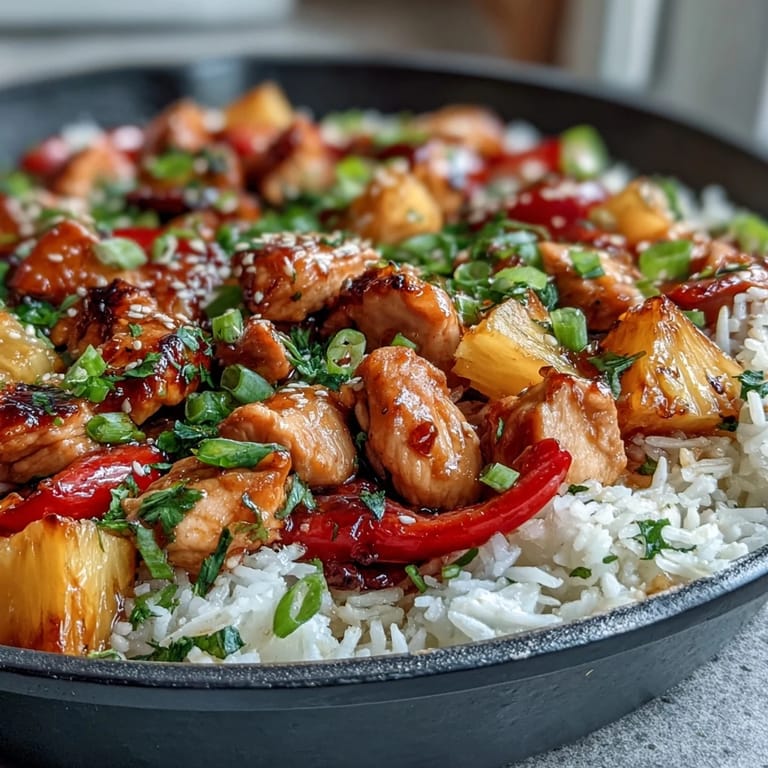
- Remove from heat, fluff the rice with a fork to separate the grains, and scatter green onions on top for a fresh contrast.
 Save It
 What made this dish stick in my memory wasn't just how delicious it was, but how my usually picky eater asked for the recipe so she could make it herself. Watching someone take ownership of a dish you shared with them feels like the highest compliment a home cook can get.
Why This Works as a One-Pan Wonder
The beauty of this skillet is that everything you need stays in one vessel from start to finish. You're not juggling multiple pots or keeping components warm on the side, which means less cleanup but also less chance of something cooling down or getting overcooked while you're managing other dishes. The rice absorbs all the broth and sauce as it cooks, so by the time you're done, you've got tender grains that taste like they've been individually flavored rather than sitting in a plain pot.
How to Adjust for What You Have at Home
Cooking isn't about rigid rules, and this dish adapts beautifully if your pantry is different from the ingredient list. Brown rice works perfectly fine, though you'll need to add an extra half cup of broth and give it about 30 minutes to simmer instead of 20. If fresh pineapple isn't available, canned chunks drained well are genuinely just as good, and the juice from the can is exactly what you need for the sauce. Thighs are actually more forgiving than breasts if you're cooking without a timer because they're harder to dry out, so go for whichever protein feels right for your shopping trip.
Flavor Twists and Seasonality
Once you've made this once and feel confident, start playing with it. In winter, I sometimes add snap peas and a touch more ginger to make it feel warming rather than bright, and in summer, I load it with extra pineapple and serve it slightly cooler for a refreshing twist. The heat option is real too—a pinch of red pepper flakes or a sliced chili added with the garlic creates a subtle burn that makes you appreciate the sweetness even more.
- A splash of extra rice vinegar at the end wakes up the flavors if the dish tastes flat to your palate.
- If you're cooking for someone who loves spice, let them add their own hot sauce at the table so they control the heat level.
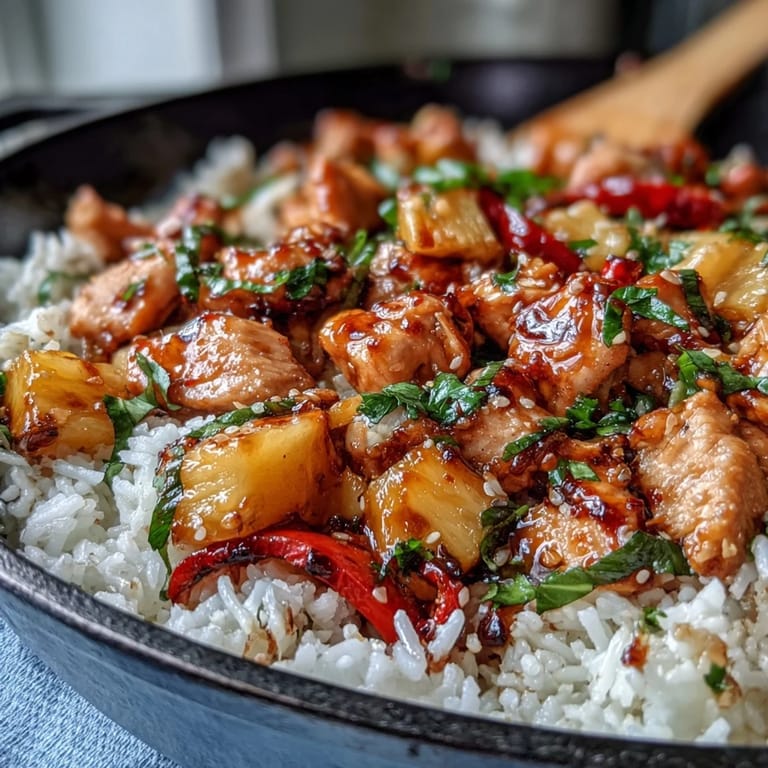
- Fresh cilantro sprinkled on top adds brightness that complements the sweetness perfectly.
 Save It
 This is the kind of recipe that makes you feel like you're taking care of yourself and the people at your table. It's straightforward enough for a Tuesday night but special enough that you won't mind making it again next week.
Common Questions About Recipes
- → Can I use brown rice instead of white rice?
Yes, substituting brown rice is possible but will require more broth and longer simmering to ensure the rice cooks thoroughly.
- → How can I make the sauce thicker?
To thicken the sauce, stir in a mixture of cornstarch and water during the last few minutes of cooking, allowing it to cook until slightly thickened.
- → What can I add for extra vegetables?
Snap peas, carrots, or broccoli are great additions to boost the veggie content and add more texture and color.
- → Is there a way to add some heat to the dish?
Yes, incorporate crushed red pepper flakes or sliced chili with the garlic during sautéing for a spicier variation.
- → What garnishes complement this dish?
Sliced green onions add a fresh, mild onion flavor and a pleasant crunch on top before serving.