 Save It
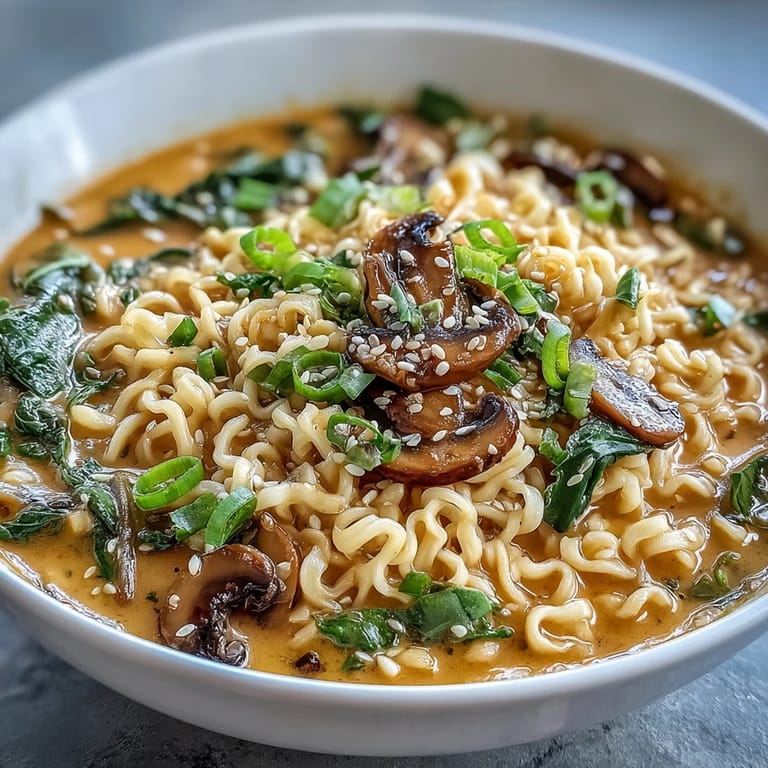
 There's something about the smell of curry paste hitting hot oil that makes me pause whatever I'm doing. One rainy Tuesday, I was experimenting with coconut and spice combinations when a friend texted asking if I had soup for her suddenly vegan diet. Instead of panicking, I grabbed what was in my pantry and built this ramen from instinct. By the time she arrived, the kitchen was wrapped in this golden, fragrant cloud that felt both comforting and adventurous. She took one sip and asked for the recipe before she'd even finished the bowl.
I made this for my roommate's book club night, thinking a warm bowl would be better than the usual appetizers, and it became the thing people kept coming back to between chapters. Someone asked if I'd added fish sauce and seemed almost offended when I said it was completely plant-based. That's when I realized the umami wasn't tricky or fake; it was just real depth from letting the mushrooms steep in coconut milk and spices. The bowl became less about the diet restriction and more about the bowl itself.
Ingredients
- Coconut oil: Use refined if you want neutral flavor or unrefined if you want that subtle coconut note to peek through; it helps the curry paste bloom and carry the spices through the entire broth.
- Yellow onion: Chopped fine means it almost dissolves into the broth, creating a sweet backbone without any bite.
- Garlic and fresh ginger: Mince them small; they dissolve into the coconut milk and create that nostril-clearing warmth that makes you feel like you're doing something real.
- Red curry paste: Check that it's vegan because some brands sneak in shrimp paste; the good ones are bright red and smell like it means business.
- Ground turmeric: This adds earthiness and a subtle golden color; it's the reason the broth glows instead of just looking tan.
- Vegetable broth: Use the one you actually like drinking because it's the backbone; I prefer a brand with a little salt already built in.
- Full-fat coconut milk: Never use lite or reduced-fat; you need the richness to balance the spices and create that silky mouthfeel.
- Soy sauce or tamari: This adds salt and umami in a way that feels essential once you taste it; tamari is the move if you're gluten-conscious.
- Maple syrup: A teaspoon of sweetness rounds out the heat and spice without making it taste like dessert.
- Sesame oil: Toast your sesame seeds separate and drizzle the oil at the very end for maximum flavor impact; it's like the exclamation point.
- Cremini or shiitake mushrooms: Slice them thick enough to stay meaty through the simmer; shiitake add a deeper, almost smoky note that cremini can't quite reach.
- Baby bok choy: Quartered lengthwise so it cooks evenly and stays tender-crisp; the stems and leaves cook at almost the same rate if you cut them this way.
- Ramen noodles: Fresh cooks faster and has a silkier texture, but dried works fine if you're planning ahead; always check the package for vegan certification because some brands use egg.
- Carrot, scallions, and garnishes: These add brightness and texture when everything else is soft and creamy from the broth.
Tired of Takeout? 🥡
Get 10 meals you can make faster than delivery arrives. Seriously.
One email. No spam. Unsubscribe anytime.
Instructions
- Get your oil shimmering and vegetables soft:
- Heat coconut oil in a large pot over medium heat until it's barely smoking, then add the chopped onion. Let it sit without stirring too much for the first minute so it can start caramelizing slightly; this takes about 3 to 4 minutes total until it's soft and translucent, which means the natural sugars are coming out.
- Layer in the aromatics:
- Stir in the minced garlic and grated ginger, cooking for about 1 minute until your whole kitchen smells like you know what you're doing. The ginger should release this bright, sharp fragrance that tells you it's time for the next step.
- Toast the curry paste and turmeric:
- Add the red curry paste and ground turmeric directly to the onion mixture and stir constantly for about 1 minute so the spices toast slightly and the raw flour flavor cooks out. This is the moment where the broth transforms from smelling like separate ingredients to smelling like an actual curry.
- Build the broth base:
- Pour in the vegetable broth slowly while stirring so there are no lumps, then add the full-fat coconut milk, soy sauce, maple syrup, and sesame oil. Bring everything to a gentle simmer over medium heat, watching for small bubbles breaking the surface rather than a rolling boil.
- Simmer the mushrooms:
- Once the broth is simmering, add the sliced mushrooms and let them cook for 8 to 10 minutes until they've absorbed some of the broth and softened but still have a slight firmness. They'll release their own liquid into the pot, deepening the flavor further.
- Cook the noodles separately:
- While the mushrooms are simmering, bring a separate pot of water to boil and cook the ramen noodles according to package instructions, then drain them in a strainer and set aside. This keeps them from turning into mush when you add them to the hot broth later.
- Wilt the vegetables:
- Stir the quartered bok choy and julienned carrot into the simmering broth and cook for 2 to 3 minutes just until the bok choy starts to soften but the stems still have a slight snap. The color should brighten slightly, which is your signal that it's perfectly timed.
- Taste and season:
- Remove the pot from heat and taste the broth, then season with salt and black pepper until it tastes balanced and warm. This is also when you can adjust the spice level if needed by adding more curry paste or a pinch of chili.
- Assemble the bowls:
- Divide the cooked ramen noodles among four serving bowls, then ladle the hot broth with vegetables and mushrooms over the noodles so everything is submerged and steaming.
- Garnish and serve:
- Top each bowl with sliced scallions, toasted sesame seeds, red chili slices if you like heat, fresh cilantro if you have it, and serve with lime wedges on the side so people can squeeze brightness into their own bowls.
 Save It
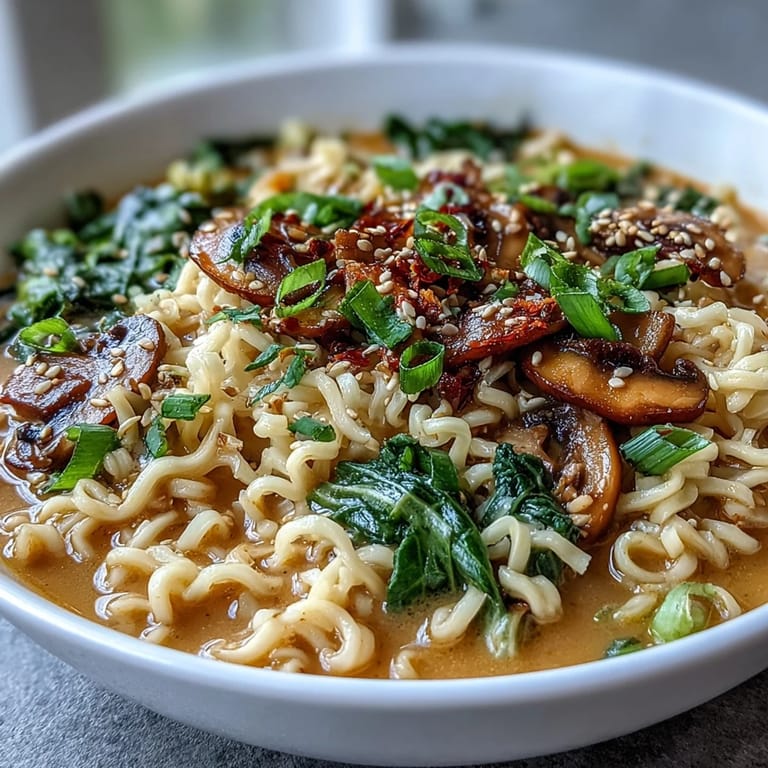
 My partner's parents came over skeptical about vegan food, and I watched them eat every last noodle without mentioning once that there was no meat or dairy. Afterward, his mom asked if the broth had some kind of special ingredient, and when I told her it was just coconut milk, curry, and mushrooms, she got this look like she'd learned something valuable. That's the magic of this bowl right there.
Building Flavor Without Rush
The trick with curry broths is that you're not trying to taste every spice individually; you're trying to create a unified flavor that feels both warm and complex. Taking time with the onion, letting the curry paste toast, and simmering the mushrooms long enough means the final broth tastes like it all belongs together. Rushing any of these steps results in something that tastes like ingredients thrown in a pot rather than a thoughtful dish.
Texture and Temperature Matters
The best part of this ramen is that contrast between the tender noodles, the meaty mushrooms, the silky broth, and the slight crunch of fresh scallions and sesame seeds. Keeping things at a gentle simmer rather than boiling hard means the broth stays creamy and doesn't separate, and the vegetables cook evenly without turning to mush. The lime wedge at the end adds this brightness that cuts through all the richness and makes your palate feel awake.
Making This Your Own
Once you understand the ratio of spice to broth to richness, you can swap almost anything in and it still works because the foundation is solid. I've made this with kale instead of bok choy, added cubed tofu for protein, thrown in whatever mushrooms I had around, and changed the heat level based on who was eating. The recipe gives you the skeleton, but your kitchen and your preferences get to make it breathe.
- Add firm or extra-firm tofu cubes in the last 5 minutes if you want extra protein without changing the broth flavor.
- Fresh herbs like basil or mint can replace or join the cilantro depending on what you have and what you're craving.
- Keep extra broth simmering on the side if you like yours brothier because every bowl drinks a little differently.
 Save It
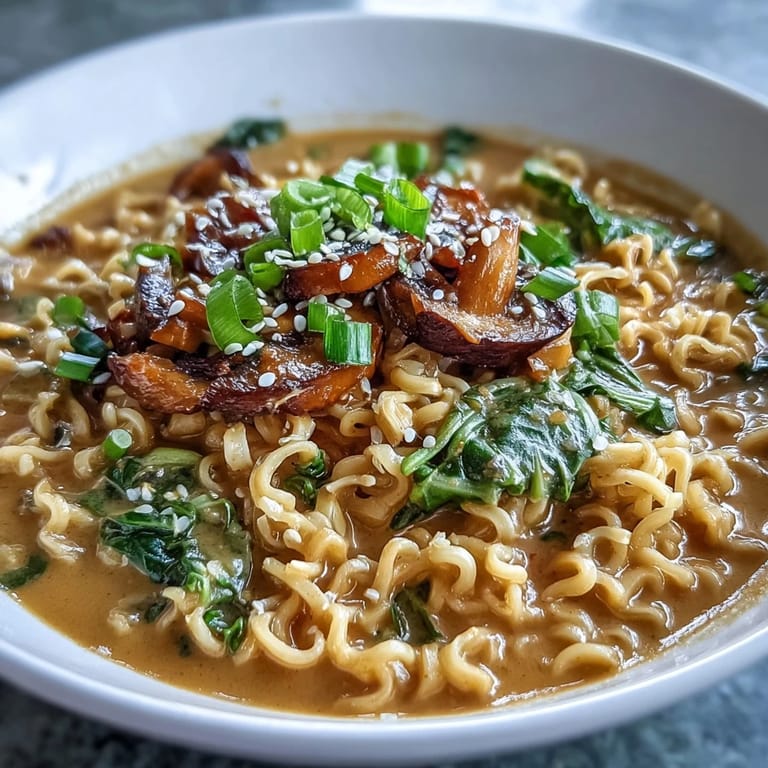
 There's something generous about making ramen for someone, like you're saying you took the time to build something warm and thoughtful specifically so they could have a good moment. This bowl does that without requiring you to spend hours in the kitchen, which somehow makes it feel even more sincere.
Common Questions About Recipes
- → How do I make the broth flavorful without meat?
Use a combination of red curry paste, turmeric, garlic, ginger, and coconut milk to create a rich, layered broth that’s deeply flavorful and aromatic.
- → Can I substitute bok choy with other greens?
Yes, spinach or kale can be used as alternatives, though bok choy offers a mild crunch and sweetness unique to this dish.
- → How should I prepare the noodles for best results?
Cook ramen noodles according to package instructions until tender, then drain and add to bowls before ladling the hot broth and vegetables on top.
- → What garnishes complement this dish well?
Fresh scallions, toasted sesame seeds, sliced red chili, cilantro, and a squeeze of lime enhance texture and add bright, fresh flavors.
- → How can I adjust the spice level to my taste?
Modify the amount of red curry paste and red chili slices to increase or soften the heat according to your preference.