 Save It
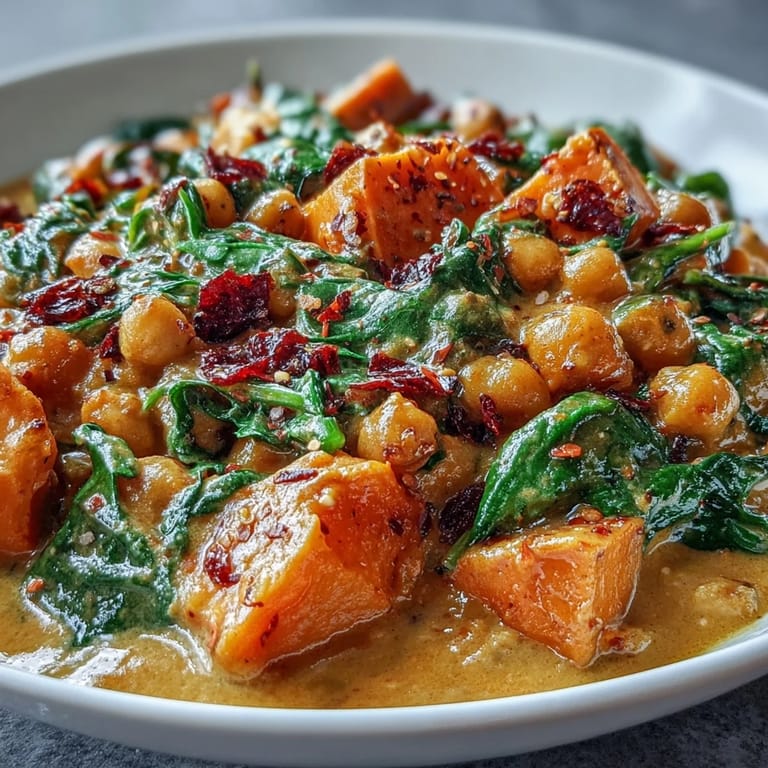
 One Tuesday evening, my kitchen filled with the most unexpected aroma—turmeric, cumin, and coconut all mingling together while I stood at the stove with absolutely no plan. A friend had dropped off a can of coconut milk and a handful of fresh ginger, and somehow that led me here, stirring together this golden curry that seemed to know exactly what it was doing even when I didn't. The steam rose up and fogged my glasses, and I found myself laughing at how a simple weeknight craving turned into something that felt almost restaurant-worthy. Now this skillet has become my go-to when I want comfort without the fuss.
I made this for my sister during a surprise visit, and she sat at my kitchen counter watching the spinach wilt into the golden broth like some kind of culinary magic trick. She'd been skeptical about the whole vegan thing until she tasted it, then went quiet for a moment—the kind of quiet that means she's already mentally planning to make it herself. The way her face lit up when I told her it took less than an hour from start to finish reminded me why I love cooking for people who are genuinely surprised by what's possible.
Ingredients
- Sweet potato: One large one, peeled and cut into half-inch cubes—these get creamy and almost melting in the sauce, so don't skip the peeling or you'll regret those papery bits.
- Yellow onion: One medium onion, finely chopped—it's the base layer of flavor, and those three to four minutes of sautéing matter more than you'd think.
- Fresh spinach: Three cups, roughly chopped—it wilts down dramatically, so don't be shy with the amount.
- Garlic and ginger: Three minced cloves and a one-inch piece grated fresh—this is where the fragrance comes from, so use fresh if you possibly can.
- Chickpeas: One drained and rinsed can gives you protein and substance without heaviness.
- Coconut milk: Full-fat is non-negotiable here—the sauce needs that richness to be truly creamy.
- Vegetable broth: Half a cup balances the coconut so it doesn't overwhelm; water works if that's what you have.
- Curry powder: Two tablespoons of mild variety builds the whole flavor foundation—taste your broth before you add it to know what you're working with.
- Cumin, turmeric, and cayenne: These three work together to deepen the spice layer—the cayenne is optional but it adds a whisper of heat that rounds everything out.
- Lime juice: Fresh and added at the end to brighten everything up and cut through the richness.
- Coconut oil: One tablespoon for sautéing—it won't smoke at medium heat and complements the flavors naturally.
Tired of Takeout? 🥡
Get 10 meals you can make faster than delivery arrives. Seriously.
One email. No spam. Unsubscribe anytime.
Instructions
- Build your base:
- Heat the coconut oil over medium heat until it's shimmering but not smoking. Add your chopped onion and let it soften for three to four minutes, stirring occasionally—you're listening for the sound to change from a quick sizzle to a gentle one as the onion releases its moisture and sweetness.
- Wake up the aromatics:
- Stir in your minced garlic and grated ginger, cooking for exactly one minute until the whole skillet smells like a curry house. Don't walk away here—this minute is crucial for releasing those essential oils.
- Toast the spices:
- Add your sweet potato cubes along with the curry powder, cumin, turmeric, cayenne if using, salt, and pepper. Stir everything together so the spices coat the vegetables and briefly toast—this should take about two minutes and it transforms the flavor completely.
- Simmer until tender:
- Pour in your coconut milk and vegetable broth, stir well to combine, then bring everything to a gentle simmer. Cover the skillet and cook for twelve to fifteen minutes, stirring occasionally, until the sweet potato cubes are fork-tender but not falling apart.
- Add the protein:
- Stir in your drained chickpeas and cook uncovered for five minutes, letting them absorb the coconut flavors and heat through gently.
- Finish with greens:
- Add your chopped spinach and stir constantly for two to three minutes until it's completely wilted and dark green. The residual heat does the work here, so you don't need high temperatures.
- Brighten and taste:
- Remove from heat and squeeze in your fresh lime juice, then taste and adjust salt, pepper, or spice level to your preference. This is your moment to make it perfectly yours.
 Save It
 This curry became the dish I make when someone tells me they're going through something—heartbreak, job stress, just a really long week. There's something about watching it come together that feels manageable and hopeful, and serving it hot in a bowl with rice feels like saying I'm thinking of you without having to make it weird. Food doesn't have to be complicated to matter.
The Secret to Creamy Coconut Sauce
The secret is not rushing the simmer and not letting the sauce boil rapidly, which can cause the coconut milk to separate and look grainy. Keep your heat at medium, watch for gentle bubbles breaking the surface, and you'll get this silky sauce that clings to every vegetable. I learned this the hard way when I cranked the heat once to speed things up and ended up with something that looked more like soup than curry.
Flexibility and Substitutions
This recipe is endlessly adaptable depending on what's in your crisper drawer or your mood. I've made it with butternut squash instead of sweet potato, with kale instead of spinach, even with tofu cubed and added alongside the chickpeas for extra protein. The foundation stays strong—the spices, the coconut milk, the aromatics—so you can build on it with whatever feels right.
Serving and Storage
Serve this hot over basmati rice, quinoa, or with warm naan bread if you want something to soak up every bit of sauce. It's also stunning as-is if you're looking for something lighter, or even over toast if you're feeling casual and hungry. This curry keeps beautifully in the refrigerator for three days and actually tastes better as the flavors meld overnight, plus it freezes well for those moments when you need something home-cooked and comforting without the effort.
- Fresh cilantro and lime wedges make the final presentation sing, but honestly, it's delicious without garnish too.
- If you're making this ahead, store the spinach separately and add it fresh when you reheat so it stays vibrant green.
- Leftovers can be thinned with extra broth and turned into soup if you feel like changing things up the next day.
 Save It
 Make this when you want something that tastes like you've been cooking all day but only takes forty-five minutes. It's the kind of meal that makes your whole evening feel intentional and warm.
Common Questions About Recipes
- → Can I make this curry ahead of time?
Yes, this curry actually tastes better the next day as flavors meld together. Store in an airtight container in the refrigerator for up to 4 days. Reheat gently on the stovetop, adding a splash of water or broth if needed to thin the sauce.
- → What can I use instead of sweet potato?
Butternut squash, pumpkin, or regular potatoes work well as substitutes. Adjust cooking time slightly as butternut squash may cook faster than sweet potato. Cube them similarly for even cooking.
- → How can I add more protein?
Stir in cubed tofu or tempeh during the last 10 minutes of cooking. You could also add lentils along with the chickpeas, or serve over protein-rich grains like quinoa instead of rice.
- → Is this curry spicy?
The mild curry powder provides gentle warmth without intense heat. The optional cayenne pepper adds customizable spice levels. For more heat, increase curry powder or add fresh chopped chili peppers along with the garlic and ginger.
- → Can I freeze this curry?
Yes, freeze in portion-sized containers for up to 3 months. The coconut milk may separate slightly upon thawing but will recombine when reheated. Thaw overnight in the refrigerator before warming on the stovetop.
- → What greens work best in this dish?
Fresh spinach wilts beautifully, but you can substitute kale (stems removed), Swiss chard, or mustard greens. Heartier greens like kale may need an extra minute or two to become tender. Add them in the same way as the spinach.