 Save It
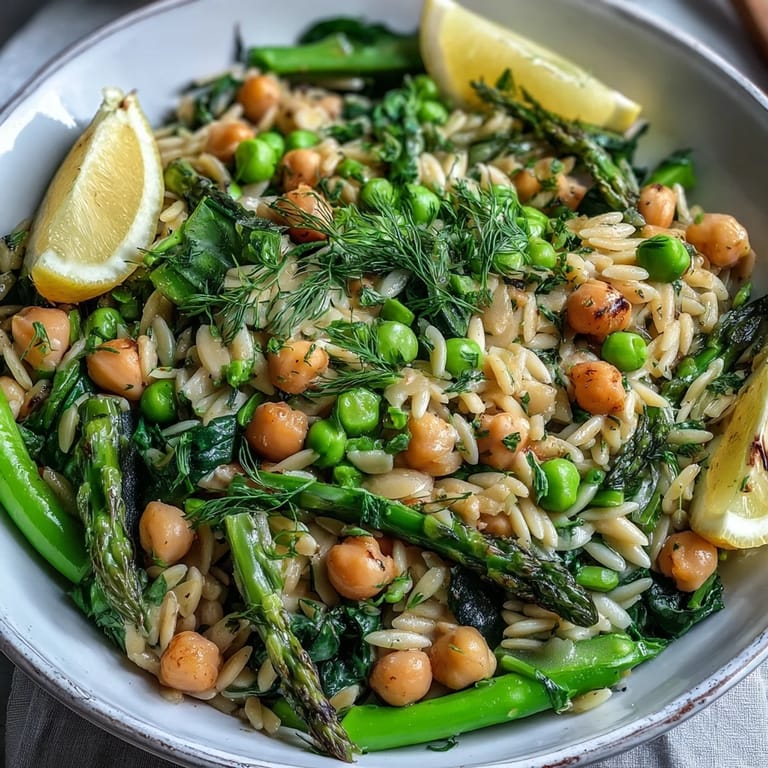
 There's something about cooking a one-pot meal on a Wednesday evening that feels like winning the dinner lottery. I discovered this lemon herb orzo while standing in my kitchen staring at a can of chickpeas, half a bunch of asparagus that needed rescuing, and the sudden realization that I had maybe twenty minutes before hunger became an emergency. The smell of garlic hitting hot olive oil, followed by that bright hit of lemon at the end, turned what could have been a quick fix into something I actually wanted to make again and again.
My roommate wandered into the kitchen halfway through cooking and asked what smelled so good, then ended up staying for dinner without being asked. That's when I knew this recipe was a keeper—when people want to linger at the table and ask for seconds before you've even finished plating. It became our go-to meal for those nights when we wanted something that felt special but didn't require special effort.
Ingredients
- Orzo pasta: This tiny rice-shaped pasta soaks up the broth beautifully and cooks right in the pot, saving you a step and keeping the flavors intertwined.
- Chickpeas: Canned and drained is perfectly fine here—they add protein and a subtle earthiness that balances the bright lemon.
- Asparagus: Cut into bite-sized pieces so they soften evenly and don't overpower the dish with that sulfurous smell.
- Sugar snap peas: These stay slightly crisp even after cooking, giving you texture and sweetness in every bite.
- Zucchini: Diced small so it melts into the orzo rather than sitting as separate chunks.
- Baby spinach: Add it at the very end so it wilts gently from the residual heat without turning dark and bitter.
- Onion and garlic: The flavor foundation—don't skip the aromatics step, it makes all the difference.
- Vegetable broth: Low-sodium lets the other flavors shine without overwhelming your palate.
- Olive oil: Good olive oil isn't just for cooking here, it also enriches the final dish.
- Lemon juice and zest: Both matter—the juice adds acidity, the zest brings brightness and prevents the dish from tasting one-dimensional.
- Fresh parsley and dill: These aren't garnishes, they're the soul of the dish, added at the very end so they taste alive and green.
- Oregano, salt, and pepper: Oregano adds a Mediterranean warmth that ties everything together.
Tired of Takeout? 🥡
Get 10 meals you can make faster than delivery arrives. Seriously.
One email. No spam. Unsubscribe anytime.
Instructions
- Warm your oil and build your base:
- Heat olive oil in a large deep skillet over medium heat and add your finely chopped onion. Listen for that gentle sizzle and let it go for about 3 to 4 minutes until the onion becomes translucent and soft—this is where the sweetness develops. You'll notice the kitchen starting to smell like something good is about to happen.
- Wake up the garden vegetables:
- Stir in your minced garlic, diced zucchini, asparagus pieces, and sugar snap peas, cooking for 2 to 3 minutes while stirring occasionally. You want them to just start softening around the edges but still hold their shape—think of this as a gentle introduction rather than full cooking.
- Toast the orzo lightly:
- Add the dry orzo pasta to the pan and stir constantly for about 1 minute. This toasting step adds a subtle nuttiness that you'll taste in every spoonful and keeps the pasta from clumping.
- Build the broth foundation:
- Pour in your vegetable broth along with the drained chickpeas, oregano, salt, pepper, and red pepper flakes if you're using them. Stir everything together and let it come to a gentle boil—you should see bubbles breaking the surface steadily but not aggressively.
- Let it simmer and absorb:
- Reduce the heat to a simmer, cover the pan, and cook for 8 to 10 minutes, stirring occasionally so nothing sticks to the bottom. You're aiming for that moment when the orzo is tender and the liquid is mostly absorbed—there should be just a tiny bit of liquid left in the pan, not a soup.
- Finish with fresh herbs and brightness:
- Stir in your baby spinach along with the lemon juice and zest, and cook for just 1 to 2 minutes until the spinach turns dark green and wilted. This final step transforms the dish from good to something that tastes like springtime on a plate.
- Taste and season one last time:
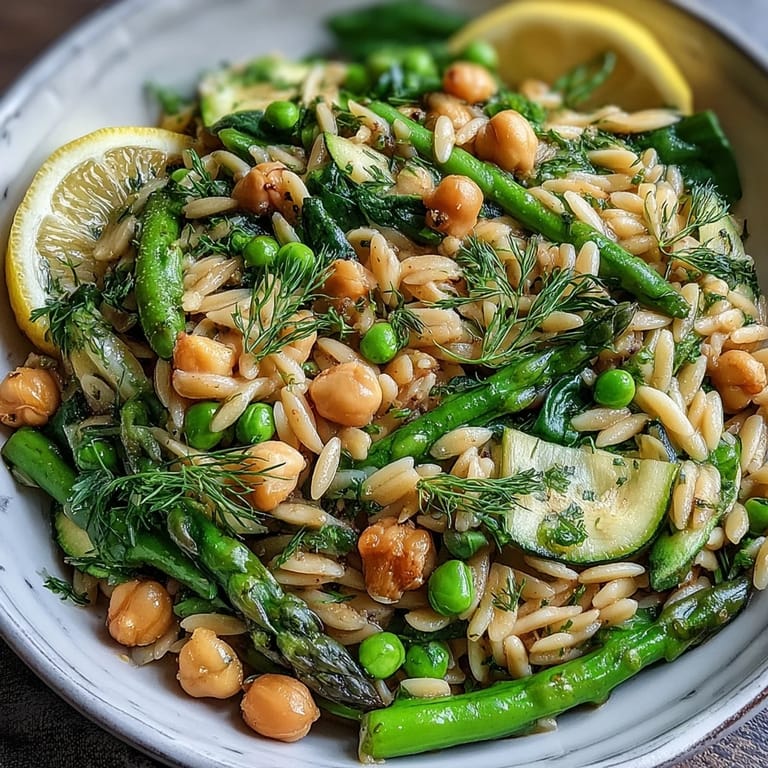
- Turn off the heat and add your fresh parsley and dill, tossing gently to distribute them throughout. Taste it now—if it needs more salt, lemon, or herbs, this is your moment to adjust.
 Save It
 One afternoon my partner came home sick and tired, and I had this on the table in under thirty minutes. Watching them eat with actual enthusiasm despite feeling awful—that's when I understood that simple food made with intention hits different. It became our go-to comfort meal, the kind of dish that says I care without requiring you to spend your whole afternoon cooking.
Why This Dish Works as a Complete Meal
The chickpeas provide the protein your body needs to feel satisfied, while the orzo acts as your starch and the vegetables contribute fiber and nutrients. You're not staring at your plate an hour later wondering why you're hungry again—everything works together to keep you full and energized. The Mediterranean flavors mean it tastes indulgent even though it's genuinely light and healthy.
Variations and Swaps That Actually Work
I've made this with shelled edamame instead of half the chickpeas, with baby kale swapped for spinach, and even with roasted cherry tomatoes added at the end for extra brightness. The beauty of this recipe is that it's flexible enough to work with whatever looks good at your farmers market or what you happen to have in your produce drawer. The structure stays solid no matter what vegetables you choose, as long as you keep the ratio of pasta to broth consistent.
How to Stretch This Into Leftovers
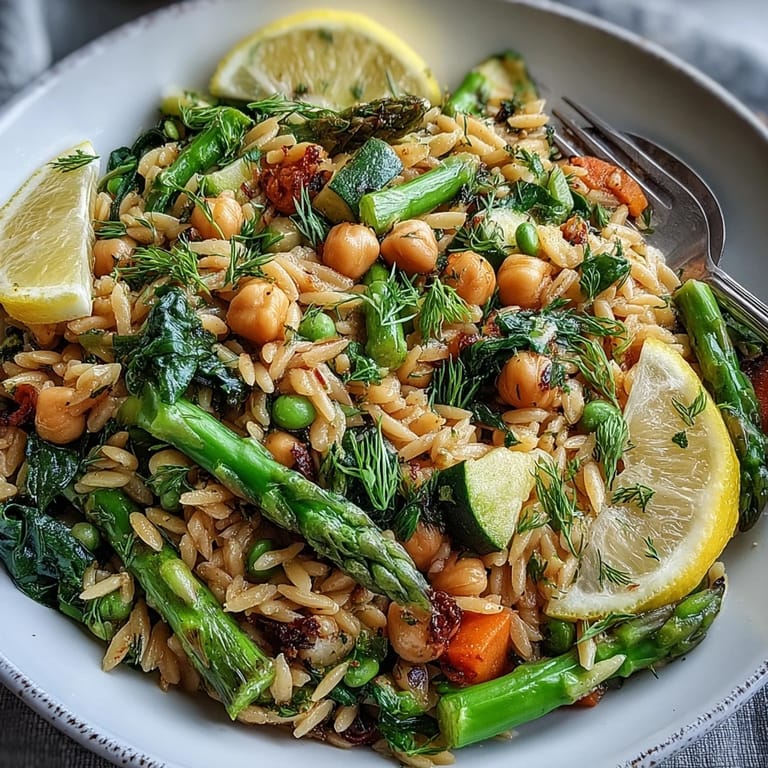
Leftovers will thicken up as they sit because the orzo continues absorbing liquid, which honestly makes them taste even better the next day. If they seem too thick when you reheat them, just add a splash of vegetable broth or water and let them loosen up. I've found that reheating gently in a covered pan on the stovetop keeps the vegetables from turning to mush better than the microwave.
- Add a spoonful of Greek yogurt or crème fraîche when you reheat for a creamier texture that feels totally different.
- Mix in some feta or goat cheese crumbles for extra richness if you're not keeping it strictly vegan.
- Serve cold as a pasta salad the next day by drizzling with a bit more olive oil and lemon.
 Save It
 This recipe became proof that weeknight dinners don't have to be boring or feel like a shortcut version of real food. There's something deeply satisfying about pulling together something this bright and alive in the time it takes to watch a single episode of something.
Common Questions About Recipes
- → Can I make this gluten-free?
Yes, simply substitute the regular orzo with gluten-free orzo or small pasta shapes. Ensure your vegetable broth is certified gluten-free as well.
- → How long do leftovers keep?
Store in an airtight container in the refrigerator for up to 4 days. The orzo will absorb more liquid over time, so you may want to add a splash of broth when reheating.
- → Can I use different vegetables?
Absolutely. Try fresh peas, green beans, broccoli, or bell peppers. The dish works well with whatever spring vegetables you have on hand.
- → Is this suitable for meal prep?
Yes, this dish meal preps beautifully. Portion into containers and refrigerate. It reheats well in the microwave or on the stovetop with a little extra broth.
- → Can I add cheese?
Feta or Parmesan cheese make excellent additions. Sprinkle crumbled feta or grated Parmesan on top just before serving for extra flavor and protein.