 Save It
 The first snowflakes had just started falling when I decided minestrone was the only logical response to the weather. I'd been putting off grocery shopping for days, working with whatever odds and ends lived in the crisper drawer, but something about the gray light made me crave a pot that could simmer away on the back burner and make the whole kitchen feel like a hug.
Last January, my sister came over after a terrible week at work, and I made a double batch. We sat at the counter with bread torn straight from the loaf, letting the steam fog up our glasses, and she told me it was exactly what she needed—something warm and uncomplicated that asked nothing from her except to show up and eat.
Ingredients
- 2 tablespoons olive oil: This creates the foundation for sautéing your vegetables
- 1 medium yellow onion, diced: Provides the aromatic base for the soup
- 2 medium carrots, peeled and diced: Adds natural sweetness and texture
- 2 celery stalks, diced: Completes the classic mirepoix base
- 3 garlic cloves, minced: Essential for that Italian kitchen aroma
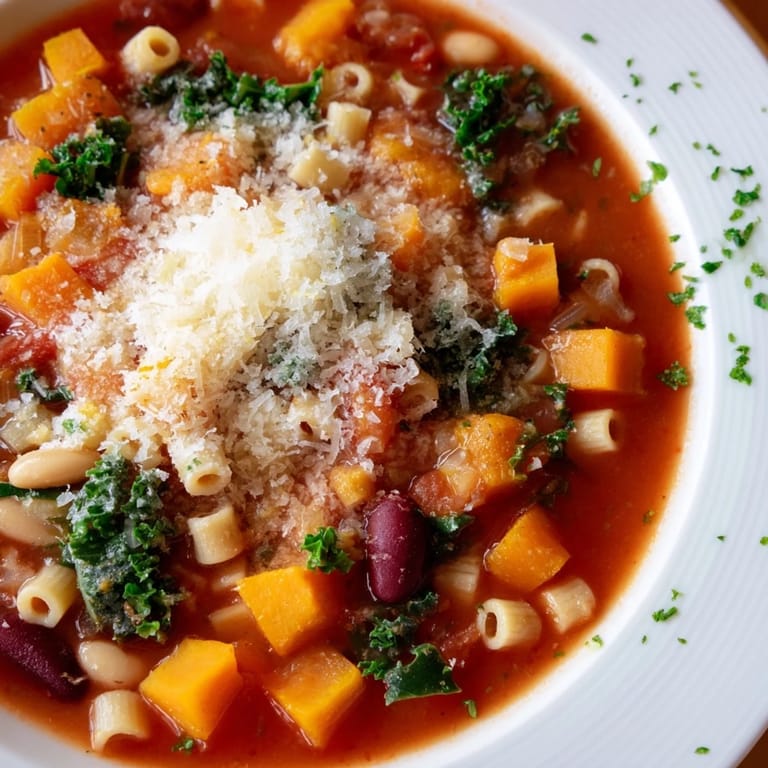
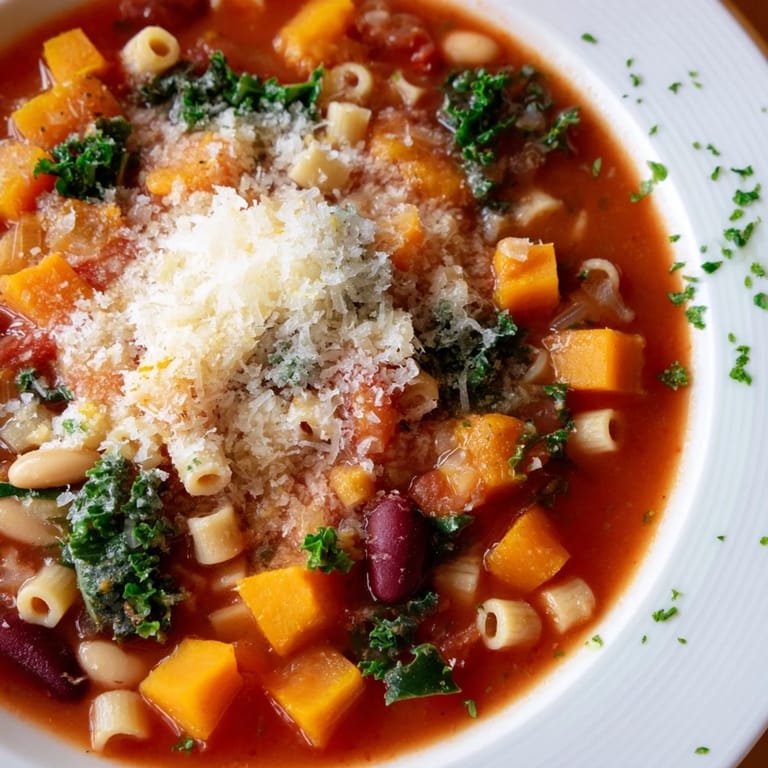
- 1 small butternut squash, peeled and diced: The star that brings sweetness and body
- 1 medium zucchini, diced: Adds another layer of vegetable goodness
- 1 cup chopped fresh kale: Wilts beautifully into the simmering broth
- 1 (14.5-ounce) can diced tomatoes: Provides the acidic backbone and rich color
- 1 (15-ounce) can cannellini beans, drained and rinsed: Creamy beans that make it substantial
- ½ cup small pasta: Ditalini or elbows work perfectly here
- 6 cups vegetable broth: The liquid foundation that brings everything together
- 1 cup water: Thins the broth slightly without diluting flavor
- 1 teaspoon dried oregano: Classic Italian herb flavor
- 1 teaspoon dried thyme: Earthy undertones that complement the squash
- ½ teaspoon dried rosemary: Pine notes that remind you of winter
- ¼ teaspoon crushed red pepper flakes: Optional warmth that cuts through the richness
- Salt and black pepper: Essential for bringing all flavors forward
- 2 tablespoons chopped fresh parsley: Bright finish that lifts the whole bowl
- Grated Parmesan cheese: The perfect salty finish if you're not keeping it vegan
Tired of Takeout? 🥡
Get 10 meals you can make faster than delivery arrives. Seriously.
One email. No spam. Unsubscribe anytime.
Instructions
- Build Your Flavor Base:
- Heat olive oil in a large pot over medium heat, then add onion, carrots, and celery. Sauté for 5–6 minutes until the vegetables soften and the onions turn translucent.
- Wake Up the Garlic:
- Stir in minced garlic and cook for just 1 minute until fragrant. You want it to release its aroma without browning.
- Add the Hard Vegetables:
- Add butternut squash and zucchini to the pot. Cook for 4–5 minutes, stirring occasionally, to help them start developing flavor.
- Create the Broth:
- Pour in diced tomatoes with their juices, vegetable broth, and water. Bring everything to a gentle boil.
- Season and Simmer:
- Stir in oregano, thyme, rosemary, and red pepper flakes if using. Reduce heat and let it simmer uncovered for 15 minutes.
- Add the Heart:
- Stir in cannellini beans and pasta. Simmer for another 8–10 minutes until the pasta is tender and the squash yields easily to a fork.
- Finish with Greens:
- Stir in kale and cook for 2–3 minutes until wilted. Taste and adjust seasoning with salt and pepper as needed.
- Final Touch:
- Remove from heat and stir in fresh parsley. Let it rest for 5 minutes before serving to let flavors meld.
- Serve It Up:
- Ladle into warm bowls and finish with grated Parmesan if you're using it. The residual heat will slightly melt the cheese.
 Save It
  Save It
 My neighbor texted me the next day asking what I'd made because the smell had drifted through the hallway and made her entire apartment feel like an Italian grandmother's kitchen. That's when I knew this soup was something special.
Making It Your Own
I've learned that minestrone is endlessly forgiving. Some weeks I use kidney beans instead of cannellini, or add a handful of spinach if kale feels too hearty for the mood.
The Bread Factor
A good crusty bread is not optional here. I tear chunks directly into my bowl, letting them soak up the broth until they're soft and pillowy.
Leftover Wisdom
This soup improves overnight as all the ingredients get to know each other better. Store it in the refrigerator and you might find yourself preferring it the second day.
- Add a splash of water when reheating if it's too thick
- The pasta will soften more over time, which some people actually prefer
- Freeze individual portions for those nights when cooking feels impossible
 Save It
  Save It
 There's something profoundly satisfying about a soup that uses whatever vegetables you have on hand and still manages to taste like it came from careful planning.
Common Questions About Recipes
- → Can I make this minestrone vegan?
Yes, simply omit the Parmesan cheese or use a dairy-free alternative. The rest of the ingredients are naturally plant-based.
- → What pasta works best in minestrone?
Small pasta shapes like ditalini or elbow macaroni are ideal. They hold up well during simmering and are easy to spoon up with the vegetables and beans.
- → How long does this soup keep in the refrigerator?
Store in an airtight container for up to 4 days. The pasta may absorb some liquid, so add a splash of broth when reheating.
- → Can I freeze winter minestrone?
Yes, freeze for up to 3 months. For best results, slightly undercook the pasta as it will continue cooking when reheated.
- → What can I substitute for butternut squash?
Try other winter squash like acorn, delicata, or kabocha. Sweet potatoes also work well for a similar sweetness and texture.
- → How do I add more protein?
Add an extra can of beans, stir in some lentils during the simmering stage, or serve with crusty bread topped with nut butter or cheese.