 Save It
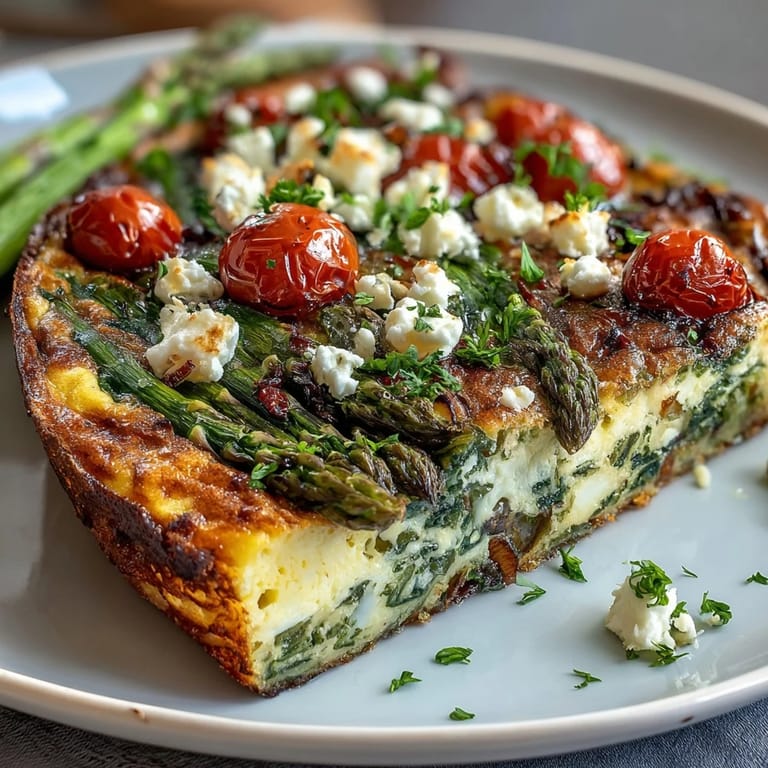
 My neighbor stopped by on a Saturday morning with a basket of fresh asparagus from her garden, and I had no idea what to do with it beyond the usual roasted side dish. She mentioned her grandmother's trick of building a frittata around whatever vegetables were in season, and something about that approach—no fussy technique, just good ingredients and heat—stuck with me. That first attempt was messy and slightly overcooked at the edges, but the creamy goat cheese and tender asparagus made it impossible to regret. Now it's become my go-to whenever I want something that tastes like spring on a plate without spending half the day in the kitchen.
There was this one Sunday when I made this for friends who were visiting, and someone asked for the recipe before they'd even finished eating. What struck me wasn't just that they loved it, but that everyone felt comfortable at the table—the frittata looked beautiful, nothing fancy, just honest and inviting. It became the thing I'd make whenever people came over unexpectedly, a dish that somehow made everyone feel welcomed without me having to fuss.
Ingredients
- Asparagus: Trim the woody ends by snapping them where they naturally break; it's the easiest way to know you're removing exactly what you don't want to eat.
- Baby spinach: Fresh and delicate, it wilts down dramatically so don't be shy about how much you add to the pan.
- Zucchini: Dice it small so it softens evenly and distributes its mild sweetness throughout every slice.
- Cherry tomatoes: Their juice bursts slightly as they cook, creating little pockets of brightness that balance the richness of the cheese.
- Green onions: Use both white and green parts for a layered onion flavor that doesn't overpower delicate spring vegetables.
- Eggs: Room temperature eggs whisk more smoothly and create a more uniform texture throughout the frittata.
- Whole milk or cream: The dairy keeps the eggs tender and adds a subtle richness without making the dish heavy.
- Goat cheese: Crumble it by hand rather than cutting; the irregular pieces melt more beautifully and distribute unevenly, which is exactly what you want.
- Parmesan cheese: Freshly grated makes a real difference in how it melts into the eggs and creates those golden edges.
- Fresh chives and parsley: Add these just before baking so their bright, fresh flavor doesn't fade into the background.
- Olive oil: Use good oil here; it's one of the few ingredients that sits on top and flavors every bite.
Tired of Takeout? 🥡
Get 10 meals you can make faster than delivery arrives. Seriously.
One email. No spam. Unsubscribe anytime.
Instructions
- Heat your oven and prepare:
- Set the oven to 375°F and let it come to temperature while you prep your vegetables. A properly heated oven is what gives the frittata that final puff and set center.
- Sauté the sturdy vegetables:
- Heat olive oil in your oven-safe skillet and add the asparagus and zucchini, cooking for about 3 to 4 minutes until they start to soften but still have some resistance when you bite them. You want them cooked enough to be tender but not so much that they fall apart when you slice the finished frittata.
- Wilt in the greens:
- Stir in the spinach, cherry tomatoes, and green onions, cooking just until the spinach turns a darker green and the tomatoes warm through, about 2 minutes. This quick cook keeps everything vibrant and prevents the vegetables from releasing too much water.
- Whisk and pour the eggs:
- In a separate bowl, whisk together the eggs, milk, salt, and pepper until the mixture is pale and uniform. Pour this slowly and evenly over the vegetables, tilting the skillet gently so the egg reaches all the corners.
- Layer on the cheese and herbs:
- Scatter the crumbled goat cheese, Parmesan, chives, and parsley over the top, distributing them so each bite gets a mix. The cheese will melt into some spots and stay slightly chunky in others, creating those pockets of creamy indulgence.
- Start on the stovetop:
- Cook the frittata on medium heat for 3 to 4 minutes until the edges begin to set and pull slightly away from the pan, but the center still jiggles a bit. You're creating a foundation that won't fall apart when you transfer the skillet to the oven.
- Finish in the oven:
- Slide the skillet into the preheated oven and bake for 12 to 15 minutes until the center is just set and the top is slightly puffed. The frittata will continue to cook a little as it cools, so pull it out when it still looks just barely underdone in the very middle.
- Rest before serving:
- Let the frittata cool for 5 minutes in the skillet, which gives it time to firm up and makes slicing cleaner. A hot frittata falls apart; a rested one slices into perfect wedges.
 Save It
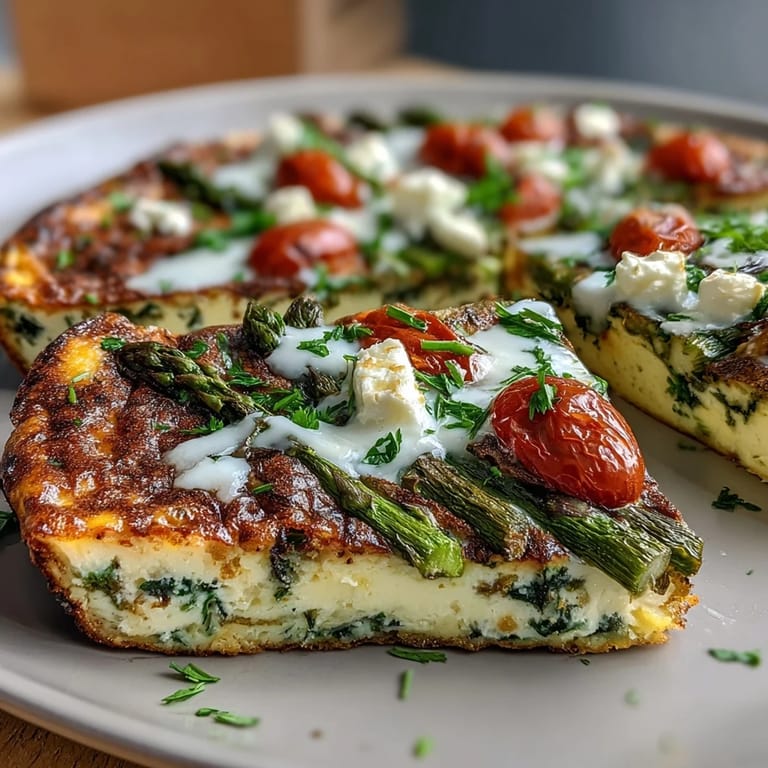
 There's something about watching someone taste a frittata they've never had before, seeing their eyes light up at that combination of creamy goat cheese, tender vegetables, and those golden edges—it's a small moment that reminds me why I love cooking. It's not complicated or showy, but it feels special because someone took the time to make it.
Springtime Variations
Once you understand the basic structure, this frittata becomes a canvas for whatever vegetables are at their peak. Early spring calls for tender peas and thinly shaved asparagus, while late spring can handle artichoke hearts or leeks. I've swapped the goat cheese for ricotta when I didn't have it on hand, and the result was less tangy but equally creamy. The herbs can change too—dill with zucchini, tarragon with spring onions, or basil if tomatoes are the star. The key is respecting the ratio of eggs to vegetables and cheese; go too heavy on vegetables and the frittata becomes heavy and won't set properly.
Serving and Pairing
A simple green salad with lemon vinaigrette cuts through the richness beautifully, especially if you dress it while the frittata is still warm. Crusty bread is perfect for soaking up any pan drippings, and a cold glass of white wine—something crisp like Sauvignon Blanc—feels right alongside it. This dish is equally good warm, room temperature, or even cold the next day, which makes it ideal for feeding a crowd or packing into lunch containers. Leftovers keep for about three days in the fridge and can be gently reheated in a low oven or eaten straight from the fridge with no apologies.
Dairy-Free and Dietary Modifications
If dairy isn't in the picture, simply omit the goat cheese and Parmesan and use plant-based milk instead of cream—the frittata will be a touch less rich but still tender and delicious. The vegetables provide enough moisture that you won't feel like anything's missing, especially if you use good olive oil. For anyone avoiding gluten, this recipe is naturally gluten-free as long as you're not serving it with regular bread alongside. You can make a double batch and freeze half uncut; reheat gently in a 300°F oven wrapped in foil, and it thaws beautifully.
- Dairy-free frittatas actually firm up slightly faster in the oven, so keep a close eye on it.
- If using plant-based milk, choose one with a slightly thicker consistency like oat or cashew rather than thin almond milk.
- Nutritional yeast can add a savory note and a hint of umami when cheese is off the menu.
 Save It
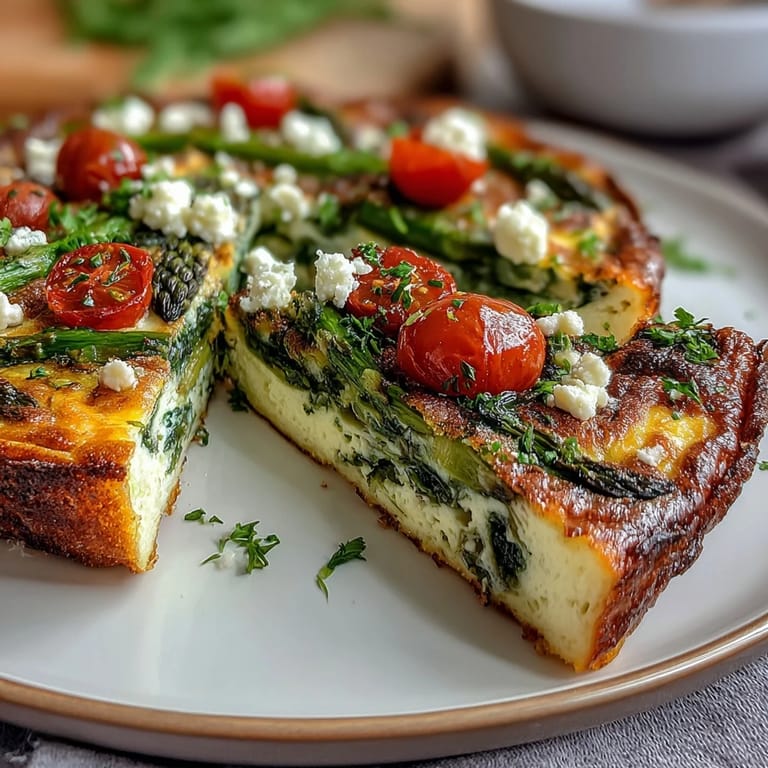
 This frittata has become one of my most reliable dishes, the one I reach for when I want to feed people something that tastes effortless but also feels thoughtful. It's proof that the best meals don't need to be complicated—just good ingredients, a hot pan, and a little attention.
Common Questions About Recipes
- → Can I substitute the asparagus with other vegetables?
Yes, you can swap asparagus with other spring vegetables such as peas or artichokes to customize the dish to your taste.
- → What type of pan is best for cooking this dish?
An oven-safe skillet, preferably 10–12 inches, works best to cook and bake this frittata evenly.
- → How do I know when the dish is fully cooked?
The frittata is done when the center is set and puffed, usually after 12–15 minutes baking, and edges are lightly browned.
- → Can I make a dairy-free version?
Yes, omit the goat cheese and Parmesan, and substitute milk or cream with a plant-based alternative.
- → What herbs work well in this vegetable dish?
Fresh chives and parsley provide bright, complementary flavors that enhance the vegetables and cheese.