 Save It
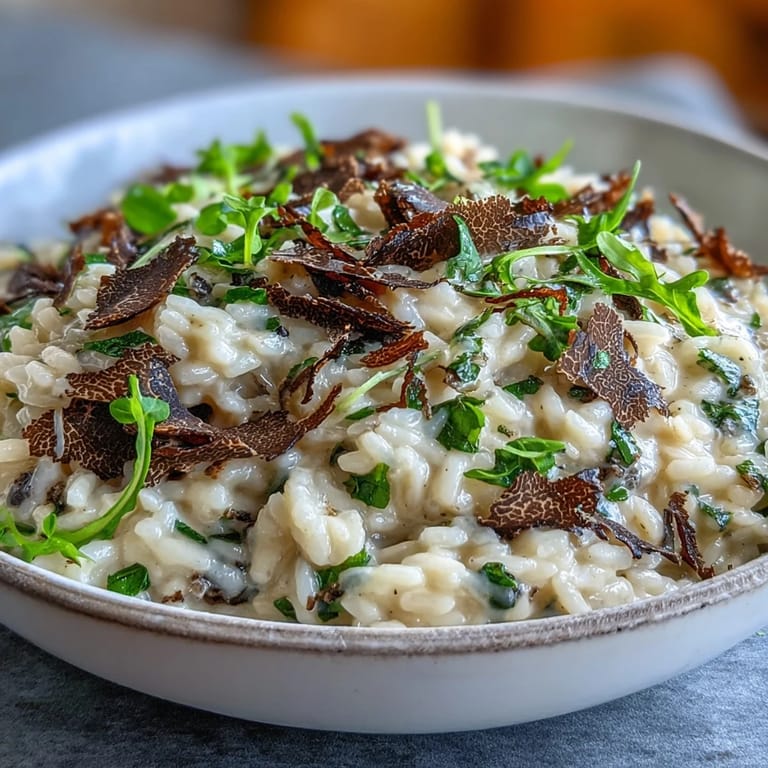
 My neighbor Marco once arrived at my kitchen door holding a small paper envelope of fresh black truffles, fresh off a foraging trip in Piedmont. He simply said, "Make risotto," and handed me the package like it was the most obvious thing in the world. That night, stirring the creamy rice over a gentle flame while the earthy aroma filled my small apartment, I understood why he'd driven four hours just to share this moment. The truffle risotto became less about ingredients and more about a conversation happening in butter and stock.
I made this for my sister's birthday last spring when she'd been working double shifts at the hospital and needed something that tasted like celebration. Watching her eyes close on that first spoonful, when the truffle flavor finally registered, made me realize that risotto isn't really about the recipe at all. It's about creating a moment where someone feels seen and cared for through the deliberate slowness of its preparation.
Ingredients
- Arborio rice: The short, starchy grains are essential because they release just enough starch to create that signature creamy texture while the rice grains stay distinctly separate and tender, not mushy.
- Vegetable stock: Keeping it warm in a separate pot is non-negotiable because cold stock shocking the hot rice will interrupt the cooking process and affect texture.
- Unsalted butter and olive oil: The combination of both fats creates a more rounded flavor base than either alone, and unsalted gives you full control over seasoning.
- Onion and garlic: These are your foundation, and mincing them finely ensures they melt into the rice rather than appearing as noticeable pieces.
- Dry white wine: The acidity cuts through the richness while adding subtle flavor depth that enhances the earthiness of the truffle.
- Parmesan cheese: Freshly grated makes a textural and flavor difference that pre-grated varieties simply cannot match due to anti-caking agents.
- Heavy cream: Added at the end, it creates the silky finish that makes risotto feel indulgent without overwhelming the dish.
- Truffle oil: Choose a reputable brand with actual truffle content, as some are purely synthetic and add a chemical note rather than depth.
- Fresh black truffle: If you can source it, the earthiness and subtle perfume are incomparable, but quality truffle paste works beautifully as a practical alternative.
- Fresh pea shoots: These delicate greens provide textural contrast and a bright, slightly sweet flavor that balances the richness of the risotto.
Tired of Takeout? 🥡
Get 10 meals you can make faster than delivery arrives. Seriously.
One email. No spam. Unsubscribe anytime.
Instructions
- Start your base:
- Heat butter and olive oil together over medium heat until the butter is foaming but not browning, then add your finely chopped onion. You're looking for that moment when the onion turns translucent and soft, which takes about three to four minutes and tells you the base is ready for the rice.
- Coax the rice:
- Add minced garlic for just one minute, then stir in the Arborio rice, coating every grain in the buttery oil. Keep stirring for about two minutes until you notice the rice grains becoming slightly translucent around the edges while the centers stay opaque, a signal that the outer starch is beginning to release.
- Toast with wine:
- Pour in your white wine and stir almost constantly as it absorbs into the rice, creating a beautiful savory-acidic foundation. This takes about two to three minutes and should smell almost like risotto already.
- Build the creaminess:
- Add warm stock one ladle at a time, stirring frequently and waiting for each addition to be mostly absorbed before adding the next ladle. This patient process, roughly eighteen to twenty minutes, is where the risotto magic happens as the rice releases starch and transforms the liquid into something velvety.
- Final touches:
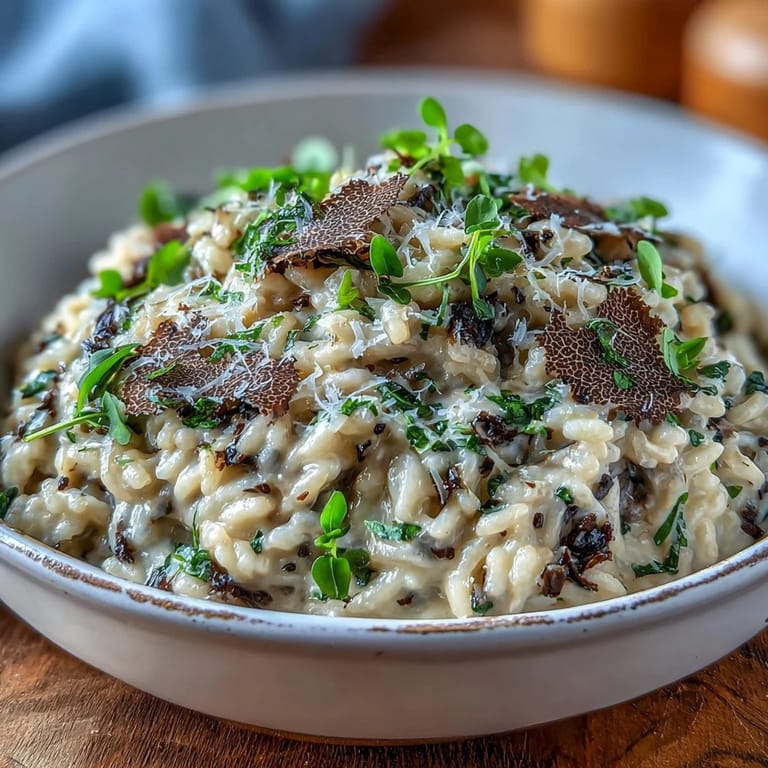
- Once the rice is creamy and just tender enough to bite through (al dente), remove from heat and stir in heavy cream and freshly grated Parmesan, tasting as you go. The risotto should flow slightly on the plate, not sit in a solid mound.
- Finish with truffle:
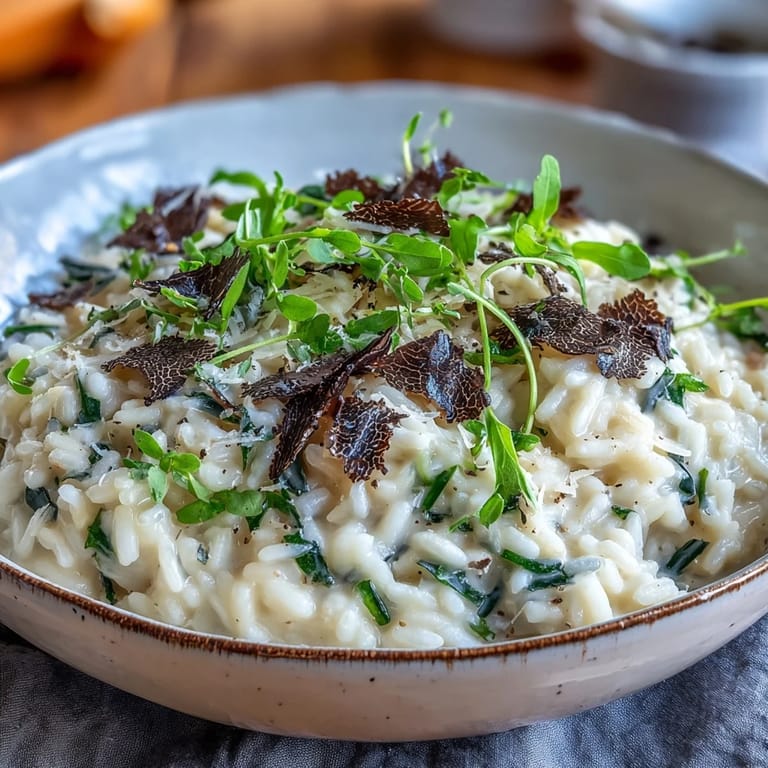
- Drizzle truffle oil over the risotto and gently fold in half of your pea shoots, letting the heat soften them slightly while preserving their brightness. Transfer to warm bowls and crown each with the remaining pea shoots and your thinly shaved fresh truffle for that final luxurious touch.
 Save It
 There's a moment, usually around minute fifteen of stirring, when everything shifts. The rice has absorbed enough stock that the mixture suddenly becomes visibly creamier, and you know you've crossed the threshold from a pan of rice and liquid into actual risotto. That's when I stop checking the recipe and just trust my instincts, knowing the finish line is close.
The Art of the Stir
Constant stirring isn't busywork in risotto, it's conversation between you and the rice. Each rotation of your wooden spoon against the pan prevents the bottom from sticking, keeps the temperature even, and crucially, helps distribute the heat so every grain cooks at the same pace. I learned this the hard way when I tried to rush a batch by adding all the stock at once and ended up with a curdled, broken sauce. Now I think of the stirring time as the actual recipe, not something to rush through before the real cooking begins.
Why Fresh Truffle Matters
Truffle oil is convenient and adds a recognizable earthy note, but fresh truffle speaks a different language entirely. The aroma is more complex, with hints of petrichor and forest floor, and the delicate shavings add visual drama that transforms the dish from accomplished to restaurant-worthy. That said, a generous quantity of high-quality truffle paste or even a splash more truffle oil can absolutely substitute when fresh truffle isn't available or feels out of budget for a weeknight dinner.
Timing and Temperature
Risotto lives in a narrow band of success. Too low heat and the rice never reaches that creamy point, too high and it browns unevenly. Medium heat, steady and unwavering, is your friend. Equally important is serving immediately after plating, because risotto continues cooking slightly from residual heat and thickens as it sits, transforming from a flowing, elegant dish into something more pastelike if you wait more than a few minutes.
- Keep your stock genuinely warm in a separate pot so you're not shocking the risotto with cold liquid.
- Have all your ingredients prepped before you start cooking, because risotto moves quickly once the stock begins adding.
- Taste for seasoning multiple times during cooking, as the Parmesan and truffle oil will add their own saltiness that builds gradually.
 Save It
 Every time I make this risotto, I'm struck by how something so simple in components becomes so elegant through patience and technique. It's the kind of dish that reminds you why people cook at all.
Common Questions About Recipes
- → What makes risotto creamy?
The creaminess comes from the Arborio rice's high starch content, released gradually as you stir and add warm stock ladle by ladle. This traditional technique creates a luxurious texture without needing excessive cream.
- → Can I use truffle oil instead of fresh truffle?
Absolutely. While fresh truffle offers the most authentic experience, quality truffle oil provides excellent flavor. Use 2 tablespoons as specified, or add more to taste. Truffle paste also works beautifully as a budget-friendly alternative.
- → How do I know when risotto is done?
The rice should be tender but still have a slight bite in the center—al dente texture typically takes 18-20 minutes of adding stock. The consistency should be creamy and flow slightly, not stiff or dry.
- → What wine pairs best with this dish?
A chilled Chardonnay complements the rich flavors beautifully. The wine's buttery notes harmonize with the creaminess while its acidity cuts through the richness. Pinot Grigio or a crisp white Burgundy also work wonderfully.
- → Can this be made vegan?
Yes. Substitute the butter with plant-based alternative, use nutritional yeast or vegan Parmesan, and replace heavy cream with coconut cream or cashew cream. The truffle oil and pea shoots remain naturally plant-based.
- → Why must the stock be warm?
Adding cold stock shocks the rice, interrupting the cooking process and resulting in uneven texture. Warm stock maintains consistent temperature, allowing even starch release for that perfectly creamy result.