 Save It
 My neighbor brought over a box of pistachio nougat from a Mediterranean market, and I was struck by how each piece tasted like an entire afternoon in Provence. The chewy texture gave way to bursts of roasted nuts and tart-sweet fruit, and I found myself asking for the recipe before the box was even half empty. What started as curiosity became obsession, and after some trial and error in my kitchen, I finally cracked the code. Now whenever I make a batch, the whole house fills with this warm, toasty aroma that makes everyone pause and ask what's happening.
I made this for my mom's book club last fall, and watching everyone's faces light up when they bit into a piece was worth every second of attention the candy thermometer required. Someone asked if I'd bought them from a fancy shop, and that question alone made the whole process feel worthwhile. She still asks me to bring a batch to family gatherings, which is the sweetest compliment I could ask for.
Ingredients
- Shelled, unsalted pistachios (1 cup): Lightly toasting them yourself brings out a nuttier flavor than store-bought roasted versions, and it gives the nougat a more sophisticated taste.
- Dried apricots (1/2 cup, diced): These add a natural sweetness and slight tang that balances the richness of the nougat perfectly.
- Dried cherries (1/3 cup, diced): Their subtle tartness cuts through the sweetness and adds a beautiful pop of color throughout.
- Dried cranberries (1/3 cup, diced): Use unsweetened cranberries if you can find them, as they provide brightness without cloying the mixture.
- Granulated sugar (1 1/2 cups): This is the foundation of your syrup and must be high-quality to avoid crystalization.
- Light corn syrup or glucose syrup (1/2 cup): This prevents the sugar from crystallizing and keeps the nougat tender, not grainy.
- Honey (1/4 cup): It adds a subtle floral note and contributes to the chewy texture without being obvious in flavor.
- Water (1/4 cup): This helps dissolve the sugar evenly and controls the syrup's cooking speed.
- Egg whites (2 large, room temperature): Bringing them to room temperature means they whip faster and hold more air, giving the nougat its signature airy texture.
- Cream of tartar (1/4 tsp): This stabilizes the egg whites so they hold their peaks longer and create a more stable nougat base.
- Fine sea salt (1/4 tsp): Just a pinch enhances the pistachio flavor and prevents the sweetness from becoming cloying.
- Vanilla extract (2 tsp): Use real vanilla, not imitation, because it makes a noticeable difference in the final taste.
- Edible wafer paper (optional): It prevents sticking and looks professional, though parchment works just as well if you oil it lightly.
Tired of Takeout? 🥡
Get 10 meals you can make faster than delivery arrives. Seriously.
One email. No spam. Unsubscribe anytime.
Instructions
- Prepare Your Pan:
- Line your 8 x 8-inch baking pan with edible wafer paper or parchment, leaving enough overhang so you can lift the finished nougat out cleanly. If you're using parchment, lightly oil it so the nougat doesn't stick.
- Cook the Sugar Syrup:
- In a medium saucepan, combine sugar, corn syrup, honey, and water, stirring over medium heat until every grain of sugar dissolves. Once it's smooth and clear, attach your candy thermometer and stop stirring—let the syrup cook undisturbed to 290°F, which takes about 15 minutes and sounds like a gentle bubble.
- Whip the Egg Whites:
- While the syrup cooks, beat your room-temperature egg whites with cream of tartar and salt in a stand mixer until soft peaks form, which means the whites hold a shape but the peaks curl over when you lift the whisk. This takes about 2 minutes with a stand mixer.
- Combine Hot Syrup and Egg Whites:
- When the syrup hits 290°F, remove it from heat immediately and, with the mixer running on medium speed, pour the hot syrup into the egg whites in a thin, steady stream. This is where patience matters—pouring too fast can scramble the eggs, so take about 30 seconds to pour it all in.
- Beat to Stiff Peaks:
- Turn the mixer to high speed and beat the mixture for 7 to 8 minutes until it transforms into something glossy, thick, and pale that holds stiff peaks. You'll notice it goes from liquid to grainy to smooth to ultimately airy and cloud-like.
- Add Vanilla:
- With the mixer still running, beat in the vanilla extract until it's evenly distributed, which takes just 30 seconds.
- Fold in the Nuts and Fruit:
- Using a sturdy spatula, quickly fold in the pistachios, apricots, cherries, and cranberries until everything is evenly mixed without deflating the airy texture. This is a gentle motion, not aggressive mixing.
- Transfer to Pan:
- Spread the nougat evenly into your prepared pan using the spatula, then place a sheet of wafer paper on top if using it to prevent sticking. Press it down lightly so it's level.
- Let It Cool and Set:
- Leave the pan at room temperature for at least 4 hours, though overnight is even better because the nougat continues to firm up and becomes easier to cut. Avoid moving the pan during this time.
- Cut and Store:
- Lift the nougat from the pan and place it on a cutting board, then use a sharp knife dipped in oil to cut it into squares with smooth, clean strokes. Store the pieces in an airtight container with parchment between layers to prevent sticking.
 Save It
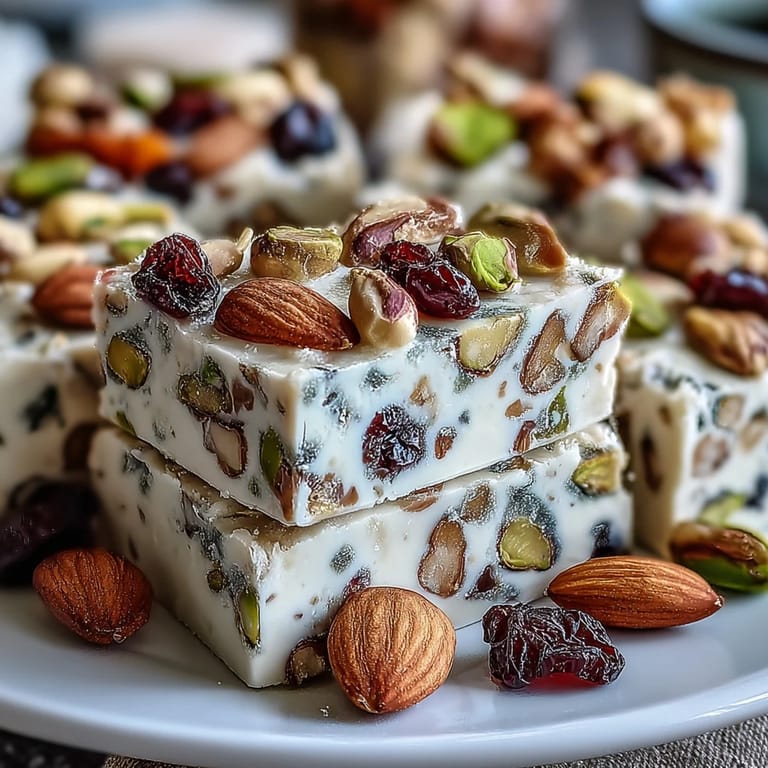
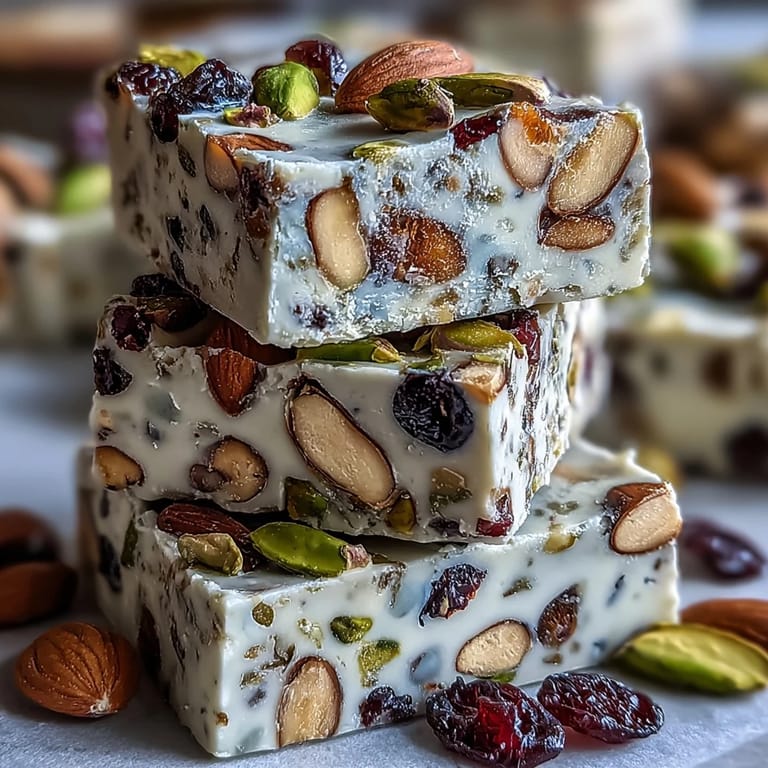
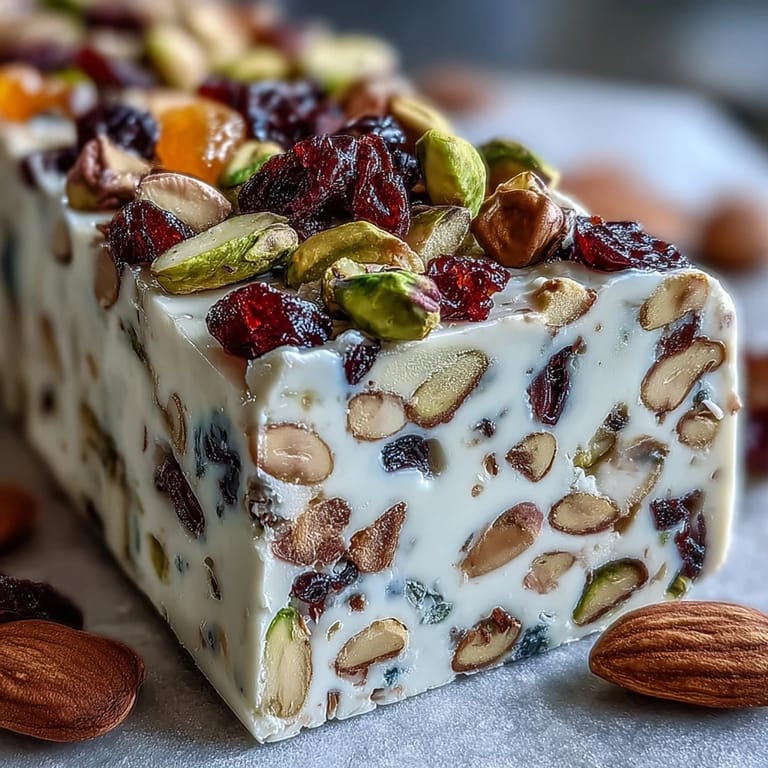
 There's something magical about the moment when you pull that glossy nougat from the pan and slice into it, revealing all those jewel-like pieces of fruit and pistachio throughout. It feels like you've just created something worthy of a fancy gift box, even though you made it right there in your own kitchen.
The Science Behind Chewy Perfection
Nougat works because egg whites trap tiny air bubbles while the hot sugar syrup cooks them into shape, creating that signature light-but-chewy texture. The corn syrup and honey prevent sugar crystals from forming, which would make the candy grainy instead of smooth. Once you understand this, you realize the recipe isn't mysterious at all—it's just controlled chemistry that happens to taste incredible.
Variations and Flavor Swaps
The beauty of nougat is that it's forgiving once you nail the base technique, which means you can experiment freely with different nuts and fruits. I've made batches with almonds instead of pistachios, substituted dried figs for cranberries, and once tried a combination with candied orange peel that reminded me of Italian Christmas markets. The key is keeping the total volume of add-ins the same and avoiding fruits that are overly moist, like dates or prunes, which can make the nougat softer than you'd like.
Gifting and Serving Tips
Nougat makes an elegant gift when you package it in a nice box with tissue paper, and it shows effort without being fussy or over-complicated. Pair it with a cup of strong espresso or a glass of dessert wine, and suddenly you've created a moment that feels intentional and special. It's the kind of thing people remember and ask you to make again, which is the highest compliment a homemade gift can receive.
- Cut your squares uniform in size so the gift box looks polished and professional.
- Wrap individual pieces in parchment or wax paper so they don't stick together during storage.
- A batch of this makes about 30 pieces, which is perfect for sharing with a small group or keeping some for yourself.
 Save It
 Making pistachio nougat taught me that some of the most impressive treats come from understanding a few simple principles, not complicated techniques. Once you've made one batch, you'll realize this is something you can turn to again and again whenever you want to feel like you've created something truly special.
Common Questions About Recipes
- → How do I know when the sugar syrup reaches the correct temperature?
Use a candy thermometer attached to your saucepan. The syrup must reach exactly 290°F (143°C), known as the soft-crack stage. This temperature ensures the nougat sets properly with the right chewy texture. Avoid stirring once the syrup begins boiling to prevent crystallization.
- → Can I make nougat without a stand mixer?
A stand mixer is highly recommended because you need to pour hot syrup while whipping, and the mixture beats for 7-8 minutes until very stiff. Hand mixers may overheat or not provide enough power. If using a hand mixer, work quickly and have help pouring the syrup safely.
- → Why did my nougat turn out hard instead of chewy?
Hard nougat usually means the syrup temperature exceeded 290°F. Even 5-10 degrees higher makes a significant difference. Always verify your candy thermometer's accuracy with boiling water first. Also ensure you beat the mixture long enough until glossy and stiff—under-beating affects texture.
- → What's the purpose of cream of tartar in this confection?
Cream of tartar stabilizes the egg whites, helping them form stronger peaks and preventing deflation when hot syrup is added. It also creates a finer texture in the final nougat. If unavailable, substitute with 1/2 teaspoon lemon juice, though results may vary slightly.
- → Can I substitute the corn syrup with other sweeteners?
Glucose syrup is the best alternative to corn syrup. Maple syrup or agave may alter texture and flavor significantly. Honey is already included in the recipe—increasing it will make the nougat softer with a stronger honey taste. For best results, stick to corn or glucose syrup.
- → How should I store finished nougat?
Wrap individual pieces in wax paper or store layers separated by parchment in an airtight container. Keep at room temperature away from moisture and humidity. Properly stored, it remains fresh for up to two weeks. Refrigeration isn't recommended as it can make the nougat hard and affect texture.