 Save It
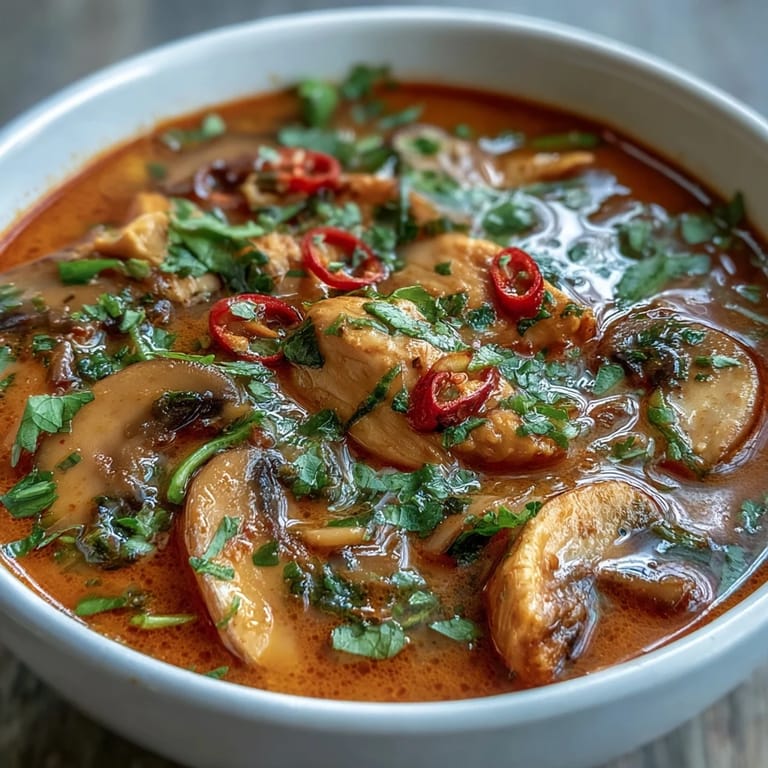
 There's a particular Tuesday evening I can't forget, when my neighbor dropped by with a container of Thai red curry paste she'd brought back from Bangkok. I had chicken thawing on the counter and suddenly the idea of transforming it into something warm and fragrant felt urgent. Twenty minutes later, my kitchen smelled like lemongrass and ginger, and she was sitting at my table with a bowl of creamy coconut curry soup that tasted like we'd both traveled somewhere far away without leaving my apartment.
I made this for my partner's coworkers during a spontaneous dinner party, and watching four people simultaneously close their eyes after the first spoonful felt like winning something. One of them asked if I'd trained in Thailand, and I had to laugh while pointing to the recipe card I'd scribbled notes on. It became the meal people asked me to bring to potlucks, which is how you know you've found something worth repeating.
Ingredients
- Chicken breast or thighs (400 g): Thighs stay more tender and forgiving if you're not watching the clock, but breast works beautifully if sliced thin enough to cook quickly in the hot broth.
- Mushrooms (200 g), sliced: Shiitake adds deeper earthiness, but button mushrooms absorb the curry flavors just as happily and cost less.
- Carrots (2 medium), julienned: Thin slicing matters here so they soften in the time the chicken needs to cook through.
- Red bell pepper (1 small), thinly sliced: Adds brightness without overpowering the coconut and curry base.
- Baby spinach or bok choy (100 g, optional): This is where you sneak in greens at the last moment, wilting them right before serving so they stay vibrant.
- Spring onions (2), thinly sliced: Save these for garnish so they keep their fresh snap instead of softening into the broth.
- Fresh ginger (1 tablespoon, grated): The backbone of warmth here; don't skip it or try to substitute powdered ginger.
- Garlic (3 cloves, minced): Aromatics build flavor from the moment the oil gets hot, so take the 30 seconds to mince properly.
- Lemongrass (2 stalks, bruised, optional): Bruise it by pressing the side of your knife against it to release oils, then fish the pieces out before serving.
- Kaffir lime leaves (4, optional): These are the secret to that authentic Thai edge; if you can find them frozen, they work perfectly.
- Red curry paste (2 tablespoons): Start with this amount and taste as you go; some pastes hit harder than others.
- Coconut milk (800 ml): Full fat makes it richer, light works if you want less heaviness.
- Chicken broth (500 ml): Use good quality here because you taste it directly, not hidden under other ingredients.
- Fish sauce (1 tablespoon): This is umami magic; use tamari or soy sauce if you're vegetarian.
- Brown sugar (1 tablespoon): Balances the heat and salt with a gentle sweetness.
- Lime juice (from 1 lime): Squeeze it fresh right before serving; bottled doesn't give the same brightness.
- Fresh cilantro, chopped: Scatter this on top like you're finishing a painting, not measuring it out.
- Fresh red chili, sliced (optional): For heat lovers who want to decide their own spice level at the table.
- Lime wedges: Serve alongside so people can adjust acidity to their taste.
Tired of Takeout? 🥡
Get 10 meals you can make faster than delivery arrives. Seriously.
One email. No spam. Unsubscribe anytime.
Instructions
- Wake up the pot with aromatics:
- Heat oil in your pot over medium heat until it shimmers, then add ginger, garlic, and lemongrass. You'll know it's ready when your kitchen fills with that distinctive Thai perfume and the raw edge disappears from the aromatics, about a minute.
- Deepen the curry flavor:
- Stir the red curry paste into the hot oil and let it fry for a full minute, stirring almost constantly. This isn't just mixing; you're toasting the spices and waking up their intensity.
- Coat the chicken:
- Add your sliced chicken and stir it into the curry paste until each piece is coated and starting to turn opaque around the edges, roughly 2-3 minutes. Don't worry about it being fully cooked yet.
- Build the broth:
- Pour in the coconut milk and chicken broth together, scraping the bottom of the pot to lift any stuck bits of flavor. Add kaffir lime leaves if you're using them and let everything come to a gentle simmer.
- Cook vegetables to tender:
- Add carrots, mushrooms, and bell pepper now so they soften alongside the chicken, about 10-12 minutes at a gentle simmer. The chicken will finish cooking, the vegetables will become tender-crisp, and everything will absorb the coconut curry flavor.
- Season to balance:
- Stir in fish sauce, brown sugar, and fresh lime juice, then taste and adjust. You're looking for that sweet spot where heat, salt, sweet, and sour all support each other.
- Finish with greens:
- If you're using spinach or bok choy, add it now and let it wilt for just 1-2 minutes so it stays bright green and tender, not gray and mushy.
- Finalize and serve:
- Fish out the lemongrass stalks and kaffir lime leaves, then ladle soup into bowls. Top with spring onions, cilantro, chili if you want heat, and serve with lime wedges so people can adjust flavors at the table.
 Save It
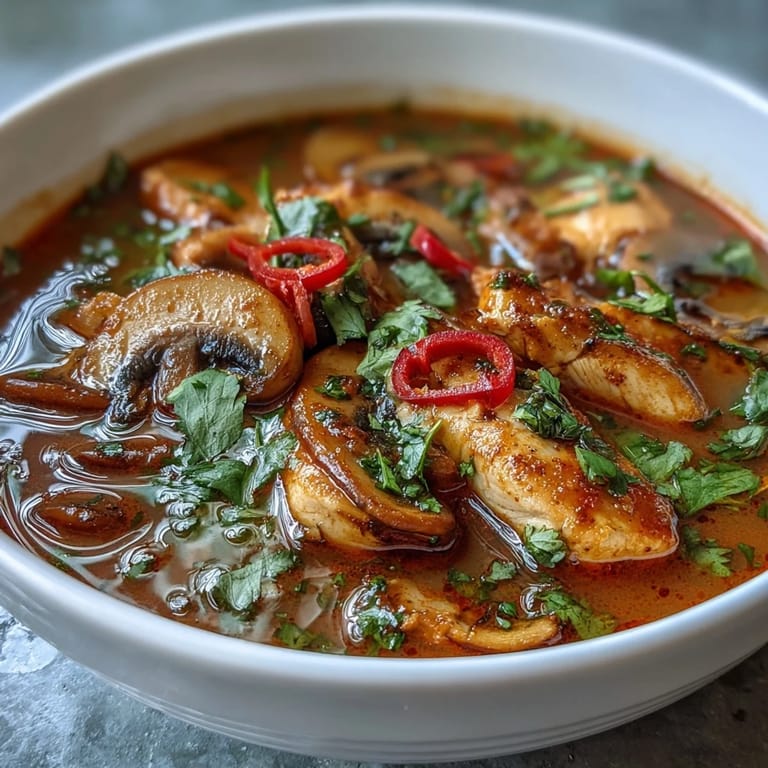
 The real moment this became more than just soup was when my mom asked for the recipe after tasting it, and I realized I'd made something she actually wanted to cook herself instead of just eating. There's something about feeding people something that tastes better than they expected that changes the energy of a table.
When to Use Chicken Thighs vs. Breast
I learned this the hard way by overcooking chicken breast and ending up with shreds that disappeared into the broth. Thighs are more forgiving because they have more fat and connective tissue that keeps them tender even if you're not watching the clock obsessively. If you prefer the leaner option, just slice the breast thinner so it cooks faster and doesn't have time to dry out.
Making It Your Own
The best version of this soup is the one that matches what you have on hand and what you're craving that day. I've made it with shrimp when fish felt right, with extra bok choy when I was trying to eat more vegetables, and with light coconut milk when I wanted something less rich at the end of a heavy day. The structure stays the same but every version tells a different story.
Serving and Storage Wisdom
This soup gets better the next day when all the flavors have had time to find each other, but honestly it's hard to have any left over because people ask for seconds. If you do have leftovers, store them in an airtight container in the fridge for up to three days, and reheat gently on the stovetop with a splash of broth so the coconut milk doesn't separate. Consider serving with jasmine rice or rice noodles on the side if you want something to soak up the broth, or just enjoy it as is with good bread for wiping the bowl clean.
- Reheat low and slow: Medium heat stirring occasionally keeps the coconut milk from breaking and getting grainy.
- Make it heartier: Serve over jasmine rice or with rice noodles stirred right into the bowl for a more filling meal.
- Prep ahead partially: Slice vegetables and mince aromatics earlier in the day, but cook the actual soup just before eating so it tastes bright and fresh.
 Save It
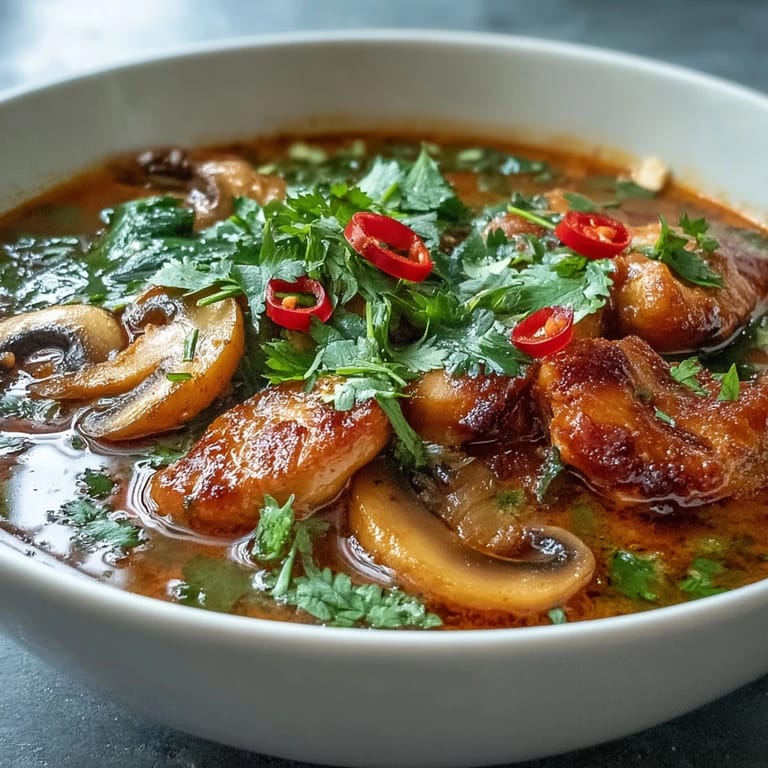
 This soup has become the meal I reach for when I want to feel like I'm taking care of someone, including myself. There's something about that combination of heat, creaminess, and brightness that just works.
Common Questions About Recipes
- → Can I make this soup vegetarian?
Absolutely. Replace chicken with firm tofu or extra vegetables, swap chicken broth for vegetable broth, and use soy sauce or tamari instead of fish sauce.
- → How spicy is this soup?
The heat level depends on your red curry paste. Start with 1 tablespoon for mild-medium spice, or increase to 2-3 tablespoons for a fiery kick. You can always add more paste gradually.
- → Can I freeze this soup?
Yes, it freezes well for up to 3 months. Cool completely before storing in airtight containers. The texture may change slightly upon reheating, but flavors will remain delicious.
- → What can I serve with this soup?
Jasmine rice or rice noodles make excellent additions for a heartier meal. For sides, try spring rolls, Thai salad, or crusty bread to soak up the flavorful broth.
- → Can I use light coconut milk?
Yes, though full-fat coconut milk creates a richer, creamier texture. Light coconut milk works but yields a thinner consistency. You can also use half light, half full-fat for balance.
- → What vegetables work best in this curry?
Beyond carrots and bell pepper, try bamboo shoots, snap peas, baby corn, or butternut squash. Add sturdy vegetables early, delicate ones like spinach in the final minutes.