 Save It
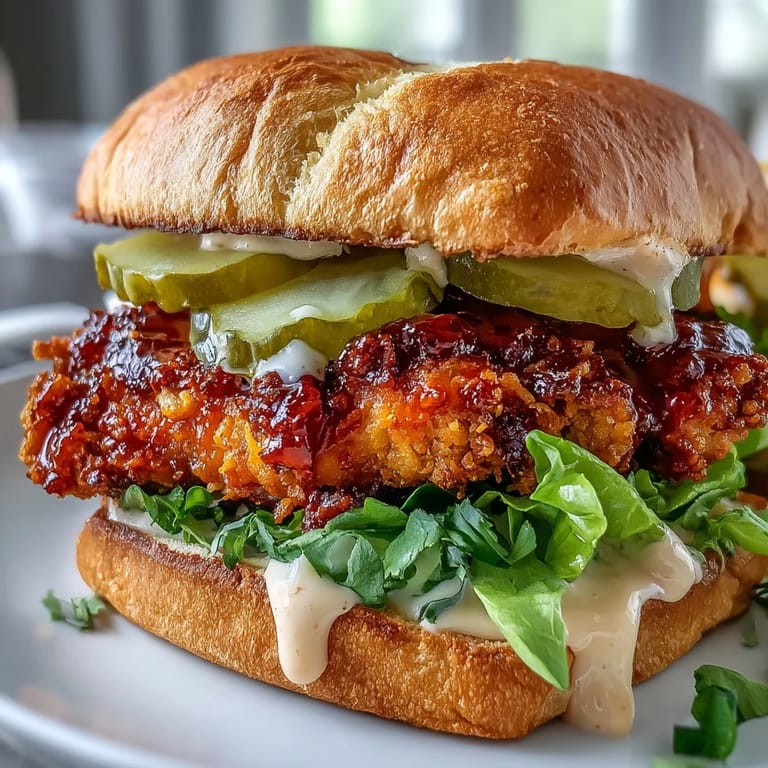
 My coworker Mike brought one of these sandwiches to lunch last Tuesday, and I watched him unwrap it like it held the secrets of the universe. The chicken was shatteringly crisp, catching the fluorescent office lights, and when he bit into it, this creamy sauce oozed out the sides while he closed his eyes in pure satisfaction. That's when I knew I had to figure out how to make it at home, because no lunch break should feel ordinary.
I made these for my sister's birthday game night, and something magical happened when everyone bit into their first sandwich simultaneously. The kitchen went completely quiet except for crunching sounds, and then someone let out a noise that was half laugh, half pure joy. That's the moment I realized this recipe wasn't just food, it was a conversation starter.
Ingredients
- Chicken breasts: Pound these to an even 1/2-inch thickness so they cook through without drying out, and honestly, that pounding motion is weirdly therapeutic after a long day.
- Buttermilk: This is the acid that tenderizes the chicken from the inside, making it juicy instead of stringy, and if you don't have it, mix regular milk with a splash of lemon juice as a backup.
- Hot sauce: Whatever brand you love goes in the marinade; I use Frank's because it adds flavor without overpowering.
- Paprika and cayenne: These create that warm, lingering heat that builds rather than burns your mouth right away.
- Cornstarch in the dredge: This is the secret weapon that makes the coating shatter instead of just crunch, and I learned this after a dozen less-crispy attempts.
- Vegetable oil: Keep it at 350°F exactly, because too hot burns the outside before the inside cooks, and too cool leaves you with greasy chicken.
- Mayo and sour cream for the sauce: The sour cream cuts through the richness and prevents the sauce from feeling heavy, which is why it works so much better than mayo alone.
- Brioche buns: These butter-loaded buns are worth seeking out because they absorb the sauce without falling apart, unlike regular burger buns.
Tired of Takeout? 🥡
Get 10 meals you can make faster than delivery arrives. Seriously.
One email. No spam. Unsubscribe anytime.
Instructions
- Build the marinade:
- Whisk buttermilk, hot sauce, salt, paprika, cayenne, garlic powder, and onion powder in a large bowl until everything dissolves smoothly. The mixture should smell intensely savory and slightly spicy, and that's your signal it's ready.
- Marinate the chicken:
- Submerge each chicken breast in the buttermilk mixture, cover with plastic wrap, and slide it into the refrigerator for at least an hour. I usually do this the night before because overnight marinating makes the chicken even more tender and flavorful, plus it's one less thing to stress about.
- Mix your dredge:
- Combine flour, cornstarch, paprika, garlic powder, onion powder, salt, cayenne, and black pepper in a shallow dish. The mixture should look like coarse sand, and you want it ready before you pull the chicken from the fridge.
- Heat the oil:
- Pour vegetable oil into a heavy skillet or Dutch oven and use a thermometer to bring it to exactly 350°F. Place a wire rack over a sheet pan nearby, because you'll want somewhere to drain the chicken the second it comes out.
- Dredge and fry:
- Lift each chicken breast from the marinade, let excess liquid drip back into the bowl, then press it firmly into the dredge mixture. For that extra-crispy texture, dip it back into the dredge one more time, and you'll hear the sizzle when it hits the hot oil.
- Cook with patience:
- Fry each side for 4 to 6 minutes until the coating turns deep golden brown and an instant-read thermometer registers 165°F at the thickest part. The chicken will want to float, so use tongs to keep it submerged for even cooking.
- Make the sauce:
- While the chicken drains, whisk mayo, sour cream, hot sauce, lemon juice, smoked paprika, garlic powder, and honey together in a bowl. Taste it and adjust salt and pepper until it feels balanced between creamy, tangy, and just spicy enough.
- Toast and assemble:
- Give your brioche buns a light toast so they're warm and slightly firm on the outside. Spread sauce generously on both the top and bottom, then layer with crispy chicken, pickle slices, lettuce, and tomato if you like, and serve immediately while everything is at its peak.
 Save It
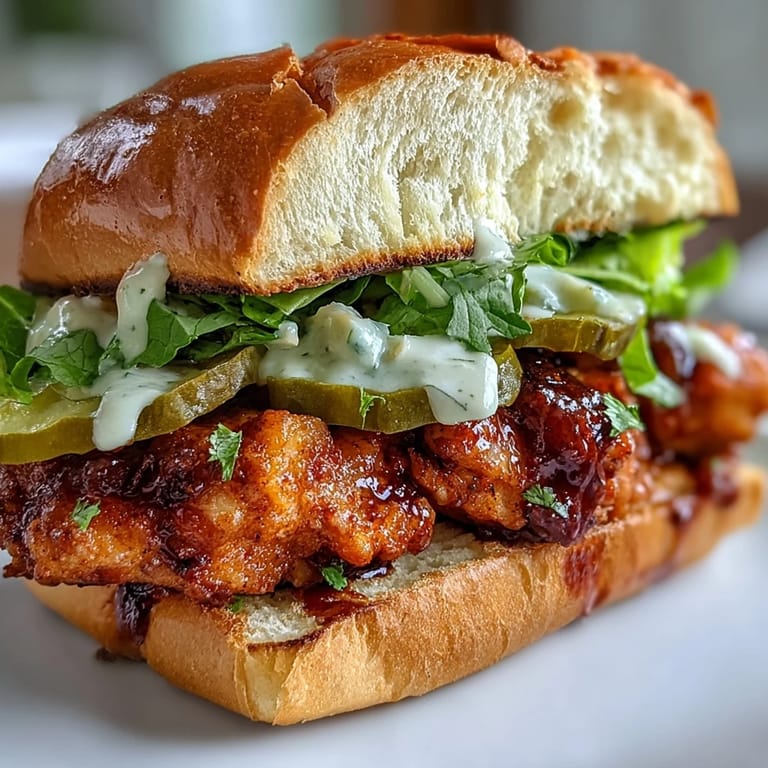
 My nephew asked if he could have seconds before he'd even finished his first sandwich, and that's when I knew this recipe had earned its place in regular rotation. There's something about homemade fried chicken on a soft brioche bun that feels both indulgent and somehow worth the effort.
The Double-Dredge Difference
The first time I made these, I dredged each piece once and wondered why they weren't as crispy as I'd imagined. A friend watching me cook casually mentioned that restaurants dredge fried chicken twice, and that tiny detail changed everything. Now I do it without thinking, and the payoff is that satisfying crunch that stays crunchy even when the sandwich sits for five minutes.
Oil Temperature and Timing
Getting the oil exactly right is the difference between fried chicken that tastes like a restaurant and fried chicken that tastes like you tried but something went wrong. I learned this when my first batch was golden on the outside but pale and slightly undercooked inside, which was when I realized I needed a thermometer and actual attention rather than just eyeballing the bubbles. Now I check the temperature before the first piece goes in and between batches, because oil cools faster than you'd think when you're adding cold chicken.
Making It Your Own
The beautiful thing about this sandwich is that it's flexible enough to bend to your preferences without losing its character. I've made it with chicken thighs for extra juiciness on nights when I didn't care about the presentation, and I've amped up the cayenne for friends who think my normal version isn't spicy enough. The sauce can be adjusted too, letting you dial in the heat, tanginess, or creaminess depending on your mood or what you're serving it with.
- If you're meal prepping, fry the chicken ahead and store it in an airtight container, then reheat it in a 350°F oven for about 8 minutes to restore the crispness.
- The sauce keeps in the refrigerator for up to three days, so making it the night before actually saves you time and lets the flavors meld.
- Crispy fries, creamy slaw, or even a simple green salad all make excellent sides without competing with the sandwich for attention.
 Save It
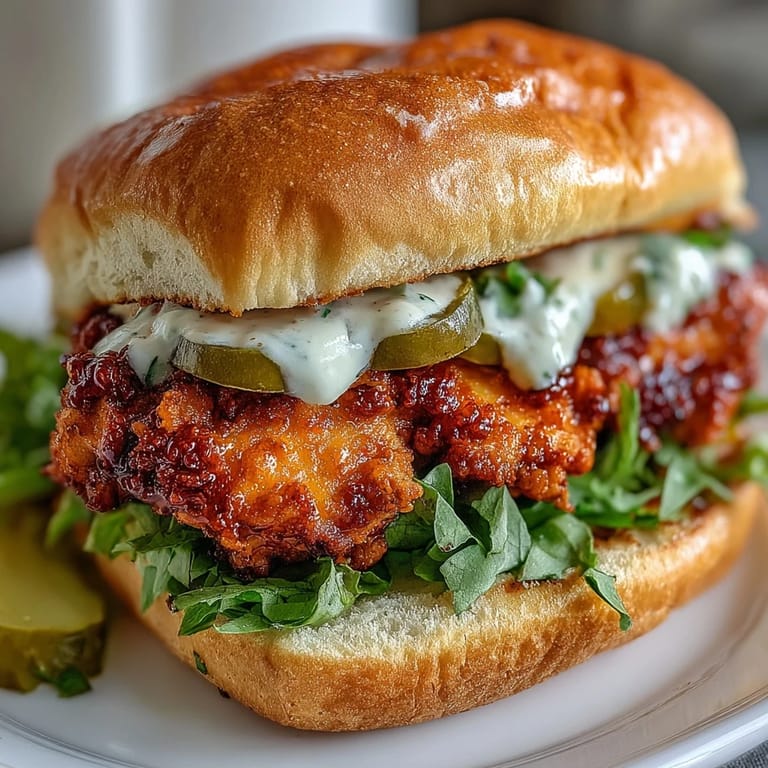
 This sandwich has become my answer to the question of what I'm making when someone asks what's for dinner and I want them to actually be excited. It's not complicated, but it tastes like someone who knows what they're doing made it.
Common Questions About Recipes
- → Can I make this sandwich less spicy?
Yes, simply reduce or omit the cayenne pepper from both the marinade and dredge. You can also use a mild hot sauce or skip it entirely in the marinade and sauce.
- → How do I keep the chicken crispy after frying?
Place fried chicken on a wire rack instead of paper towels to allow air circulation. Avoid stacking pieces, and if reheating, use an oven at 375°F for 10-12 minutes to restore crispiness.
- → Can I use chicken thighs instead of breasts?
Absolutely! Chicken thighs are juicier and more flavorful. Pound them to even thickness and adjust cooking time slightly, ensuring they reach an internal temperature of 165°F.
- → How long can I marinate the chicken?
The minimum marinating time is 1 hour, but you can marinate up to 24 hours for deeper flavor. The buttermilk tenderizes the meat while infusing it with spices.
- → What can I substitute for buttermilk?
Mix 1 cup of regular milk with 1 tablespoon of lemon juice or white vinegar. Let it sit for 5 minutes before using as a buttermilk replacement in the marinade.
- → Can I bake instead of frying?
Yes, bake breaded chicken on a wire rack over a baking sheet at 425°F for 20-25 minutes, flipping halfway. Spray with cooking oil for extra crispiness, though it won't be as crunchy as fried.