 Save It
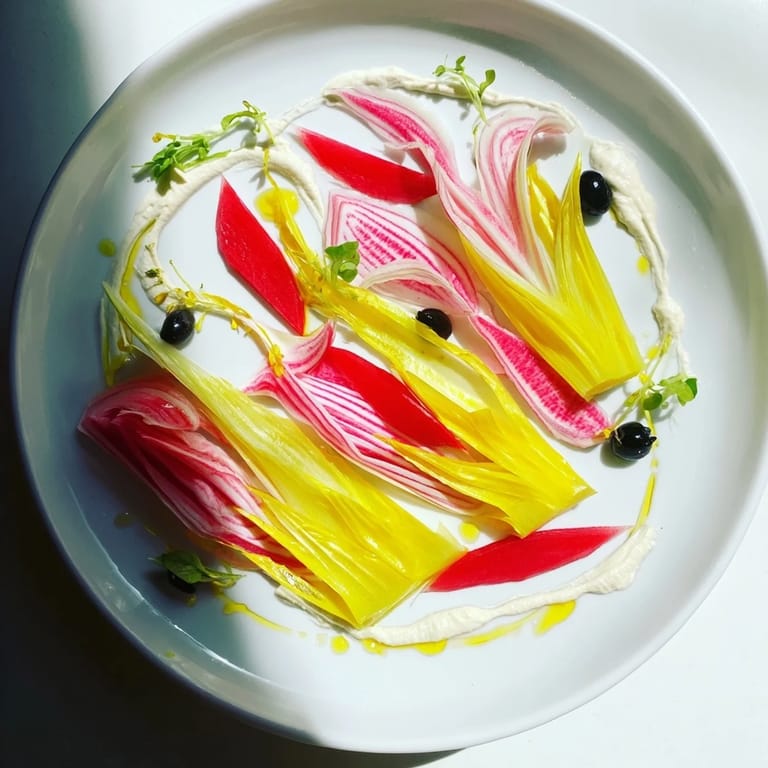
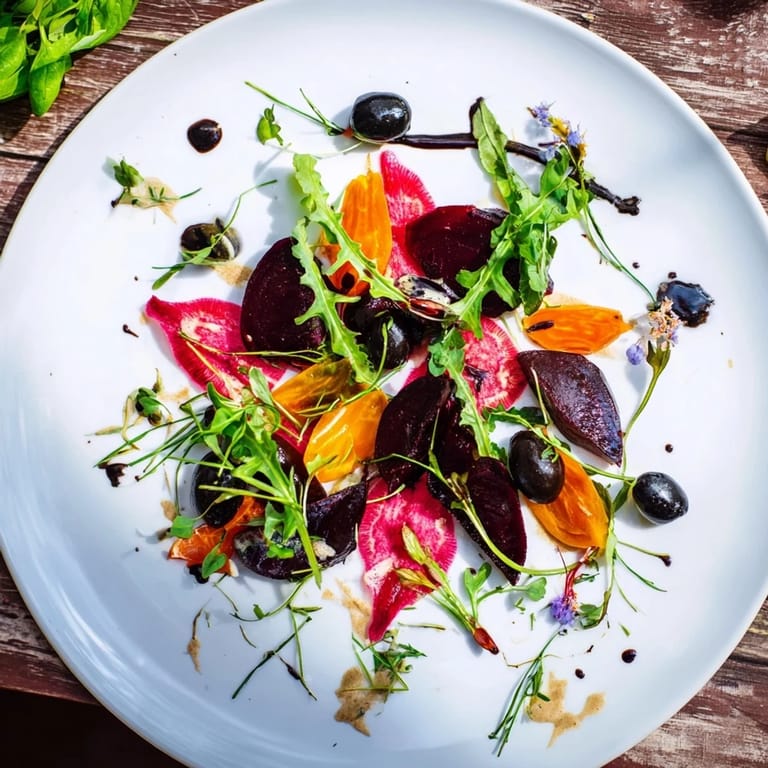
 I was standing in my kitchen on a gray Tuesday afternoon, caught between meal planning and wanting to impress someone with something that felt effortless and deliberate at once. That's when I started playing with the idea of contrast, not just in flavor but in how a plate could tell a visual story. The Shadow Play emerged from that restless energy, where I discovered that the most sophisticated dishes often come from asking a simple question: what if the plate itself became the conversation?
I remember serving this to a friend who'd been stressed all week, and watching her face shift when the plate arrived. She didn't immediately eat; she just looked, quiet for a moment, and said the colors felt calming somehow, despite all the visual intensity. It made me realize that food can whisper secrets to us through our eyes before we even taste.
Ingredients
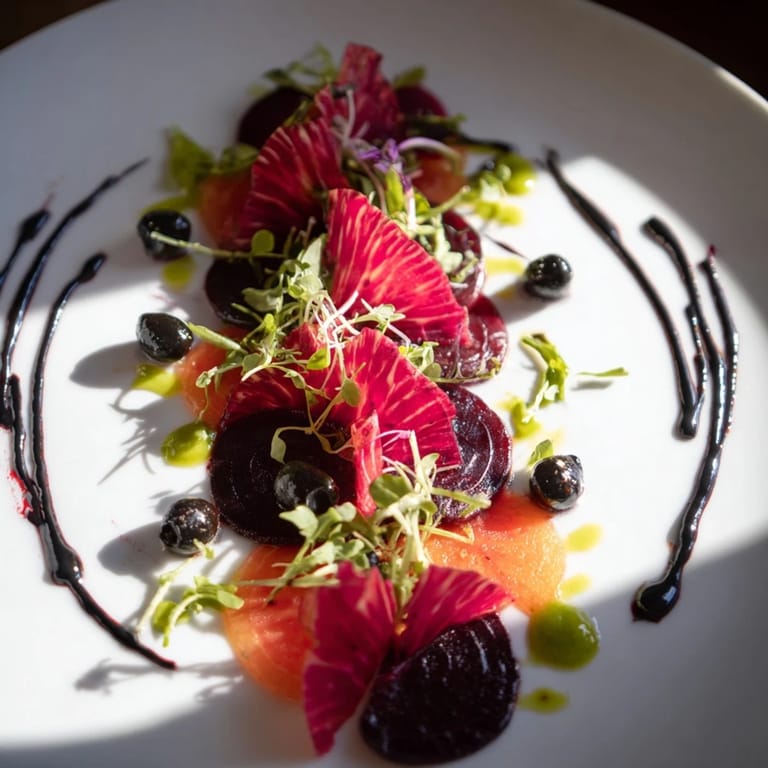
- Golden beet, medium: Sliced paper-thin to catch light and create luminous warmth against the darker elements, almost glowing on the plate.
- Red beet, medium: Its deep jewel tone provides the first layer of the shadow play, earthiness that grounds the composition.
- Baby arugula, 1 cup: Peppery and delicate, these leaves float over the beets like they're dancing, adding movement to a still life.
- Watermelon radish, 1/2 cup thinly sliced: Those pale pink and white stripes cut through darkness with unexpected tenderness; slice just before serving so the color stays vivid.
- Blackberries, 1/2 cup: Position them where they create shadows in your composition, their dark jewel tone doing the heavy visual lifting.
- Black olives, 1/4 cup pitted and halved: These anchor the darker zones, their briny earthiness a counterpoint to the bright radish sweetness.
- Black tahini, 2 tablespoons: If you can't find it, regular tahini swirled with a touch of squid ink creates the same moody depth and adds a subtle nuttiness that ties flavors together.
- Extra virgin olive oil, 3 tablespoons: Use one you actually love; it's the only fat here, so it carries the whole dressing's soul.
- Lemon juice, 1 tablespoon: Fresh lemon is non-negotiable; bottled tastes like apology.
- Honey, 1 teaspoon: Just enough to soften the lemon's acidity and let the vegetables' natural sweetness shine through.
- Salt and pepper: Taste as you go, remembering that vegetables are naturally different each season.
- Microgreens: Whether purple radish or basil, these are your final whisper, adding textural contrast and a hint of spice.
- Edible flowers, optional: A few viola or nasturtium petals can push this from appetizer into art without overwhelming.
Tired of Takeout? 🥡
Get 10 meals you can make faster than delivery arrives. Seriously.
One email. No spam. Unsubscribe anytime.
Instructions
- Slice with intention:
- Use a mandoline if you have one, letting the beets drop into thin, nearly translucent rounds that catch light like stained glass. If using a knife, let the blade do the work; aggressive cutting bruises the delicate vegetable and dulls its natural color.
- Build your base:
- Lay down the golden and red beet slices in a semi-overlapping pattern, alternating colors so each slice touches another, creating a foundation that's already visually interesting before anything else lands on the plate.
- Scatter the bright moments:
- Fan the watermelon radish slices across the beets like they're revealing themselves, then loosely pile the arugula so it doesn't look forced or too arranged.
- Create the shadow:
- Position blackberries and black olives where they'll actually read as shadows in your composition, tucking some slightly under the bright ingredients so there's real depth, not just color.
- Make the dressing:
- Whisk olive oil, lemon juice, honey, salt, and pepper until emulsified and bright; taste it before it touches the plate, adjusting acid or sweetness to match your mood and the season's vegetables.
- Apply the dark contrast:
- Spoon the black tahini in small strategic dollops, then use the back of your spoon to create soft, organic smears that suggest shadows rather than demand them, like someone's hand moving through the plate.
- Finish and serve:
- Top with microgreens and edible flowers if using, letting them settle naturally into the valleys and high points, then serve immediately while everything is still alive and crisp.
 Save It
 There was a moment when I realized that cooking this dish became meditation, not labor. Arranging the vegetables forced me to slow down, to look closely at colors and negative space, to think about balance in a way that kitchen work doesn't usually demand.
The Philosophy Behind the Plate
This dish exists in the space where modern plating meets vegetable-forward cooking with real respect for ingredients. There's no hidden sauce masking flavors, no technique deployed just to show off. Instead, contrast does the work: dark against light, bitter against sweet, raw and fresh against the earthiness of roasted or raw roots. It's the kind of appetizer that makes people lean in and ask questions, which is really what we're after when we cook for others.
Variations and Substitutions
This recipe has a forgiving structure that welcomes improvisation. Roasted purple carrots, black garlic, or even charred eggplant can deepen the shadow elements, while edible greens like microgreens or purple basil add personality. If beets feel intimidating or you want to shift the flavor profile entirely, use thinly shaved celery root for brightness and parsnip for subtle sweetness; the principle of layering color and contrast remains the same.
Pairing and Presentation
Serve this as a refined appetizer before something equally thoughtful, or stand it alone as a light starter that celebrates restraint and clarity. A crisp Sauvignon Blanc cuts through the tahini's richness, while an earthy Pinot Noir echoes the beet's deep notes without overwhelming the plate's delicate balance. On the presentation side, let the plate itself be your canvas; choose white, black, or neutral ceramics that let the food do the visual heavy lifting, and remember that sometimes the most sophisticated move is leaving plenty of white space.
- Slice beets just before serving to preserve their brilliant color and prevent oxidation.
- Taste your dressing on an actual vegetable, not from the spoon, to gauge how it lands in context.
- If making ahead, keep all components separate and assemble only when you're ready to serve.
 Save It
 This dish is a reminder that simple ingredients, when arranged with attention and intention, become something that feeds more than just hunger. Cook it when you want to slow down and let the vegetables speak for themselves.
Common Questions About Recipes
- → How do I achieve thin, even slices of beet?
Use a mandoline slicer or a very sharp knife to produce uniform thin slices, which help in layering and enhance the dish's visual appeal.
- → Can I substitute the black tahini for a different ingredient?
Yes, you can use regular tahini mixed with squid ink for color or omit it and use small dollops of black garlic paste to maintain the dark contrast.
- → What is the best way to arrange ingredients for the shadow effect?
Layer the bright vegetables like beets and radish first, then place darker items such as blackberries and olives behind or slightly underneath to create striking silhouettes.
- → How can this dish be adapted for vegan diets?
Replace honey in the dressing with agave syrup or maple syrup to keep the sweet element while making it vegan-friendly.
- → What wine pairing complements this dish?
A crisp Sauvignon Blanc or an earthy Pinot Noir pairs beautifully, balancing the dish's fresh flavors and dark undertones.
- → Are there any allergy considerations to keep in mind?
This dish contains sesame in tahini and may contain olive pits; check ingredient labels carefully if sensitive.