 Save It
 The first time I assembled something called a Royal Tapestry, I was trying to impress someone who'd just returned from Paris raving about a charcuterie board that changed their life. I didn't have their budget or their connections to fancy importers, but I had a good pâté, some dried figs from the pantry, and an idea to layer them like I was building something precious. What surprised me wasn't how elegant it looked—it was how the sweetness of the figs cut through the richness of the liver, how the toasted walnuts added this small crunch that made people pause between bites and actually taste what they were eating.
I made this for a dinner party where I was nervous about the menu, and my neighbor brought over a bottle of something expensive she refused to name. When she tasted the first bite, she closed her eyes for a moment, then looked at the platter like it had personally wronged her for not bringing it sooner. That's when I realized this wasn't about being fancy—it was about creating a moment where flavors collide in someone's mouth and suddenly they're paying attention.
Ingredients
- Duck or chicken liver pâté (200 g): This is the foundation, and it needs to be good—buy it from somewhere you trust, or make your own if you're feeling ambitious. Room temperature makes all the difference in how it spreads and tastes.
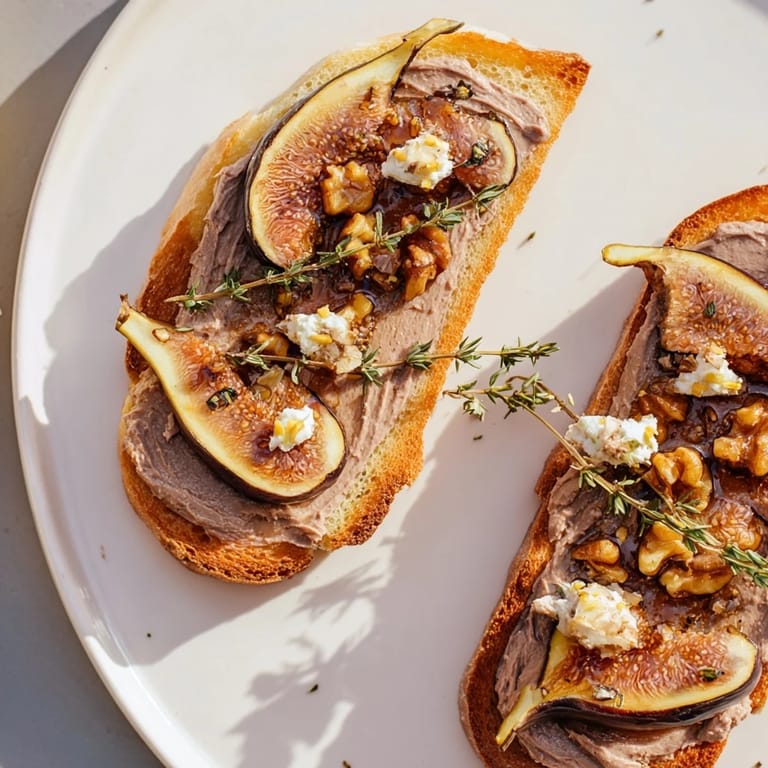
- Dried figs (120 g), thinly sliced: Figs bring sweetness and chew that balances the savory richness of pâté. Look for ones that are plump and fragrant, not hard and crystallized.
- Soft goat cheese (80 g), room temperature: This adds a tangy coolness that keeps the whole thing from feeling heavy, and it creates pockets of creaminess between the other flavors.
- Toasted brioche or gluten-free crackers (12 slices): The structure matters here—you want something sturdy enough to hold the toppings but with a little give. Toast them yourself for better texture and flavor control.
- Toasted walnuts (40 g), roughly chopped: Their bitterness and crunch are essential; they prevent the appetizer from becoming one-dimensional on the palate.
- Fresh thyme sprigs: Don't skip the fresh herb—it adds an herbal brightness that ties everything together and makes it look intentional.
- Fig jam (2 tbsp, optional): A drizzle adds a glossy finish and deepens the fig flavor if you want extra sweetness.
Tired of Takeout? 🥡
Get 10 meals you can make faster than delivery arrives. Seriously.
One email. No spam. Unsubscribe anytime.
Instructions
- Build your foundation:
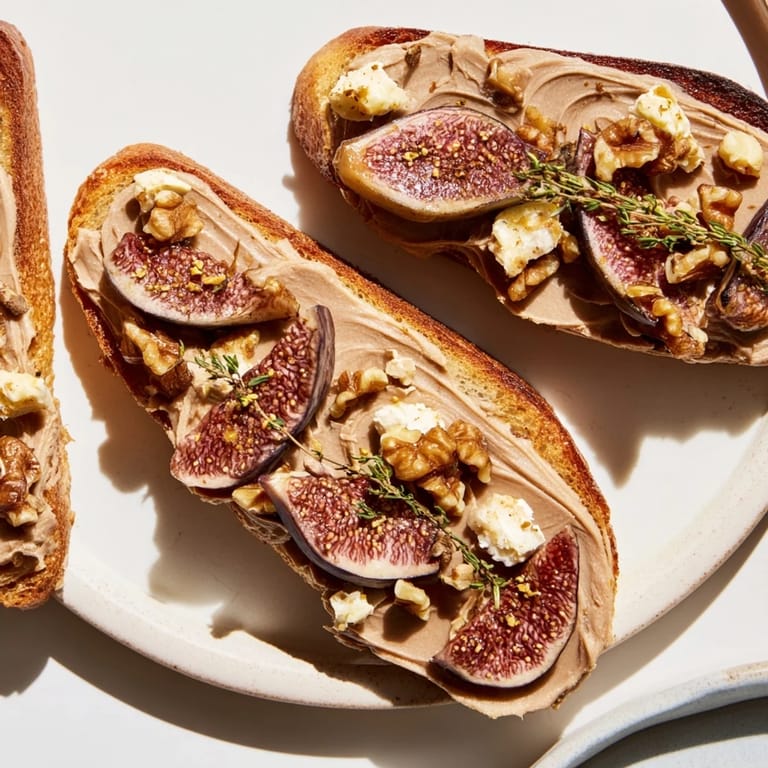
- Arrange the toasted brioche slices or crackers on a large serving platter in a dense, overlapping pattern—think of them like roof tiles or the scales on a dragon, all leaning the same direction. This isn't just for looks; it creates a unified surface to build on.
- Spread the richness:
- Using a small spatula or butter knife, spread a generous layer of pâté across each piece of bread or cracker. Don't be timid—this is where the depth of flavor lives. If the pâté is resisting, dip your knife in warm water between spreads.
- Add the jewels:
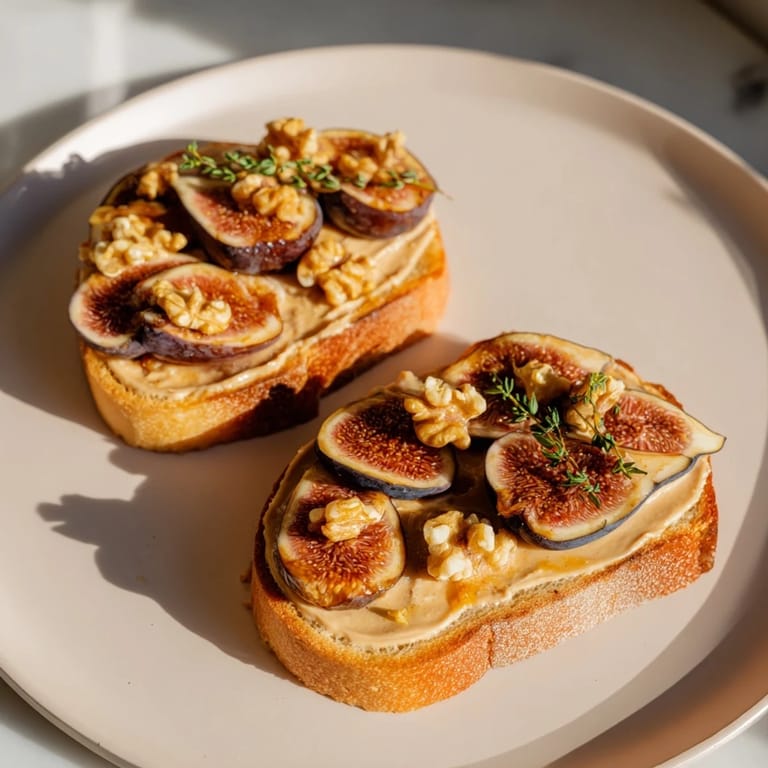
- Top with thinly sliced dried figs, ensuring even coverage and playing with the visual contrast between the dark figs and the pale pâté. Overlap them slightly so they catch the light.
- Scatter the brightness:
- Dot small spoonfuls of goat cheese across the platter, tucking them among the figs and pâté like you're placing treasures. The creamy, tangy cheese is your counterbalance to everything else.
- Add texture and depth:
- Sprinkle with toasted walnuts, letting some pieces fall in clusters and others sit alone. They should look natural, not perfectly distributed.
- Finish and serve:
- Drizzle with fig jam if using, letting it create thin streams across the surface, then scatter fresh thyme sprigs across everything. Serve immediately while textures are still distinct, and encourage guests to take a piece that includes all the layers—that's where the magic happens.
 Save It
 There was a moment at that dinner party when my usually quiet friend reached for a second piece, and three other people immediately did the same. Nobody was talking about the wine or the candlesticks anymore—they were just reaching for more bites, and that felt like the highest compliment I could have received.
The Art of Assembly
This dish is a study in contrast—soft against crunchy, rich against bright, savory against sweet. The key is respecting each component enough to let it shine without overshadowing the others. I learned this the hard way by making a version where I used too much pâté and drowned out the fig flavor entirely. Now I think of it like conducting an orchestra where every ingredient gets its moment to be heard. The brioche provides the stage, the pâté brings gravitas, the figs add melody, and the goat cheese offers a pause to reset your palate between bites.
Wine Pairing and Presentation
Serve this with a chilled glass of Sauternes if you can swing it—the wine's sweetness plays beautifully with the figs while its acidity cuts through the richness of the pâté. If you're in the mood for something different, a fruity red wine with lower tannins works wonderfully too. On the platter itself, the overlapping pattern isn't just decorative; it tells your guests this was made with intention. There's something about that visual order that makes people slow down and actually experience what they're eating instead of just snacking mindlessly.
Variations and Substitutions
If liver pâté isn't your thing, mushroom pâté creates an entirely different but equally elegant appetizer—earthier, less intense, and more welcoming to people who find liver off-putting. Blue cheese instead of goat cheese transforms the whole experience into something bolder and more assertive; the funk of the blue plays a completely different tune against the sweet figs. You can toast walnuts in advance and store them for a few days, and you can prep the fig slices an hour or two ahead, but assemble everything right before serving so textures stay bright and the brioche doesn't get soggy from sitting with toppings.
- For a vegetarian version, mushroom pâté or walnut pâté creates satisfying richness without the liver.
- Hazelnuts or pecans can replace walnuts if that's what you have, each bringing its own personality.
- Apricots or dates work if figs aren't available, though the flavor profile shifts slightly more toward spice than pure sweetness.
 Save It
 This is the kind of appetizer that makes people feel like you've gone to tremendous effort, even though you've just arranged six simple things with intention. That's the real luxury right there.
Common Questions About Recipes
- → Can I use a vegetarian alternative for the pâté?
Yes, mushroom pâté works well as a vegetarian substitute, maintaining the creamy texture and rich flavor.
- → What bread options suit this appetizer?
Toasted brioche slices provide a buttery base, but gluten-free crackers are an excellent alternative to accommodate dietary needs.
- → How should the dried figs be prepared?
Thinly slice dried figs to evenly layer them over the pâté, adding a sweet contrast and vibrant color.
- → Is the fig jam essential for the flavor?
Fig jam is optional but adds a delightful sweetness and depth; you can omit it if preferred.
- → What wine pairs well with this appetizer?
Chilled Sauternes or a fruity red wine complement the rich pâté and sweet figs beautifully.
- → Can the goat cheese be swapped for another cheese?
Blue cheese offers a stronger, more intense flavor if you want to add variety to the layers.