 Save It
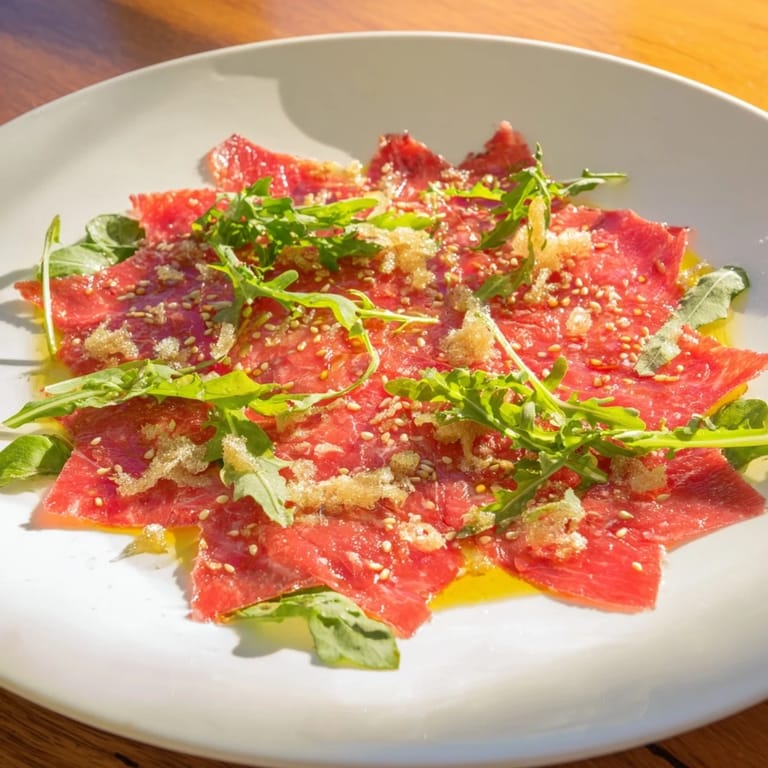
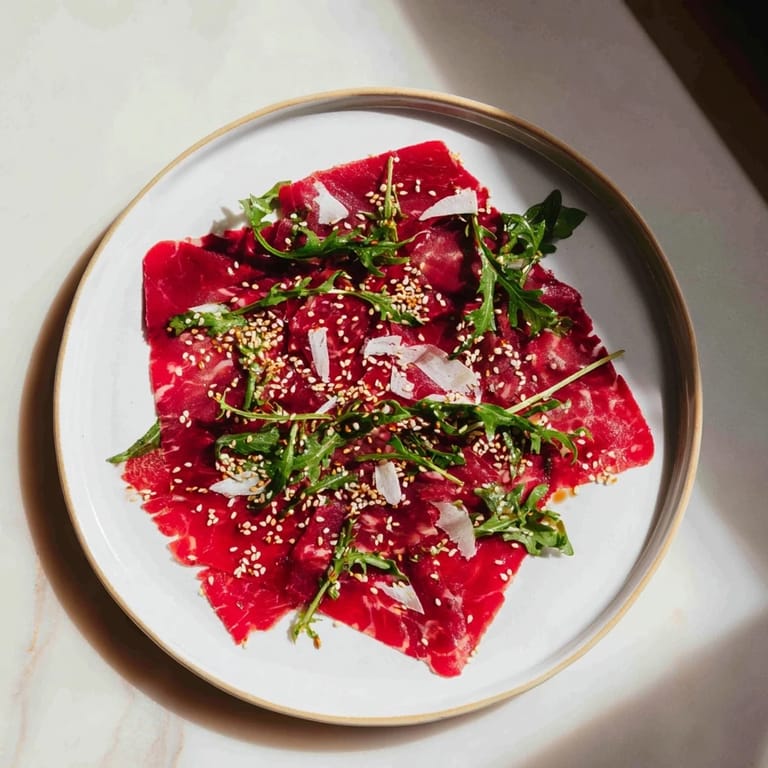
 I discovered this folding technique completely by accident at a dinner party when I was arranging beef carpaccio on a platter and realized each slice could become its own small sculpture. What started as fidgeting with my knife and a piece of meat turned into something genuinely stunning—the kind of appetizer that makes people pause before eating because they can't believe something so simple looks so intentional. Now whenever I need to impress without spending hours in the kitchen, these geometric folds are my secret weapon.
The first time I made this for guests, I was so focused on getting the folds perfect that I completely forgot to taste the marinade beforehand. One bite at the table and I could see everyone's faces light up—that moment of quiet approval before someone inevitably asked for the recipe is something I still think about.
Ingredients
- Beef carpaccio or very thinly sliced roast beef (300 g): Use the thinnest slices you can find or ask your butcher to slice it paper-thin; thicker meat won't fold cleanly and defeats the whole visual purpose.
- Extra virgin olive oil (2 tbsp): The quality here matters because it's tasted directly in the marinade, not cooked away into background flavor.
- Soy sauce (1 tbsp): Go for gluten-free if needed, and taste your brand first since saltiness varies wildly between bottles.
- Lemon juice (2 tsp): Fresh squeezed makes a noticeable difference in brightness compared to bottled.
- Dijon mustard (1 tsp): This brings a subtle tang that keeps the beef from feeling one-dimensional.
- Freshly ground black pepper (1/2 tsp) and sea salt (1/4 tsp): Season right before serving to avoid drawing out moisture from the beef.
- Baby arugula (40 g): This becomes both your base and your palate cleanser between bites of rich beef.
- Toasted sesame seeds (2 tbsp): Toast them yourself if you have the time; the aroma alone is worth it.
- Finely chopped chives (1 tbsp): A small handful goes a long way for onion flavor without the bite.
- Shaved Parmesan cheese (50 g): Use a vegetable peeler to create proper shards that add texture and umami depth.
Tired of Takeout? 🥡
Get 10 meals you can make faster than delivery arrives. Seriously.
One email. No spam. Unsubscribe anytime.
Instructions
- Build your marinade:
- Whisk together the olive oil, soy sauce, lemon juice, mustard, pepper, and salt in a small bowl until the mustard is fully dissolved and everything smells aromatic. Taste it on your finger and adjust the salt or lemon if needed before the beef goes in.
- Prepare the beef canvas:
- Lay your beef slices on a clean cutting board or parchment paper, making sure they're not overlapping. Brush each slice gently with the marinade using just enough to flavor without saturating, then let them sit for a minute so the flavors can settle in.
- The folding moment:
- This is where the magic happens—carefully fold each slice into triangles, squares, or fan shapes, using slow, deliberate pressure to encourage the fold without tearing the delicate meat. If a slice feels stubborn, a tiny dab of moisture on your fingers helps, and cocktail picks or chive stems can hold trickier folds in place.
- Arrange with intention:
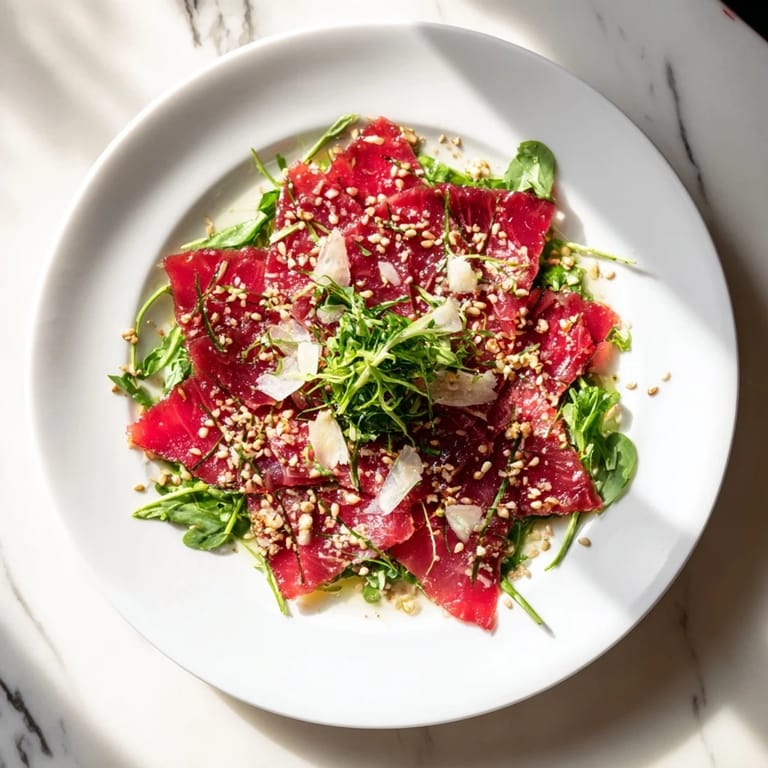
- Create a bed of baby arugula on your serving platter and nestle the folded beef pieces directly onto it, angling them so each fold is visible. Think of it like arranging flowers—height variation and direction matter more than you'd expect.
- The final flourish:
- Scatter the toasted sesame seeds across the top first, then add your chopped chives and shaved Parmesan, letting the colors and textures work together. Just before serving, drizzle the remaining marinade over everything in thin streams so it catches the light.
 Save It
 There's something about food that requires you to slow down and pay attention that reminds you why cooking matters. When my friend carefully unfolded one of these just to examine how it was made, laughing at the engineering of it all, I realized this wasn't really about the beef at all—it was about creating a moment where people felt delighted before they even took a bite.
Timing and Temperature
The entire assembly happens at room temperature, but cold beef holds its folds much better than warm beef, so keep everything chilled until the absolute last moment. I've learned that preparing the platter in a cool kitchen and serving within ten minutes keeps the beef's texture perfect and prevents the arugula from wilting under the weight of the garnishes. Timing-wise, the actual folding takes longer than you'd think—maybe fifteen minutes the first time—so don't rush it or you'll end up frustrated with torn slices.
Playing with Flavor Variations
Once you understand the basic structure, this recipe becomes a playground for your palate. I've experimented with adding a single drop of truffle oil to the marinade for a special dinner, and another time I swapped the soy sauce for balsamic vinegar and added fresh thyme for a completely different mood. The beauty is that the folding technique stays exactly the same, so you're really just adjusting the flavor profile while keeping the visual impact that makes people stop and stare.
Serving and Pairing Ideas
This dish bridges the gap between elegant appetizer and light first course, so it works beautifully at cocktail parties or dinner parties alike. Pair it with a crisp Sauvignon Blanc or a dry rosé that won't overpower the delicate beef, and don't be shy about offering thin slices of baguette or rice crackers on the side for guests who want something textural to balance the silky meat.
- A squeeze of fresh lemon juice at the table lets guests customize their own brightness level.
- If you're entertaining pescatarians, thinly sliced tuna or salmon folds just as beautifully and tastes equally stunning.
- Make the folds ahead of time and refrigerate them until thirty minutes before serving so they're cold but still showcase the geometry clearly.
 Save It
 This recipe taught me that some of the most impressive things you can serve take no cooking at all, just attention and care in the assembly. Every time someone tells me how stunning these look, I remember that moment of accidental discovery in my kitchen, and I'm grateful for the happy accidents that turn into dinnertime magic.
Common Questions About Recipes
- → What cut of beef works best for folding?
Thinly sliced beef carpaccio or very thin roast beef slices work best as they are flexible and hold folds well.
- → Can I prepare the marinade in advance?
Yes, the marinade can be whisked together ahead and refrigerated briefly for convenience.
- → How do I prevent the folded slices from unfolding?
Gently press folds with fingers or secure them with a small chive stem or cocktail pick if needed.
- → Are there alternative garnishes to use?
Toasted sesame seeds, chopped chives, and shaved Parmesan provide a nice balance, but microgreens or crushed nuts can also complement the dish.
- → Is this suitable for gluten-free diets?
Yes, using gluten-free soy sauce ensures the dish remains gluten-free.