 Save It
 There's a Wednesday afternoon burned into my memory when my coworker brought her homemade donburi to lunch, and I watched her eat with such quiet satisfaction that I knew I had to learn her secret. The rice was impossibly fluffy, the salmon flaked at the gentlest nudge of her chopstick, and everything sang together without competing. She laughed when I asked for the recipe, saying the real trick wasn't the fancy marinade—it was loving each component enough to cook it properly, then letting them share the same bowl. That bowl changed how I thought about weeknight cooking.
I made this for friends on a rainy Friday when everyone was tired and nobody wanted to sit through a three-course dinner, and something shifted in the room when those bowls arrived. My roommate closed her eyes after the first bite and didn't say anything for a minute, which told me everything. The combination of cool avocado, warm salmon, and that umami-rich sauce somehow felt both comforting and exciting—proof that simple food, when built with intention, becomes the meal people remember.
Ingredients
- Salmon fillets: Choose sushi-grade if you can find it, though regular grocery store salmon works beautifully; the key is not overcooking it, which I learned the hard way.
- Chicken thighs: These stay juicier than breasts and forgive you if you're a minute off on timing.
- Soy sauce: The backbone of everything—taste yours first because brands vary wildly in saltiness.
- Mirin: This Japanese sweetness is what separates a good bowl from a remarkable one; skip it and you'll feel the absence.
- Sake: Dry white wine works in a pinch, but sake adds a subtle depth that makes people ask what's different.
- Japanese short-grain rice: This specific rice matters; it clings together in a way that long-grain rice refuses to.
- Avocado: Add it just before serving or it'll turn an unappetizing shade of gray.
- Cucumber and carrot: The crunch prevents the bowl from feeling one-note; don't skip the texture contrast.
- Sesame seeds: Toast your own if you have five minutes—the difference is worth it.
- Nori strips: Optional, but they add a whisper of ocean that makes the whole bowl feel intentional.
Tired of Takeout? 🥡
Get 10 meals you can make faster than delivery arrives. Seriously.
One email. No spam. Unsubscribe anytime.
Instructions
- Rinse and cook the rice:
- Run cold water over the rice until the water runs clear—this removes the starch and keeps grains from clumping. Cook in your rice cooker or saucepan with exactly 2 1/2 cups water, then let it rest and fluff gently with a fork.
- Prepare the marinade:
- Whisk soy sauce, mirin, sake, sesame oil, and honey together until everything dissolves. Divide between two dishes so salmon and chicken stay separate and can marinate undisturbed for at least ten minutes.
- Cook the chicken:
- Heat your skillet over medium heat until it's properly hot, then add chicken thighs skin-side down if they have skin, or just lay them flat. Let them cook for four to five minutes per side until golden and cooked through, then remove and let them rest before slicing.
- Cook the salmon:
- In the same warm pan, lay salmon fillets gently in and cook for two to three minutes per side—this is where patience saves you from dry fish. Remove carefully and flake with a fork into large, tender pieces.
- Prep your toppings:
- Slice avocado, cucumber, and carrot into thin, elegant pieces, and slice your scallions on a sharp angle. Whisk together soy sauce, rice vinegar, sesame oil, and sugar for the sauce until the sugar fully dissolves.
- Assemble your bowls:
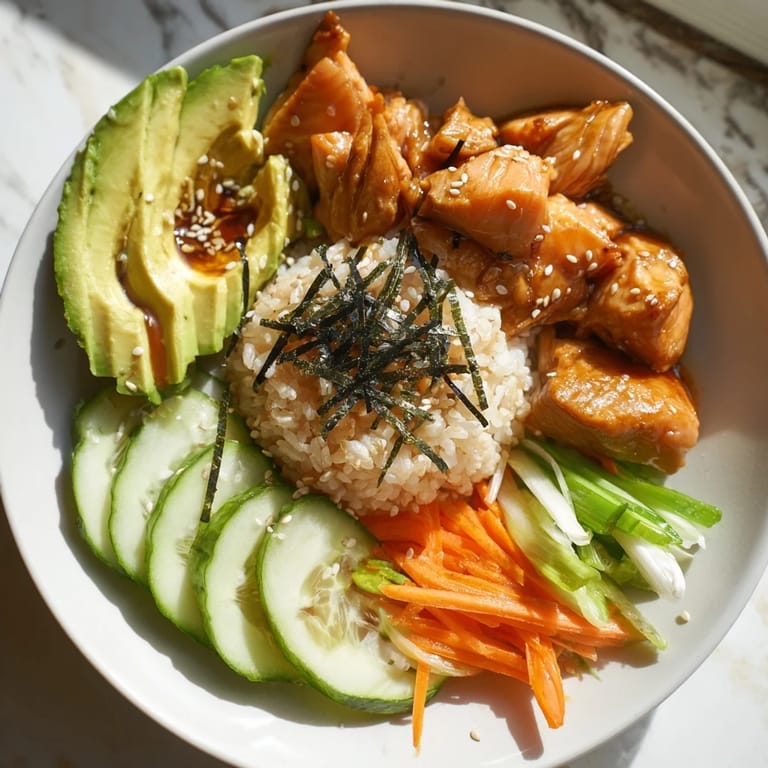
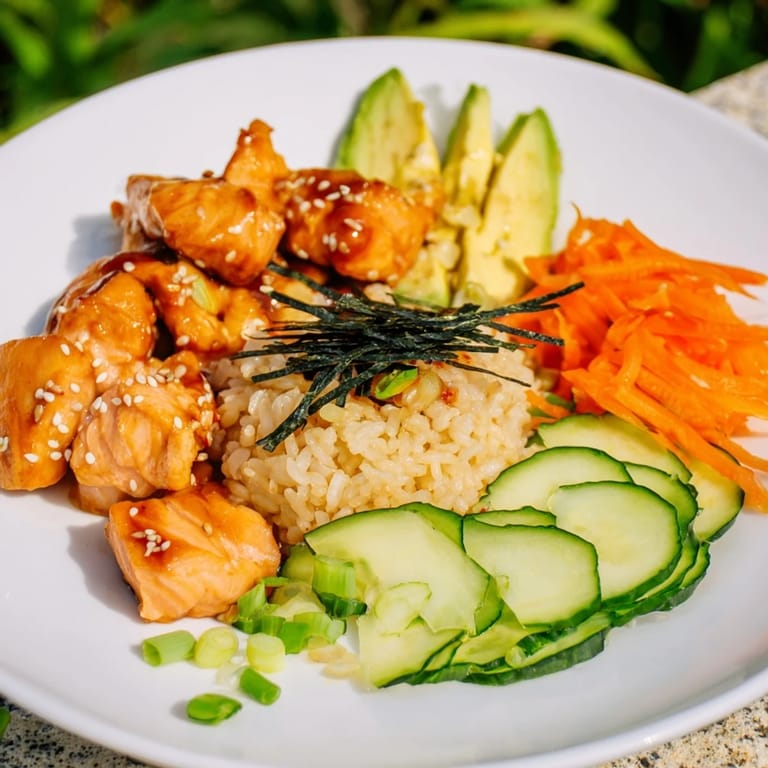
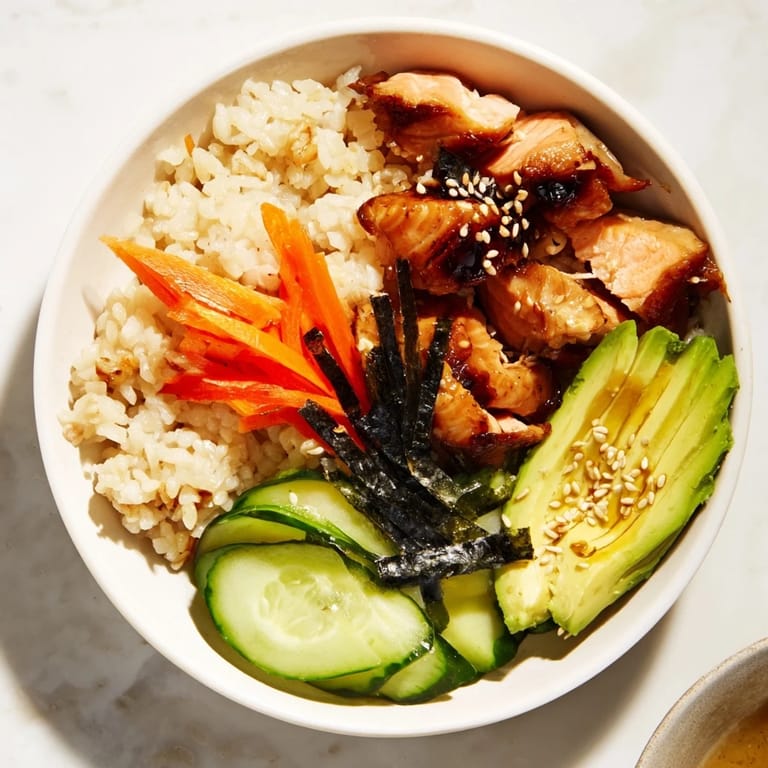
- Divide rice among bowls, then arrange chicken, salmon, avocado, cucumber, carrot, and scallions in sections across the top. Drizzle sauce, shower with sesame seeds and nori strips, then eat immediately while rice is warm and toppings are still crisp.
- The ice cube hack for leftovers:
- If you're reheating an assembled bowl, place one ice cube in the center of the rice, cover with a microwave-safe lid, and microwave on high for one to two minutes. The ice melts slowly and steams the rice back to life without drying it out.
 Save It
 My nephew, who usually pushes vegetables around his plate like he's defusing a bomb, asked for seconds of this bowl and didn't even notice the carrot. That's when I realized this recipe works because nothing overwhelms anything else—there's harmony in the arrangement, respect for each ingredient, and enough flavor that vegetables taste like a choice, not an obligation.
Why Marinades Matter More Than You Think
Most people skip the marinade step and regret it immediately. The soy-mirin combination isn't just seasoning; it's building umami depth and coating every fiber of your protein with flavor that can't come from salt alone. I've watched the difference between marinated and unmarinated side by side, and there's no contest. Ten minutes feels short until you taste how those ten minutes changed everything.
The Secret of Texture Balance
A bowl of just soft foods feels like eating clouds—pleasant but forgettable. This recipe works because you get warm rice, soft salmon, tender chicken, creamy avocado, crisp cucumber, and crunchy sesame seeds all in one bite. That texture conversation is what keeps you coming back and makes people say this bowl tastes more interesting than the sum of its parts.
Customizing Your Bowl Without Losing the Plot
The beauty of donburi is that it bends to what you have. I've made it with grilled shrimp, pan-seared tofu, even hard-boiled eggs when I was between grocery trips. The structure stays the same: something protein-rich on hot rice, fresh vegetables for brightness, sauce for cohesion, seeds for crunch.
- Try edamame instead of avocado if you want green without the richness.
- Swap in whatever vegetables are in season—daikon, radish, snap peas all belong here.
- A drizzle of sriracha or a small pile of pickled ginger on the side keeps things exciting for repeat meals.
 Save It
 This bowl became part of my regular rotation not because it's complicated, but because it's one of those meals that makes you feel taken care of, whether you're cooking it for yourself or someone else. Every time I make it, I'm grateful for that coworker and her Wednesday lunch wisdom.
Common Questions About Recipes
- → How do I marinate the salmon and chicken?
Whisk soy sauce, mirin, sake, sesame oil, and honey together, then marinate the salmon and chicken separately for about 10 minutes for balanced flavor infusion.
- → What’s the best method for cooking the proteins?
Cook chicken thighs over medium heat until golden and cooked through, about 4–5 minutes per side. Then cook salmon fillets 2–3 minutes per side until just done.
- → Can I prepare the rice ahead of time?
Yes, cook the Japanese short-grain rice in advance and use the ice cube reheating hack to keep it moist when warming leftovers.
- → What vegetables work well as toppings?
Sliced avocado, cucumber, julienned carrot, and finely sliced scallions provide fresh texture and flavor to complement the proteins.
- → How does the ice cube reheating hack work?
Placing an ice cube in the center of reheated rice creates steam as it melts, ensuring the rice stays tender and moist without drying out.
- → Are there variations to customize the bowl?
You can substitute avocado with edamame or broccoli, or replace salmon and chicken with tofu for a vegetarian option.