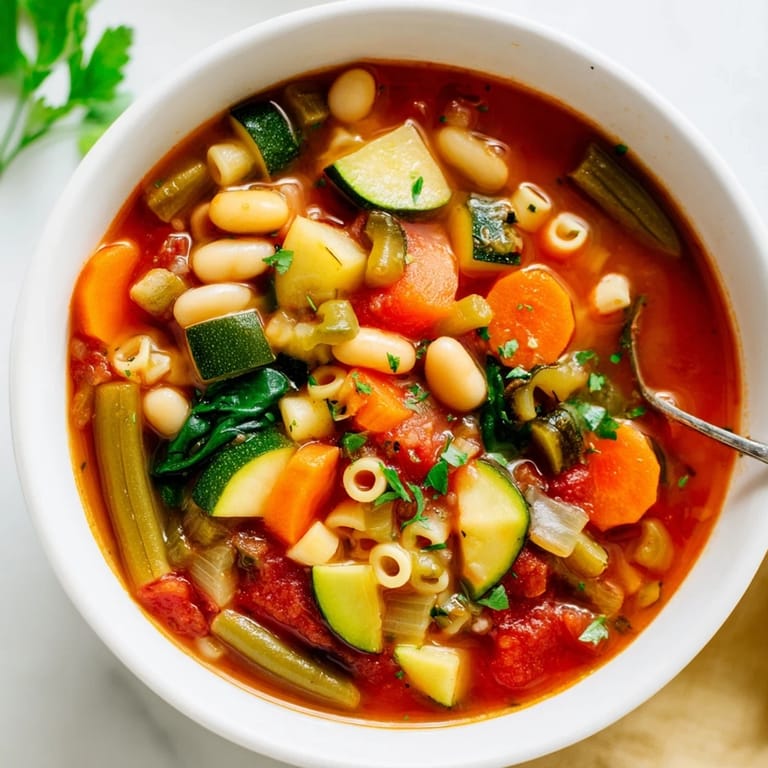
 Save It
 The first time I made minestrone was during a particularly relentless February when my apartment felt like it would never be warm again. I hadnt planned to make soup that day, but I found myself staring at a wilting zucchini and half a bag of green beans that needed to be used. Something about chopping vegetables into tiny, uniform pieces felt oddly satisfying, like I was bringing order to a chaotic week. The house filled with that unmistakable scent of garlic and tomatoes hitting hot oil, and suddenly winter didnt seem so unmanageable. My roommate wandered in, wrapped in a blanket, and simply asked, "How long until we can eat?"
Last autumn, I brought a batch to a friend who had just moved into a new apartment. Her boxes were still stacked in the living room, and we ate directly from the pot with mismatched spoons she found in a hurry. She kept saying, "I cant believe you made this," but truthfully, I had just thrown everything in a pot and let time do the work. We talked for hours while the steam rose between us, and I left feeling like Id given her something more substantial than soup.
Ingredients
- 2 tablespoons olive oil: This is your foundation, so use something you actually like the taste of
- 1 large onion, diced: Yellow onions work beautifully here, sweetening as they cook down
- 2 celery stalks, diced: Dont skip these, they provide the essential aromatic backbone
- 2 medium carrots, diced: Try to keep the pieces roughly the same size as your other vegetables
- 2 cloves garlic, minced: Add these after the initial vegetables have softened so they dont burn
- 1 medium zucchini, diced: Summer squash makes this feel lighter than traditional heavy winter soups
- 1 cup green beans: Fresh ones hold their texture better, but frozen work in a pinch
- 1 can (14 oz) diced tomatoes: The juices become part of your broth, so quality matters here
- 6 cups vegetable broth: Low sodium is best since youll control the seasoning yourself
- 2 tablespoons tomato paste: This little tube concentrates all the umami flavor
- 3/4 cup small pasta: Ditalini or elbows are traditional, but anything tiny works
- 1 can (15 oz) cannellini beans: These make it substantial enough to be a complete meal
- 1 teaspoon dried oregano: Dried herbs work wonderfully in long simmered soups
- 1 teaspoon dried basil: Complements the oregano without overwhelming the vegetables
- 1/2 teaspoon dried thyme: Adds that earthy, herbal undertone
- 1 bay leaf: The quiet hero that deepens everything else
- 1 cup baby spinach or kale: Added at the very end for freshness and color
- 2 tablespoons chopped fresh parsley: Brightens the whole bowl right before serving
- Salt and pepper: Season gradually, tasting as you go
Tired of Takeout? 🥡
Get 10 meals you can make faster than delivery arrives. Seriously.
One email. No spam. Unsubscribe anytime.
Instructions
- Build your foundation:
- Heat the olive oil in your large soup pot over medium heat, then add your onion, celery, and carrots. Let them soften and become fragrant for about 5 minutes, listening to the gentle sizzle that tells you theyre releasing their sweetness.
- Add the next layer:
- Stir in the garlic, zucchini, and green beans, cooking for another 3 to 4 minutes until you can smell the garlic. Youll notice the vegetables shrinking slightly, which means theyre ready to welcome the liquid.
- Create the soup base:
- Pour in the diced tomatoes with their juices, along with the tomato paste and vegetable broth. Add your oregano, basil, thyme, and bay leaf, then bring everything to a boil before reducing to a gentle simmer. Let it bubble away for 15 minutes while your kitchen begins to smell like an Italian grandmother visited.
- Add the heartiness:
- Stir in the pasta and beans, then cook for about 10 minutes until the pasta is tender but still has some bite. Watch the pot carefully now, as pasta has a tendency to stick if you dont give it an occasional stir.
- Finish with fresh greens:
- Fold in the spinach or kale along with the fresh parsley, simmering for just 2 to 3 minutes until the leaves wilt perfectly into the soup. Remove the bay leaf, then taste and adjust the seasoning until it sings.
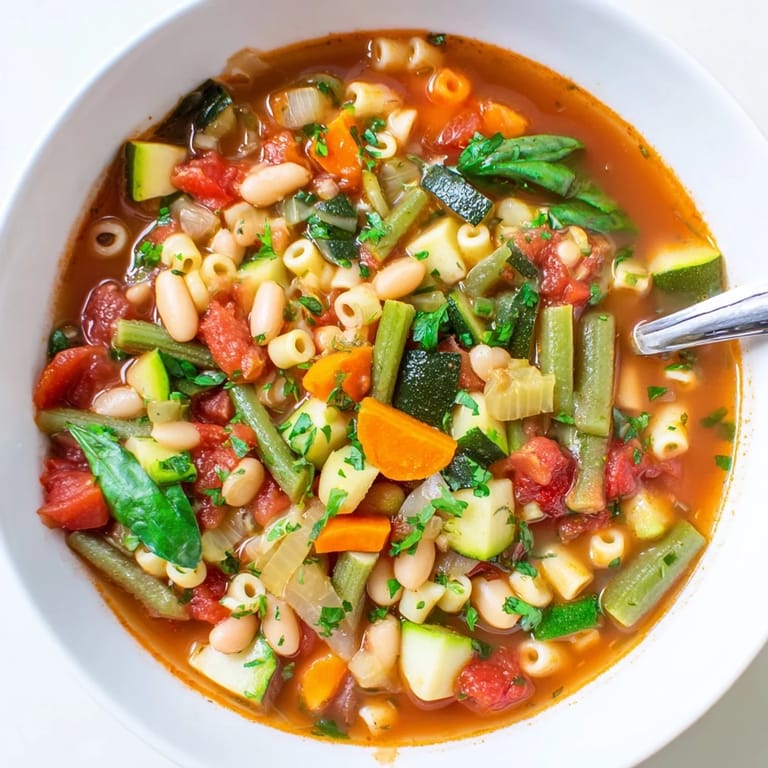 Save It
 My grandmother would always say that soup needs time to think, and shes right. The flavors marry and deepen in ways they cant in the first hour of cooking. Now whenever I make minestrone, I make sure to have enough for the next days lunch, because thats when it truly becomes something special.
Making It Your Own
The beauty of minestrone lies in its flexibility. Ive made versions with butternut squash in autumn, cabbage in winter, and even fresh peas in spring. The only non negotiable elements are the aromatic vegetables and the slow simmering time. Everything else is an invitation to use what you have.
Serving Suggestions
A thick slice of crusty bread is non negotiable in my house, but a simple green salad with bright vinaigrette cuts through the richness beautifully. If you eat dairy, a small bowl of grated Parmesan on the table lets everyone adjust their own level of indulgence.
Storage And Reheating
This soup keeps beautifully in the refrigerator for up to five days, and it freezes well for up to three months if you leave the pasta out and add it fresh when reheating. I like to portion it into containers before adding the pasta, then cook the pasta separately and combine them when I rewarm each portion.
- Always reheat gently over medium low heat, stirring frequently
- Add a splash of water or broth if the soup has thickened too much
- Never boil leftovers vigorously, as this can break down the vegetables
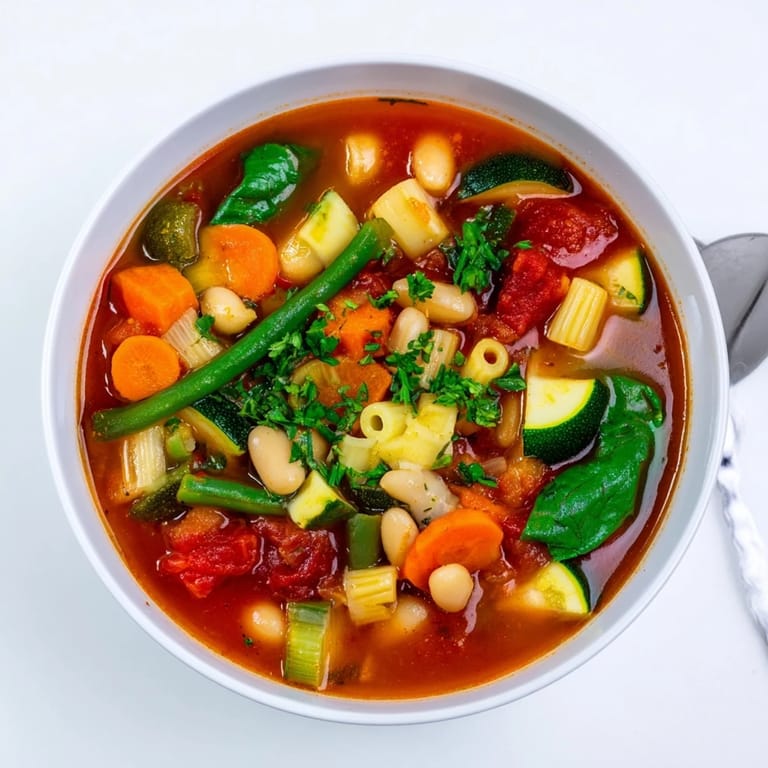 Save It
 Theres something profoundly honest about a pot of minestrone, simple and nourishing in a way that feels almost medicinal. I hope it brings as much comfort to your table as it has to mine over the years.
Common Questions About Recipes
- → What vegetables work best in minestrone?
Classic minestrone features onion, celery, carrots, zucchini, and green beans as the foundation. Feel free to add seasonal vegetables like diced potatoes, bell peppers, or Swiss chard based on what's available.
- → Can I make this gluten-free?
Absolutely. Simply substitute regular pasta with your favorite gluten-free variety like rice penne or corn fusilli. Ensure your vegetable broth is certified gluten-free as well.
- → How should I store leftovers?
Cool completely and refrigerate in an airtight container for up to 4 days. The pasta may absorb additional liquid, so add extra broth when reheating. This soup also freezes beautifully for up to 3 months.
- → Can I use dried herbs instead of fresh?
Yes, dried oregano, basil, and thyme work wonderfully in the simmering broth. Use about one-third the amount of dried herbs compared to fresh, as their flavor is more concentrated.
- → What type of pasta is traditionally used?
Small pasta shapes like ditalini, elbows, or small shells are ideal because they cook evenly and fit perfectly on a spoon. These shapes hold the broth well and provide satisfying texture in every bite.