 Save It
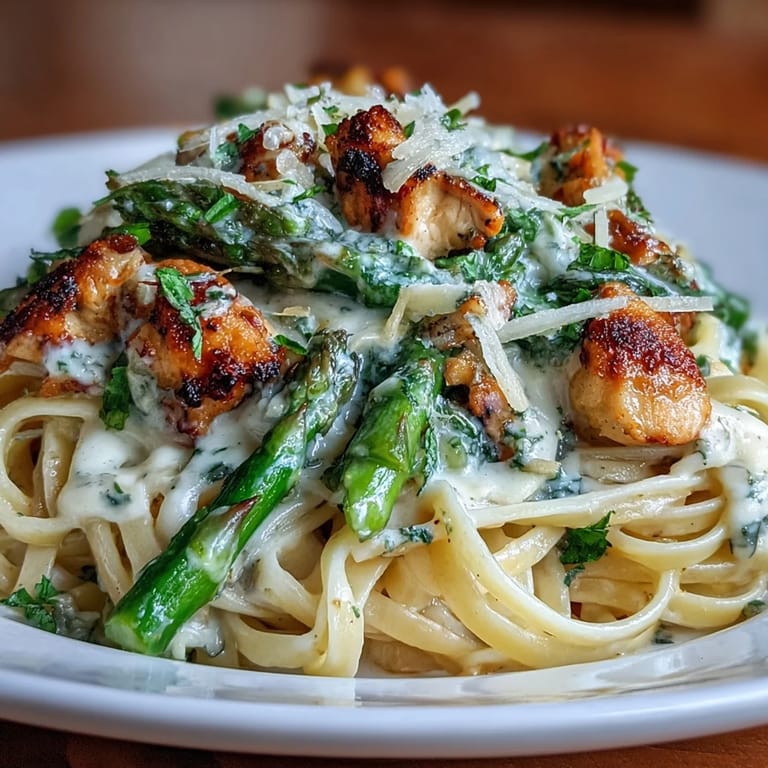
 The smell of roasted Asiago hit me before I even opened the oven door—sharp, nutty, almost caramelized. I was testing a way to make asparagus more interesting than the usual steam-and-serve, and tossing it with grated cheese before roasting turned out to be a small revelation. When those spears came out golden and crispy at the edges, I knew I had stumbled onto something worth building a whole dinner around. That evening, I tossed them with linguine, cream, and pan-seared chicken, and the result was so comforting and bright at the same time that it became my go-to whenever asparagus season rolled around.
I made this for a friend who claimed she didn't like asparagus, mostly because she had only ever had it steamed to mush. She picked at it skeptically at first, then went back for seconds without saying a word. By the end of the night, she asked me to write down the recipe, which I took as the highest compliment. It reminded me that the way we cook something matters just as much as what we cook.
Ingredients
- Boneless, skinless chicken breasts: I cut them into bite-sized pieces so they cook faster and coat better with the sauce—no one wants to wrestle with a whole breast on a pasta fork.
- Asparagus: Look for firm stalks with tight tips, and snap off the woody ends instead of guessing where to cut.
- Asiago cheese: Grate it fresh if you can, the pre-shredded stuff doesn't melt as smoothly and lacks that sharp, nutty punch.
- Linguine: The flat shape holds onto creamy sauces better than round pasta, and it twirls beautifully on the fork.
- Heavy cream: This is what makes the sauce silky and rich, though you can use half-and-half if you want something lighter.
- Garlic and onion: These build the base flavor, and cooking them in butter after the chicken leaves behind all those good browned bits.
- Olive oil and butter: I use oil for high-heat cooking and butter for sautéing the aromatics, each does its job without burning.
- Lemon zest: Optional, but a little brightness at the end lifts the whole dish and keeps it from feeling too heavy.
- Red pepper flakes: Just a pinch adds warmth without making it spicy, but skip it if you prefer things mild.
Tired of Takeout? 🥡
Get 10 meals you can make faster than delivery arrives. Seriously.
One email. No spam. Unsubscribe anytime.
Instructions
- Roast the asparagus:
- Preheat your oven to 220°C and toss the asparagus with olive oil, salt, pepper, and half the Asiago on a parchment-lined baking sheet. Roast for 12 to 15 minutes until the cheese crisps up and the tips turn golden, then chop them roughly so they mix into the pasta easily.
- Cook the linguine:
- Boil the pasta in salted water until al dente, and save about 120 ml of the starchy cooking water before draining. That water is your secret weapon for loosening the sauce later if it gets too thick.
- Sear the chicken:
- Season the chicken pieces with salt and pepper, then cook them in a hot skillet with olive oil until golden and cooked through, about 5 to 6 minutes. Transfer them to a plate so they don't overcook while you make the sauce.
- Build the sauce:
- In the same skillet, melt butter and cook the onion until soft, then add garlic and let it bloom for 30 seconds. Pour in the cream and remaining Asiago, stirring until the cheese melts and the sauce thickens just enough to coat the back of a spoon.
- Bring it all together:
- Add the cooked linguine, chicken, and chopped asparagus to the skillet, tossing everything until well coated and heated through. Taste and adjust with more salt, pepper, lemon zest, or red pepper flakes, then serve right away with extra cheese on top.
 Save It
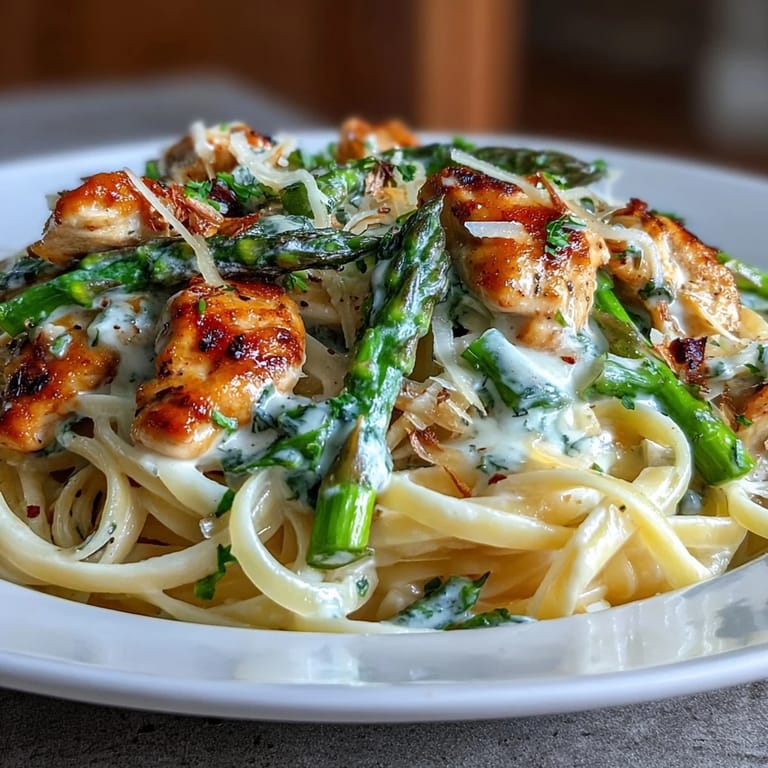
 One spring evening, I served this to my family on the back porch with the windows open and a bottle of cold Pinot Grigio. My dad, who usually skips vegetables, cleaned his plate and asked if there was more asparagus left. That moment reminded me that good food doesn't need to be complicated, it just needs to taste like care went into it.
Choosing the Right Cheese
Asiago has a sharpness that stands up to cream without disappearing, and when you roast it on the asparagus, it gets nutty and almost lacy. I tried this once with mozzarella and it was fine, but forgettable—Asiago makes the dish. If you cannot find it, aged Parmesan or Pecorino Romano work in a pinch, though the flavor will be a little saltier and more intense.
Making It Lighter or Heartier
If you want to dial back the richness, swap the heavy cream for half-and-half or even whole milk with a tablespoon of flour whisked in to keep it from breaking. On the flip side, you can add a handful of baby spinach or frozen peas in the last minute of tossing for extra color and nutrition. I have also stirred in sun-dried tomatoes when I had a jar open, and the tangy sweetness played beautifully with the Asiago.
Storing and Reheating
Leftovers keep in the fridge for up to three days in an airtight container, though the pasta will soak up some of the sauce as it sits. When reheating, add a splash of milk or cream and warm it gently in a skillet over low heat, stirring often so the sauce does not separate. The roasted asparagus will lose some of its crispness, but the flavor stays just as good.
- Reheat on the stovetop, not the microwave, for the best texture.
- If the sauce looks broken, whisk in a teaspoon of butter to bring it back together.
- This does not freeze well because cream sauces tend to separate and get grainy when thawed.
 Save It
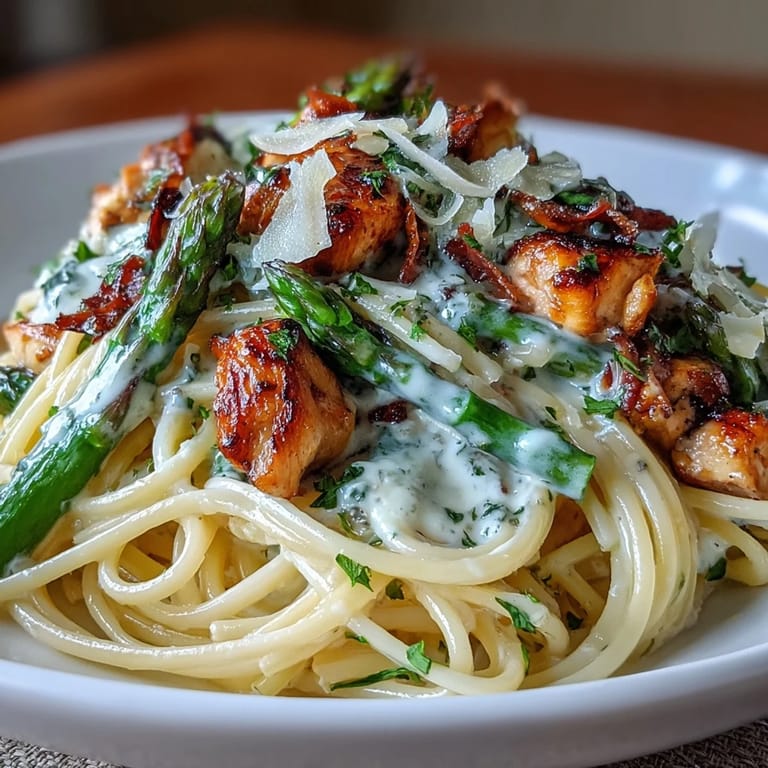
 This dish has become my answer to wanting something cozy but not heavy, something that feels special but does not demand hours in the kitchen. I hope it finds a place at your table the way it has at mine.
Common Questions About Recipes
- → Can I use a different type of pasta?
Yes, fettuccine, penne, or rigatoni work beautifully with this creamy sauce. Adjust cooking time according to pasta shape.
- → What can I substitute for Asiago cheese?
Parmesan, Pecorino Romano, or Gruyère make excellent substitutes with similar nutty, sharp flavors that complement the cream sauce.
- → How do I prevent the cream sauce from separating?
Keep the heat at medium-low when adding cream and cheese. Stir constantly and avoid boiling. Use reserved pasta water to adjust consistency.
- → Can I make this ahead of time?
This dish is best served fresh. However, you can prep ingredients in advance and cook the chicken and asparagus earlier, then reheat gently when combining with pasta.
- → How do I store and reheat leftovers?
Store in an airtight container in the refrigerator for up to 3 days. Reheat gently in a skillet over low heat, adding a splash of cream or milk to restore creaminess.
- → Can I add other vegetables to this dish?
Absolutely! Cherry tomatoes, mushrooms, spinach, or sun-dried tomatoes complement the creamy Asiago sauce beautifully without overwhelming the flavors.