 Save It
 I discovered the magic of checkerboard desserts during a particularly chaotic dinner party when I ran out of space on the dessert table. Rather than fret, I arranged four different fillings into a grid pattern and called it intentional. My guests spent the entire evening debating which square they'd choose next, turning a last-minute improvisation into the most talked-about course. That playful moment taught me that desserts don't always need to be serious or uniform to be memorable.
The first time I served this to my book club, someone asked if I'd made it at a professional bakery. That question, more than any compliment, made me realize how much impact a little visual creativity could have. They spent the next hour photographing their plates from different angles, and I loved watching their faces light up as they discovered each layer's distinct personality.
Ingredients
- Crisp shortbread cookies or graham crackers, crushed (80 g): These form your crunchy foundation and deserve respect—don't pulverize them into dust, keep some texture.
- Unsalted butter, melted (30 g): This binds your crunchy base together and keeps it from tasting like sad crumbs.
- Cream cheese, softened (80 g): Make sure it's actually soft before you start mixing, or you'll fight it and end up with lumps.
- Powdered sugar (30 g): Sift it if you have time; it dissolves smoother and prevents grainy cream cheese.
- Vanilla extract (1 tsp): Use real vanilla if you can afford it—it transforms the soft layer from basic to quietly luxurious.
- Dark chocolate, chopped (100 g): Chop it yourself from a quality bar rather than using chips, which contain stabilizers and won't set as silky.
- Heavy cream (60 ml): Don't skip the quality here; it makes the ganache pour like velvet.
- Salted caramel sauce (80 g): Homemade is glorious, but honest store-bought saves you thirty minutes and still tastes wonderful.
- Flaky sea salt, for garnish: This isn't a suggestion; it's what makes the salty squares actually sing.
- Small raspberries, optional (16): They add brightness and anchor the visual checkerboard if you want to go that route.
Tired of Takeout? 🥡
Get 10 meals you can make faster than delivery arrives. Seriously.
One email. No spam. Unsubscribe anytime.
Instructions
- Build your crunchy foundation:
- Mix your crushed cookies with melted butter until it feels like wet sand, then press it firmly and evenly into your lined baking dish. You want it compact enough to hold together but loose enough that you can still taste individual cookie pieces when you bite it.
- Whip the soft layer:
- Beat your softened cream cheese with powdered sugar until it's completely smooth and fluffy, then fold in the vanilla extract. This takes about two minutes if your cream cheese was actually soft to begin with.
- Create silky chocolate ganache:
- Heat your cream until steam just starts rising, pour it over your chopped chocolate, wait two minutes without touching anything, then stir slowly from the center outward until you've got something glossy and luxurious. Patience here pays off—rushing ruins the texture.
- Prepare your salty element:
- Use whatever caramel you've chosen and know that it doesn't need any help from you right now. Just let it be ready.
- Mark your grid:
- Remove your chilled crust from the fridge and use a ruler and sharp knife to lightly score a 4×4 grid on the surface, creating 16 equal squares. Think of yourself as a careful architect, not a rushed cook.
- Assemble the checkerboard:
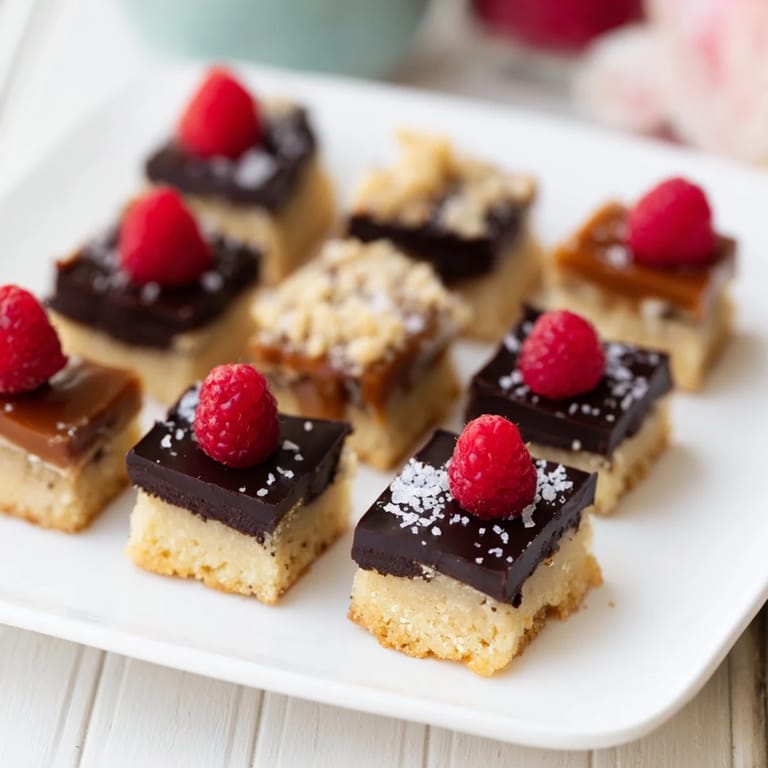
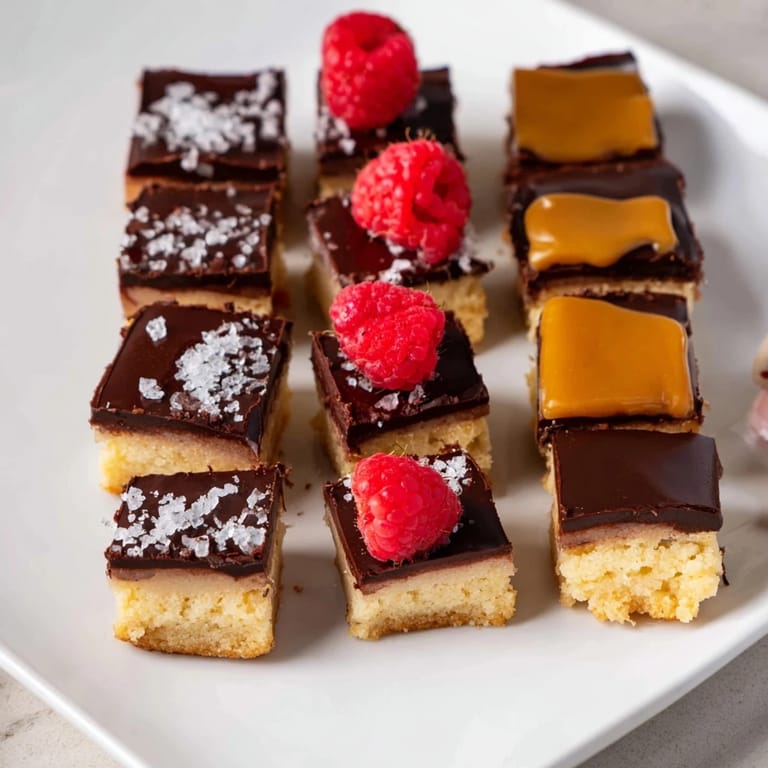
- Fill four squares with cream cheese in one pattern, four with ganache, four with caramel topped with sea salt, and leave four as crunchy crust bases topped with raspberries if you like. The key is spacing them so no two identical textures sit side by side, which creates both visual interest and a better eating experience.
- Chill to set:
- Let the whole thing sit in the refrigerator for 30 minutes so every layer firms up and the knife cuts cleanly instead of dragging.
- Slice and serve:
- Use a sharp knife and cut slowly along your grid lines, wiping the blade between cuts if crumbs build up. Serve slightly chilled so the textures are most pronounced.
 Save It
 One afternoon while testing this recipe, my young nephew watched me arrange the squares and said it looked like a dessert game board. We spent the next twenty minutes eating it like a board game, taking turns choosing which texture we wanted next, and I realized this wasn't just clever plating—it was genuinely interactive food that made people pause and think.
Texture is Everything
This dessert lives or dies by contrast. The crunch needs to stay crispy against creamy fillings, the chocolate needs to be silky without being runny, and the caramel needs to be thick enough to hold its shape but yielding enough to spread slightly when you bite. Each layer should feel distinctly different in your mouth, almost like you're tasting four separate desserts instead of one. That's the entire point, and it's also what makes serving this feel like you've done something unexpectedly thoughtful.
Timing and Temperature Matter
Make your crust and chocolate ganache hours ahead if you want—they both improve with patience. The cream cheese can be mixed ahead too, but assemble everything within a few hours of serving so your crust doesn't absorb moisture and go soft. Serving it slightly chilled rather than cold makes every flavor pop more clearly and prevents the chocolate and caramel from being too stiff to appreciate.
Variations and Personal Touches
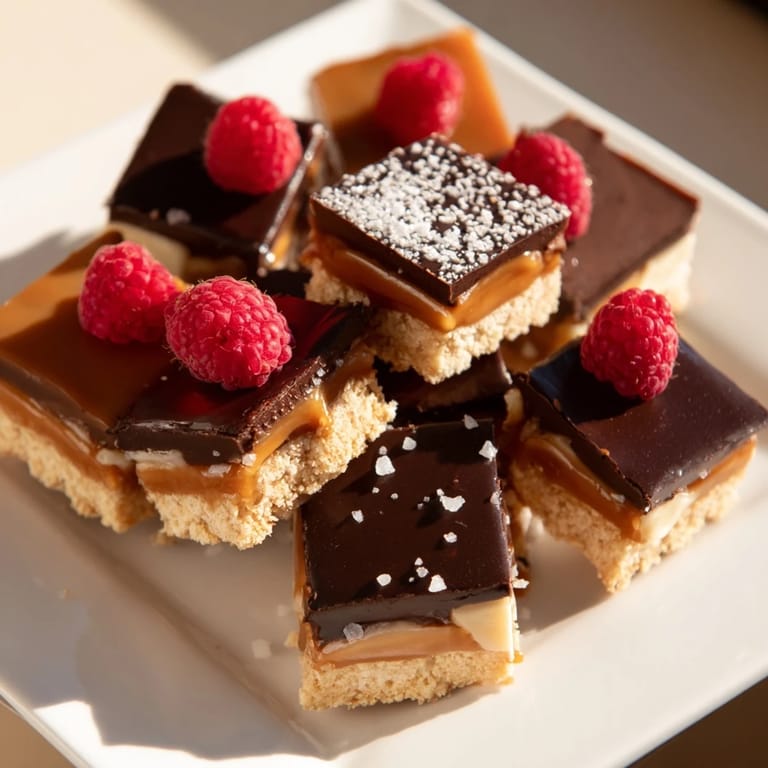
This is less a rigid recipe and more a framework for your own preferences. Swap in mascarpone for tangier richness, add citrus zest to the cream cheese for brightness, or use white chocolate if dark feels too intense. The variations I've loved most came from friends who added a pinch of espresso powder to the ganache or drizzled a tiny bit of honey over the crunchy squares. Once you understand how the checkerboard works, it becomes a canvas for whatever flavors make you happy.
- Try half crushed cookies and half toasted nuts for a more complex crunch.
- A tiny splash of Amaretto in the ganache elevates it without overpowering anything else.
- Keep the pieces slightly larger than bite-sized if you prefer desserts you can actually eat without the whole thing falling apart.
 Save It
 This dessert taught me that sometimes the most memorable food comes from breaking rules and playing with what you have. It's become my answer to the question of what to bring when I want to impress without stress.
Common Questions About Recipes
- → How do I achieve the checkerboard pattern?
Mark the chilled crunchy base into a 4x4 grid and alternate filling the squares with soft, sweet, salty, and crunchy layers, ensuring no adjacent squares share the same texture.
- → Can I prepare this dessert in advance?
Yes, prepare the layers ahead and assemble before chilling to set. Keep refrigerated until serving to preserve texture and freshness.
- → What substitutes work well for the soft layer?
Mascarpone can replace cream cheese for a richer texture, or add citrus zest to brighten the flavor profile.
- → Are there alternative toppings to raspberries?
Fresh raspberries add a tart contrast, but you can also use other small berries or edible flowers for garnish.
- → How can I add a nutty crunch to the dessert?
Replace half the crushed cookies in the crunchy layer with chopped toasted nuts for an added texture and flavor dimension.
- → What beverage pairings complement this dessert?
Sweet wines like Moscato d'Asti or Riesling enhance the dessert's balance of sweet and salty flavors.