 Save It
 I discovered mango sticky rice not in a cookbook but on a humid Bangkok street corner, where an elderly vendor arranged jewel-bright mango slices with the precision of an artist. She handed me a warm ceramic spoon, and the sticky rice—barely warm, impossibly creamy—melted against the sweet tang of the fruit. I've chased that exact moment in my own kitchen ever since, and somehow, this version gets closer each time.
My sister took one spoonful and said it tasted like the holiday she was too busy to take, which stuck with me. That's when I realized this dessert isn't about technique or fancy ingredients—it's about creating a moment that feels stolen from somewhere more beautiful. Every time I make it now, someone lingers over their plate a little longer.
Ingredients
- Glutinous (sweet) rice, 1 cup: This short-grain rice is essential; regular rice won't give you that silky, clingy texture that makes this dish special.
- Coconut milk (full fat), 1 cup: Don't skimp here—cheap coconut milk tastes thin and tinny, but a good one tastes like the tropics.
- Granulated sugar, 1/4 cup: This sweetens the sauce without overwhelming the coconut; you'll taste both, not just sugar.
- Salt, 1/4 tsp: A pinch that wakes everything up and makes the coconut flavor deeper and more complex.
- Large ripe mangoes, 2: Hunt for ones that smell fragrant and yield slightly to pressure; they should feel almost creamy when you press them gently.
- Coconut cream (optional), 2 tbsp: A drizzle on top adds richness and makes it feel luxurious without changing the core flavor.
- Toasted sesame seeds or mung beans (optional), 1 tbsp: A subtle crunch that gives your teeth something to do and makes each bite more interesting.
Tired of Takeout? 🥡
Get 10 meals you can make faster than delivery arrives. Seriously.
One email. No spam. Unsubscribe anytime.
Instructions
- Rinse and soak the rice:
- Rinse the glutinous rice under cold running water until the water runs clear—this removes the starch that would otherwise make it gluey instead of creamy. Soak it in water for at least 4 hours, or overnight if you're planning ahead; the grains need that time to soften and absorb moisture evenly.
- Steam until tender:
- Drain the rice and line your steamer basket with cheesecloth, then add the rice in an even layer. Steam for 25–30 minutes until the grains are completely soft and stick together when you stir them gently; you'll know it's ready when a grain dissolves easily between your fingers.
- Warm the coconut sauce:
- While the rice steams, combine coconut milk, sugar, and salt in a saucepan over medium heat, stirring occasionally until the sugar dissolves. Keep the heat gentle—never let it boil, or the coconut milk will separate and lose its silky texture.
- Marry rice and sauce:
- Pour 3/4 of the warm coconut sauce into the hot rice and stir gently, coating every grain. Cover the bowl and let it sit for 10–15 minutes so the rice absorbs the sauce and becomes infused with coconut flavor.
- Prepare the mango:
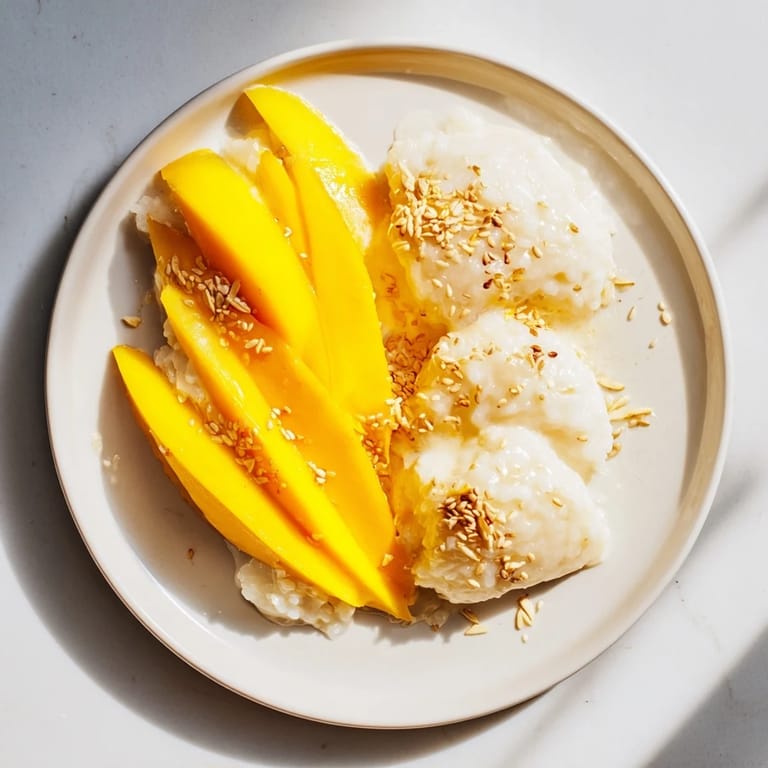
- While the rice absorbs the sauce, peel and slice your mangoes lengthwise along the pit, then carefully slice the flesh into thin, elegant pieces. The fruit itself is doing most of the work here, so let it taste like itself.
- Assemble and serve:
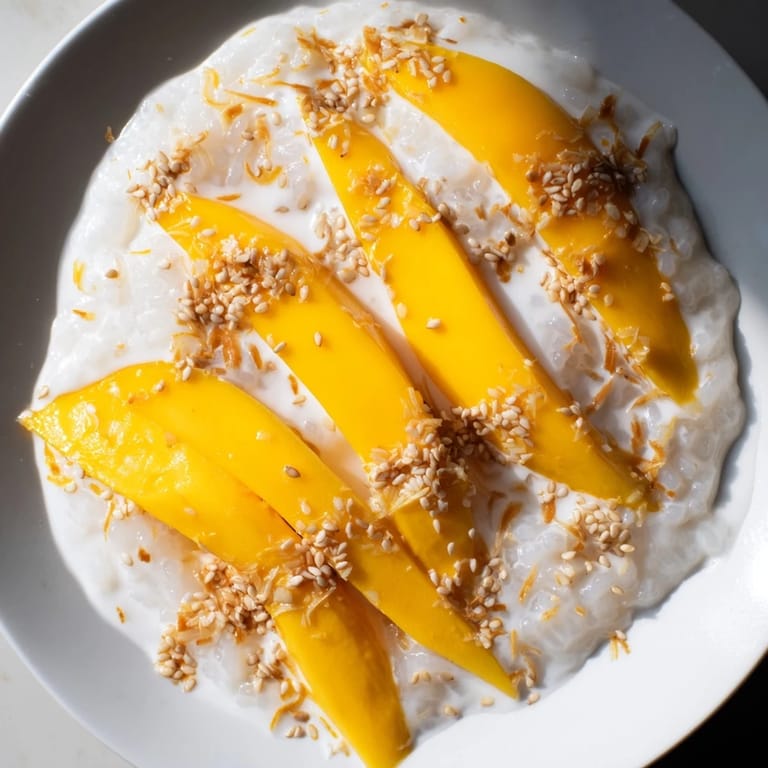
- Mound a generous portion of sticky rice on each plate, arrange the mango slices alongside in a gentle arc, and drizzle the remaining coconut sauce over everything. Top with a teaspoon of coconut cream and a scatter of sesame seeds if you want that finishing touch.
 Save It
 I once made this for a friend going through a rough patch, and she cried a little over it—not because it was perfect, but because someone had taken time to make something special just for her. That's when I stopped thinking of this as a fancy dessert and started thinking of it as edible kindness.
Choosing Your Mango
The mango is the whole story, so this is where perfectionism pays off. A ripe mango should smell fragrant and sweet, with a slight give when you press it gently near the pit. If it's hard, it'll taste starchy and sour; if it's mushy, it'll fall apart on the plate. The color matters less than the smell and feel—some golden mangoes taste like nothing, while a pale one can be ambrosial.
Coconut Milk Matters
Not all coconut milk is created equal, and you'll taste the difference immediately. Full-fat versions with fewer ingredients taste richer and more authentic; the thin stuff from a can sometimes tastes plasticky. Look for brands with just coconut and maybe guar gum, and always shake the can well before opening—the good stuff rises to the top and needs to be mixed back in.
Making It Your Own
This recipe is a starting point, not a rulebook, and I've learned the most from breaking it in tiny ways. Some nights I add a whisper of vanilla to the coconut sauce, or infuse the steaming rice with a single pandan leaf for that subtle floral note. Once, I scattered fried shallots on top by accident, and it was unexpectedly brilliant.
- Try palm sugar instead of granulated sugar for a deeper, almost caramel-like sweetness that changes the whole vibe.
- A single strip of pandan leaf steamed with the rice adds fragrance without overpowering the delicate flavors.
- This dessert is naturally vegetarian and gluten-free, but always double-check your coconut milk label for hidden allergens.
 Save It
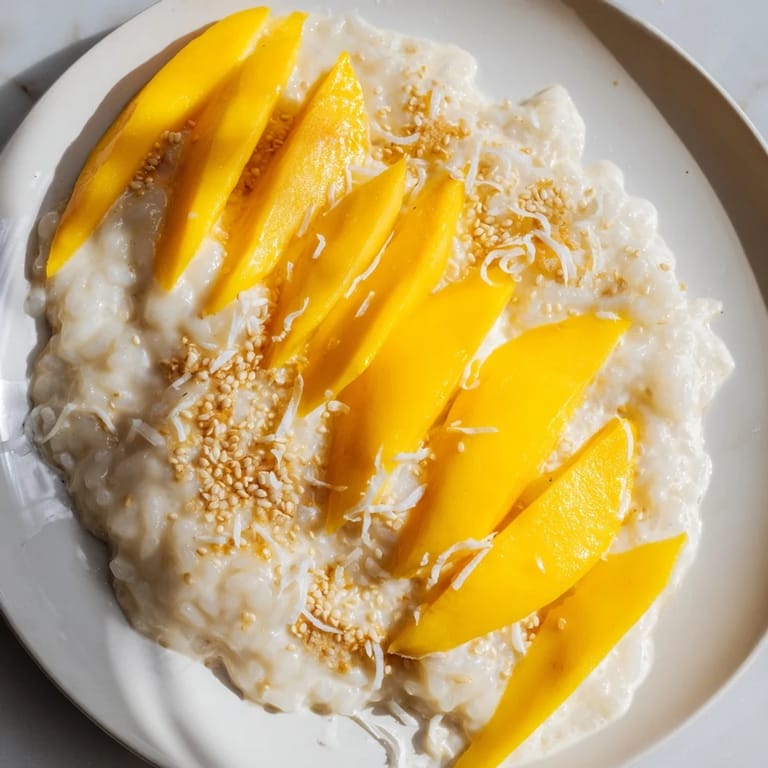
 Mango sticky rice is comfort food dressed up as elegance, proof that sometimes the simplest things—ripe fruit, warm coconut, soft rice—are exactly what a moment needs. Make it for someone, and watch their face change.
Common Questions About Recipes
- → How is the sticky rice prepared for this dish?
The glutinous rice is rinsed until clear, soaked for several hours, then steamed in a cheesecloth-lined basket until tender, ensuring a soft and sticky texture.
- → What gives the rice its creamy flavor?
The rice is gently mixed with a warm coconut milk sauce sweetened with sugar and a pinch of salt, allowing it to absorb the rich and aromatic coconut flavors.
- → Can I use other fruits instead of mango?
While mango is traditional, ripe papaya or fresh lychee can be used to maintain the tropical sweetness and complement the creamy rice.
- → What garnishes enhance the dish?
Optional toppings include coconut cream for added richness and toasted sesame seeds or mung beans for a slight crunch and nutty aroma.
- → How should I store leftovers?
This dish is best enjoyed fresh. Refrigerating assembled portions may cause the rice to harden and lose its creamy texture.