 Save It
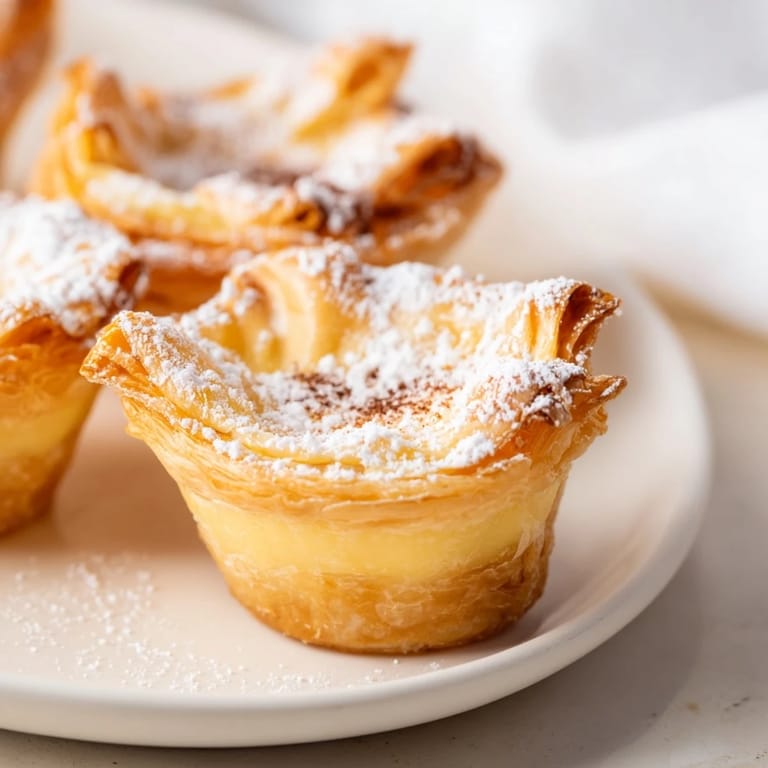
 My grandmother used to bring these little golden treasures home from the Portuguese bakery near her apartment, their phyllo shells crackling softly as she unwrapped them from tissue paper. Years later, I watched her make them in her kitchen on a lazy Sunday afternoon, and the way the cinnamon-scented custard transformed into something silky and perfect felt like witnessing a small miracle. Now when I make them, I'm transported back to that warm kitchen, flour dusting her apron, and the smell of butter browning in the oven.
I brought a batch of these to my coworker's birthday potluck last spring, nervous they'd seem too fussy for a casual office gathering. Instead, people hovered around the plate, asking for the recipe with genuine longing in their voices. One of them told me later that these tarts reminded her of a trip to Lisbon she'd taken years ago—suddenly, this little dessert had become a small gateway back to someone's favorite memory.
Ingredients
- Phyllo pastry: Buy it from the frozen section and thaw it slowly in the fridge the night before—rushing this step makes it tear. Twelve sheets is standard, but I always grab an extra package in case of mishaps.
- Unsalted butter: Melted and brushed generously between each sheet is what creates those shattered, golden layers. Use real butter, not margarine; the flavor difference is real.
- Whole milk and heavy cream: The combination is crucial—milk alone makes the custard thin, cream alone makes it heavy. Together they create that glossy, almost pourable richness.
- Cornstarch: This is what thickens the custard without making it grainy like flour would. Trust the technique here.
- Granulated sugar: Dissolves into the custard seamlessly and sweetens without overpowering the spices.
- Egg yolks: These are what make it custard instead of pudding—use room temperature eggs if you can, they blend more smoothly.
- Vanilla extract and ground cinnamon: The flavor duo that makes these distinctly Portuguese. The cinnamon especially should smell fragrant when you open the jar—old spices disappear into the custard without leaving a trace.
- Powdered sugar and cinnamon topping: A final whisper of sweetness and spice that sits on the tongue before melting away.
Tired of Takeout? 🥡
Get 10 meals you can make faster than delivery arrives. Seriously.
One email. No spam. Unsubscribe anytime.
Instructions
- Preheat and prepare your workspace:
- Set your oven to 200°C (400°F) and have your muffin tin nearby. Phyllo dries out fast once exposed to air, so organization matters here.
- Butter and layer the phyllo:
- Lay out one sheet, brush it lightly with melted butter—not so much that it pools, just enough to coat. Stack three buttered sheets together, then cut into squares large enough to drape over your muffin cups with a little overhang.
- Press into the muffin tin:
- Gently settle each phyllo stack into the cups, letting the edges rise slightly above the rim. The phyllo will shrink a bit as it bakes, so don't worry about it being too tall.
- Blind bake the shells:
- Bake these empty shells for 8 to 10 minutes until they turn light golden and become crisp. You'll hear them crackling—that's the butter doing its job.
- Make the custard filling:
- In a saucepan, whisk milk and cornstarch together first to eliminate lumps, then add cream, sugar, egg yolks, vanilla, cinnamon, and salt. The mixture will look thick and slightly grainy at this point, which is exactly right.
- Cook the custard to silky perfection:
- Place the saucepan over medium heat and whisk constantly—and I mean constantly—for about 5 to 7 minutes until the custard thickens and becomes noticeably smoother. When it coats the back of a spoon and you can draw a line through it that doesn't immediately fill in, it's ready. Remove from heat immediately so it doesn't overcook.
- Fill the shells:
- Divide the warm custard carefully among the baked phyllo cups, filling each about three-quarters full. The warmth of the custard will soften the shells just enough to settle in without becoming soggy.
- Final bake:
- Return to the oven for 8 to 10 minutes, watching until the custard edges are just set and the tops turn pale golden. The centers might jiggle slightly when you gently shake the tin—that's perfect, they'll finish setting as they cool.
- Cool and dust:
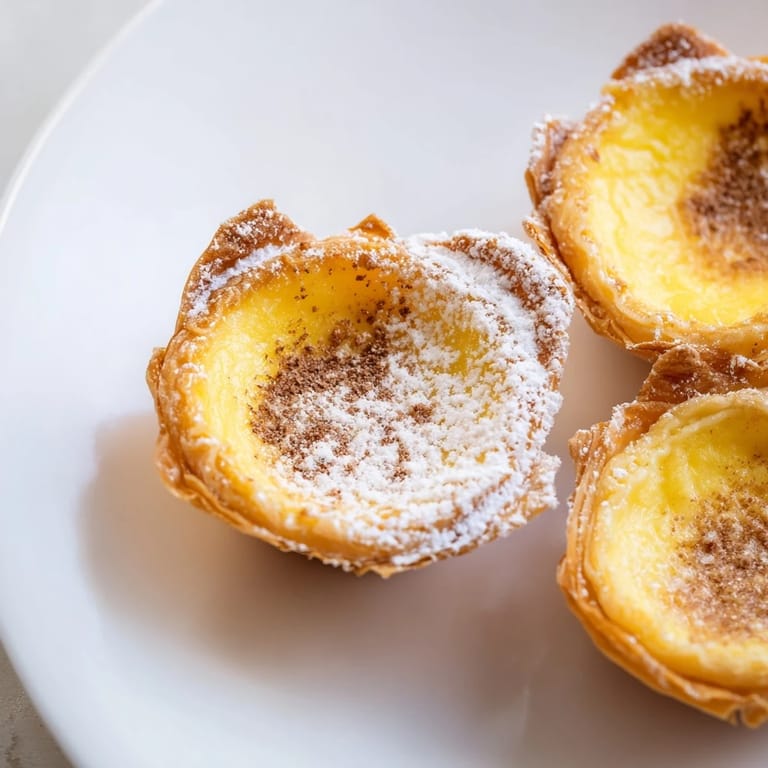
- Let the tarts rest for a few minutes before carefully lifting them from the tin. While they're still warm, dust each one generously with cinnamon and powdered sugar, letting a little cloud of sweetness settle over everything.
 Save It
 I remember my neighbor stopping by unexpectedly one afternoon when I had these cooling on the rack, and she took one bite and got quiet—the kind of quiet that comes when food touches something real inside you. She said they tasted like home, like someone had baked away all the distance she felt from her own mother's kitchen. That's when I understood that these little tarts carry more than just flavor; they carry stories.
The Phyllo Secret
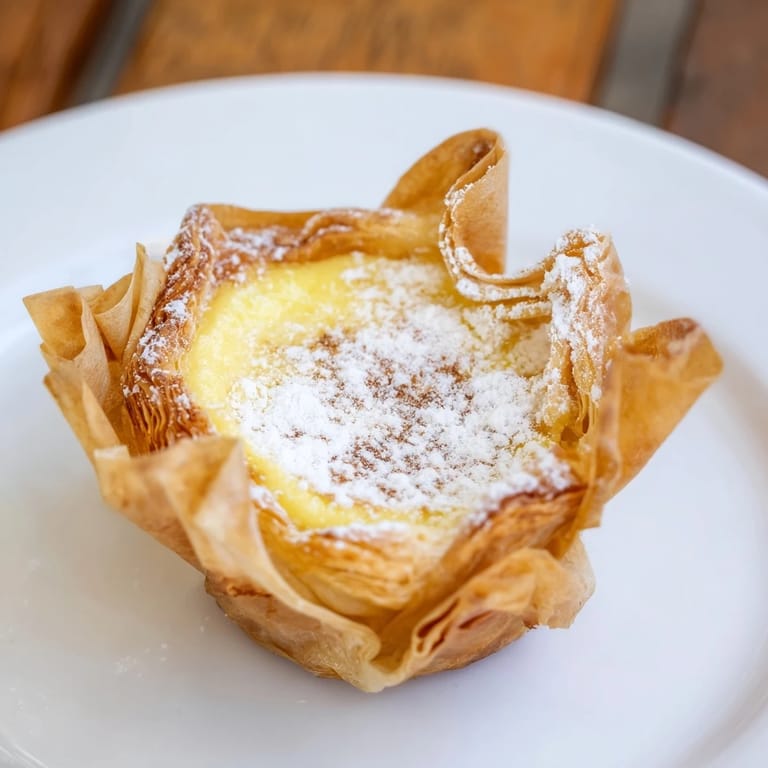
Phyllo seems intimidating at first because it's so delicate and papery, but the real secret is that it's actually quite forgiving if you treat it with respect. Thaw it in the refrigerator, not on the counter, and work quickly but without panic. The butter between the layers is doing all the heavy lifting—it's what creates those shattering, golden sheets that make these tarts feel luxurious. I learned this the hard way when I tried being too gentle and ended up with dense, chewy shells instead of crispy ones.
Custard Chemistry
The custard is where this recipe shows its elegance, because it's really just milk, cream, egg yolks, and a little cornstarch coming together into something completely transformed. The cornstarch is crucial because it thickens without the graininess that flour can bring, and the egg yolks provide both richness and that beautiful pale golden color. I've made this custard dozens of times now, and I still get a small thrill when I see it go from thin and scattered to glossy and cohesive, usually right around the five-minute mark of whisking.
Timing and Temperature Matter
These tarts are best when nothing is rushed, but also when nothing is overdone. The phyllo needs just enough time to brown without becoming brittle, the custard needs exactly the right moment of setting without curdling, and then everything needs just enough cooling time to settle. I've learned to trust the visual cues more than strict timing—golden means golden, and set means set with a slight jiggle in the center. Here are the small details that make the difference:
- Always brush phyllo gently from the center outward to avoid tearing and creating weak spots.
- Keep extra phyllo covered with a damp kitchen towel while you work so it doesn't dry out.
- Test the custard by tilting the pan slightly; it should move like thick cream, not liquid.
 Save It
 There's something almost meditative about making these, the repetitive motion of layering and brushing butter, the quiet moment of waiting while they bake. They're simple enough to feel achievable but impressive enough to feel special, which is exactly what comfort food should be.
Common Questions About Recipes
- → How do I make the phyllo cups crispy?
Brush each phyllo sheet with melted butter before baking and bake the stacked cups until lightly golden to achieve a crisp texture.
- → What gives the custard its cinnamon aroma?
Ground cinnamon is added to the custard mixture, infusing it with warm, aromatic notes that complement the creamy base.
- → Can I prepare the custard in advance?
Yes, you can prepare the custard earlier and fill the baked phyllo cups just before the final baking step for freshness.
- → How should the tarts be stored after baking?
Store leftovers chilled and reheat briefly in the oven to re-crisp the phyllo shells before serving again.
- → What is the best way to serve these tarts?
Serve slightly warm with a dusting of cinnamon and powdered sugar; they pair wonderfully with chilled white port or espresso.