 Save It
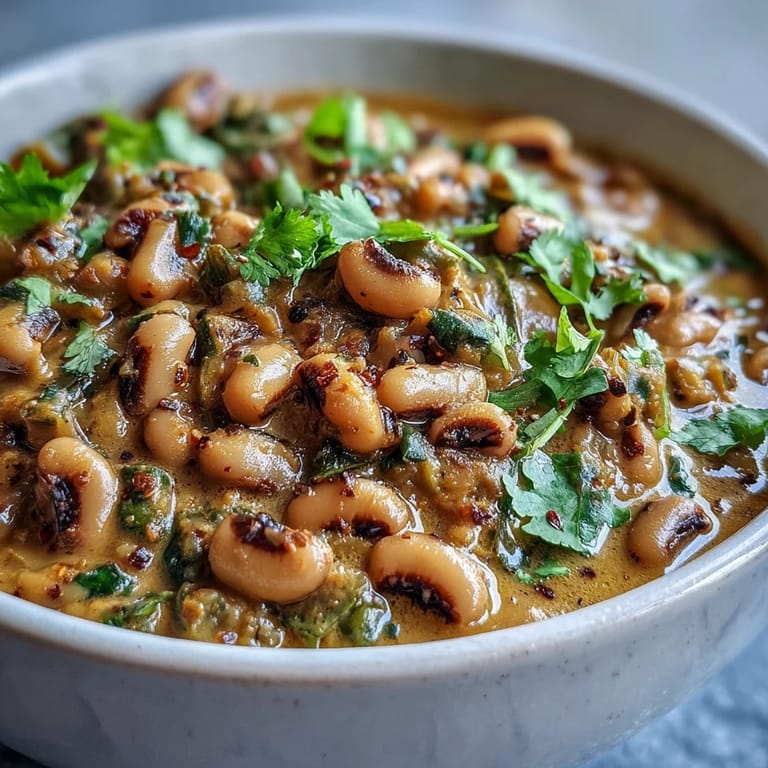
 A few years back, I found myself staring at a half-empty pantry on a rainy Tuesday evening, wondering what could possibly come together for dinner. My hand landed on a forgotten can of black-eyed peas, and suddenly I remembered my neighbor mentioning her mother's curry recipe. Within an hour, the kitchen smelled like turmeric and coconut, and something clicked. This curry became the dish I reach for when I need comfort that feels both nourishing and unexpectedly elegant.
I made this for a friend who'd just started exploring Indian food, and watching her take that first spoonful was pure joy. She kept asking what made it taste so complex, and I realized it wasn't any single ingredient but the way everything builds on itself, each spice adding depth. That's when I knew this recipe deserved a permanent spot in my rotation.
Ingredients
- Black-eyed peas: These humble beans have an earthy sweetness that absorbs the spices beautifully; canned saves time without sacrificing flavor, just rinse them well.
- Coconut oil: It carries the spices and creates that silky base, though vegetable oil works fine if that's what you have on hand.
- Onion: The foundation of everything, so take your time letting it soften until it's nearly translucent and slightly caramelized at the edges.
- Garlic and ginger: Fresh is non-negotiable here; they bring a brightness that powdered versions can't match.
- Ground cumin: Warm and slightly nutty, it's the backbone of the spice profile.
- Ground coriander: Often overlooked, but it adds a subtle citrus note that lifts the entire dish.
- Ground turmeric: The golden star, bringing both color and that unmistakable warmth.
- Chili powder: Start conservative; you can always add more heat, but you can't take it back.
- Garam masala: This complex blend goes in at the end to preserve its aromatic oils and keep everything tasting bright.
- Mustard seeds: Optional but worth it; that tiny pop in hot oil is a sensory moment that sets the tone.
- Coconut milk: Full-fat creates that creamy, luxurious texture that makes every bite feel indulgent.
- Vegetable broth: It stretches the curry to the right consistency without diluting the flavor.
- Diced tomatoes: They break down into the sauce and add gentle acidity that balances the richness.
- Green peas: A little brightness and pop of color; frozen ones are just as good as fresh.
- Salt: Don't skip tasting and adjusting; every brand of coconut milk is slightly different.
- Cilantro and lime: The finishing touch that makes everything taste alive and present.
Tired of Takeout? 🥡
Get 10 meals you can make faster than delivery arrives. Seriously.
One email. No spam. Unsubscribe anytime.
Instructions
- Prepare your mise en place:
- Chop your onion, mince the garlic, grate the ginger, and have everything within arm's reach. This is genuinely the difference between a relaxed cooking experience and a frantic one.
- Toast the mustard seeds:
- Heat the oil over medium and add the mustard seeds if you're using them; they'll crackle and pop within seconds, releasing their nutty aroma. This small step awakens all the flavors that follow.
- Build your flavor base:
- Add the onion and let it become soft and golden, stirring occasionally so it doesn't stick. Watch the edges start to turn a deeper color, that's when you know it's ready for the next ingredient.
- Add the aromatics:
- Stir in the garlic, ginger, and green chilies and cook for just a minute or two until the raw edge disappears and everything becomes fragrant. You'll notice the smell shift, that's your signal to move forward.
- Bloom your spices:
- Add all the dry spices and stir constantly for about a minute; this toasts them slightly and releases their essential oils into the oil. Don't walk away, watch for the color to deepen slightly.
- Add the tomatoes:
- Pour in the diced tomatoes and let them simmer for five minutes, breaking down and creating a rich sauce base. They'll lose their bright color and become more integrated into the oil.
- Combine your proteins and vegetables:
- Stir in the black-eyed peas and green peas, coating everything in that tomato mixture. This is when the pot really starts to look like curry.
- Add the creamy element:
- Pour in the coconut milk and vegetable broth, stirring until everything is evenly distributed. Bring the whole thing to a gentle simmer, not a rolling boil.
- Let it meld:
- Simmer for fifteen to twenty minutes, stirring occasionally and watching as the flavors become unified and the sauce thickens slightly. This patience makes all the difference.
- Finish with brightness:
- Stir in the garam masala and lime juice at the very end, tasting as you go and adjusting salt if needed. The lime should make everything pop.
- Garnish and serve:
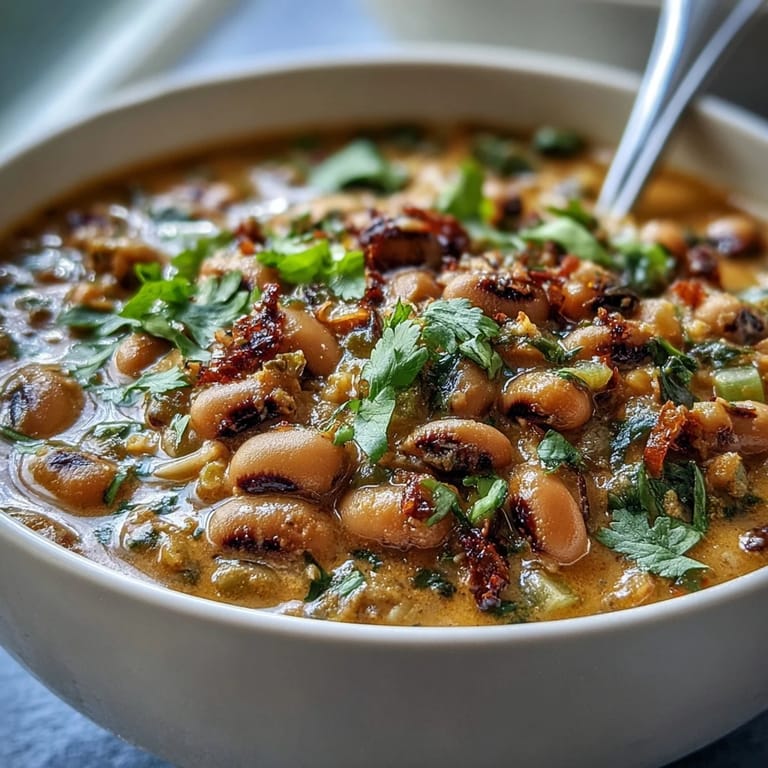
- Top with fresh cilantro and serve with rice or naan while it's hot. The heat will keep everything at its best temperature and aromatics at their strongest.
 Save It
 There's a moment near the end of cooking, right when the garam masala goes in and everything suddenly coheres into something greater than the sum of its parts, where I pause and just breathe in the steam. That moment reminds me why cooking matters—it's not just about eating, it's about the transformation.
Variations to Try
Once you've made this once, you'll start seeing the possibilities. Some days I add a cinnamon stick and a few curry leaves in the beginning for extra warmth and depth. Other times, when I'm feeling experimental, I swap the black-eyed peas for chickpeas or kidney beans, and the character shifts just enough to keep things interesting. The spice level is entirely yours to adjust; I've learned that what tastes perfect for me might be too much for someone else, so trust your palate and build it gradually.
What to Serve With It
I default to basmati rice because its subtle, slightly floral notes don't compete with the curry; they let it shine. Naan is wonderful too, especially if you can get it warm and tear pieces off to scoop up every last bit of sauce. A simple cucumber raita on the side cools things down beautifully if the spices get intense, and a green salad with lemon dressing adds freshness that cuts through the richness. It's the kind of meal that improves with company, so don't hesitate to cook extra.
- Basmati rice is the classic choice and pairs effortlessly with the creamy sauce.
- Warm naan turns this into something you can eat with your hands, which feels more satisfying somehow.
- A dollop of yogurt on the side for anyone who isn't vegan, offers cooling contrast to the warming spices.
Why This Curry Matters
This isn't a complicated recipe, and that's exactly the point. It proves that you don't need fancy ingredients or hours at the stove to create something that tastes intentional and deeply satisfying. Every time I make it, I'm reminded that cooking is really about paying attention, respecting your ingredients, and giving yourself permission to take up space in your own kitchen. It's become the dish I make when I want to feel grounded, and the one I share when I want someone to understand that good food doesn't have to be complicated to be meaningful.
 Save It
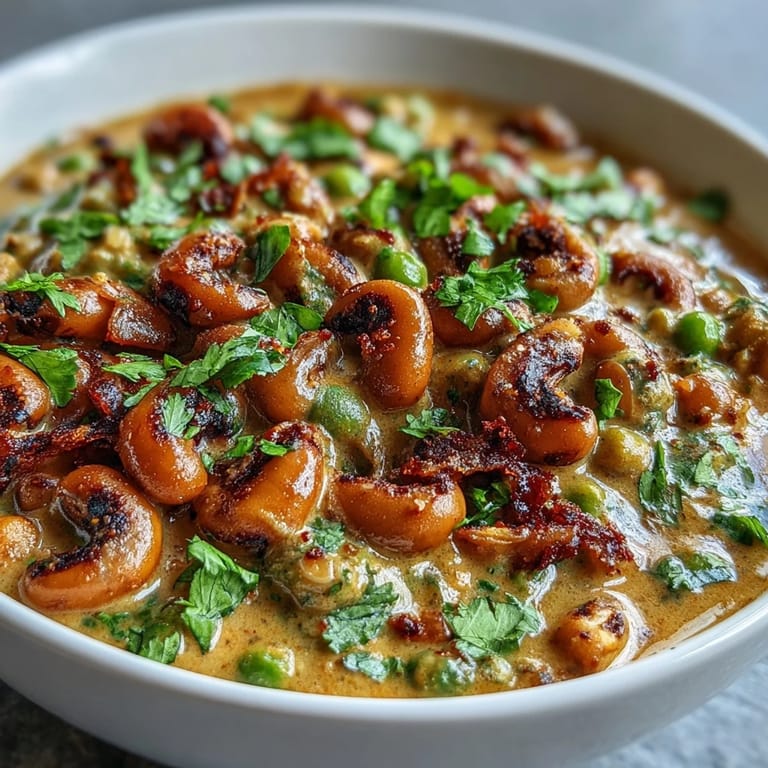
 This curry has become the dish I reach for when I need to feed people and make them feel cared for. It's simple enough to not stress over, but developed enough to earn genuine compliments.
Common Questions About Recipes
- → Can I use dried black-eyed peas instead of canned?
Yes, soak dried peas overnight and cook until tender before adding to the curry. This typically takes 45-60 minutes of boiling.
- → How spicy is this curry?
The spice level is medium. Adjust by reducing chili powder or omitting green chilies for a milder version.
- → What can I serve with black-eyed pea curry?
Basmati rice, naan, roti, or quinoa pair perfectly. The creamy sauce complements these sides beautifully.
- → How long does this keep in the refrigerator?
Store in an airtight container for up to 4 days. The flavors deepen and improve after resting.
- → Can I freeze this curry?
Absolutely. Freeze for up to 3 months. Thaw overnight in the refrigerator and reheat gently on the stovetop.
- → What beans work as substitutes?
Chickpeas, kidney beans, or black beans make excellent alternatives with similar cooking times.