 Save It
 There's something about the smell of lavender that pulls me back to a small café in Provence, where I watched a barista pour a delicate purple syrup into steaming milk and crown it with clouds of lavender-infused foam. I came home determined to recreate that moment, tinkering with ratios and whisking techniques until I got it just right. Now, whenever I make this latte, I'm transported back to that afternoon—the afternoon I realized the best recipes are the ones that taste like a place you love.
I first made this for my sister on a gray afternoon when she needed something more than coffee but less complicated than comfort food. She took one sip and went quiet—the good kind of quiet—and we ended up sitting at the kitchen table for an hour just talking. That's when I knew this recipe was doing something right.
Ingredients
- Dried culinary lavender: Use only culinary-grade lavender; ornamental varieties can taste like soap and ruin everything in seconds.
- Whole milk: It steams richer and froths more dramatically than low-fat, but oat and almond milk work beautifully if that's what you have.
- Espresso or strong brewed coffee: Freshly brewed matters here—stale coffee will dull the delicate floral notes.
- Granulated sugar: Fine sugar dissolves fastest in the warm water, creating a smooth syrup without grittiness.
- Heavy cream: Optional, but it adds a luxurious density to the foam that makes it feel truly indulgent.
Tired of Takeout? 🥡
Get 10 meals you can make faster than delivery arrives. Seriously.
One email. No spam. Unsubscribe anytime.
Instructions
- Steep the lavender syrup:
- Combine water, sugar, and lavender in a small saucepan and bring to a gentle simmer, stirring as the sugar melts and the water turns faintly purple. Once it cools, strain out every flower speck or you'll bite down on something bitter and wonder what went wrong.
- Brew strong coffee:
- Pull two shots of espresso or brew coffee strong enough that it would stand up to the floral sweetness coming its way. Divide between two mugs while it's hot.
- Steam and sweeten the latte:
- Heat your milk until it's steaming (tiny bubbles rising, not a rolling boil), then froth it gently until it's light and airy. Stir one tablespoon of lavender syrup into each mug, then pour in the steamed milk, letting the foam settle on top.
- Whip the lavender cloud:
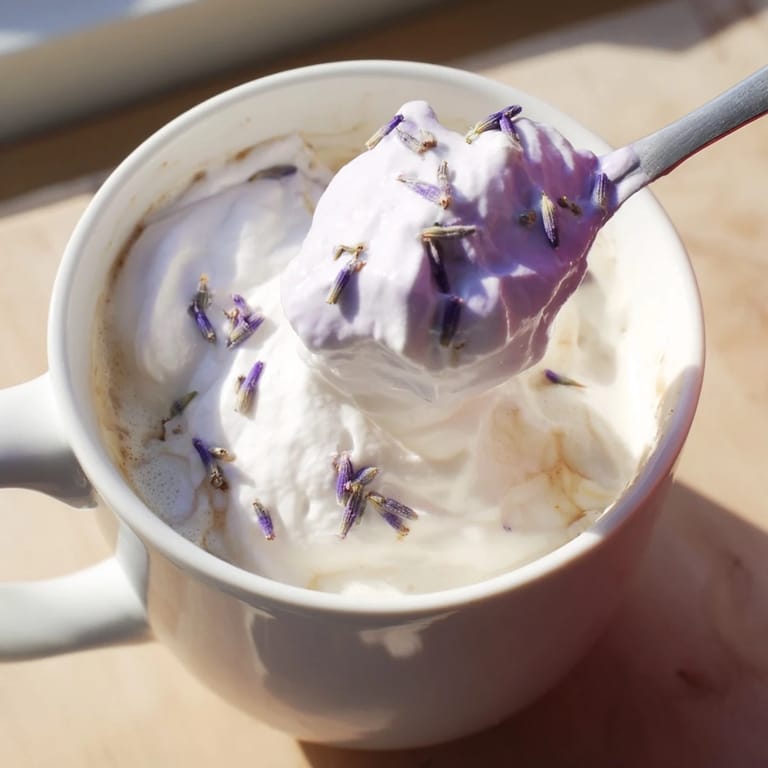
- In a mixing bowl, combine cold milk, lavender syrup, and cream if using, then whip with a hand frother or electric whisk until it's thick, fluffy, and holds peaks. This takes about a minute if you're going hard, so don't overthink it.
- Crown with foam:
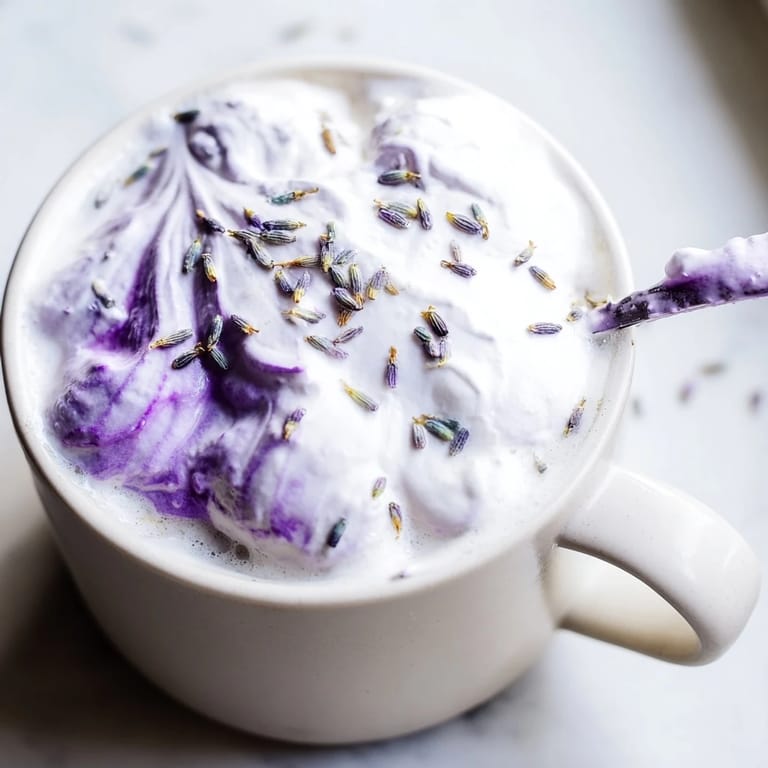
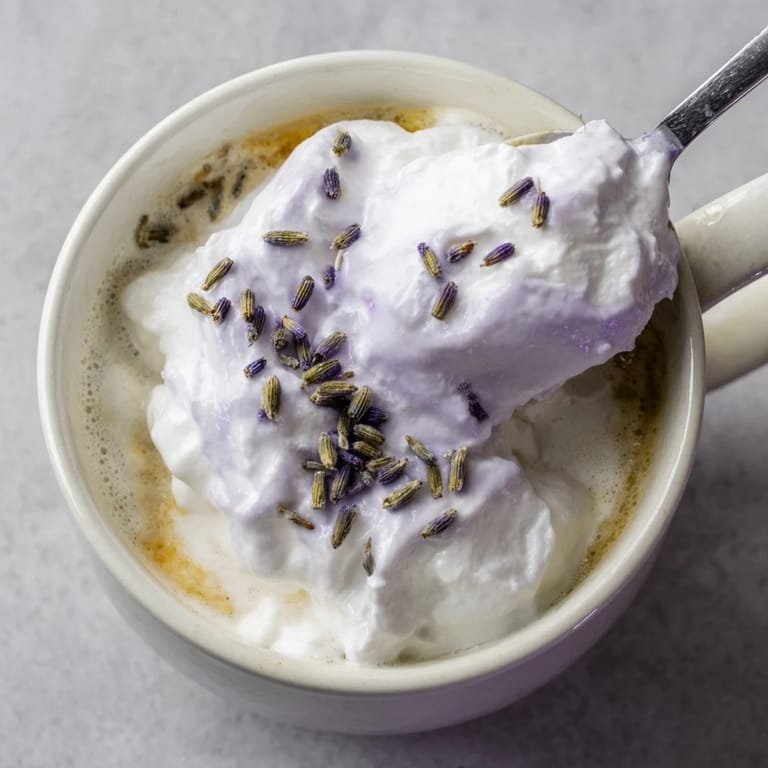
- Spoon generous clouds of whipped lavender foam over each latte, and if you're feeling it, dust with a tiny pinch of dried lavender for that final touch of elegance.
 Save It
 The first time someone asked for a second one, I knew this latte had become more than just my experiment—it had become something I wanted to share again and again.
The Magic of Lavender Syrup
Making your own lavender syrup opens a door to flavoring other things too—drizzle it over Greek yogurt, stir it into lemonade, or use it as a glaze for shortbread. Once you taste how much better homemade syrup is compared to store-bought, you'll find yourself brewing small batches whenever you want to add something floral to your week. The flowers steep in just five minutes, so the whole process never feels like actual cooking.
Choosing the Right Milk
Whole milk froths the thickest and creates that luxurious mouthfeel that makes this drink feel special, but oat milk comes in a close second and actually froths surprisingly well. Almond milk is thinner, so your foam won't be quite as voluminous, but it still works and keeps the recipe vegan-friendly. The key is whatever milk you choose, it should be cold before you whip it, because cold milk froths better than room-temperature milk.
Timing and Temperature
Espresso goes into the mug first so it stays hot while you're steaming your milk, and the syrup goes in before the milk so everything mixes together naturally. If you wait too long between steps, your coffee will cool and your foam will deflate, so treat this like a small dance—each move flowing into the next. Don't stress about perfection though; even a slightly cooled latte with a droopy foam still tastes like something worth making again.
- Always use cold milk for the foam layer—it whips faster and holds better.
- Drink it within a few minutes of assembly so the foam doesn't sink into the latte.
- Keep your saucepan and strainer clean so no sugar residue carries over to the next batch.
 Save It
 This latte reminds me that sometimes the best moments in the kitchen aren't about following rules perfectly—they're about pausing long enough to enjoy something beautiful with someone you care about.
Common Questions About Recipes
- → How is the lavender syrup made?
Combine water, granulated sugar, and dried culinary lavender in a saucepan. Simmer until sugar dissolves, then steep for 5 minutes and strain to remove lavender flowers.
- → Can I use plant-based milk for this latte?
Yes, plant-based milks like oat or almond work well and can be used to keep the latte vegan-friendly.
- → What is the purpose of the whipped foam?
The whipped foam adds a light, airy texture and enhances the lavender flavor, creating a cloud-like topping for the latte.
- → How do I make the whipped lavender foam?
Whip cold milk and lavender syrup with a frother or electric whisk until thick and fluffy. Heavy cream can be added for extra richness.
- → What pairs well with this lavender latte?
Shortbread cookies or scones make excellent accompaniments, complementing the latte's floral and creamy notes.