 Save It
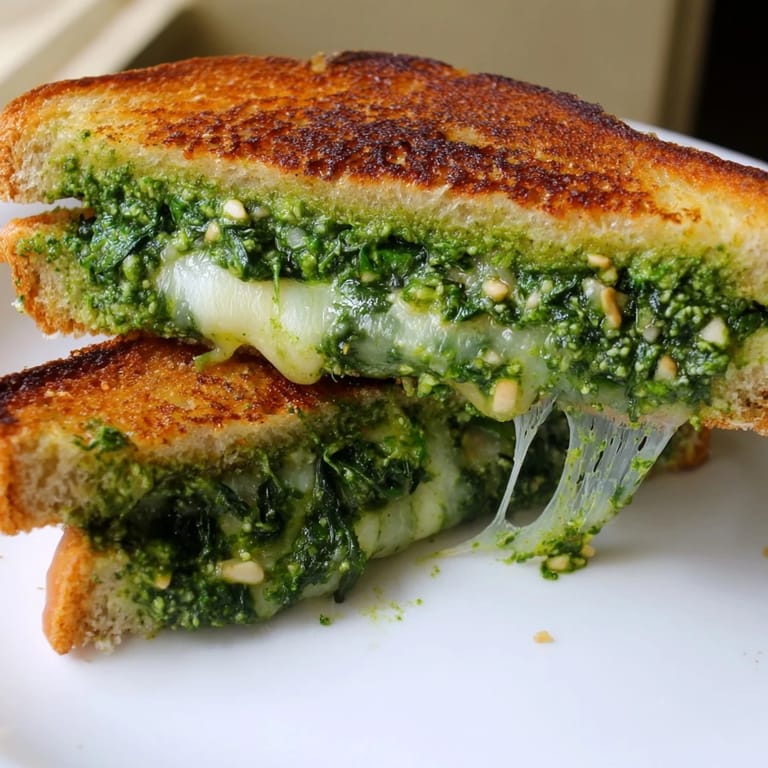
 There's something about the smell of butter hitting a hot skillet that makes you forget every other sandwich you've ever made. I discovered this spinach pesto grilled cheese on an ordinary Tuesday when I had a bunch of basil wilting in my crisper drawer and absolutely refused to let it go to waste. One quick blitz in the food processor, a handful of spinach thrown in as reinforcement, and suddenly I wasn't making a guilt-free sandwich—I was making something genuinely exciting that happened to be green.
I made these for my sister when she came home from a long work week, skeptical about anything labeled "healthy sandwich." She took one bite, closed her eyes, and didn't say anything for a full thirty seconds—which, coming from someone who usually talks through every meal, meant everything. Now she texts me pictures of her homemade pesto attempts.
Ingredients
- Fresh spinach leaves: Use the tender stuff, packed down—you'll need about 2 cups. The heartier the spinach, the earthier your pesto, which honestly is never a bad thing.
- Fresh basil: Half a cup of leaves, and don't be shy about bruising them a little as you measure; it wakes up the flavor.
- Parmesan cheese: Grate it yourself if you have time—pre-grated has anti-caking agents that make the pesto slightly grainy.
- Toasted pine nuts: They add a subtle richness that raw nuts never quite capture; toast them in a dry pan for 2 minutes until fragrant.
- Garlic: One large clove is plenty; this isn't a vampire deterrent, it's a flavor builder.
- Extra virgin olive oil: The good stuff matters here since it's not being cooked down—you actually taste it.
- Salt and black pepper: Taste as you go; pesto is forgiving about seasoning once you understand your palate.
- Lemon juice: A tablespoon keeps everything bright and prevents that muddy green color oxidation can cause.
- Sourdough or country bread: Thick-cut slices that can handle the heat without falling apart; thinner bread gets sad and rubbery.
- Unsalted butter: Softened to room temperature, which makes spreading easier and distributes heat more evenly.
- Mozzarella cheese: Use fresh if you can find it sliced thick; shredded works but melts into corners less elegantly.
- Sharp cheddar cheese: The sharpness cuts through the richness and adds a savory edge that keeps things from getting one-note.
Tired of Takeout? 🥡
Get 10 meals you can make faster than delivery arrives. Seriously.
One email. No spam. Unsubscribe anytime.
Instructions
- Make the pesto while you're thinking about it:
- Pulse your spinach, basil, Parmesan, pine nuts, and garlic in the food processor until everything is finely chopped and starting to look like wet sand. Turn on the processor and drizzle in your olive oil slowly, watching it transform into something glossy and spreadable; add the lemon juice at the end and taste, adjusting salt and pepper until it tastes like something you'd want to eat by the spoonful.
- Butter and assemble:
- Spread softened butter on one side of each bread slice, then lay them all buttered-side down on your cutting board. On the unbuttered sides of two slices, spread a tablespoon of pesto each, then layer half the mozzarella and cheddar on top of each; cap them with the remaining bread slices, buttered-side facing out, creating two perfect little sandwiches.
- Get the pan ready:
- Heat your skillet or griddle over medium heat for a full minute—you want it hot enough that a drop of water sizzles, but not so hot that the butter burns. This is the secret no one mentions: temperature patience.
- Cook until golden and melted:
- Place your sandwiches on the hot skillet and listen for that immediate, satisfying sizzle. Press down gently with your spatula for about 3 to 4 minutes, until the bottom is deep golden brown and you can see the cheese starting to peek out the sides; flip carefully, press again, and cook the second side for another 3 to 4 minutes until it matches.
- Rest and serve:
- Let them cool for just two minutes—this helps the cheese set up so it doesn't leak everywhere when you cut. Slice diagonally if you're feeling fancy, straight down the middle if you're hungry, and serve while they're still warm enough to steam.
 Save It
 The moment I realized this sandwich had staying power was when my neighbor smelled one cooking through the shared wall and knocked on the door asking what that incredible smell was. I handed her one straight off the skillet, and we stood in my kitchen eating sandwiches in comfortable silence, which is the highest compliment food can possibly receive.
The Pesto Philosophy
Pesto isn't actually tied to any specific ingredient—it's a method, a ratio, a way of thinking about flavor. Once you understand that spinach can replace basil, that sunflower seeds work as well as pine nuts, and that the oil and acid are what make it sing, you'll stop following recipes and start improvising. I've made pesto with arugula, with mint, with parsley and chives, and every version teaches me something different about what I like.
Why This Works as Dinner
There's an old food writing trick where you're supposed to serve sandwiches alongside soup, salad, or pickles to make them feel more intentional, less like lunch. But honestly, this sandwich is built well enough that it stands alone as dinner—the two cheeses give you richness, the pesto provides freshness and herbal depth, and the bread carries it all with dignity. If you want company for it, a simple arugula salad dressed with lemon and olive oil is perfect, but it's not necessary.
Storage and Making Ahead
The pesto is your time-saver here; make it when you have ten minutes, store it covered in the fridge, and you can assemble and cook these sandwiches in about fifteen minutes on any given weeknight. The assembled sandwiches don't keep well once built—the bread absorbs the pesto and gets soggy—so don't butter and fill them until you're actually cooking. Fresh bread matters more with this recipe than with fussier sandwiches because there's nothing masking staleness; get good bread, use it quickly, and you'll understand why this became a regular in my rotation.
- Make the pesto up to three days ahead and store it in an airtight container.
- You can prep all your ingredients and cheese in advance, then assemble and cook right before eating.
- Leftover pesto is incredible on pasta, stirred into eggs, or spooned onto roasted vegetables.
 Save It
 This sandwich has become my go-to weeknight dinner, the kind of meal that makes you feel taken care of even when you're cooking for yourself. Every time I make it, I think about my neighbor and that quiet moment of recognition, and it reminds me that the best food isn't always complicated—it's just real.
Common Questions About Recipes
- → How is the spinach pesto prepared?
Fresh spinach, basil, Parmesan, pine nuts, garlic, salt, and pepper are blended with olive oil and lemon juice to create a smooth, flavorful pesto spread.
- → What types of cheese are used in the sandwich?
Mozzarella and sharp cheddar cheeses are combined for a creamy, melty interior with rich flavor.
- → Can I substitute the pine nuts in the pesto?
Yes, walnuts or almonds can be used instead of pine nuts to maintain a nutty texture and taste.
- → What bread is recommended for best results?
Sourdough or country-style bread provides a sturdy, crispy base that holds the filling well when grilled.
- → How is the sandwich cooked to achieve a crispy outside?
Butter is spread on the bread's outer sides, then the sandwich is cooked on a skillet over medium heat until golden brown and the cheese melts.
- → Are there any suggestions to enhance the flavor?
Adding sliced tomato or roasted red pepper inside can add freshness and depth, while sprinkling Parmesan on the outside before grilling enhances crispiness.