 Save It
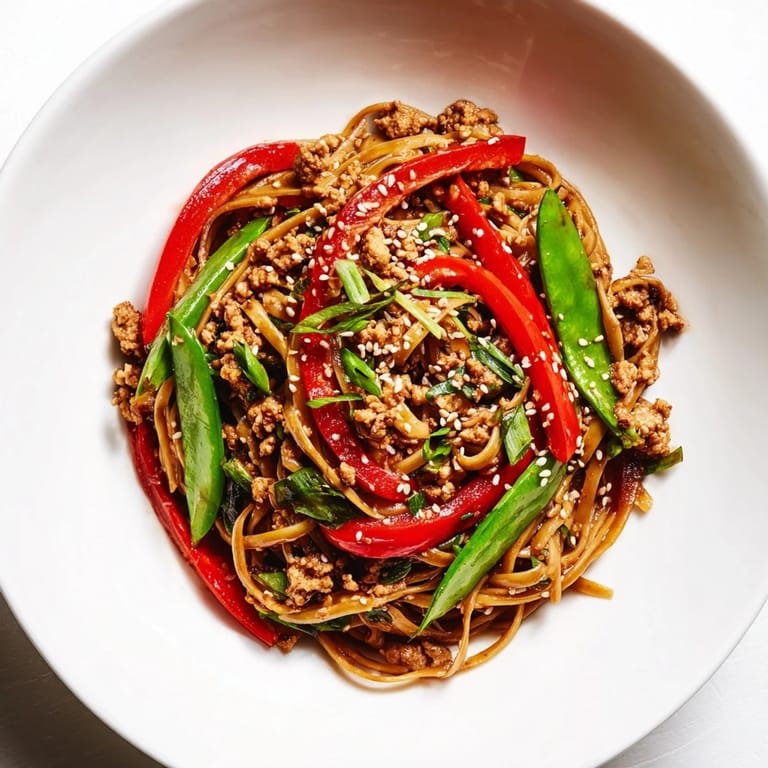
 I discovered this dish on a Tuesday night when my pantry was nearly bare and I had ground chicken thawing on the counter. A jar of hoisin sauce caught my eye—something I'd picked up months earlier on a whim—and suddenly I was rummaging through the fridge, pulling together whatever vegetables looked halfway decent. The first time those flavors hit the linguine, something clicked. It felt like a secret I'd accidentally uncovered, a way to turn an ordinary weeknight dinner into something that tasted like I'd been planning it all along.
I made this for my partner on a night when they'd had a rough day, and watching them pause mid-bite, fork suspended in air, was worth every minute in the kitchen. They asked me what restaurant I'd ordered from, and I'll admit I felt a small spark of pride admitting I'd made it. Cooking this dish has become my quiet way of saying I care, without needing to say anything at all.
Ingredients
- Linguine, 350 g (12 oz): The thin strands catch and hold the sauce beautifully, much better than thicker pasta would.
- Ground chicken, 450 g (1 lb): It cooks quickly and absorbs the sauce, but don't skip browning it properly—that step builds flavor.
- Red bell pepper, 1, thinly sliced: The sweetness balances the savory hoisin, and slicing thin ensures it stays crisp.
- Snap peas, 1 cup, halved: They add a delicate crunch that's easy to lose if you're not watching the clock.
- Green onions, 2, thinly sliced: Save some for garnish; their fresh bite at the end matters more than you'd think.
- Garlic, 2 cloves, minced: Fresh garlic is non-negotiable here—the jarred stuff won't give you that same aromatic punch.
- Fresh ginger, 1-inch piece, grated: This is where the dish gets its warmth and complexity; don't measure it conservatively.
- Hoisin sauce, 5 tbsp: This is your flavor backbone—taste your sauce before adding pasta, and adjust if needed.
- Low-sodium soy sauce, 2 tbsp: Low-sodium gives you room to taste and adjust without oversalting.
- Rice vinegar, 1 tbsp: It keeps the sauce bright and prevents it from tasting flat and one-dimensional.
- Toasted sesame oil, 2 tsp: A little goes a long way; never skip the toasting step on the bottle.
- Chili garlic sauce, 1 tsp (optional): Add this if you want heat, but the magic happens when you start small and taste as you go.
- Honey, 1 tbsp: It rounds out the acidity and adds subtle depth without making the dish sweet.
- Toasted sesame seeds, 2 tbsp: Toast them yourself if you can; they're worth the two extra minutes.
- Fresh cilantro or scallions for garnish (optional): A handful scattered on top transforms the dish visually and adds a final fresh note.
Tired of Takeout? 🥡
Get 10 meals you can make faster than delivery arrives. Seriously.
One email. No spam. Unsubscribe anytime.
Instructions
- Start the pasta:
- Bring a large pot of salted water to a boil and cook the linguine until it's al dente—tender but still with a slight bite. This takes about 8–10 minutes depending on your pasta. Drain it, but hold onto that starchy pasta water like it's liquid gold.
- Build the sauce:
- Whisk together the hoisin, soy sauce, rice vinegar, sesame oil, honey, and chili garlic sauce (if you're using it) in a small bowl. This is your moment to taste it—the sauce should feel balanced, with savory, slightly sweet, and tangy notes all playing together.
- Brown the chicken:
- Heat your skillet or wok over medium-high heat with a splash of neutral oil. Add the ground chicken and break it up as it cooks, letting it sit in the pan long enough to develop some color and character, about 5 minutes.
- Awaken the aromatics:
- Add the minced garlic, grated ginger, and most of the sliced green onions to the pan. The kitchen should fill with an incredible smell—this is when you know it's working.
- Build texture with vegetables:
- Stir in the red bell pepper and snap peas, cooking for just 2–3 minutes until they're tender-crisp. Don't walk away from the stove here; the difference between perfect and overcooked is about one minute.
- Bring it all together:
- Pour the sauce over everything and toss to coat the chicken and vegetables evenly. The heat will make it glossy and fragrant.
- Marry the pasta:
- Add the cooked linguine to the skillet and toss everything together, adding splashes of reserved pasta water until the sauce coats the noodles without pooling. You're looking for a balance—saucy but not soupy.
- Final touches:
- Remove from heat, scatter toasted sesame seeds and the reserved green onions (and cilantro if you're using it) over the top, and serve immediately while everything's still warm and fragrant.
 Save It
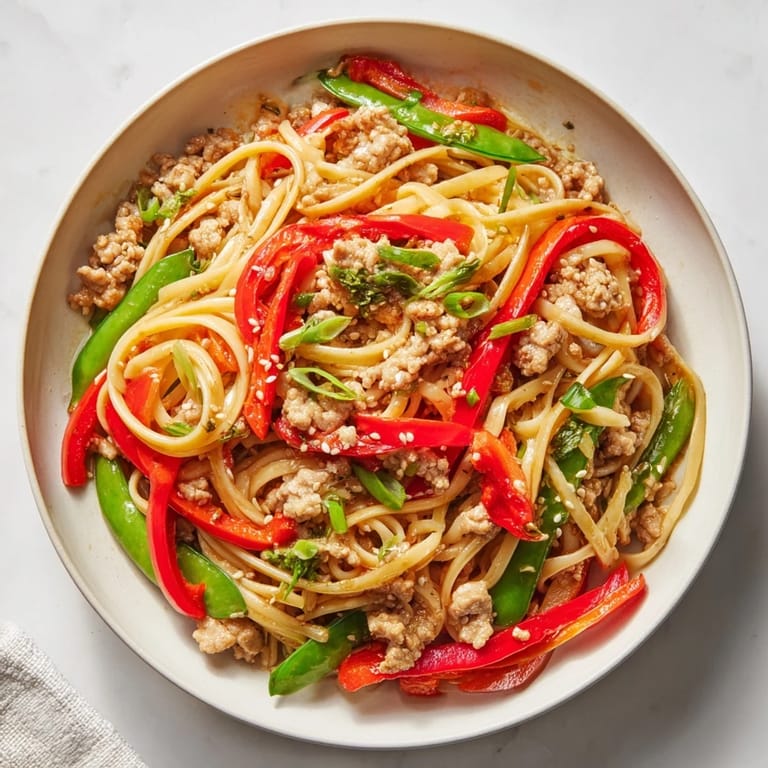
 There's a moment in this dish that always gets me—when the pasta water mixes with the hoisin sauce and everything suddenly comes alive, clinging to the noodles like it was meant to be there all along. It's the moment when separate ingredients stop being separate and become something bigger, something worth sharing.
Why the Sesame Oil Matters
Sesame oil is deceptive in its power; a small amount at the end of cooking tastes nothing like a large amount added early. I learned this the hard way when I poured half the bottle into the sauce and ended up with something that tasted like a spa. Now I add it to the sauce mixture before cooking, so the heat mellows it into something warm and round rather than aggressive. If you buy the toasted kind (the darker bottle), you're already halfway to success.
Swaps and Variations
Ground turkey works beautifully here if chicken isn't what you have on hand, and pork adds a richness that's unexpectedly lovely. For a vegetarian version, firm tofu—pressed and crumbled into small pieces—picks up the sauce just as well, though you'll want to use vegetarian hoisin to avoid hidden fish sauce. Some nights I'll add a handful of mushrooms sautéed with the chicken, or swap the snap peas for broccoli when that's what survived the week in my crisper drawer.
Serving and Pairing Suggestions
Serve this while it's hot, ideally in bowls rather than on plates; the sauce deserves respect and shouldn't be chased across a plate. A cold glass of crisp Riesling or a cup of chilled green tea cuts through the richness and feels like a small celebration alongside the meal. Leftovers reheat gently in a skillet with a splash of water, and they taste even better the next day when the flavors have had time to settle and become friends with each other.
- If you're feeding people who love spice, set out extra chili garlic sauce on the side and let them adjust their own heat.
- Fresh lime wedges on the side add brightness if you want to lighten it up at the last minute.
- This dish is naturally dairy-free, making it easy to serve to a mixed table without fussing over substitutions.
 Save It
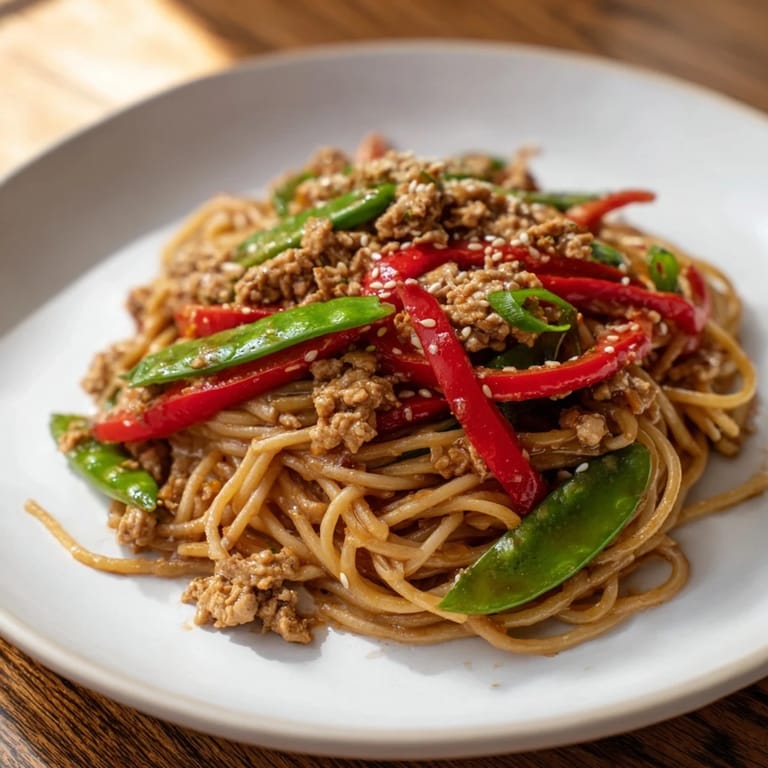
 This dish has become my weeknight anchor, the recipe I reach for when I want something that feels special without requiring special effort. It's the kind of food that makes people linger at the table, asking for the recipe, and I never mind sharing it because the real magic happens in your own kitchen, with your own hands.
Common Questions About Recipes
- → What is the best pasta type for this dish?
Linguine works well to hold the sauce, but spaghetti or fettuccine can be great alternatives for similar texture and coating.
- → Can I substitute the ground chicken?
Yes, ground turkey or pork can be used, and for a vegetarian option, firm tofu or plant-based ground works well when paired with a vegetarian hoisin sauce.
- → How can I adjust the spiciness?
Adding more chili garlic sauce increases heat, while reducing or omitting it keeps the flavors mild and balanced.
- → What garnishes complement this meal?
Toasted sesame seeds and fresh green onions or cilantro add texture and fresh notes that enhance the dish’s flavors.
- → Is there a recommended beverage pairing?
A crisp Riesling or chilled green tea pairs excellently, balancing the savory and slightly sweet elements of the dish.
- → How do I keep the vegetables crisp?
Sauté the bell pepper and snap peas briefly—2-3 minutes—to maintain their vibrant crunch and freshness.