 Save It
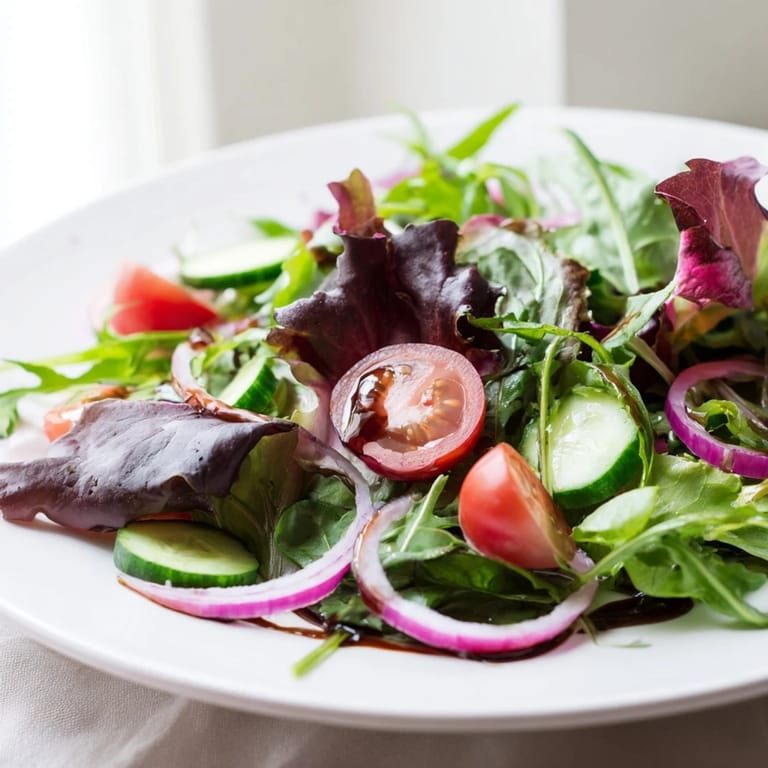
 There's something almost magical about the moment balsamic vinegar hits a hot pan and transforms into liquid gold. I discovered this salad on a lazy Tuesday afternoon when I had nothing but a bag of mixed greens, a bottle of decent balsamic, and the urge to make something that felt like more than the sum of its parts. What started as a quick weeknight solution became the dressing I now reach for whenever I want to turn ordinary vegetables into something that tastes like it took hours.
I made this for my sister last summer when she showed up unannounced, stressed about work and hungry. She took one bite and actually paused mid-conversation. That's when I knew the balsamic reduction wasn't just a nice technique—it was the kind of thing that made people slow down and actually taste their food. Now she asks me to make it every time she visits.
Ingredients
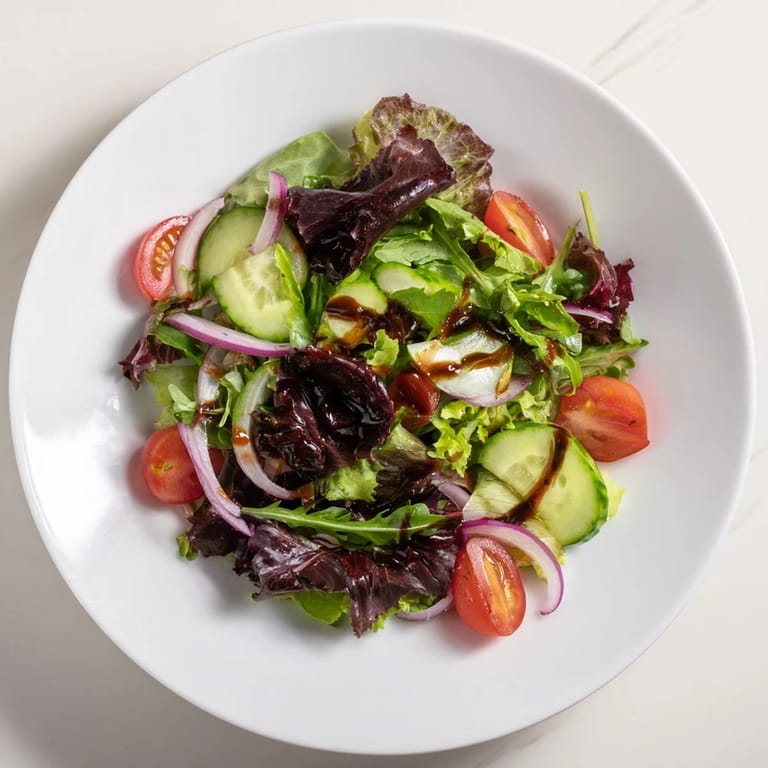
- Mixed salad greens (6 cups): Use a blend of textures and flavors—peppery arugula, tender spinach, crisp romaine, and bitter radicchio create a more interesting bite than any single green alone.
- Cherry tomatoes (1 cup, halved): The sweetness balances the vinegar's punch, and halving them releases their juices into the dressing.
- Red onion (1/2 small, thinly sliced): Slice it paper-thin so it softens slightly when it sits with the dressing, mellowing just enough to add sharpness without bite.
- English cucumber (1/2, sliced): The watery crispness keeps everything fresh and prevents the salad from feeling heavy.
- Toasted walnuts (1/4 cup, optional): Toasting them yourself makes all the difference—it wakes up their flavor and adds a subtle crunch that grocery-store nuts can't match.
- Balsamic vinegar (1/2 cup): Buy something you'd actually drink straight, not the cheap stuff that tastes like sugar and regret.
- Extra-virgin olive oil (2 tablespoons): This is where quality whispers instead of shouts, so don't skimp.
- Dijon mustard (1 teaspoon, optional): It's a secret weapon that adds depth and helps the dressing emulsify without becoming heavy.
- Sea salt and freshly ground black pepper: Both are essential—pre-ground pepper tastes like dust compared to what you grind yourself.
Tired of Takeout? 🥡
Get 10 meals you can make faster than delivery arrives. Seriously.
One email. No spam. Unsubscribe anytime.
Instructions
- Reduce the balsamic:
- Pour the vinegar into a small saucepan and set it to medium heat. You'll notice it starts to bubble gently around the edges—this is exactly what you want. Stir occasionally and watch as it darkens and thickens, reducing by about half. It should look glossy and coat the back of a spoon after 6 to 8 minutes.
- Cool and combine the greens:
- While the reduction cools for a couple of minutes, toss your mixed greens, tomatoes, onion, cucumber, and walnuts into a large salad bowl. Don't dress it yet—just let everything breathe there, waiting.
- Build the dressing:
- In a small bowl, whisk together the olive oil, mustard if you're using it, salt, and pepper until they start to come together. Slowly drizzle in the cooled balsamic reduction while whisking—it'll transform into something silky and dark, coating the whisk in a way that feels almost luxurious.
- Toss gently:
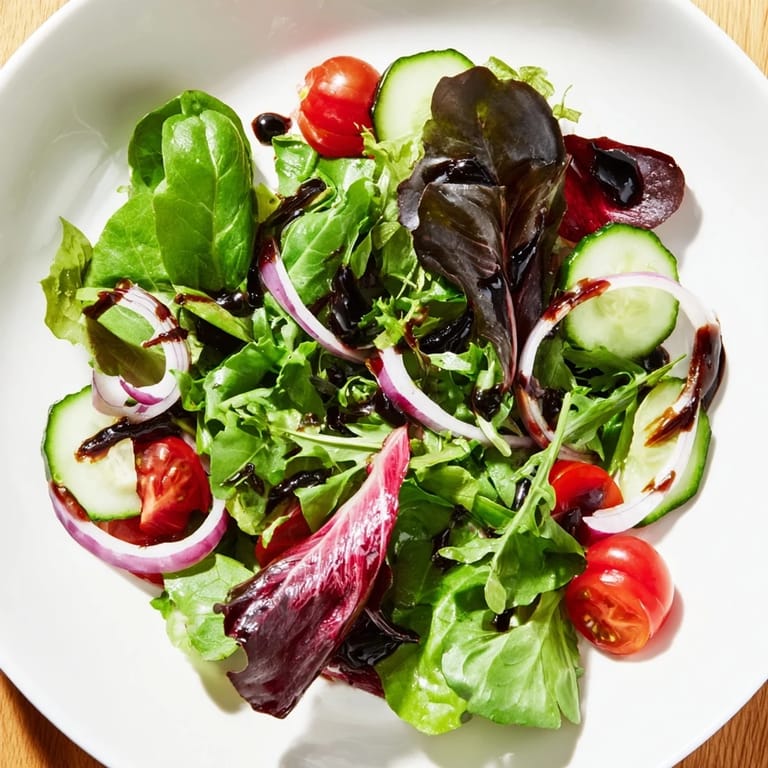
- Pour that dressing over your salad and toss with enough care that you're coating everything without crushing the delicate greens. A light hand here keeps everything crisp and elegant.
- Serve immediately:
- Don't let this sit—the magic is in serving it right away while the greens are still cold and the dressing is still warm enough to release its aromatics into the air as you bring it to the table.
 Save It
 The first time I served this to guests, I caught my mother actually closing her eyes while eating it. Not because it was complicated or fancy, but because something so simple made her fully present for a moment. That's when I realized salad doesn't have to be an apology for a meal—it can be the reason you gathered around the table.
Why This Dressing Changes Everything
Most vinaigrettes sit on top of salad like they're afraid of commitment. This balsamic reduction actually clings to the leaves, warming them just enough that they soften into the flavors instead of resisting them. The technique of reducing the vinegar isn't fancy—it's just heat and time doing what they do best. Once you taste the difference between raw vinegar and reduced, you'll understand why this simple step matters so much.
Making It Your Own
This salad is a canvas, not a prescription. On nights when I want something heartier, I've added crumbled feta, grilled chicken, or crispy chickpeas without changing a single thing about the dressing. On mornings when I'm eating alone, I keep the quantities exactly as written and feel like I'm giving myself something special. The balsamic reduction stays the star no matter what you add around it.
Timing and Prep
The beauty of this recipe is that it respects your schedule. You can reduce the balsamic earlier in the day and store it in the fridge—it'll keep for a week, thickening even more as it cools. When you're ready to eat, assembly becomes almost meditative: slice, toss, dress, serve. There's no last-minute panic, just the satisfaction of turning simple ingredients into something that tastes deliberately made.
- Slice your vegetables while the balsamic reduces so everything's ready to go.
- The balsamic reduction actually tastes better cold than warm, so make it ahead if you can.
- This salad should be dressed right before serving to keep the greens from wilting.
 Save It
 This salad became my answer to the question: what do you make when you want to cook something real but don't have hours? It's proof that simple done well beats complicated every single time. Serve it and watch people actually taste it.
Common Questions About Recipes
- → How do I make a balsamic reduction?
Simmer balsamic vinegar over medium heat for 6–8 minutes, stirring occasionally, until reduced by half and slightly thickened. Then let it cool before using.
- → Can I prepare the balsamic glaze ahead of time?
Yes, the balsamic reduction can be made in advance and stored in the refrigerator for up to one week.
- → What does Dijon mustard add to the dressing?
Dijon mustard adds a subtle depth and slight tanginess to the dressing, enhancing the overall flavor profile.
- → Are toasted walnuts necessary for this dish?
Walnuts are optional but provide a pleasant crunch and nutty flavor that complements the fresh ingredients.
- → What are some good additions for more protein?
Grilled chicken or chickpeas can be added to boost protein while maintaining a balanced, wholesome meal.
- → How should the salad be served for best taste?
Serve immediately after tossing with dressing to retain the crispness of the greens and freshness of the vegetables.