 Save It
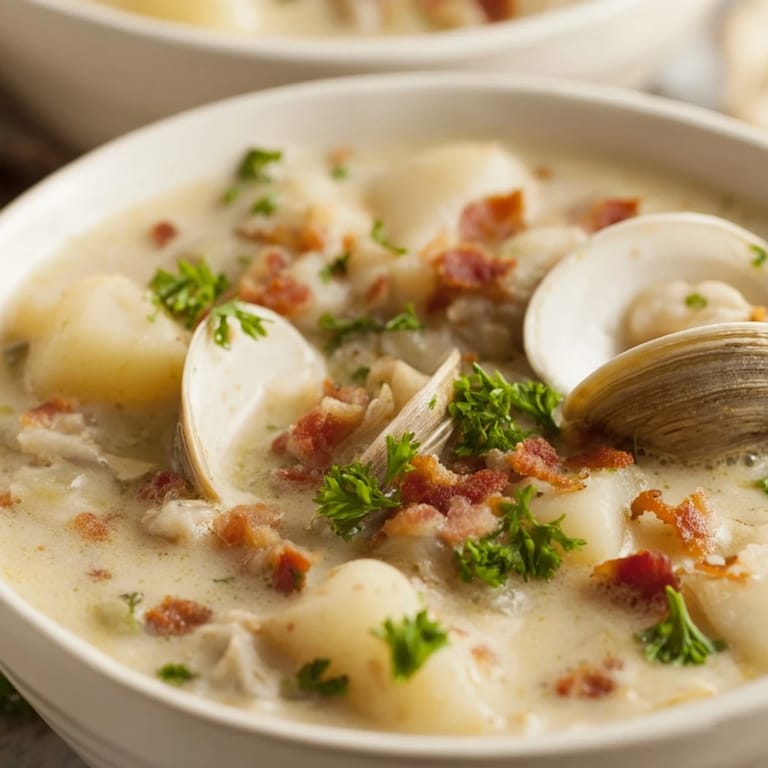
 The first time I attempted New England clam chowder during a bleak February in Boston, I accidentally used half-and-half instead of cream and wondered why it never thickened properly. My neighbor, a retired fisherman named Pete, tasted it and kindly told me that real chowder should coat the back of a spoon like velvet. That rainy afternoon lesson stuck with me more than any cookbook ever could.
Last winter during a particularly nasty Nor'easter, my kitchen became the neighborhood gathering spot. I made triple batches of this chowder while friends tracked snow through the mudroom, leaving wet boots and coats piled by the door. Something about steam rising off those bowls makes people forget how miserable the weather actually is outside.
Ingredients
- 2 pounds fresh clams or 2 cups canned chopped clams with juice: Fresh clams give you that sweet brininess that defines coastal New England cooking, but good quality canned clams work perfectly when you need dinner in under an hour
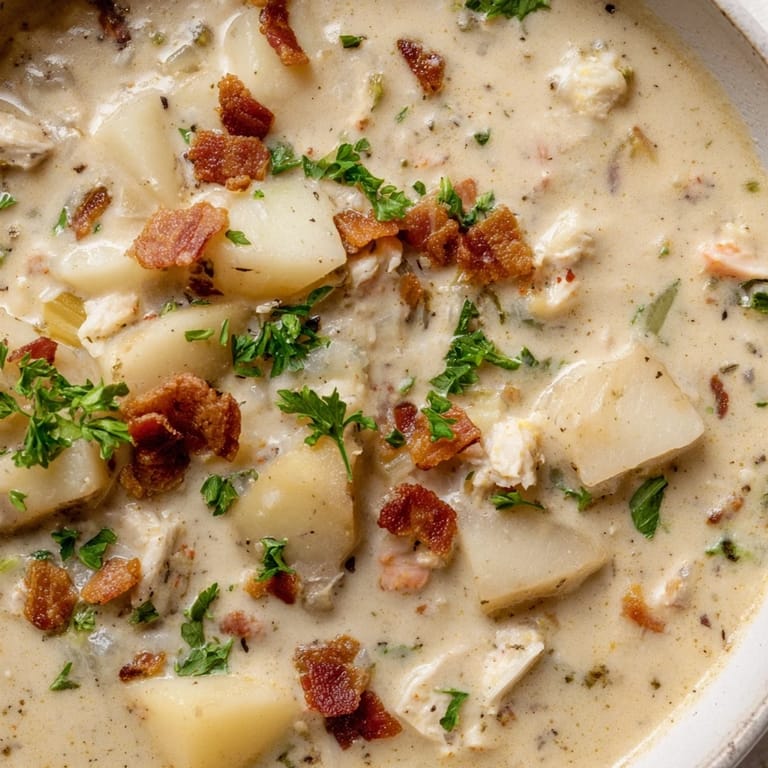
- 4 ounces salt pork or thick-cut bacon, diced: This is the foundation of the chowders soul, rendering down into smoky crisp bits that you will stir back in at the end
- 4 tablespoons unsalted butter: Butter joins forces with the rendered pork fat to create that rich base that makes restaurant chowder so addictive
- 1 medium onion, finely diced: Onion provides the aromatic backbone and should be cut small enough that it nearly disappears into the soup
- 2 celery stalks, diced: Celery adds essential freshness and a subtle crunch that balances all that creaminess
- 2 medium Yukon Gold or russet potatoes, peeled and diced: Yukon Golds hold their shape beautifully while russet potatoes will break down slightly to naturally thicken the broth
- 1 clove garlic, minced: One clove is perfect here since you want just a whisper of garlic without overpowering the delicate clams
- 2 tablespoons all-purpose flour: This creates the roux that ensures your chowder has body without becoming heavy or pasty
- 2 cups bottled clam juice plus 1 cup water: Bottled clam juice provides consistent brininess, but never use fish stock as it will overwhelm the clams
- 1 cup heavy cream: Heavy cream is non-negotiable for that luxurious restaurant texture, though you can use half-and-half for a lighter version
- 1 cup whole milk: The milk tempers the richness of the cream so the chowder remains drinkable rather than coating your mouth too heavily
- 1 bay leaf and 1/2 teaspoon dried thyme: These herbs work quietly in the background to add depth without announcing their presence
- 2 tablespoons chopped fresh parsley: Fresh parsley stirred in at the very end brightens everything and cuts through the richness
Tired of Takeout? 🥡
Get 10 meals you can make faster than delivery arrives. Seriously.
One email. No spam. Unsubscribe anytime.
Instructions
- Prepare the clams:
- If using fresh clams, scrub them thoroughly and steam them in a large pot with 1 cup of water over medium heat until the shells open, about 6 to 8 minutes. Discard any clams that refuse to open, then remove the meat and strain the cooking liquid for later use.
- Render the salt pork:
- Cook the diced salt pork or bacon in your Dutch oven over medium heat until the fat has rendered and the meat is golden and crisp, about 8 minutes. Remove the crispy bits with a slotted spoon but leave all that precious rendered fat behind.
- Build the vegetable base:
- Add the butter to the rendered fat and sauté the onion and celery until they are soft and translucent but not browned, about 5 minutes. Add the garlic and cook for just 1 minute until fragrant, being careful not to burn it.
- Create the roux:
- Sprinkle the flour over the softened vegetables and stir constantly for 2 minutes, cooking away the raw flour taste. This step is crucial for achieving that silky smooth consistency without any chalky texture.
- Add the liquids:
- Slowly whisk in the clam juice, reserved clam cooking liquid, milk, and cream, stirring vigorously to prevent any lumps from forming. The mixture will thicken dramatically as it comes to temperature.
- Simmer the potatoes:
- Add the diced potatoes, bay leaf, and thyme, then simmer uncovered until the potatoes are fork tender, about 12 to 15 minutes. Stir occasionally to prevent anything from sticking to the bottom of the pot.
- Finish with clams:
- Gently fold in the chopped clams and the crispy salt pork, then simmer for just 3 to 5 minutes more. Never let the chowder boil once the clams are added or they will become tough and rubbery.
- Season and serve:
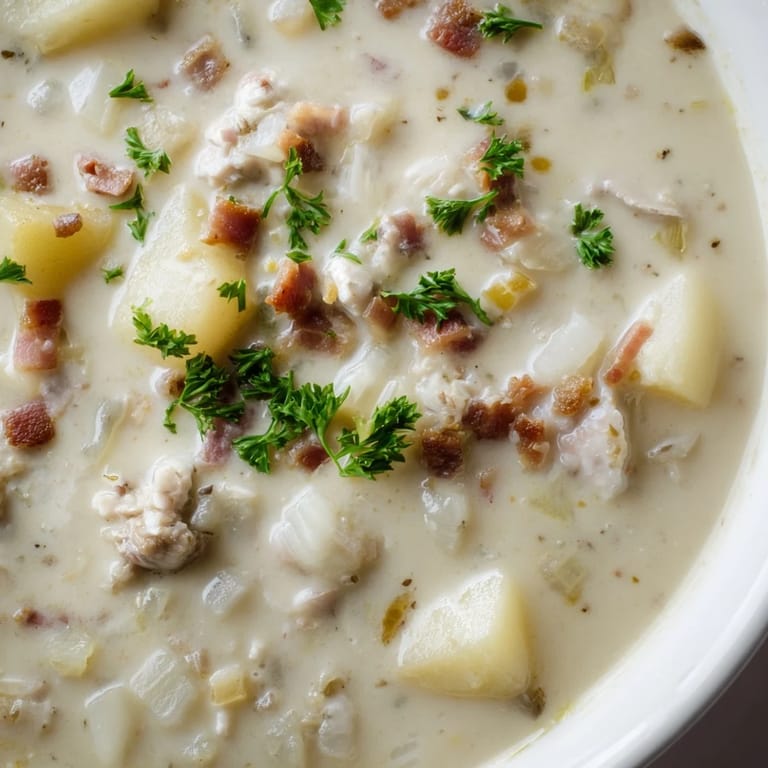
- Remove the bay leaf, stir in the fresh parsley, and season generously with salt and pepper. Serve immediately in warmed bowls with oyster crackers on the side.
 Save It
 This chowder has become my go-to when friends need comforting after hard news or just because Tuesdays sometimes call for something richer than ordinary life provides. Last month my sister called it better than any version she has had in coastal Maine, which might be the highest compliment I have ever received in my kitchen.
Making It Ahead
Chowder actually tastes better on day two when the flavors have had time to marry and mellow. Prepare the recipe completely, then cool it quickly and refrigerate for up to three days. The potatoes will continue to absorb liquid, so plan to add more cream or milk when reheating.
Choosing Your Clams
Littleneck clams are my top choice because they offer the perfect balance of sweetness and brine, but cherrystone clams work beautifully if you prefer larger pieces of meat in every spoonful. If you are using canned clams, seek out brands that pack them in their natural juice rather than oil for the most authentic flavor.
Serving Suggestions
A warm loaf of crusty sourdough bread is essential for soaking up every last drop of broth from the bottom of your bowl. Oyster crackers are traditional but I also love serving chowder alongside a simple green salad dressed with nothing but lemon juice and olive oil to cut through the richness.
- Warm your bowls in a low oven before serving to keep the chowder hot longer
- Pass additional hot cream at the table for guests who prefer an even richer bowl
- A glass of crisp Sauvignon Blanc provides the perfect acidic counterpoint to all that creamy goodness
 Save It
 There is something profoundly satisfying about making a dish that has warmed generations of New Englanders through harsh winters and seaside storms. I hope this chowder finds its way into your own rotation of comfort foods.
Common Questions About Recipes
- → What's the difference between New England and Manhattan clam chowder?
New England chowder features a rich, creamy dairy-based broth, while Manhattan chowder uses tomatoes for a reddish, lighter soup. The New England version relies on cream and milk for its signature velvety texture and white color.
- → Can I use canned clams instead of fresh?
Absolutely. Canned chopped clams work well and save significant preparation time. Just reserve the clam juice from the can to enhance the broth flavor. For best results, look for whole baby clams rather than minced pieces.
- → Why does my chowder separate or curdle?
High heat causes dairy to separate. Always add cream at the end and keep the heat at a gentle simmer—never boil. If reheating, do so slowly over low heat while stirring constantly.
- → How can I make a lighter version?
Replace half the heavy cream with half-and-half or whole milk. You can also increase the potato-to-cream ratio for a thicker base with less dairy. The roux (flour and fat) helps maintain body even with reduced cream.
- → What type of potatoes work best?
Yukon Gold or russet potatoes hold their shape well during cooking. Waxy red potatoes may not break down enough to help thicken the broth naturally. Dice potatoes evenly so they cook at the same rate.
- → How long does leftover chowder keep?
Store in an airtight container in the refrigerator for up to 3 days. Reheat gently over low heat, adding a splash of milk or cream if it becomes too thick. The flavors often develop and improve overnight.