 Save It
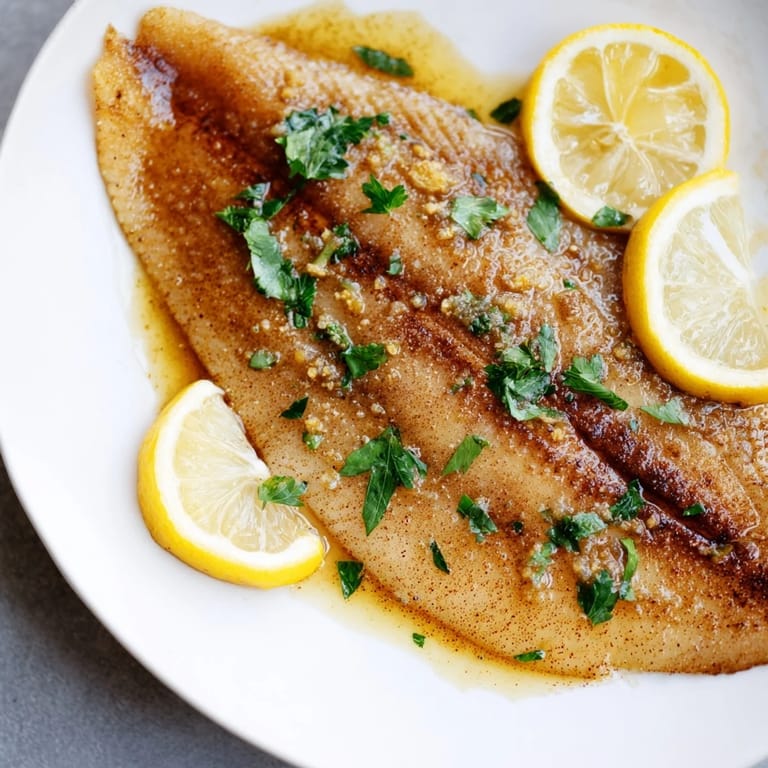
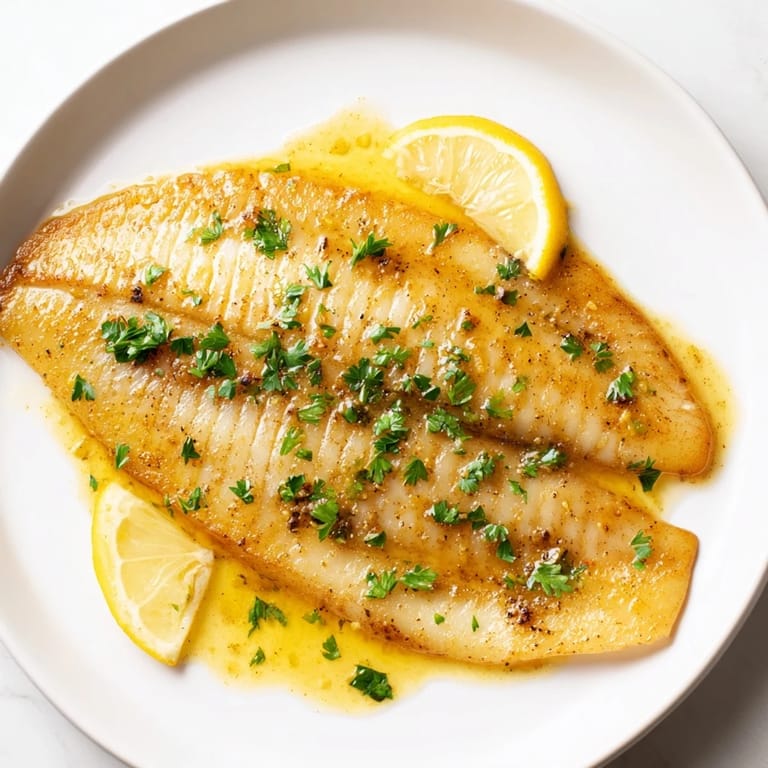
 The smell of butter turning golden in a hot pan still brings me straight back to a tiny Paris bistro where I first tasted flounder meunière. The waiter set down a pale, delicate fillet glistening under a pool of nutty, lemon-scented butter, and I remember thinking it looked almost too simple to be extraordinary. One bite proved me wrong. I've been making it at home ever since, amazed that something this elegant takes less time than ordering takeout.
I made this for my mom on her birthday last spring, and she kept saying it reminded her of a trip she took to Normandy decades ago. We sat at the table long after we'd finished eating, just talking and soaking up the last bits of sauce with crusty bread. That's when I realized some recipes aren't just about feeding people, they're about opening little windows into memories we didn't know we were storing.
Ingredients
- Flounder fillets: Look for fillets that are firm, not mushy, and smell like the ocean in a good way. If your fishmonger has skin-on, ask them to remove it for you.
- Kosher salt and black pepper: Season right before dredging so the salt doesn't draw out moisture and make the fish soggy.
- All-purpose flour: A light dusting creates that delicate golden crust without overwhelming the fish. Don't pack it on.
- Unsalted butter (divided): You'll use some to cook the fish and the rest to make the nutty, caramelized sauce. Salted butter can tip the flavor too far.
- Olive oil: Mixing it with butter raises the smoke point so you can get a beautiful sear without burning.
- Lemon juice: Freshly squeezed is the only way. Bottled lemon juice tastes flat and won't give you that bright, clean finish.
- Flat-leaf parsley: Curly parsley works in a pinch, but flat-leaf has a fresher, less bitter flavor that plays better with butter.
- Lemon wedges: For serving. Some people want extra brightness, and it's nice to let them decide.
Tired of Takeout? 🥡
Get 10 meals you can make faster than delivery arrives. Seriously.
One email. No spam. Unsubscribe anytime.
Instructions
- Prep the Fillets:
- Pat the flounder dry with paper towels until there's no trace of moisture left. Season both sides with salt and pepper, using your fingers to press the seasoning gently into the flesh.
- Dredge Lightly:
- Spread flour on a shallow plate. Dredge each fillet by laying it in the flour, then lifting and shaking it so only a thin, even coat remains.
- Heat the Pan:
- Place a large nonstick skillet over medium-high heat and add 2 tablespoons butter plus the olive oil. Wait until the butter is foamy and smells nutty before adding fish.
- Pan-Fry the Fish:
- Lay the fillets in the pan without crowding them. Cook for 2 to 3 minutes per side until golden and the flesh flakes easily with a fork. Transfer to a warm platter.
- Brown the Butter:
- Wipe out any flour bits with a paper towel, then add the remaining 4 tablespoons butter. Swirl the pan gently over medium heat until the butter turns amber and smells like toasted hazelnuts, about 2 to 3 minutes.
- Finish the Sauce:
- Pull the pan off the heat and immediately stir in lemon juice and parsley. The sauce will sizzle and foam a little, that's exactly what you want.
- Plate and Serve:
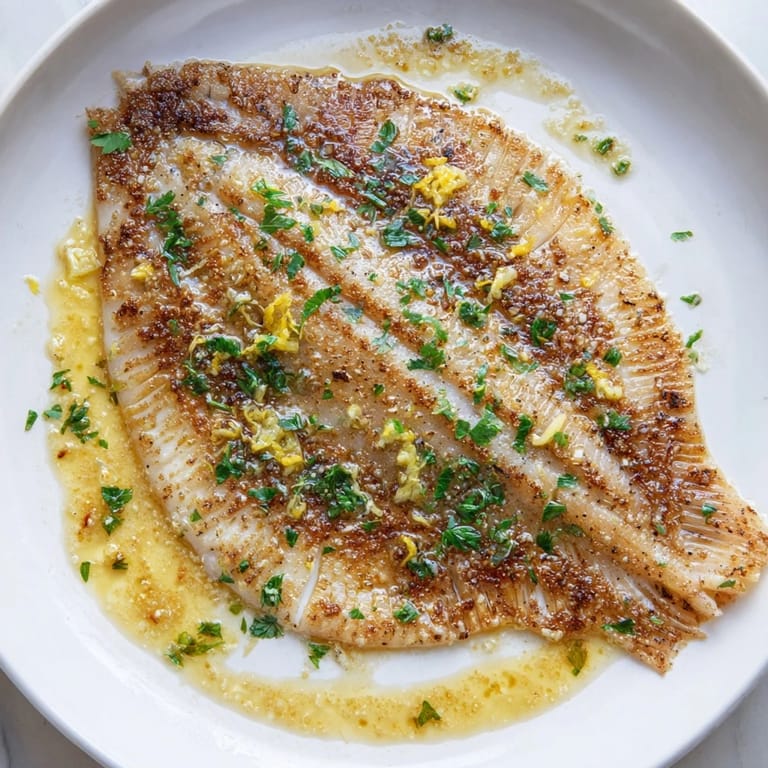
- Spoon the warm browned butter sauce generously over each fillet. Serve right away with lemon wedges on the side.
 Save It
 One night I served this to a friend who swore she hated fish. She took one cautious bite, then another, and by the end she was using her fork to chase every last drop of sauce across the plate. She looked up and said, I think I've been eating the wrong fish my whole life. It's funny how a dish this simple can change someone's mind about an entire ingredient.
What to Serve Alongside
I like pairing this with steamed green beans tossed in a little butter and garlic, or roasted baby potatoes with thyme. A crisp white wine like Chablis or Sauvignon Blanc is perfect if you're feeling fancy. If you want something heartier, a warm baguette for soaking up the sauce never disappoints. Keep the sides light so the delicate flavor of the fish stays front and center.
Choosing the Right Fish
Flounder is ideal because it's thin, delicate, and cooks fast, but Dover sole, tilapia, or even thin catfish fillets work beautifully. The key is choosing a white fish that's not too thick, anything over half an inch will take longer and might not cook evenly. Ask your fishmonger what's freshest that day. If they're enthusiastic about something, trust them.
Make It Your Own
Once you've nailed the classic version, it's fun to experiment. A splash of white wine in the butter before it browns adds a subtle depth. Swap parsley for fresh tarragon or chives if you want a different herbal note. Some people love adding capers to the sauce for a briny pop.
- Try a pinch of smoked paprika in the flour for a hint of warmth.
- Finish with a few toasted slivered almonds for crunch.
- If you're gluten-free, rice flour works perfectly for dredging.
 Save It
 This is the kind of recipe that makes you feel like a real cook, even if you're still figuring things out. It's proof that French elegance doesn't require fancy techniques, just good ingredients, a hot pan, and a little bit of patience.
Common Questions About Recipes
- → How do I prevent the flounder from sticking to the pan?
Use a nonstick skillet and ensure the butter-oil mixture is foamy before adding the fillets. Don't move the fish around—let it cook undisturbed for 2-3 minutes per side so a light golden crust forms naturally.
- → What does browned butter taste like?
Browned butter has a rich, nutty flavor that deepens as the milk solids caramelize. Watch it carefully—it goes from golden to burnt quickly. It should smell fragrant and toasty, not burned.
- → Can I make this with other white fish?
Yes! Dover sole, tilapia, cod, or halibut work beautifully. Adjust cooking times based on thickness—thinner fillets need less time to cook through, typically 1-2 minutes per side.
- → How do I know when the flounder is cooked through?
The flesh should be opaque and flake easily with a fork. Flounder fillets typically need 2-3 minutes per side over medium-high heat. Avoid overcooking or the delicate texture becomes dry.
- → Can I prepare this ahead of time?
Cook and serve immediately for the best texture and flavor. The browned butter sauce should be poured over the fish right away. You can prep ingredients (pat fish dry, measure ingredients) up to 2 hours ahead.
- → What's the best way to serve this dish?
Serve immediately on warm plates with lemon wedges on the side. Pair with steamed green beans, roasted asparagus, or boiled potatoes to complement the rich butter sauce.