 Save It
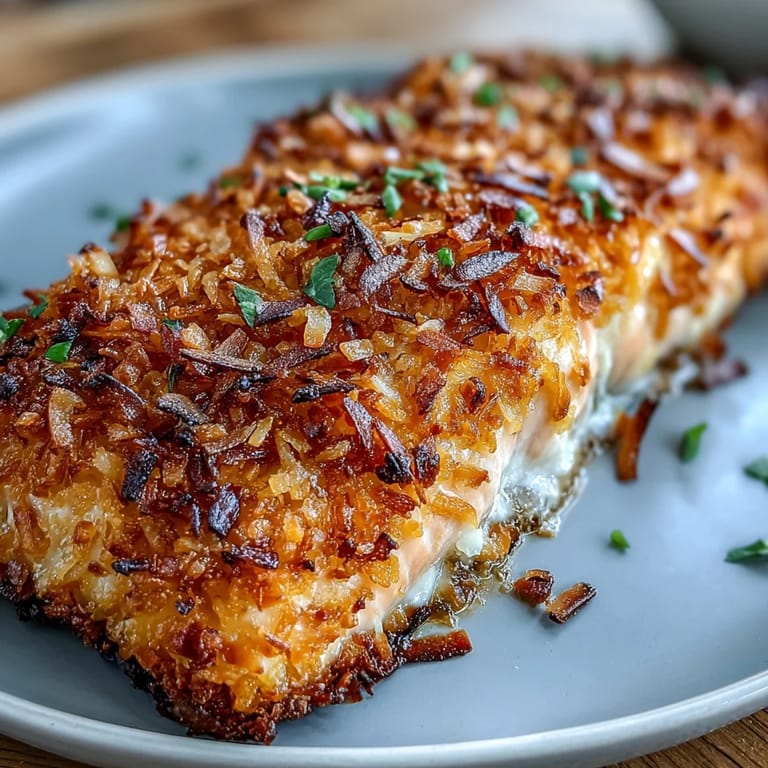
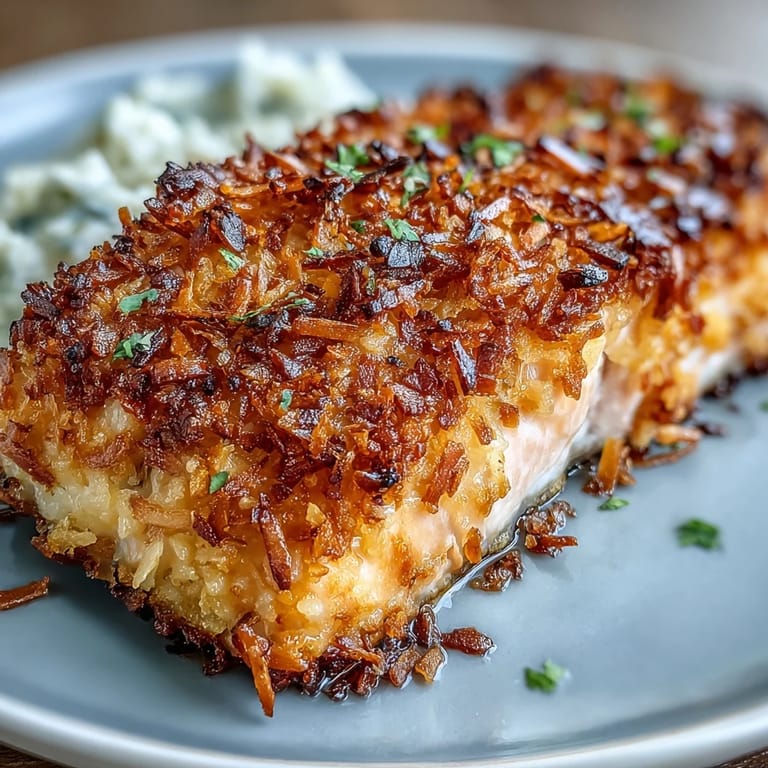
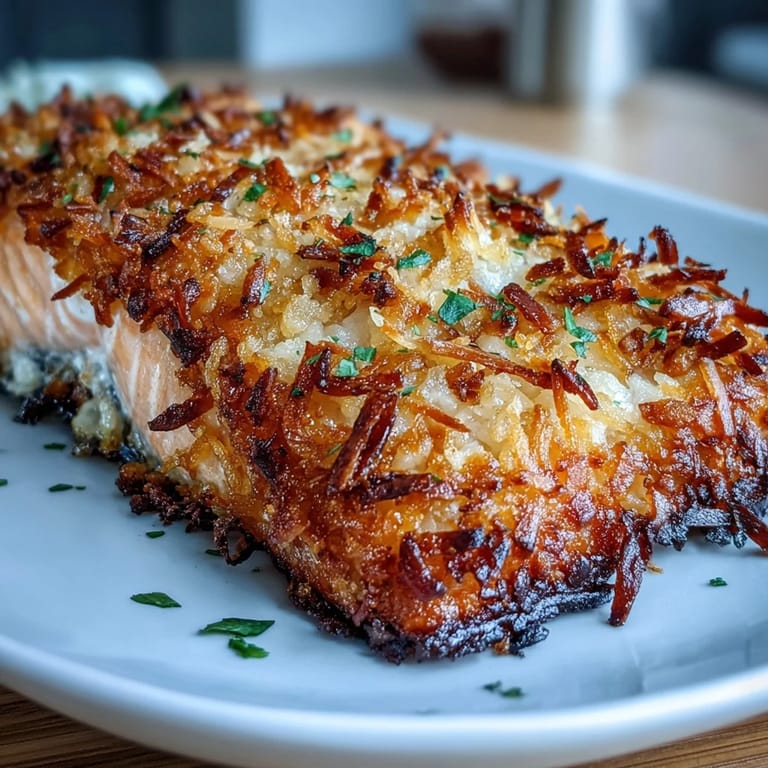
 My neighbor brought home this salmon dish from a beachside restaurant and couldn't stop raving about the crispy coconut coating and the way the pineapple salsa cut through the richness. I was skeptical at first—coconut on fish felt like an odd choice—but one bite changed my mind completely. Now whenever I'm craving something that feels both indulgent and refreshingly light, this is what I make. The combination works because the sweetness of the tropical flavors doesn't overshadow the salmon, it just plays with it.
I made this for a dinner party where someone asked if I'd studied culinary school, which honestly made my night. The golden fillets glistening with that fresh salsa looked restaurant-quality, but what really got people talking was how the flavors surprised them—nobody expected the lime and cilantro to be quite so bright against the buttery salmon. That meal became the reason I started cooking more adventurously at home.
Ingredients
- Salmon fillets (4, 6-oz each, skin removed): Choose fillets that are roughly the same thickness so they cook evenly; ask your fishmonger to remove the skin, which makes the coating stick better and saves you a step.
- Unsweetened shredded coconut (1 cup): The unsweetened version is crucial here because sweetened coconut will brown too quickly and taste cloying; it toasts beautifully on the salmon's exterior.
- Panko breadcrumbs (½ cup): Panko gives you that airy, crispy texture—regular breadcrumbs compress and become dense by comparison.
- Large eggs (2, lightly beaten): These act as your adhesive and help create that golden crust when the coconut mixture hits hot oil.
- Olive oil (2 tbsp for searing): Use a good quality oil that can handle medium-high heat without smoking; this is your only fat for the initial sear.
- Sea salt (½ tsp) and black pepper (¼ tsp): Season generously because the coating will mute some of these flavors once it's applied.
- Smoked paprika (¼ tsp): This adds a subtle warmth and color without overpowering the delicate fish.
- Fresh pineapple (1 cup diced): Truly fresh pineapple makes a difference; canned tastes flat next to the brightness of everything else in the salsa.
- Red bell pepper (½, finely chopped): The pepper adds crunch and a slight vegetal note that balances the fruit's sweetness.
- Red onion (¼ cup minced): This brings a pleasant bite that keeps the salsa from being one-dimensional.
- Fresh cilantro (1 tbsp chopped): Add this just before serving so it stays vibrant; it wilts if it sits too long in the lime juice.
- Lime juice (from 1 lime): Fresh lime is non-negotiable; bottled juice just won't have the same brightness.
- Honey (1 tsp, optional): Only add this if your pineapple tastes underripe or if you prefer your salsa sweeter.
- Lime wedges: These are for garnish and an extra squeeze at the table, letting people adjust the tartness to their taste.
Tired of Takeout? 🥡
Get 10 meals you can make faster than delivery arrives. Seriously.
One email. No spam. Unsubscribe anytime.
Instructions
- Prepare your salmon with intention:
- Pat each fillet completely dry with paper towels—moisture is the enemy of a crispy crust. Season both sides with salt, pepper, and paprika, then let them rest at room temperature for about 10 minutes so the seasoning begins to penetrate the flesh rather than just sitting on the surface.
- Set up your dredging station:
- Combine the coconut and panko in one shallow dish and beat your eggs in another. This assembly-line approach keeps things clean and prevents you from getting egg all over the coconut mixture. The egg should be lightly beaten, not aerated—just mixed enough to be uniform.
- Coat each fillet with care:
- Dip each salmon fillet into the egg, let the excess drip back into the bowl, then press gently into the coconut mixture, making sure to coat all the sides and edges. The pressure matters here; you want the coating to adhere, but you're not trying to cake it on thick.
- Make your salsa while the oven preheats:
- Combine the pineapple, bell pepper, red onion, and cilantro in a medium bowl, then add the lime juice, a pinch of salt, and honey if you're using it. Toss gently and let it sit—the flavors will meld and the pineapple will release some of its juice, which becomes part of the dressing.
- Sear with confidence:
- Heat your oven to 375°F and get a large non-stick, oven-safe skillet screaming hot over medium-high heat. When you add the olive oil, wait until it shimmers and barely smokes, then place the salmon in the pan. You want that sizzle—that's what creates the golden crust. Let it cook undisturbed for 3 to 4 minutes, then flip carefully and sear the other side for 2 to 3 minutes.
- Finish in the oven:
- Transfer the whole skillet to the preheated oven and bake for 8 to 10 minutes, depending on the thickness of your fillets. You're looking for the salmon to flake gently when tested with a fork and reach an internal temperature of 145°F. The residual heat in the pan will continue cooking the bottom, so don't overbake.
- Rest and plate with flair:
- Let the salmon rest in the warm skillet for 5 minutes—this helps the flesh stay moist. Plate each fillet, top generously with the pineapple salsa, and finish with a lime wedge and a drizzle of any pan juices if you'd like.
 Save It
 What struck me most about this dish is how it brought together people with very different food preferences—my partner who usually avoids anything coconut-flavored actually asked for seconds. That's when I realized the recipe isn't about forcing a trend together; it's about finding flavors that genuinely complement each other, and somehow they do.
Why the Oven Finish Matters
The reason you sear first and finish in the oven instead of cooking the whole thing on the stovetop is temperature control. Searing gives you that crispy, golden exterior, but continuing on the stove risks burning the coating or overcooking the salmon before the center is done. The oven's gentle, even heat lets the fish cook through while the crust stays intact and bronzed. I learned this the hard way by babysitting a pan too long and ending up with either a raw center or a blackened crust.
Customizing Your Salsa
The beauty of the pineapple salsa is that it's deeply customizable without losing its character. Some nights I swap the red bell pepper for yellow, or I add a tiny pinch of jalapeño if I want heat. I've even experimented with swapping cilantro for mint when that's what I have on hand, and the result is still delicious, just slightly different. The core—pineapple, lime, and salt—is what carries the dish, and everything else is just your personal touch.
Serving Suggestions and Pairings
This salmon sings alongside coconut rice, which echoes the tropical flavors without competing with them. A crisp green salad with a light vinaigrette also works beautifully, offering contrast to the richness of the coconut crust. For beverages, a chilled Sauvignon Blanc is classic for a reason—the acidity cuts through the butter and coconut—but I've also found a light lager or even a sparkling ginger beverage pairs surprisingly well.
- Make extra salsa if you're serving guests; people love having a second helping, and it keeps well in the fridge for a day.
- If you're cooking for someone with gluten sensitivities, swap the regular panko for gluten-free panko or crushed rice crackers, which crisp up just as nicely.
- Leftover salmon is wonderful at room temperature the next day, shredded into a salad with the remaining salsa.
 Save It
 This dish has become my go-to when I want to feel like I've done something special without spending half the evening in the kitchen. It's the kind of meal that tastes more complicated than it actually is, which is the highest compliment you can give a recipe.
Common Questions About Recipes
- → Can I use frozen salmon for coconut crusted salmon?
Yes, thaw frozen salmon completely and pat thoroughly dry before coating. Excess moisture prevents the coconut crust from adhering properly. Let thawed fillets sit at room temperature for 15-20 minutes to ensure even cooking.
- → How do I keep the coconut crust from burning?
Monitor the heat during searing—medium-high prevents scorching. Transfer to the oven once both sides are golden-brown. The oven finishing method cooks the salmon through while maintaining the crust's color and texture.
- → Can I make the pineapple salsa ahead of time?
Prepare salsa up to 4 hours in advance and refrigerate. The flavors actually improve as they meld together. Bring to room temperature 15 minutes before serving for optimal taste and texture.
- → What sides pair well with coconut salmon?
Coconut rice complements the tropical flavors beautifully. Fresh green salads with citrus vinaigrette, roasted asparagus, or sautéed bok choy work equally well. Keep sides light to let the salmon shine.
- → How do I know when the salmon is done?
Use an instant-read thermometer—145°F at the thickest point is the target. Visual cues include opaque flesh that flakes easily with a fork. The salmon will continue cooking slightly during the 5-minute resting period.
- → Can I make this dish gluten-free?
Substitute regular panko with certified gluten-free panko or crushed rice crackers. All other ingredients naturally fit gluten-free requirements. Double-check labels on pre-shredded coconut, which sometimes contains wheat-based anti-caking agents.