 Save It
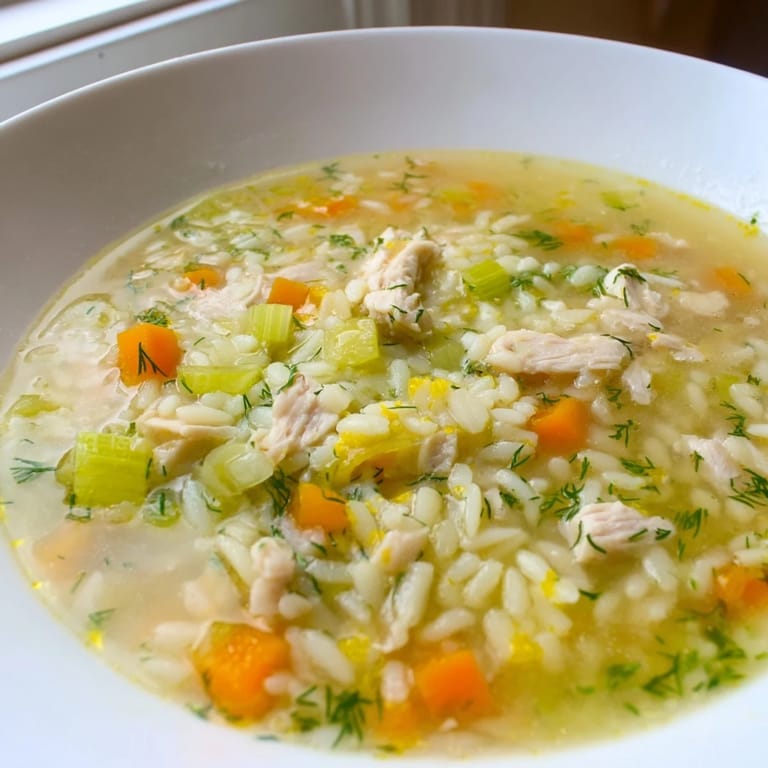
 There's something about a steaming bowl of lemon soup that makes everything feel manageable. I discovered this particular version on a chilly afternoon when I had leftover rotisserie chicken taking up space in my fridge and a lemon that had been rolling around for days. The combination seemed obvious in retrospect, but that first spoonful—bright, warm, and unexpectedly elegant—caught me off guard. Now it's the soup I turn to when I need comfort that doesn't feel heavy, when I want something that tastes like it took effort but honestly doesn't.
I made this for my neighbor one winter when she'd been under the weather, and watching her face light up when she tasted it made me realize soup is really about showing up for people. She called the next day asking for the recipe, and I've since made it for friends dealing with everything from bad weeks to celebrations. There's an ease to serving it that makes people feel looked after without any fuss.
Ingredients
- Cooked chicken breast: Two cups shredded or diced—rotisserie chicken saves time and adds extra flavor, though plain poached works beautifully too.
- Yellow onion: One medium, finely chopped—the foundation of everything, so don't rush this step.
- Carrots and celery: Two medium carrots and two stalks of celery, diced—they soften into the broth and disappear a little, which is exactly what you want.
- Garlic: Three cloves minced—it's brief in the pan, so watch it closely so it turns fragrant rather than bitter.
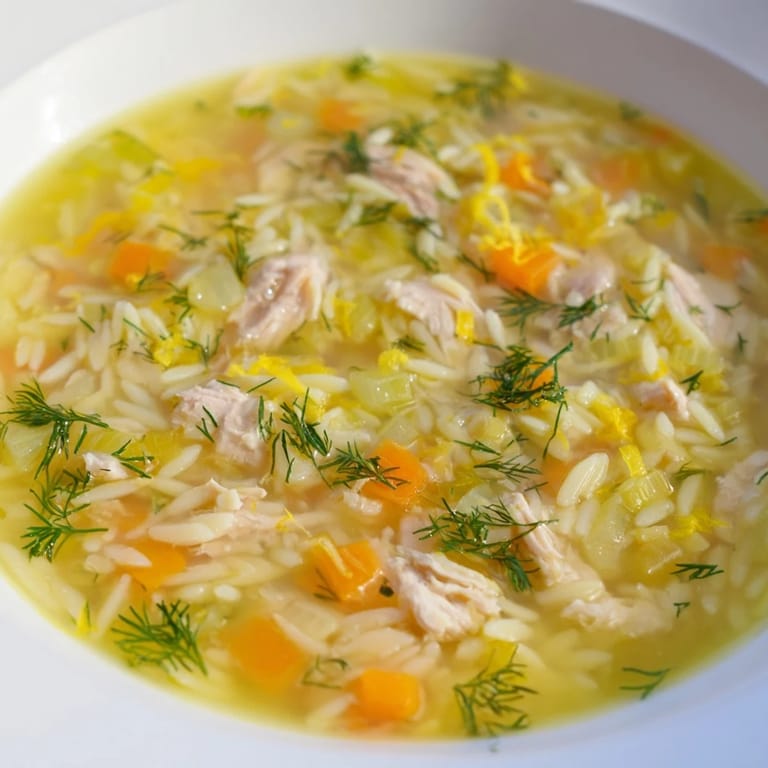
- Lemon: One whole lemon, zested and juiced—zest goes in at the end for brightness, juice comes right after so it doesn't cook away.
- Fresh dill and parsley: Two tablespoons fresh dill chopped, two of parsley if you have it—they're delicate, so add them last and let them keep their personality.
- Orzo pasta: Three-quarters of a cup—it plumps up in the broth and becomes almost creamy without any cream involved.
- Chicken broth: Six cups low-sodium—the quality here matters more than you might think, so taste it first before you season.
- Olive oil: Two tablespoons—good olive oil, if you have it, makes a difference you can taste at the end.
- Bay leaf, thyme, salt, and pepper: Bay leaf and half a teaspoon dried thyme go in early, salt and pepper at the very end after tasting.
- Parmesan cheese: Grated, optional for serving—it adds richness but the soup is equally lovely without it.
Tired of Takeout? 🥡
Get 10 meals you can make faster than delivery arrives. Seriously.
One email. No spam. Unsubscribe anytime.
Instructions
- Build your base:
- Heat two tablespoons of olive oil in a large pot over medium heat, then add your chopped onion, carrot, and celery. Let them soften for about five minutes, stirring occasionally—you want them tender but not colored, releasing their sweetness into the oil.
- Awaken the aromatics:
- Stir in the minced garlic, half a teaspoon of dried thyme, and a bay leaf. Within about a minute you'll smell that unmistakable fragrance that tells you everything is about to come together—that's when you know it's right.
- Bring it to life:
- Pour in your six cups of chicken broth and bring everything to a boil. Once it's bubbling, you've got momentum.
- Cook the orzo:
- Add three-quarters of a cup of orzo pasta and let it simmer for eight to ten minutes, stirring occasionally so the pasta doesn't stick to itself. It should be just tender, not mushy—this is where tasting as you go really pays off.
- Reunite the chicken:
- Add your two cups of cooked chicken along with the lemon zest, letting everything warm through for three to four minutes. The chicken is already cooked, so you're really just heating it and letting the lemon scent rise into the steam above the pot.
- Season to your taste:
- Fish out the bay leaf, then stir in two tablespoons of fresh chopped dill along with three-quarters of a teaspoon of salt and half a teaspoon of black pepper. Taste it, then taste it again—this is your moment to make it exactly what you want, balancing the bright lemon against the savory broth.
- Serve generously:
- Ladle the soup into bowls and finish with a scatter of fresh parsley if you have it and a light shower of grated Parmesan. Serve it hot, while the flavors are still singing.
 Save It
 A friend once told me she makes this soup whenever she feels like she's failing at something, because it reminds her that sometimes the simplest combinations—chicken, lemon, warmth—are the most honest. I think about that every time I make it.
Why Leftover Chicken Changes Everything
The genius of this soup is that it transforms chicken you might have already cooked into something that feels entirely new. Rotisserie chicken from the market works wonderfully because it brings extra flavor from the roasting process, but even plain poached chicken becomes something completely different once it's swimming in this broth. The chicken isn't the star—it's the supporting player that lets everything else shine.
The Lemon Question
Lemon in soup seems intimidating until you make it once and realize how forgiving it actually is. The brightness doesn't disappear, it just needs to arrive at the table, not get lost during cooking. Some people worry about it tasting sharp or overwhelming, but in this context with the chicken and the soft vegetables, it acts more like a spotlight than a sledgehammer. If you've never cooked with lemon this way, this is the perfect introduction—you'll taste exactly why it matters.
When You Want More from a Simple Soup
The beauty of this recipe is its flexibility without sacrificing its soul. You can add a handful of fresh spinach or peas in the last minute if you want more green, or use brown rice instead of orzo for a different texture entirely. Some people stir in a splash of cream at the end, though I find it unnecessary. The avgolemono variation—whisking egg yolks into hot broth before stirring it in—transforms it into something almost velvety, more Greek taverna than simple weeknight soup.
- Rice, small pasta, or even egg noodles work in place of orzo if that's what you have on hand.
- Don't skip the dill—it's the secret that makes this soup taste like more than the sum of its parts.
- A sprinkle of Parmesan at the table is optional, but it adds a savory note that some people will love and others won't miss.
 Save It
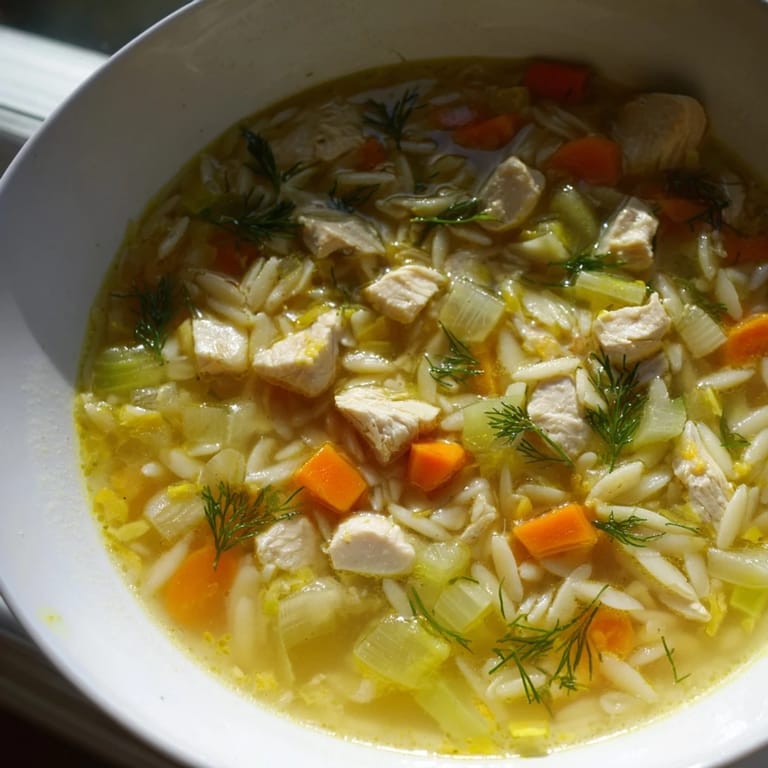
 This soup sits somewhere between nourishment and comfort, asking for nothing fancy but delivering something that feels thoughtful. Make it when you have time to sit with a bowl and notice what you're tasting.
Common Questions About Recipes
- → Can I substitute orzo with another grain?
Yes, rice can be used instead of orzo for a gluten-free option while maintaining a similar texture.
- → How do I enhance the soup’s richness?
Incorporate beaten egg yolks whisked with hot broth off heat (avgolemono style) to create a creamy texture and deepen flavor.
- → What herbs complement this dish best?
Dill and thyme bring fresh, aromatic notes that harmonize well with lemon and chicken.
- → Can leftover cooked chicken be used?
Absolutely, roast or rotisserie chicken works well, making this a convenient and flavorful meal.
- → Are there options to increase vegetable content?
Adding spinach, peas, or other fresh vegetables can boost nutrition and add variety without altering the core flavors.