 Save It
 Whenever I catch the scent of peaches sizzling in brown sugar, I'm reminded of the hum of summer afternoons with the windows thrown open and sunlight slanting across the counter. The magic that happens when butter, sugar, and fruit meet in a warm pan is hard to overstate & I swear, this upside-down cake always gets people poking their heads into the kitchen. Last August, while trying out a stash of farm-stand peaches, I stumbled onto this combination almost by accident when I realized I was—yet again—out of white sugar for the topping. Making a cake like this feels like harnessing summer in every slice. It's the kind of dessert that begs you to linger a little longer at the table, forks in hand and laughter echoing.
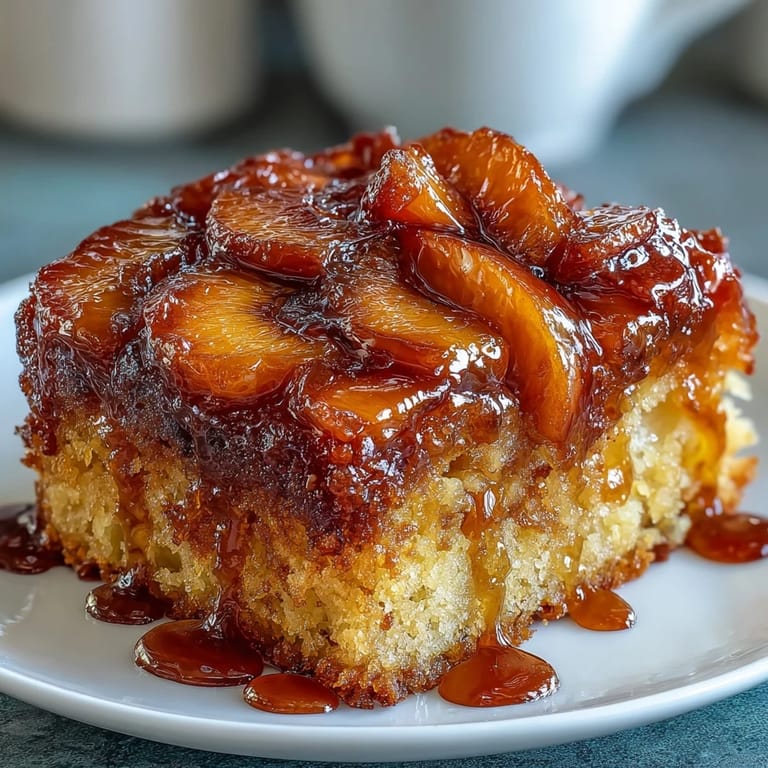
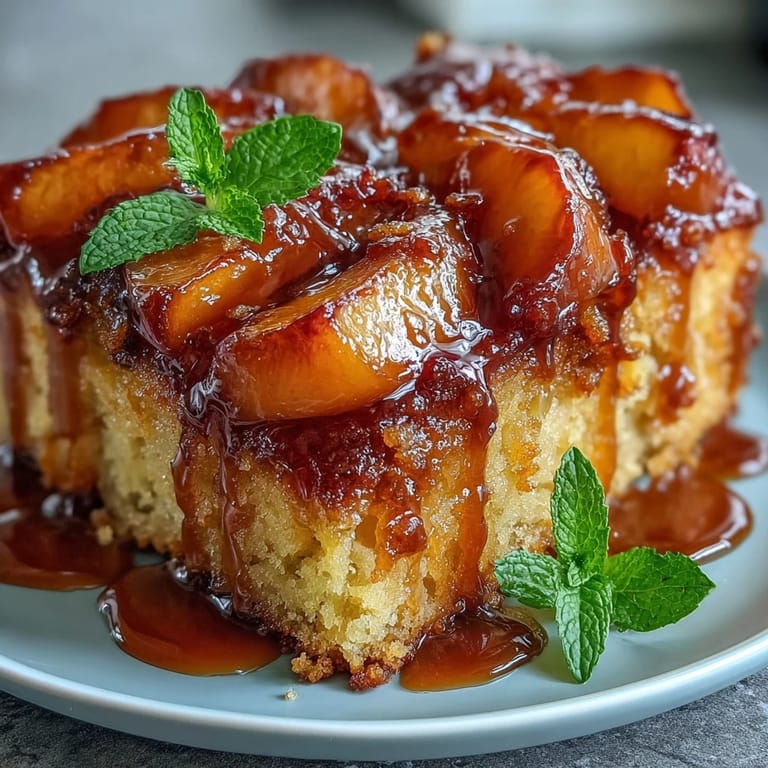
I’ll never forget bringing this cake to a spontaneous backyard gathering when everyone expected simple cookies—and seeing, with surprise, faces light up as I flipped the cake and those glistening peaches came into view. There was a moment of suspense; the cake warming my hands just before the reveal, and then cheers all around at the sight of the caramelized fruit.
Ingredients
- Ripe peaches: If you can find fragrant, slightly soft peaches, they bring extra juiciness to every bite (I’ve learned peeling them with a sharp paring knife is fastest).
- Unsalted butter: Essential for rich flavor and soft crumb in both topping and batter & room temperature butter makes mixing so much easier.
- Light brown sugar: This brings deep caramel notes on top; pat it gently so it dissolves into the melted butter without clumping.
- All-purpose flour: Go for a gentle hand when measuring—fluff it up and spoon it in for a tender cake.
- Baking powder: For that classic lift, give your can a shake to break up any lumps before measuring.
- Salt: Just a quarter teaspoon balances the sweetness of the caramelized topping and cake.
- Granulated sugar: Creamed with butter, it makes the crumb light and lovely—don’t rush this bit.
- Eggs: Let them warm to room temperature so they incorporate smoothly and keep the batter stable.
- Vanilla extract: Stirred in at the end, a splash adds warmth and rounds out the fruit flavor perfectly.
- Whole milk: I always use whole milk here for richness, but 2% works in a pinch. Add it gradually to avoid splashes!
Tired of Takeout? 🥡
Get 10 meals you can make faster than delivery arrives. Seriously.
One email. No spam. Unsubscribe anytime.
Instructions
- Get Set Up:
- Preheat your oven to 350°F (175°C) and grease a 9-inch round cake pan—I always swipe a bit of butter generously along the edges to make sure nothing sticks.
- Create the Peach Caramel:
- Melt the butter in your cake pan right in the oven, then pull it out and swirl in the brown sugar until you've got a sandy, glossy base (it'll smell amazing).
- Artful Peach Arrangement:
- Layer the peach slices over the brown sugar mixture, nestling them close for a beautiful pattern—don’t stress if you overlap a little, it only adds to the look once flipped.
- Mix the Dry Ingredients:
- Whisk the flour, baking powder, and salt in a medium bowl until combined; this step keeps your cake evenly tender without dry patches.
- Cream and Combine:
- Beat the room-temp butter and granulated sugar together until pale and fluffy, then mix in eggs one at a time, scraping down the bowl to catch stray bits. Add the vanilla and blend gently.
- Bring it All Together:
- Alternately add the flour mixture and milk to the wet ingredients, starting and ending with flour; mix just until combined for the plushest outcome.
- Assemble & Bake:
- Gently spread the batter over the peaches (it’ll feel thick), smoothing the top. Bake for 40–45 minutes until golden and a toothpick comes out mostly clean, with just a crumb or two.
- Revealing the Magic:
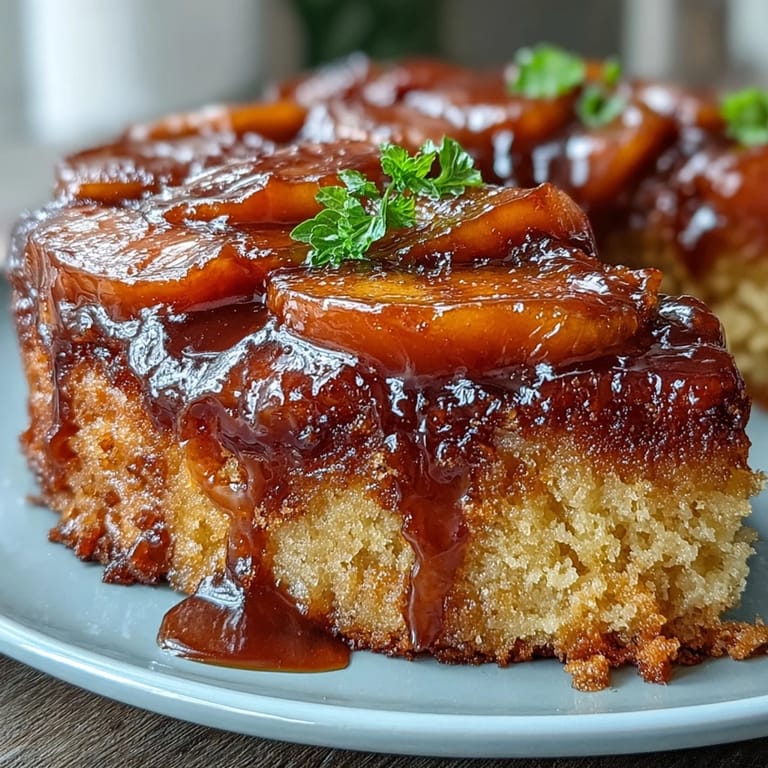
- Cool for 10 minutes in the pan—this is important or the topping can stick—then run a knife around the edges and, with a deep breath, invert onto your serving plate. If any peaches cling to the pan, simply nudge them back into place while the cake is warm.
 Save It
 This cake quietly became the centerpiece at my friend’s birthday when the impromptu candlelight made the peach topping glisten even more. Sharing slices, I realized sometimes the simplest desserts hold the most memory-making power.
How to Keep Peaches From Sticking
Melting the butter right in the pan before sprinkling the brown sugar has always yielded a glossy nonstick shield for me. Swirling the pan so every edge is coated helps all those caramelized edges slip out perfectly when it’s time for the reveal.
Serving Suggestions (and Leftovers)
While nothing beats a slightly warm slice alongside a scoop of vanilla ice cream, chilled leftovers make a surprisingly delightful summer breakfast. I sometimes add a little whipped cream or a dusting of cinnamon if serving the next day.
Little Lessons From Testing
Peeling peaches can be slippery work, but blanching them for a few seconds in boiling water makes the skin slide right off. Don’t be tempted to pack the brown sugar—keep it light, so it melts properly and doesn’t get gritty. Even on humid days, I let the cake cool just until slightly warm so the topping sets without sticking too much.
- If some peaches stick when inverting, nudge them back atop while still warm.
- If using salted butter, skip the added salt in the dry mix.
- Always store leftovers loosely covered to keep the cake tender.
 Save It
 Pour some lemonade, cue up your favorite summer playlist, and enjoy letting a humble upside-down cake shine. Here's to more (sweet and sticky) moments in good company.
Common Questions About Recipes
- → Can I use canned or frozen peaches?
Yes, well-drained canned or thawed frozen peaches can substitute fresh, ensuring similar texture and sweetness.
- → What other fruits work with this dessert?
Try nectarines, pears, or apples as alternatives for the topping—each brings a unique twist.
- → How should the cake be stored?
Keep leftovers covered at room temperature for up to 2 days or refrigerate for longer freshness.
- → Can I add spices for extra flavor?
Absolutely! Cinnamon or ginger added to the brown sugar topping delivers a warm, aromatic boost.
- → Is substitution possible for dairy or eggs?
Plant-based butter and milk alternatives may be used; egg substitutes work for vegan adaptations.