 Save It
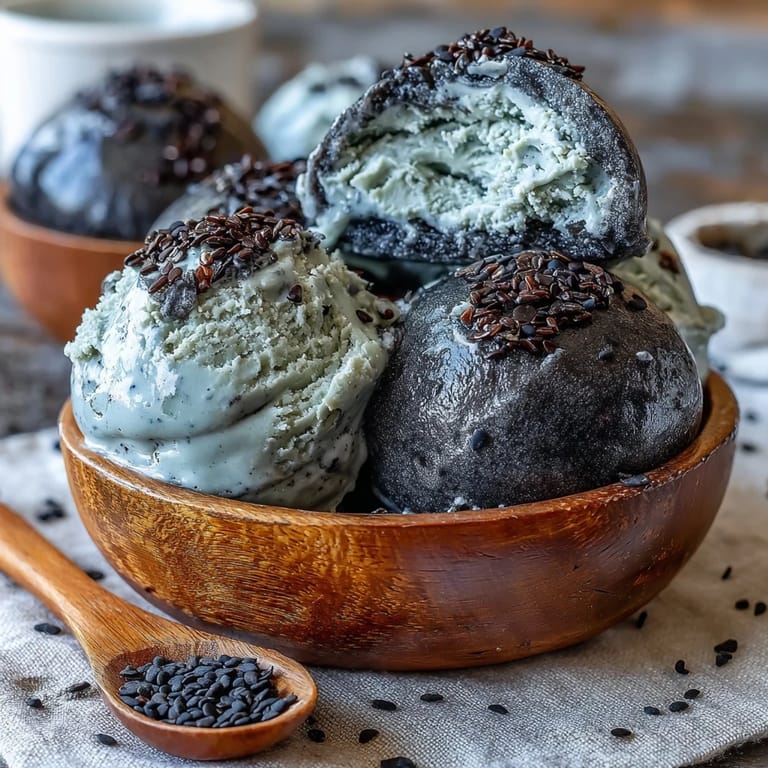
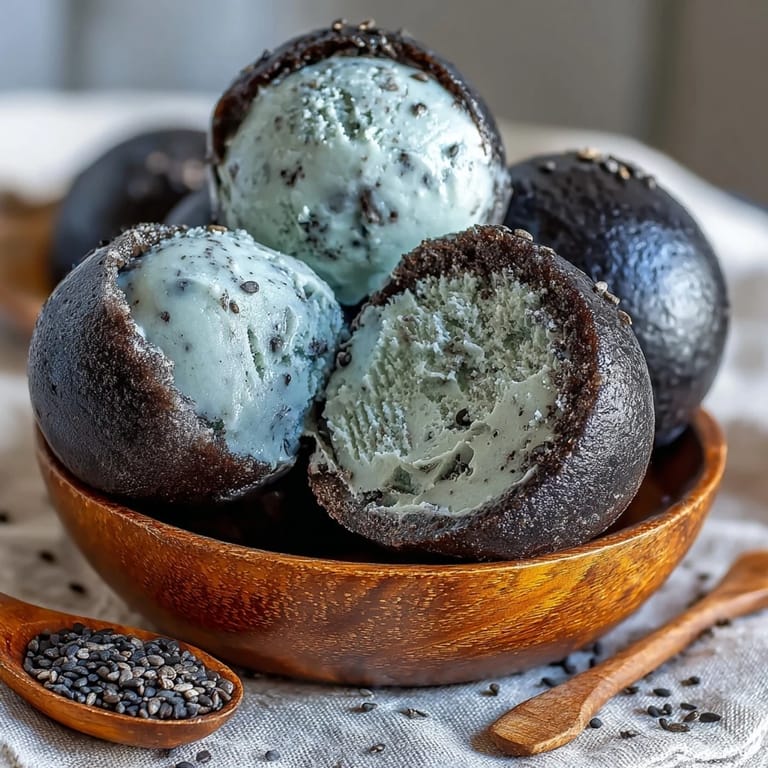
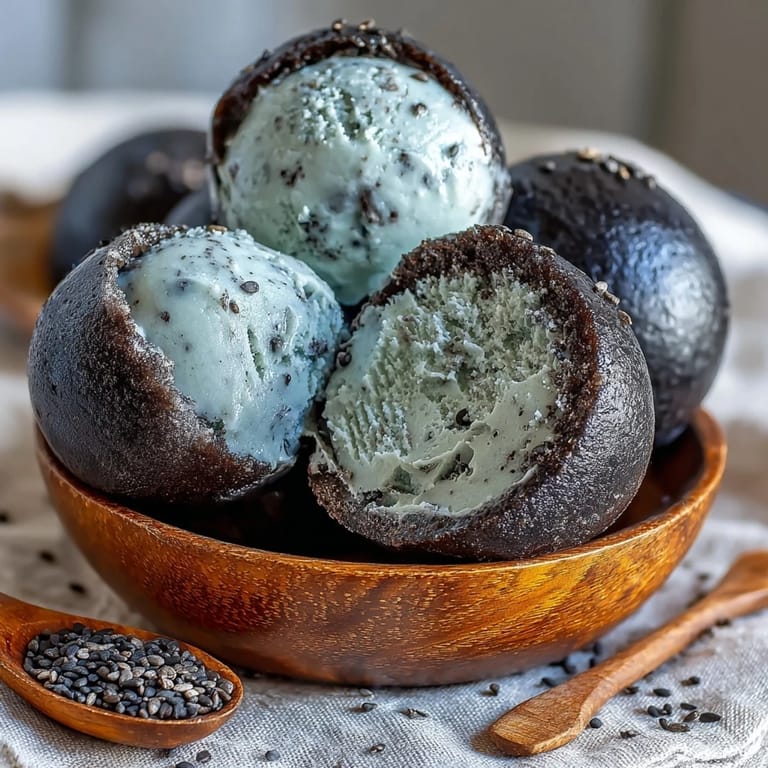
 My first encounter with black sesame mochi ice cream happened on a humid summer evening at a tiny dessert shop tucked between two apartment buildings in Tokyo. The owner, a woman in her seventies, handed me one with a knowing smile, watching as I bit through that impossibly chewy shell into something cold and deeply nutty. Years later, I finally decided to recreate it at home, and the moment that first homemade ball melted on my tongue, I understood why she'd smiled—this dessert is pure magic wrapped in simplicity.
I made these for a dinner party once without realizing how much guests would lose their minds over them. One friend literally paused mid-conversation to ask what was happening in her mouth, and another person went back for a second one before dessert was officially finished. That's when I knew this recipe wasn't just about the flavors—it was about creating a moment of genuine surprise and delight.
Ingredients
- Whole milk and heavy cream: These form the silky base of your ice cream, and the ratio between them determines how rich and indulgent each bite feels.
- Granulated sugar: For the ice cream custard, it sweetens while helping create that smooth, scoopable texture you're after.
- Egg yolks: These are what transform a simple cream mixture into proper custard, giving you that luxurious mouthfeel that sets homemade ice cream apart.
- Black sesame paste: This is the soul of the recipe—seek out roasted, unsweetened paste from an Asian market for authentic nutty depth.
- Vanilla extract and salt: Just a touch of each amplifies the sesame flavor rather than masking it.
- Sweet rice flour (mochiko): This glutinous flour is what creates that signature chewy, almost bouncy texture that makes mochi so addictive.
- Water and cornstarch: Water transforms the flour into workable dough, while cornstarch prevents sticking as you assemble everything.
Tired of Takeout? 🥡
Get 10 meals you can make faster than delivery arrives. Seriously.
One email. No spam. Unsubscribe anytime.
Instructions
- Heat your milk and cream gently:
- You want it steaming and fragrant, just below a boil—this temperature will properly cook your eggs. Rush this step and you'll end up with scrambled bits in your custard, which I learned the hard way.
- Whisk eggs and sugar until pale:
- This takes about two minutes of honest whisking and turns your mixture light and voluminous. This step actually helps prevent curdling when you add the hot cream, so don't skip it even though it feels tedious.
- Temper your egg yolks slowly:
- Pour the hot cream into eggs in a thin stream while whisking constantly—this is where patience matters. If you dump it all at once, you'll have sweet scrambled eggs instead of custard.
- Cook the custard low and slow:
- Keep heat low and stir constantly until the mixture coats the back of a wooden spoon and leaves a clean line when you run your finger through it. This takes about five minutes and smells absolutely divine.
- Strain and chill your ice cream base:
- Straining removes any cooked egg bits and creates silky texture, then chilling overnight (or at least four hours) lets flavors deepen. This pause feels like stopping, but it's actually where magic happens.
- Churn according to your machine:
- Every ice cream maker has its own rhythm, so follow yours. You're looking for soft-serve consistency when you stop—it will firm up in the freezer.
- Freeze ice cream balls solid:
- Scoop immediately into small balls onto parchment and freeze for at least two hours. If they're not completely firm, your mochi will melt right through when you wrap it.
- Mix and microwave your mochi dough:
- Combine the dry ingredients with water and whisk until completely smooth before microwaving, or you'll end up with lumpy, weird texture. The first microwave round takes two minutes, then you stir and go another minute.
- Work with warm mochi immediately:
- It needs to be pliable but not scalding—a minute or two of cooling on the cornstarch-dusted surface is perfect. If it cools too much, microwave it for fifteen seconds to soften.
- Flatten mochi rounds to the right thickness:
- About a quarter-inch thickness gives you enough dough to wrap without being too thick and doughy. Dust constantly with cornstarch or the mochi will stick to everything.
- Wrap ice cream quickly but gently:
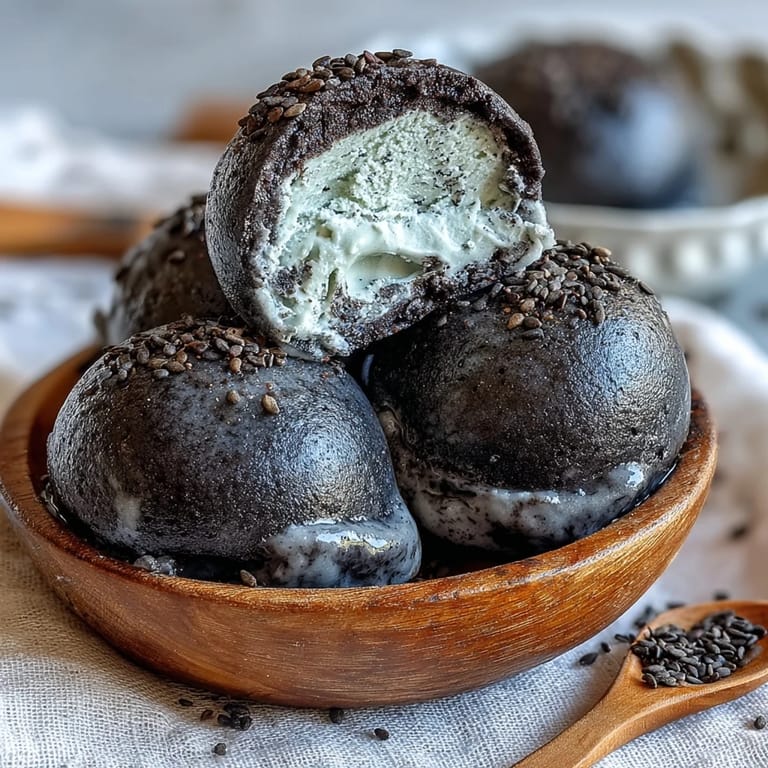
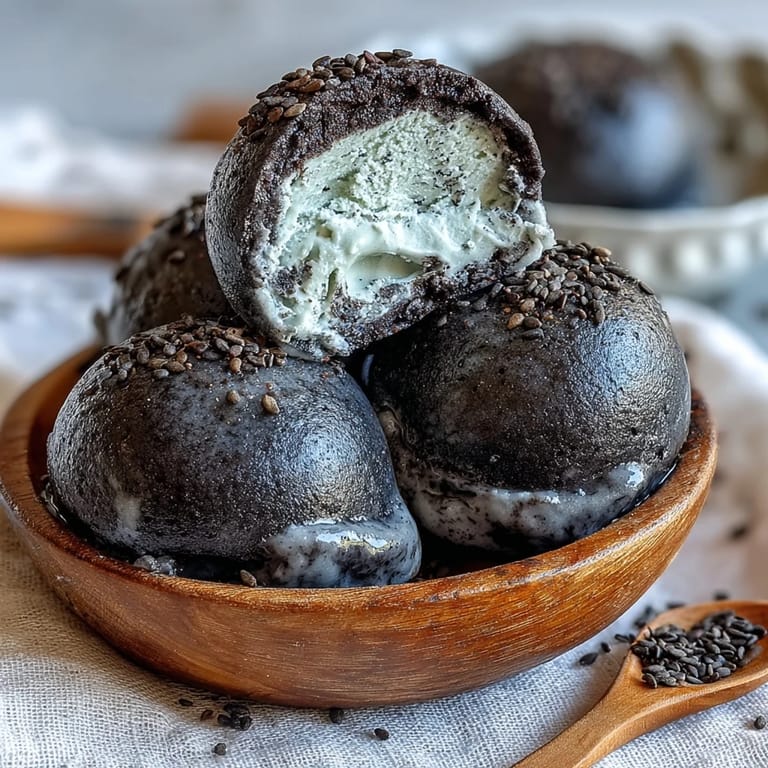
- Place the frozen ball in the center, then bring edges up and pinch to seal—think of it like wrapping a tiny present. The whole process should take less than a minute per mochi.
- Freeze assembled mochi for final setting:
- An hour in the freezer firms everything up and melds the textures. You can eat them after an hour, but they're best after a full day when all the flavors have gotten to know each other.
 Save It
  Save It
 There's something quietly beautiful about the moment when a guest takes that first bite and their whole face changes—the slight surprise, then the nod of recognition that says this is something special. That's when you realize you didn't just make dessert; you made a memory.
The Black Sesame Story
Black sesame has been used in Asian desserts for centuries, and there's a reason: it's sophisticated without being pretentious. Unlike white sesame with its subtle nuttiness, black sesame tastes like it's been roasted over an open fire, with this earthy warmth that somehow feels both ancient and modern. When it meets creamy ice cream, something unexpected happens—the flavors don't fight, they dance.
Timing and Temperature Matter More Than You Think
I used to think the exact temperature of things was overthinking it, until I made a batch where my ice cream base wasn't quite chilled enough before churning. The result was grainy and weird, nothing like the silky luxury I was chasing. Now I chill everything overnight without fail, and the difference is remarkable—it's the difference between good and genuinely excellent.
Making This Your Own
Once you've nailed the basic technique, this recipe is your playground. I've rolled finished mochi in toasted black sesame seeds, added a whisper of matcha to the mochi dough, and even tried a tiny pinch of cardamom in the ice cream base. Each variation taught me something new about how these flavors work together.
- Toast the sesame seeds yourself if you have time—the smell alone is worth the effort.
- Serve these alongside hot green tea for a contrast that feels intentional and restaurant-worthy.
- Make them ahead and keep in the freezer for up to a week; they're perfect for when you need something special but didn't plan ahead.
 Save It
  Save It
 This recipe is a small gift you can give yourself or someone you care about, and that's really what cooking is all about. Once you've made it once, you'll want to make it again and again.
Common Questions About Recipes
- → What does black sesame mochi ice cream taste like?
Black sesame offers a rich, nutty flavor with subtle earthy notes, similar to peanut butter but more delicate. The roasted seeds provide depth and complexity, while the mochi adds a neutral, chewy contrast that lets the sesame flavor shine through.
- → Can I make this without an ice cream maker?
Yes, you can freeze the custard in a shallow container, stirring every 30 minutes for the first 2-3 hours to break up ice crystals. The texture will be slightly denser but still delicious.
- → How long does homemade mochi ice cream last?
Store in an airtight container in the freezer for up to 2 weeks. For best texture, let thaw for 2-3 minutes before eating. The mochi may become slightly harder over time but remains enjoyable.
- → Why is my mochi dough too sticky to handle?
Dust your hands and work surface generously with cornstarch. If the dough is still too sticky, let it cool for a few more minutes—warm mochi is exceptionally tacky. You can also knead in additional cornstarch gradually.
- → Can I use store-bought ice cream instead of making it from scratch?
Absolutely. Use high-quality vanilla or black sesame ice cream, scoop into balls, and freeze until very firm before wrapping. This shortcut saves time while still delivering excellent results.
- → What's the difference between mochiko and regular rice flour?
Mochiko is glutinous rice flour made from short-grain sticky rice. It creates the characteristic chewy, elastic texture of mochi. Regular rice flour won't work—look for 'sweet rice flour' or 'glutinous rice flour' on the label.