 Save It
 The first time I made crispy rice paper dumplings, I was standing in my kitchen at midnight, stress-testing a new recipe for a dinner party I'd committed to way too enthusiastically. My hands were shaking a little as I dipped that first sheet of rice paper into warm water—would it tear? Would it stick to itself in some irreversible, gluey way? It didn't. Instead, something almost magical happened: that thin, delicate wrapper transformed into something golden and shatteringly crisp when it hit the hot oil. I realized right then that this wasn't fussy or difficult. It was just a small moment of attention and warmth.
I made these for my sister's book club last spring, and what started as a simple appetizer became the entire evening's main topic. Everyone wanted to know if they were actually hard to make, if they could do it at home, whether the rice paper would betray them. One friend announced loudly that she'd never be able to roll anything this tightly, then somehow managed to make the neatest ones in the batch. That moment reminded me that good food is partly about the small permission it gives people to try something unfamiliar.
Ingredients
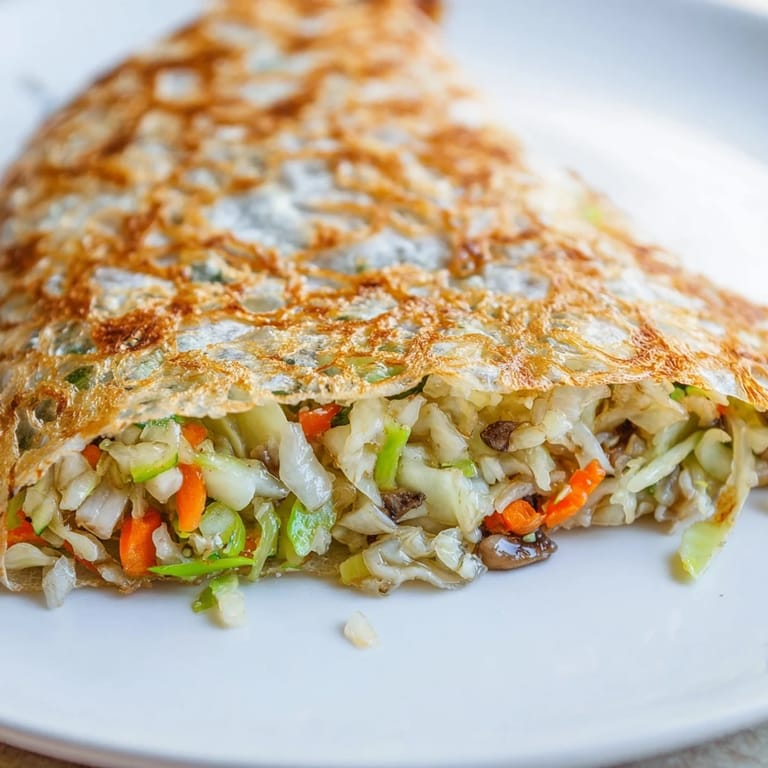
- Shredded green cabbage: This is your textural foundation—keep it finely shredded so it softens quickly and releases its sweetness when cooked.
- Carrot, grated: Adds subtle sweetness and keeps the filling moist, but don't over-grate or it'll turn to mush in the pan.
- Shiitake mushrooms: Their umami depth makes these dumplings taste savory and intentional, not like an afterthought vegetable snack.
- Green onions: Slice them thin and add them near the end of cooking so they stay bright and don't turn bitter.
- Garlic and ginger: These two are your flavor anchors—don't skip either, and always mince them small so they distribute evenly through every bite.
- Soy sauce or tamari: Use tamari if you need gluten-free, and measure it carefully—a tablespoon is enough to season everything without making the filling soggy.
- Sesame oil: A teaspoon is just enough to add richness without overwhelming the vegetables.
- Rice paper sheets: Buy the 22 cm round ones if you can find them, and keep your stack covered while you work so they don't dry out.
- Neutral oil for frying: Canola or avocado oil works perfectly; avoid extra virgin olive oil since it burns at the heat you need.
Tired of Takeout? 🥡
Get 10 meals you can make faster than delivery arrives. Seriously.
One email. No spam. Unsubscribe anytime.
Instructions
- Mix your filling:
- In a large bowl, combine all the vegetables—cabbage, carrot, mushrooms, green onions—with the garlic and ginger. Add soy sauce, sesame oil, and ginger, and stir until everything is evenly coated. This is where you taste and adjust; if it feels bland, add a tiny splash more soy sauce.
- Cook the filling gently:
- Heat a nonstick skillet over medium heat and add your vegetable mixture. You're not trying to roast or caramelize here—just cook for 3 to 4 minutes until the cabbage starts to soften and release moisture. The filling should still have some texture, not be mushy. Let it cool on a plate for a few minutes so it's easier to work with.
- Prepare your rice paper station:
- Fill a shallow dish with warm water—not hot, just warm enough to be comfortable when you dip your fingers in. Have a damp kitchen towel or cutting board ready nearby. The water should be deep enough to submerge the rice paper but not so deep that it's awkward to fish it back out.
- Dip and soften:
- Take one sheet of rice paper and dip it into the warm water for about 5 to 10 seconds—this is where timing matters. It should soften just enough to be pliable, not so much that it falls apart in your hands. Pull it out and lay it flat on your damp towel.
- Fill and fold:
- Place 2 tablespoons of the cooled filling in the center of the rice paper. Fold the sides toward the center first, tucking them over the filling, then roll it up tightly from the bottom like a burrito, sealing everything inside. The tighter you roll, the better it will fry.
- Repeat with intention:
- Work your way through all 12 sheets and filling. If you're feeling uncertain, it's okay to lay a few completed dumplings on a plate and take a breath before moving to the next batch.
- Heat your oil properly:
- In a clean nonstick skillet, add oil and heat it over medium heat for a minute or two. You want it hot enough that the dumplings sizzle when they hit the pan, but not so hot that they brown in 30 seconds.
- Fry until golden:
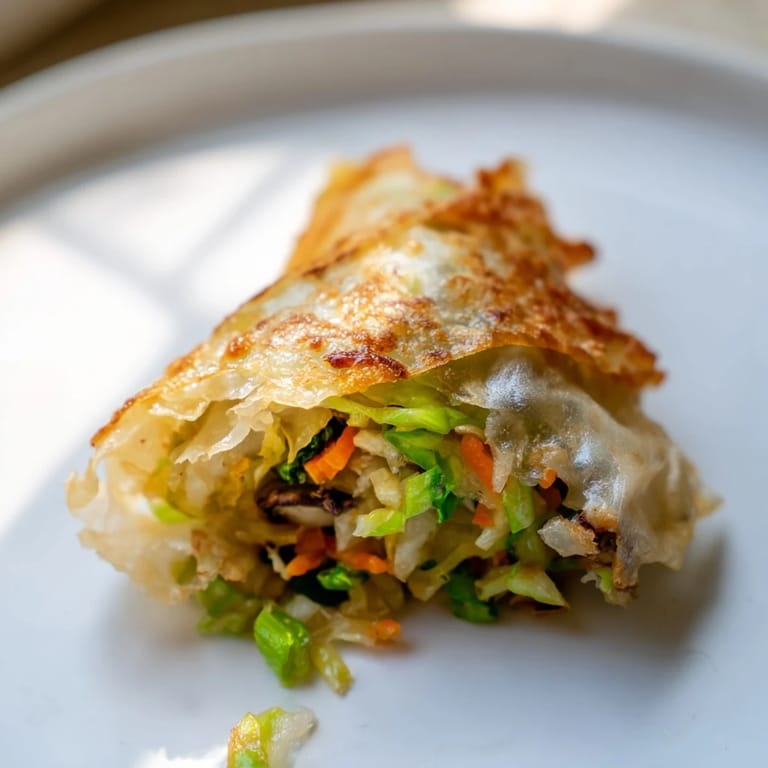
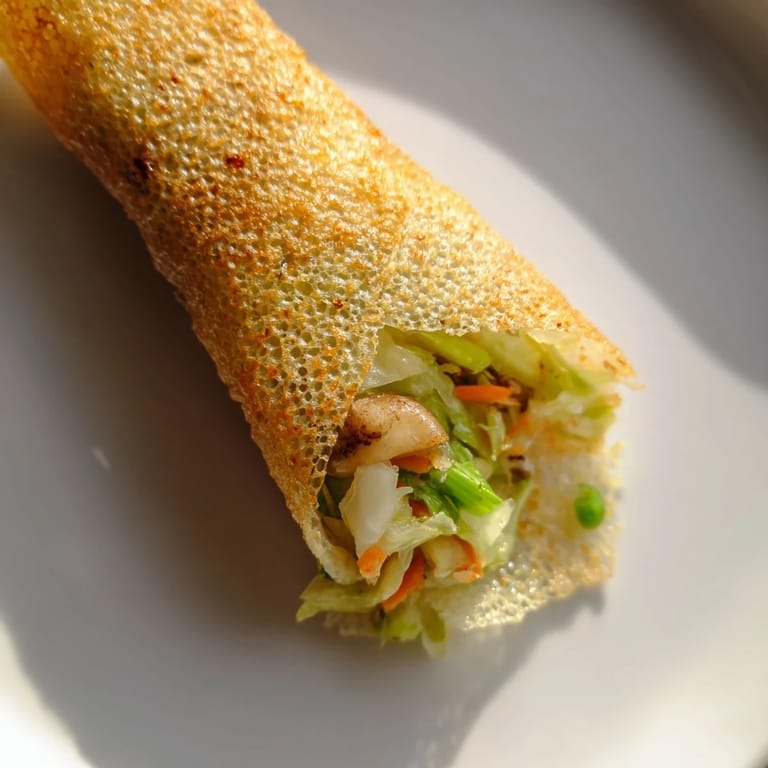
- Place dumplings seam side down in the hot oil, leaving space between each one. Don't crowd the pan. Cook for 2 to 3 minutes on the first side until the rice paper turns golden and starts to crisp, then flip gently and cook the other side for another 2 to 3 minutes. The whole package should be shatteringly crisp.
- Make the dipping sauce:
- While the dumplings finish cooking, mix soy sauce, rice vinegar, maple syrup or honey, and chili flakes in a small bowl. Taste it and adjust—it should be balanced between salty, tangy, and just a hint of sweetness.
- Serve immediately:
- Transfer the hot dumplings to a plate and serve right away with the dipping sauce on the side. They're best eaten while still warm and crispy.
 Save It
 There's a specific sound these dumplings make when they're perfectly fried—a soft crackle when you bite into them, almost like eating thin caramel. I'll never forget my niece's face the first time she heard that sound and realized she was eating something she thought would be complicated but actually just tasted like someone cared enough to get it right.
About Rice Paper and Its Temperament
Rice paper has a reputation for being finicky, but it's really just misunderstood. It's thin and delicate, yes, but it's also forgiving in the way that patient things usually are. The key is understanding that it has a very small window of pliability—not too dry, not too wet—and that this window is actually quite generous if you're paying attention. Once you've soaked and filled three or four, your hands will remember the rhythm without you having to think about it.
The Filling: Building Flavor in Layers
The beauty of this filling is that every ingredient has a specific job. The cabbage provides volume and sweetness, the carrot adds moisture and color, the mushrooms contribute umami depth, and the garlic and ginger are the ones doing the actual flavor work. When you cook them together briefly, they start to marry and soften, but they haven't yet given up their individual character. It's a balance that matters more than people usually think.
The Oil, The Heat, and The Golden Moment
Getting the oil temperature right is genuinely the difference between crispy and sad. Medium heat on most stovetops works because it gives you time to adjust without burning anything, but every stove is different, so pay attention to what your oil is doing—small wisps of steam rising from it, not smoke. When you place the first dumpling in, it should sizzle enthusiastically but not violently. If it goes quiet, your heat is too low. If it starts smoking immediately, pull the pan off the heat for 30 seconds and try again.
- The first batch is always a learning moment—don't judge yourself if it's not perfect.
- Flip gently but confidently; hesitation is what causes tearing, not the flip itself.
- If you see the edges starting to brown too quickly, lower the heat slightly for the remaining dumplings.
 Save It
 These dumplings have become my go-to when I want to impress without stress, or when I want to remember that good food doesn't have to be complicated to be special. Make them for people you like, and watch what happens.
Common Questions About Recipes
- → How do I achieve a crispy exterior on dumplings?
Use neutral oil and pan-fry over medium heat, turning gently until all sides turn golden and crisp.
- → What is the best way to handle rice paper wrappers?
Dip each sheet briefly in warm water until pliable but not overly soft to prevent tearing during rolling.
- → Can I prepare the filling in advance?
Yes, the vegetable filling can be made ahead and refrigerated to save time on cooking day.
- → How to prevent dumplings from sticking during cooking?
Ensure the skillet and oil are hot before adding dumplings and avoid overcrowding the pan.
- → What dipping sauce pairs well with these dumplings?
A simple blend of soy sauce, rice vinegar, maple syrup, and chili flakes creates a balanced sweet and tangy dip.