 Save It
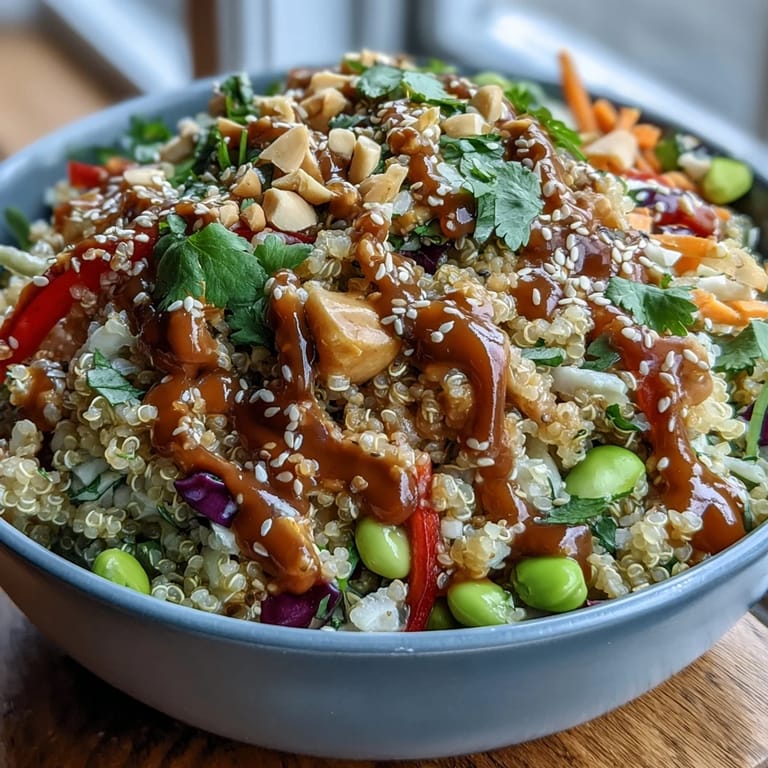
 Last summer, I was standing in my kitchen on a sweltering afternoon, staring at a half-empty fridge and wondering what could possibly feel light yet satisfying in the heat. My neighbor had just given me a jar of homemade coconut milk from her pantry, and somehow that became the spark for this bowl. The first time I combined that creamy coconut with nutty quinoa and crisp, colorful vegetables, I realized I'd stumbled onto something that felt both nourishing and exciting—the kind of meal that makes you want to come back to the kitchen again and again.
I made this bowl for my sister during a visit, and watching her face light up when she tasted that combination of creamy quinoa with the punchy peanut dressing was the moment I knew I had to stop keeping it to myself. She sat at my kitchen counter and asked if I'd made it up, and honestly, the pride I felt was ridiculous—but that's what happens when you create something that brings people genuine joy.
Ingredients
- Quinoa, rinsed: This tiny grain is packed with protein and has a subtle, slightly nutty flavor that plays beautifully with coconut milk—rinsing it removes any bitterness that can sneak in.
- Coconut milk, full-fat or light: Full-fat gives you that luxurious richness, but light works too if you're watching calories; the key is using it to cook the quinoa so every grain gets infused with flavor.
- Water: This balances the coconut milk so the quinoa cooks evenly without becoming mushy or too heavy.
- Salt: A small amount seasoned directly into the cooking liquid makes a difference you'll taste in every bite.
- Red bell pepper, thinly sliced: The sweetness and slight crunch add brightness and visual appeal without overpowering the dish.
- Carrot, julienned or shredded: I prefer julienning because those thin strands catch the dressing better than larger chunks and add an elegant texture.
- Cucumber, thinly sliced: Cooling and refreshing, it's what keeps this bowl from feeling heavy even on warm days.
- Purple cabbage, shredded: The color alone is worth it, but the subtle sweetness and crisp bite are what really earn it a spot here.
- Edamame, cooked and shelled: A plant-based protein boost that adds a satisfying pop and a touch of earthiness.
- Fresh cilantro, chopped: Don't skip this; it lifts the entire bowl with herbaceous notes that feel authentically Thai-inspired.
- Sesame seeds: A sprinkle at the end adds nutty depth and catches the light in a way that makes the bowl look magazine-worthy.
- Creamy peanut butter: Make sure it's truly creamy—the chunky stuff can be harder to whisk smooth into the dressing.
- Soy sauce, gluten-free if needed: This is your umami anchor, adding savory depth that makes everything taste intentional.
- Rice vinegar: Milder and slightly sweeter than other vinegars, it balances the richness without being harsh.
- Fresh lime juice: Bottled works in a pinch, but fresh lime brings a brightness that feels like a small gift to your taste buds.
- Maple syrup or honey: Just a touch to round out the dressing and keep it from being one-note savory.
- Toasted sesame oil: A little goes a long way here; this is where the magic happens, adding a toasty, complex flavor you'll keep tasting.
Tired of Takeout? 🥡
Get 10 meals you can make faster than delivery arrives. Seriously.
One email. No spam. Unsubscribe anytime.
Instructions
- Rinse and combine your grains:
- Place your quinoa in a fine-mesh strainer and rinse it under cool water for about 30 seconds—you'll feel the starch wash away. In a medium saucepan, combine the rinsed quinoa, coconut milk, water, and salt, then bring it to a boil.
- Simmer until the grain is tender:
- Once boiling, reduce the heat to low, cover the saucepan, and let it simmer for exactly 15 minutes; you'll hear it gently bubbling underneath the lid. Remove from heat, keep it covered, and let it rest for 5 minutes—this allows the grains to fully absorb the liquid and become fluffy when you fluff them with a fork.
- Prep your vegetables while the grain cooks:
- This is the moment to set up your cutting board and work through each vegetable with intention—thin slices for the bell pepper and cucumber, fine julienne or shreds for the carrot and cabbage. If your edamame isn't already cooked, heat them quickly according to package directions so they're warm and ready.
- Whisk together your dressing:
- In a small bowl, combine the peanut butter, soy sauce, rice vinegar, lime juice, maple syrup, and sesame oil; whisk until everything is incorporated. Slowly add warm water, one tablespoon at a time, whisking between each addition until the dressing reaches a smooth, pourable consistency that coats a spoon.
- Build your bowl with intention:
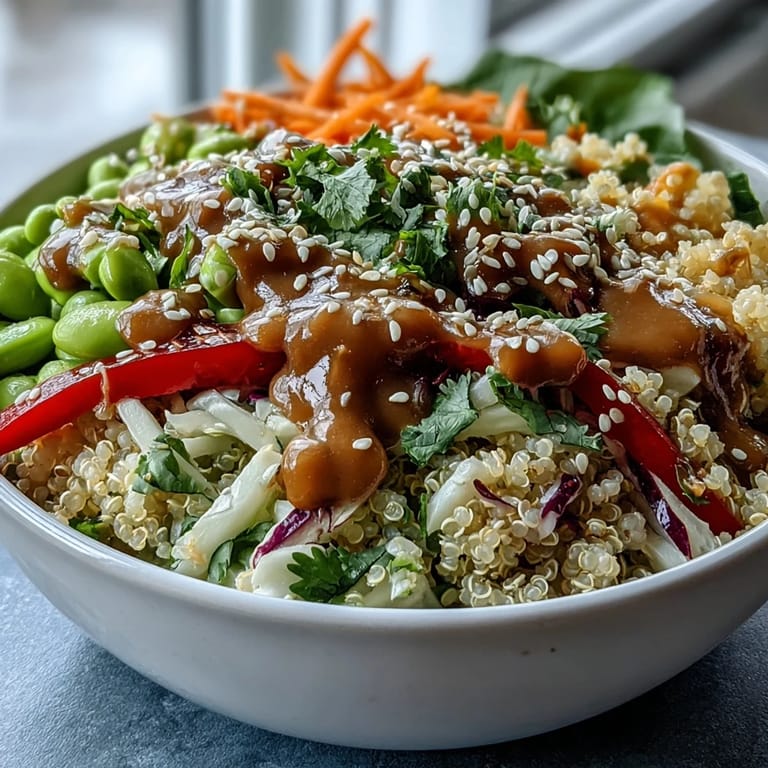
- Divide the fluffy coconut quinoa evenly among four bowls, creating a generous base. Arrange the sliced bell pepper, julienned carrot, cucumber, shredded cabbage, and edamame on top of each portion in whatever pattern feels natural to you.
- Dress and garnish before serving:
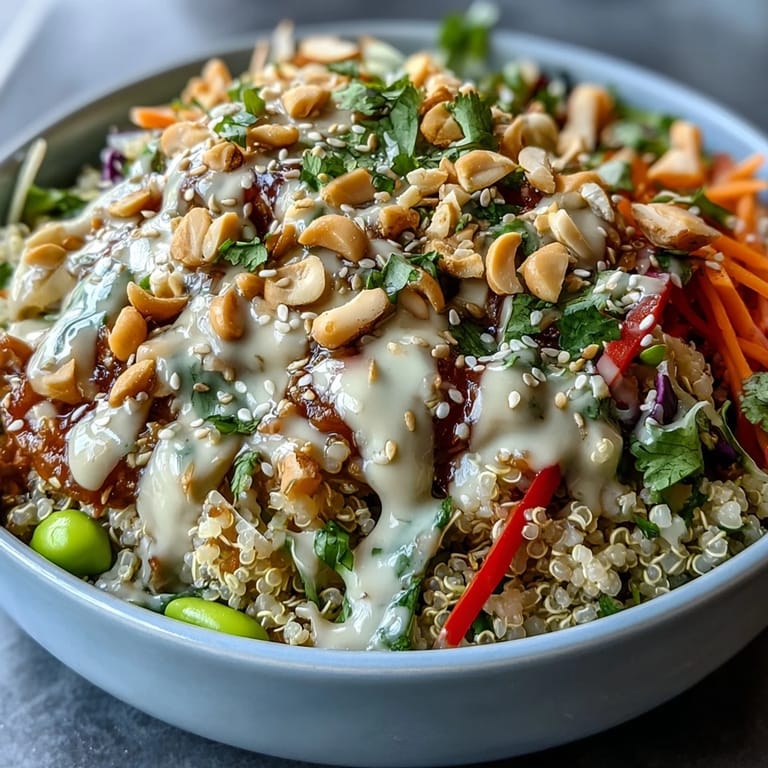
- Drizzle the peanut dressing generously over each bowl—don't be shy, this is where the flavor lives. Top with fresh cilantro and a scatter of sesame seeds, then serve immediately while everything is at its crispest, or chill if you prefer a cold bowl.
 Save It
 There's something transformative about eating a bowl of food where every ingredient has a reason for being there. I watched my roommate eat this on a random Tuesday night, and she said it felt like self-care on a plate—not in a wellness-culture way, but in the genuine way of choosing something colorful and alive when you could have chosen anything else. That moment shifted how I think about cooking for myself.
The Secret to a Silky Dressing
The peanut dressing is where this bowl lives or dies, and I've learned that temperature matters more than you'd think. Cold peanut butter is stubborn and clumpy, so let your ingredients sit at room temperature for a few minutes before whisking, or gently warm the peanut butter in a small saucepan first. The moment it becomes smooth and glossy, you know you're on the right track.
Making It Your Own
This bowl is genuinely flexible, and that's what I love about it most. If red bell peppers aren't calling to you, use yellow or orange—they'll taste slightly different but equally beautiful. If edamame feels like a strange addition, swap in chickpeas or sliced avocado for protein and creaminess. The quinoa and dressing are your anchors; everything else is up for negotiation based on what's in your kitchen or what sounds good to you today.
Meal Prep Magic and Quick Fixes
I've made this bowl on Sunday for the entire week, and it's stayed fresh and flavorful when stored properly. Keep the quinoa base separate from the vegetables—I use glass containers for this reason—and store the dressing in its own jar so nothing gets soggy. On the mornings you're rushing out the door, you can assemble it in minutes, and it tastes just as vibrant as when you first made it.
- Store everything in separate containers to prevent the vegetables from wilting prematurely.
- If you're making it ahead, add the sesame seeds and cilantro fresh right before eating for maximum impact.
- The dressing keeps for up to five days in the refrigerator, so you can make a double batch and use it on salads or grain bowls throughout the week.
 Save It
 This bowl has become my go-to when I want to feel nourished and excited about what I'm eating, which is honestly all I want from food. Make it once, and I promise you'll find yourself building these again and again.
Common Questions About Recipes
- → Can I make this bowl ahead of time?
Yes, this bowl is excellent for meal prep. Cook the quinoa and prepare the vegetables up to 3 days in advance. Store the dressing separately and combine just before serving. The flavors actually meld beautifully overnight.
- → What vegetables work best in this bowl?
Red bell pepper, carrot, cucumber, and purple cabbage provide vibrant color and satisfying crunch. You can also add shredded Brussels sprouts, snap peas, radishes, or thinly sliced kale depending on the season.
- → How do I store leftovers?
Store components separately in airtight containers in the refrigerator for up to 4 days. Keep the dressing in a small jar and give it a good shake before using. If combined, the bowl will keep for 2-3 days though vegetables may soften slightly.
- → Can I add protein to make it more filling?
Absolutely. Grilled tofu, tempeh, baked tofu cubes, or shredded chicken all work wonderfully. You can also increase the edamame to a full cup or add roasted chickpeas for plant-based protein.
- → Is the peanut dressing spicy?
The dressing is creamy and tangy rather than spicy. If you enjoy heat, add sriracha, red pepper flakes, or fresh minced ginger to the dressing. Adjust the spice level to your preference.
- → Can I use a different grain instead of quinoa?
Certainly. Brown rice, farro, couscous, or cauliflower rice all work well. Adjust the cooking liquid and time according to your chosen grain while keeping the coconut milk for that rich tropical flavor.