 Save It
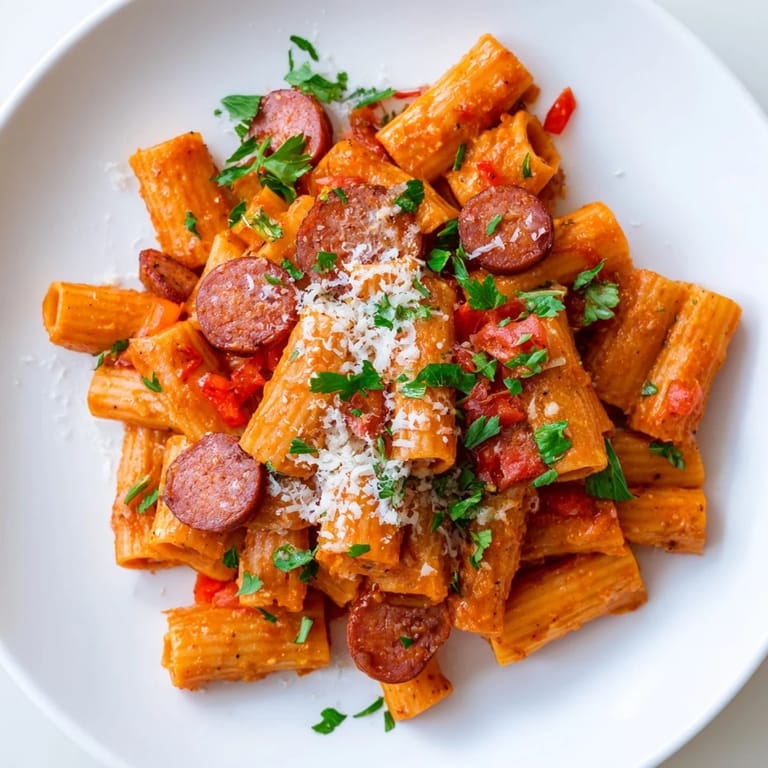
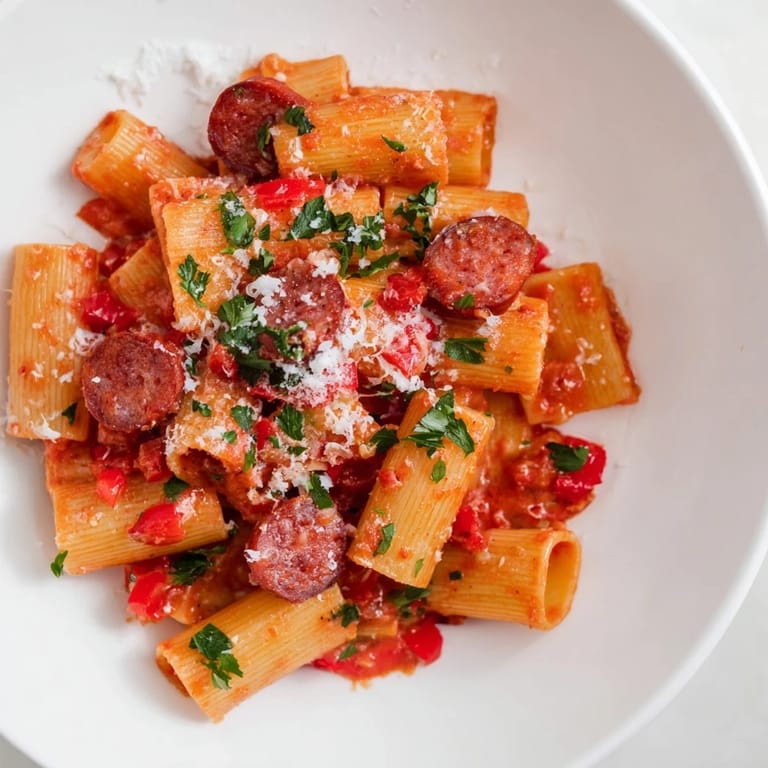
 I discovered Spanish chorizo pasta by accident on a Tuesday evening when my neighbor dropped off a link of chorizo from a market visit to Barcelona. Standing at my stove, I had some penne in the pantry and a can of tomatoes, so I threw it all together on a whim. The kitchen filled with this incredible smoky-spicy aroma, and by the time it was done, I understood why she'd been raving about Spanish food the whole time.
The first time I made this for friends, my partner kept asking if I'd accidentally set something on fire because the smell was so intense—in the best way. When everyone came back for seconds and asked for the recipe, I realized this wasn't just dinner, it was the kind of dish people remember. Now it's become our go-to when we want something that tastes like travel without leaving the kitchen.
Ingredients
- Penne or rigatoni, 350 g: The ridges catch that chorizo-infused sauce beautifully, so skip the angel hair here—you want something sturdy enough to hold onto the flavor.
- Spanish chorizo, 200 g: Slice it thin so it gets crispy at the edges and releases that smoky oil faster. This is the star, so don't skimp or substitute unless you absolutely have to.
- Medium onion, finely chopped: The sweetness balances the heat and smoke, so don't skip this even if you're in a hurry.
- Garlic, 2 cloves minced: Fresh is non-negotiable here—it wakes everything up.
- Red bell pepper, diced: It adds brightness and sweetness that keeps the dish from feeling one-note.
- Canned chopped tomatoes, 400 g: The acidity is your secret weapon against too much richness from the chorizo oil.
- Smoked paprika, 1 tsp: This is where the magic lives—it's the Spanish countryside in a spice jar, so taste as you go.
- Chili flakes, ½ tsp optional: Add this only if you want heat beyond what the chorizo provides.
- Extra virgin olive oil, 2 tbsp: Use good oil here since you're tasting it directly, not cooking it away.
- Fresh parsley, chopped: The brightness cuts through the richness at the end—it's the difference between good and memorable.
- Manchego or Parmesan cheese, grated: Either works, but Manchego nods to the Spanish theme if you can find it.
Tired of Takeout? 🥡
Get 10 meals you can make faster than delivery arrives. Seriously.
One email. No spam. Unsubscribe anytime.
Instructions
- Get the pasta water ready:
- Bring a large pot of salted water to a boil and cook your pasta according to package directions until it's al dente—that slight bite is crucial because it'll keep its texture when it hits the sauce. Save about half a cup of that starchy water before draining; it's liquid gold for tightening your sauce later.
- Brown the chorizo:
- While the pasta cooks, heat olive oil in a large skillet over medium heat and add your chorizo slices. Let them sit for a couple minutes without stirring so they get those crispy, caramelized edges, then toss them around for another minute or two until the oil starts pooling in the pan—that's when you know the flavor is ready to work with.
- Build the base:
- Toss in your chopped onion and diced bell pepper, stirring occasionally until they soften and lose their raw look. This takes about 4–5 minutes, and you'll notice the peppers starting to turn a deeper red as they release their sweetness.
- Wake it up with aromatics:
- Add the minced garlic, smoked paprika, and chili flakes if you're using them, stirring constantly for just about a minute—you want the spices to bloom and scent the whole kitchen, but not burn. This is the moment where the dish transforms from just ingredients to something with real character.
- Simmer the sauce:
- Pour in your canned tomatoes right into the skillet and let everything bubble gently for 8–10 minutes, stirring occasionally. The sauce will darken slightly and thicken as it reduces, and you'll start to see the oil from the chorizo creating little red-golden pools on top.
- Bring it all together:
- Add your drained pasta directly to the skillet and toss everything until the pasta is coated. If the sauce feels too thick, splash in a little of that reserved pasta water and stir—it'll loosen things up and help the starch bind everything into a silky finish.
- Season and serve:
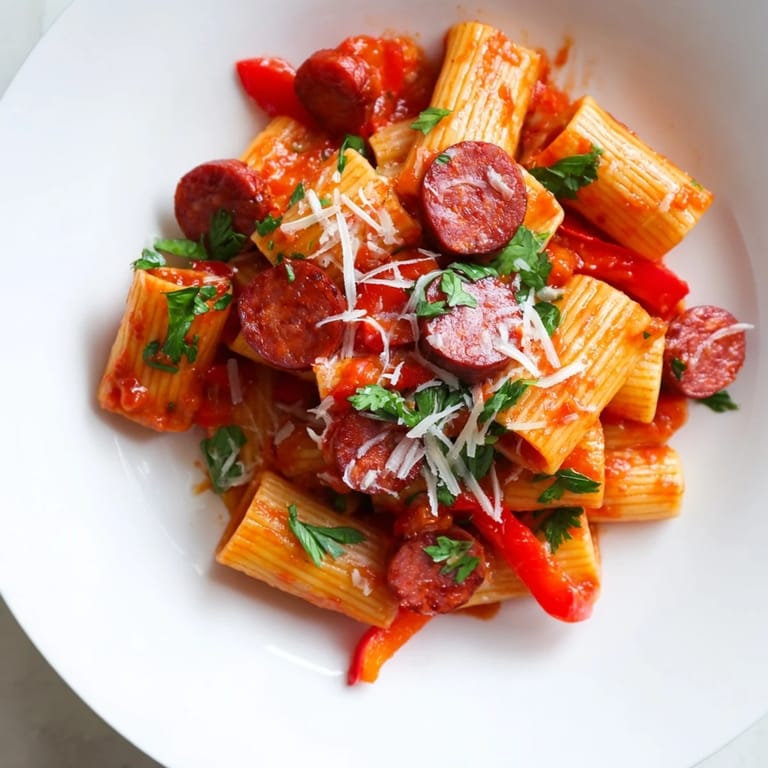
- Crack fresh black pepper over the top, taste for salt (the chorizo and cheese add quite a bit, so be careful), and turn off the heat. Finish with a handful of fresh parsley and a shower of grated cheese if you like, then serve immediately while it's still steaming.
 Save It
 The moment this dish shifted from recipe to ritual was when my kid, who normally pushes food around the plate, asked for help grating cheese and wanted to know what made it smell like that. Suddenly it wasn't just dinner—it was something they wanted to be part of making.
When to Make This
This is a weeknight hero because it comes together in 30 minutes, but it's also elegant enough for a casual dinner party where you want to impress without seeming like you slaved all day. I reach for it when I'm craving something warm and substantial but my energy is low, or when I want to feel like I've traveled somewhere without leaving home.
Common Variations
Some nights I add a splash of dry white wine after the vegetables soften—let it bubble away for a minute so the alcohol cooks off, and it adds a subtle depth that's hard to name but easy to taste. If Spanish chorizo isn't available, spicy Italian sausage works in a pinch, though the flavor profile shifts a bit. I've also thrown in baby spinach at the very end, and it wilts right into the sauce without losing its color or feeling like an afterthought.
Storing and Reheating
This keeps beautifully in the fridge for a few days, and it actually tastes better on day two after everything has had time to marry together. When you reheat it, add a splash of water or pasta water to loosen it up, because the pasta will have absorbed the sauce overnight. It's also one of those rare dishes that microwaves reasonably well if you cover it loosely.
- Store leftovers in an airtight container and eat within three days for the best texture.
- Reheat gently on the stovetop over low heat, stirring occasionally and adding water as needed.
- This isn't a dish that freezes beautifully because the pasta gets soft, but the sauce alone freezes wonderfully.
 Save It
 This recipe taught me that sometimes the most satisfying meals are the ones that don't pretend to be complicated. It's the kind of dish that fits into a real life without requiring a culinary degree or a shopping list as long as your arm.
Common Questions About Recipes
- → What type of pasta works best?
Penne or rigatoni works well as they hold the sauce nicely and complement the chorizo.
- → Can I use a substitute for Spanish chorizo?
Yes, spicy Italian sausage can be used if Spanish chorizo is unavailable, preserving a similar flavor profile.
- → How can I add more vegetables to the dish?
Try adding baby spinach or arugula during the last few minutes of cooking for extra greens and freshness.
- → Is smoked paprika necessary?
Smoked paprika adds a distinct smoky flavor important to the dish's character, but you can reduce it if preferred.
- → Any tips for adjusting sauce consistency?
Reserve some pasta water while boiling and add it gradually to the sauce to reach your desired thickness.