 Save It
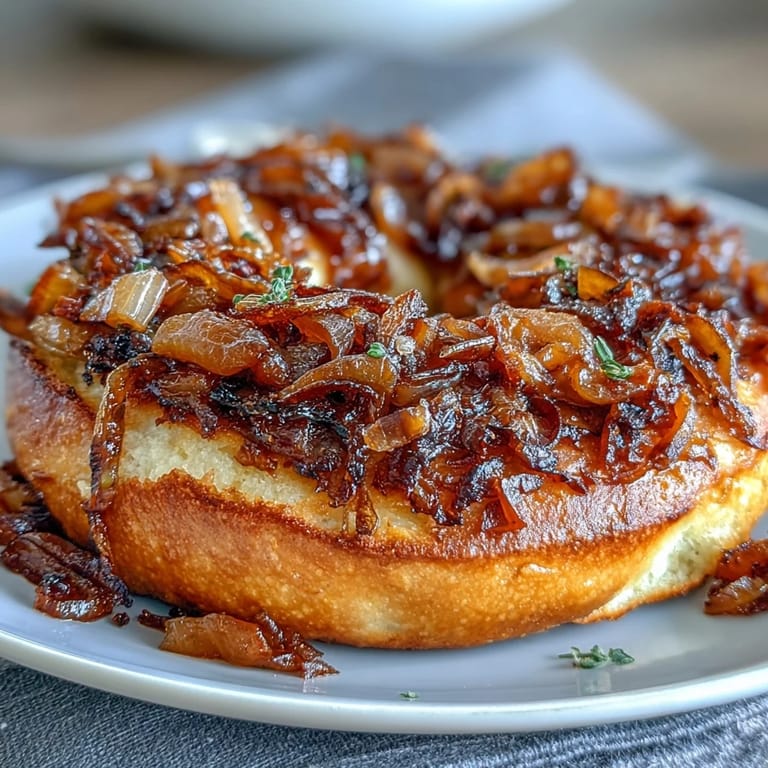
 There's something about the moment when sourdough starter bubbles up and you know it's ready—that's when I decided to stop buying bagels from the shop and make them myself. My kitchen filled with that unmistakable tangy smell, and I realized bagels weren't some impossible baker's secret, just patience and good technique. The first batch came out chewy with a crackling crust, and I immediately topped them with caramelized onions that turned almost jammy in the pan. My partner couldn't stop eating them, which felt like real victory. Now these sourdough onion bagels are what I reach for on Saturday mornings.
I made these for a small brunch last spring, and watching people bite into a warm bagel still steaming from the cooling rack—then their surprised faces when they tasted the sourdough depth—that's when I knew this recipe had to be perfected. Someone asked if I'd trained as a baker, and I laughed because three months earlier I'd burned my first batch. The bagels became the thing everyone asked me to bring, which meant I finally had an excuse to make them every weekend.
Ingredients
- Active sourdough starter (100 g, 100% hydration): This is your flavor engine—the slow fermentation creates that distinctive tangy note that makes homemade bagels sing.
- Bread flour (400 g): Don't skip this for all-purpose; the higher protein content gives you real chew and a better rise.
- Whole wheat flour (50 g): Just enough to add subtle nutty complexity without overwhelming the sourdough.
- Sea salt (10 g): Use fine salt so it distributes evenly through the dough.
- Granulated sugar (25 g): A modest amount that feeds the fermentation and balances the tanginess.
- Lukewarm water (240 ml): Temperature matters—too hot kills the starter, too cold slows everything down.
- Large yellow onion (1, finely chopped): Yellow onions caramelize beautifully and turn almost sweet; red onions stay too sharp.
- Olive oil or unsalted butter (1 tbsp): Butter gives richer flavor, but olive oil works if that's what you have.
- Barley malt syrup (1 tbsp): This is the secret ingredient that gives bagels their classic glossy finish and subtle sweetness in the boiling water.
- Baking soda (1 tsp): Raises the pH of the boiling water, creating that signature bagel crust and chew.
Tired of Takeout? 🥡
Get 10 meals you can make faster than delivery arrives. Seriously.
One email. No spam. Unsubscribe anytime.
Instructions
- Coax out the onion sweetness:
- Heat your oil in a skillet over medium heat, then add the chopped onions with salt. Let them cook low and slow for 8–10 minutes, stirring occasionally—you're not trying to rush this, just coax out all that natural sweetness until they're soft and golden. The kitchen will smell incredible.
- Bring the dough together:
- In a large bowl, combine your active starter, both flours, salt, sugar, and water. Mix until everything comes together into a shaggy mass; it'll look rough at first, and that's exactly right.
- Build strength through kneading:
- Knead for 8–10 minutes until the dough becomes smooth and elastic—this is when you're developing the gluten that gives bagels their chew. Cover the bowl and let it rest for 4 hours at room temperature.
- Develop flavor with stretch-and-folds:
- During that 4-hour rest, perform two stretch-and-folds about 30 minutes apart in the first 2 hours. Wet your hand slightly, grab one side of the dough, fold it over itself, rotate the bowl, and repeat—this builds structure without aggressive kneading.
- Cold ferment for depth:
- After the 4-hour rest, cover the dough and refrigerate overnight for 8–12 hours. This slow cold fermentation is where the sourdough magic happens, developing flavor that would take much longer at room temperature.
- Shape with intention:
- Divide the cold dough into 8 equal pieces. Roll each into a ball, then poke a hole in the center and gently stretch it until you have a bagel shape with about a 2-inch diameter hole.
- Let them rise gently:
- Place your shaped bagels on a parchment-lined baking sheet, cover loosely, and let them sit at room temperature for 1–2 hours. They should look slightly puffy but not massively risen—bagels don't need as much proof as bread.
- Prepare the boiling bath:
- Preheat your oven to 220°C (425°F), then bring 2 liters of water, barley malt syrup, and baking soda to a boil. The barley malt gives authentic flavor, but honey works if that's what you have.
- Boil for the signature crust:
- Working 1–2 bagels at a time, carefully place them into the boiling water. Boil for exactly 1 minute per side—this is what creates that chewy interior and sets the exterior so it won't rise too much in the oven.
- Top while damp:
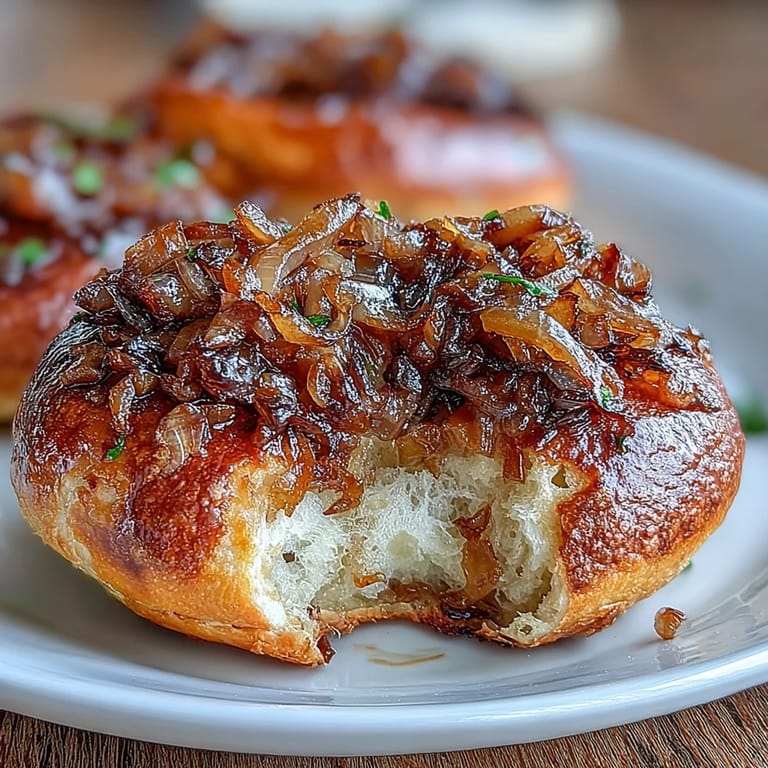
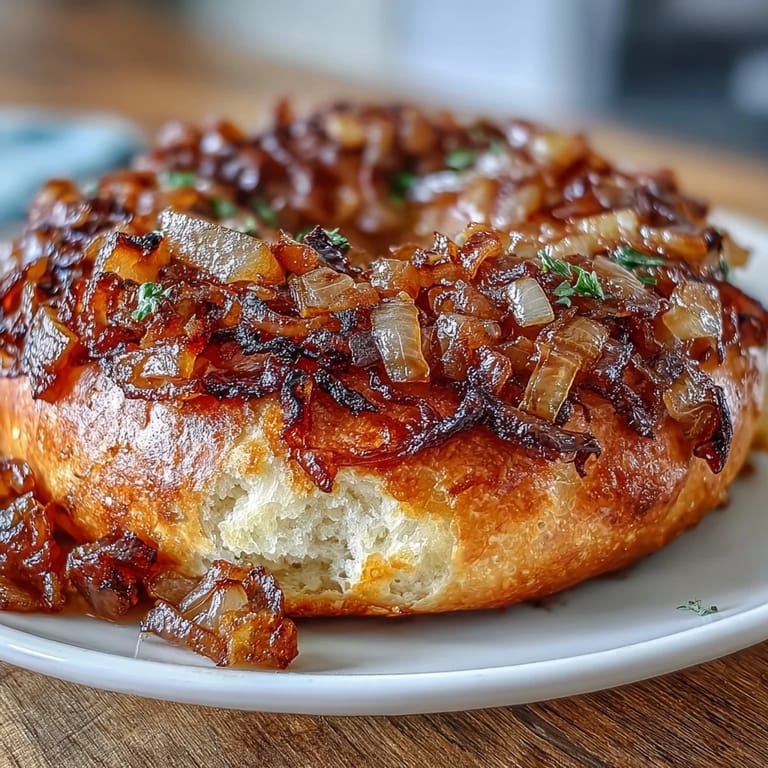
- As each bagel comes out of the water, return it to the parchment sheet while still damp, then press the cooled sautéed onions onto the top. The moisture helps the onions stick beautifully.
- Bake until golden:
- Bake for 20–25 minutes until the bagels are deep golden brown and cooked through. The onions on top will darken slightly—that's the caramelization deepening, which is exactly what you want.
- Cool before slicing:
- Transfer the bagels to a wire rack and let them cool completely before slicing. They'll continue to set as they cool, and you'll get a better, less gummy slice if you can wait.
 Save It
 There was a morning when I sliced one open still warm and the steam rose up carrying that deep, slightly tangy aroma—and I thought about how something so simple (just flour, water, time, onions) could taste so good. That's when I understood why people get obsessed with bread baking.
Why Sourdough Starter Makes All the Difference
A lot of people think bagels need commercial yeast to work, but sourdough starter does something different—it ferments slowly over many hours, building complexity that instant yeast can't match. The tanginess develops gradually, giving you that New York deli flavor without any shortcuts. If you don't have a sourdough starter yet, it's worth creating one or asking a baker friend for some; once you have it, you can make these bagels forever.
The Caramelized Onion Topping Is Worth the Wait
Don't rush the onions—I learned this the hard way by cooking them on high heat, thinking I could speed things up. They turned bitter and thin instead of sweet and jammy. Low and slow means you're breaking down the onion's natural sugars, creating something almost confiture-like that clings to the bagel. The contrast between the tangy sourdough and the sweet, mellow onions is what makes these bagels memorable.
Making Them Your Own
The base recipe is solid, but these bagels respond beautifully to adjustments once you've made them once. Sesame seeds or poppy seeds pressed into the onions add texture and a subtle nutty note. Some mornings I've added a pinch of fresh cracked pepper to the onions, or scattered crispy fried shallots on top for crunch. You're building on something traditional, which means there's room to play.
- Try everything toasted with cream cheese and smoked salmon—it becomes breakfast or brunch depending on what you're calling it.
- These freeze beautifully for up to a month, and thawing at room temperature or toasting brings them right back to life.
- If your bagels spread too wide during proofing, your dough might be too warm; the refrigeration time helps prevent this, so don't skip it.
 Save It
 These bagels have become my weekend ritual, the thing I make when I want to slow down and feel like I'm creating something real. Once you've made them, store-bought bagels will never taste the same.
Common Questions About Recipes
- → What makes the sourdough base special?
The sourdough starter ferments the dough slowly, enhancing flavor depth and texture, resulting in a chewy crumb and tangy profile.
- → Why are the bagels boiled before baking?
Boiling helps set the crust and creates the characteristic shiny, chewy exterior by gelatinizing the starches on the surface.
- → How are the onions prepared for topping?
Onions are finely chopped and gently sautéed in olive oil or butter with a pinch of salt until soft and golden, enhancing their natural sweetness.
- → Can I use honey instead of malt syrup for boiling?
Yes, honey is a suitable alternative that adds a subtle sweetness and helps develop a rich color during boiling.
- → What is the purpose of the stretch-and-fold technique during fermentation?
It strengthens the dough’s gluten network, improves structure, and encourages better gas retention for an airy yet chewy crumb.
- → Are these bagels suitable for vegetarians?
Yes, all ingredients used are vegetarian-friendly, including the sourdough starter and toppings.