 Save It
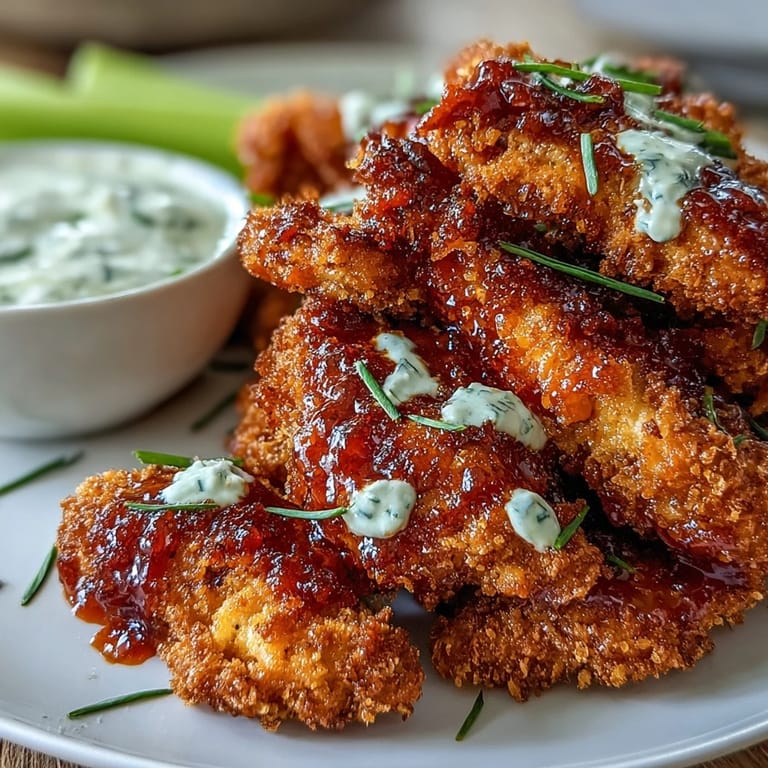
 My partner came home one Thursday evening craving wings, but we'd committed to keto that month. Instead of ordering out, I raided the pantry and realized almond flour could be my secret weapon for that crispy coating everyone loves. Twenty minutes later, golden chicken tenders were sizzling in the skillet, and the kitchen smelled like a Buffalo sports bar in the best way possible. That night taught me that low-carb doesn't mean low-flavor, and honestly, these tenders taste better than the fried versions I grew up eating.
I made these for a Super Bowl party last winter, and watching people dip them in the homemade ranch while debating whether they were actually low-carb made me smile. Someone even asked for the recipe, which never happens at my gatherings. That's when I knew this dish had crossed from weeknight dinner into something worth sharing.
Ingredients
- Chicken tenders: Look for ones that are roughly the same thickness so they cook evenly, or gently pound thicker pieces to even them out.
- Almond flour: Skip the super fine blanched kind for this application; the slightly coarser version gives you better crunch and adheres better to the chicken.
- Egg and heavy cream: The cream makes the egg mixture richer and helps the coating stick where a plain egg wash often fails.
- Parmesan cheese: Adds umami depth and helps brown the coating faster, which is how you get that golden exterior.
- Hot sauce: Frank's RedHot works beautifully here, but use whatever you love; the butter is what mellows the heat anyway.
- Fresh herbs for ranch: This is where homemade ranch becomes a game-changer; dried herbs taste hollow by comparison.
- Olive or avocado oil: Both have higher smoke points than butter alone, so your coating won't burn before the chicken cooks through.
Tired of Takeout? 🥡
Get 10 meals you can make faster than delivery arrives. Seriously.
One email. No spam. Unsubscribe anytime.
Instructions
- Get your station organized:
- Line your baking sheet with parchment paper and preheat the oven to 400°F, because scrambling for these basics once you've started breading chicken is a headache.
- Whisk your wet mixture:
- Beat together the egg and heavy cream until they're completely combined and slightly frothy, which helps the coating cling to the chicken like it should.
- Build your coating blend:
- Combine the almond flour, Parmesan, garlic powder, onion powder, smoked paprika, salt, and pepper in a shallow bowl, mixing really well so the spices aren't clumpy.
- Bread each tender carefully:
- Dip one chicken tender into the egg mixture, letting excess drip off, then roll it through the almond flour mixture until it's completely covered. The coating should look generous but not clumpy.
- Sear for golden color:
- Heat your oil in a large skillet over medium heat, then fry the tenders in batches for 2 to 3 minutes per side until the coating turns golden brown. Don't crowd the pan or they'll steam instead of sear.
- Finish in the oven:
- Transfer the seared tenders to your prepared baking sheet and bake for 10 to 12 minutes until the chicken is cooked through and the coating stays crispy.
- Make your buffalo sauce:
- While the tenders bake, whisk together hot sauce, melted butter, and garlic powder in a small bowl. The butter makes the heat feel less aggressive on your palate.
- Blend the ranch dip:
- Mix mayonnaise, sour cream, all the fresh herbs, garlic powder, onion powder, lemon juice, and salt and pepper until completely smooth. Chill it while everything else cooks.
- Coat and serve:
- Once the chicken comes out of the oven, toss it in the buffalo sauce until every piece is evenly coated, then arrange on a platter with celery sticks and that creamy ranch dip.
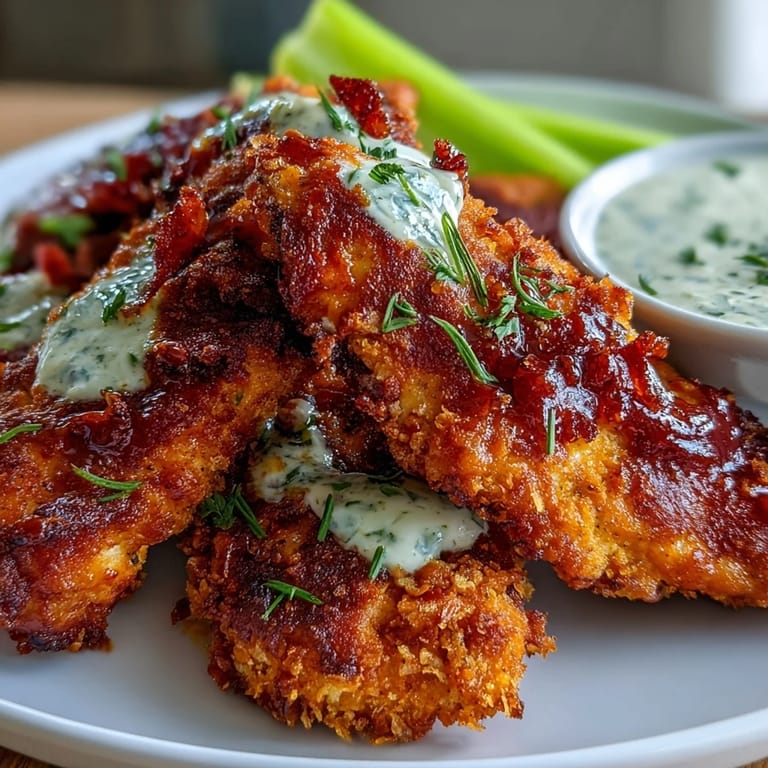 Save It
 My eight-year-old nephew actually asked for seconds at a family dinner last month, and that's when I realized this recipe had worked its magic. There's something about food that tastes indulgent but keeps you on track that makes people feel cared for.
Why the Two-Stage Cooking Method Works
Pan-frying the tenders first creates that golden, flavorful crust while keeping the coating from absorbing too much oil. Then baking finishes the cooking without the coating turning dark or bitter. It sounds like an extra step, but it's really the difference between tenders that taste restaurant-quality and ones that taste rushed. Once you understand this technique, you'll use it for everything from fish fillets to pork cutlets.
Customizing Your Buffalo Heat Level
Not everyone handles spicy the same way, so the butter-to-hot-sauce ratio is totally adjustable. More butter makes it creamier and less fiery, while equal parts sauce and butter gives you legitimate wings-level heat. I've learned to taste a small sample before coating all the tenders, so you avoid the awkward moment of serving something that sends your guests running for milk. Even a splash of ranch mixed into the buffalo sauce mellows everything beautifully if you accidentally overestimate your heat tolerance.
Storage, Leftovers, and Make-Ahead Tips
These tenders actually taste great cold the next day, which makes them perfect for meal prep or packed lunches if you're doing keto. Store them in an airtight container in the refrigerator for up to three days, and reheat in a 350°F oven for about five minutes if you want them warm again. You can also bread the chicken tenders hours ahead and keep them on a plate in the fridge before cooking, which takes the pressure off when guests are arriving.
- Make the ranch dip a full day ahead so the flavors have time to meld together.
- Cut your celery sticks right before serving so they stay crisp and cold.
- If you're doubling this for a crowd, batch your frying and don't fill the pan more than halfway.
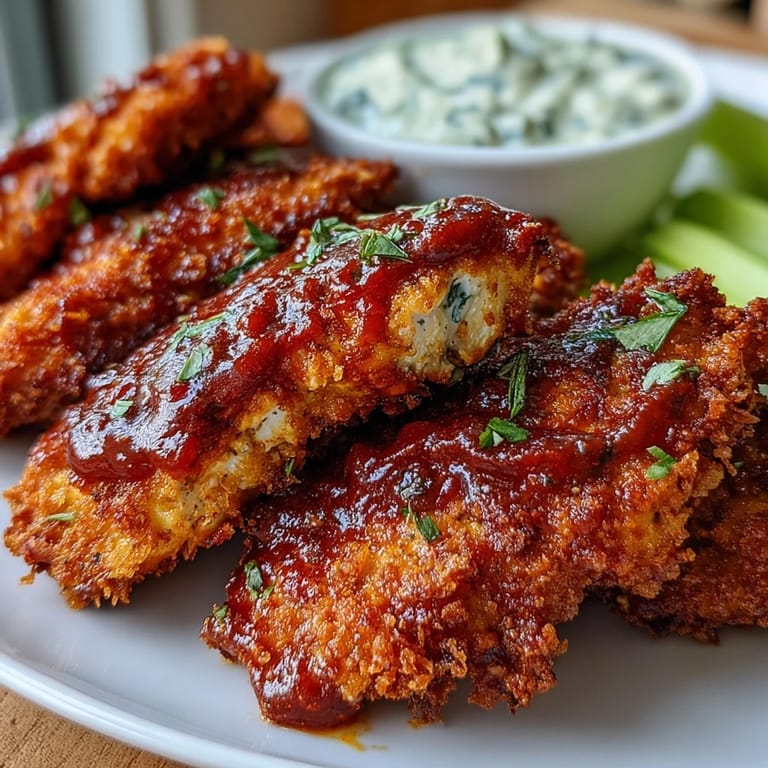 Save It
 This recipe proved to me that eating for your health doesn't mean sacrificing the foods that make you happy. Every time I make these tenders, someone ends up asking how I make them taste so good on a keto plan.
Common Questions About Recipes
- → What type of flour is used for coating?
Almond flour is used to create a crispy, gluten-free coating that complements the chicken without adding carbs.
- → Can I bake the tenders instead of frying?
Yes, after frying briefly to brown, the tenders are baked to ensure they're cooked through and tender.
- → How is the buffalo sauce made?
The buffalo sauce combines hot sauce with melted unsalted butter and garlic powder for a tangy, spicy coating.
- → What herbs are included in the ranch dip?
The ranch dip features fresh chives, parsley, and dill mixed with mayonnaise and sour cream for a creamy, herbal flavor.
- → Are there any tips for extra heat?
Adding a pinch of cayenne pepper to the buffalo sauce intensifies the spiciness without overpowering the flavors.