 Save It
 The smell of simmering ginger used to wake me up every winter morning at my friend Yuki's apartment in college. She'd stand by the stove in her oversized sweater, stirring a pot of miso soup before exams, claiming it cleared her head better than coffee. I never believed her until I made my own batch during a particularly brutal January, and something about the warmth and the sharpness of the ginger actually made me feel human again. Now it's my go-to whenever the cold settles in and I need something that feels like care in a bowl. It takes less time than ordering takeout and somehow tastes like you've been tending it all day.
I made this for my sister once when she had a bad cold, and she sat at my kitchen table wrapped in a blanket, slurping it straight from the bowl. She didn't say much, just kept going back for seconds, and later she texted me asking for the recipe, which is the highest compliment she's ever given my cooking. There's something about serving someone a bowl of hot soup that feels more intimate than a fancy dinner. It's the kind of dish that says I care without having to actually say it out loud.
Ingredients
- Water or vegetable broth: I usually use water because the miso and ginger carry enough flavor on their own, but if you have good vegetable broth on hand, it adds another layer of richness.
- Fresh ginger: Don't skip this or substitute dried, the fresh stuff is what makes the whole soup come alive with that bright, warming bite.
- Garlic cloves: Just a couple of slices are enough to add a mellow sweetness that balances the sharpness of the ginger.
- Miso paste: I prefer white or yellow miso here because it's gentler and slightly sweet, but if you only have red miso, just use a little less.
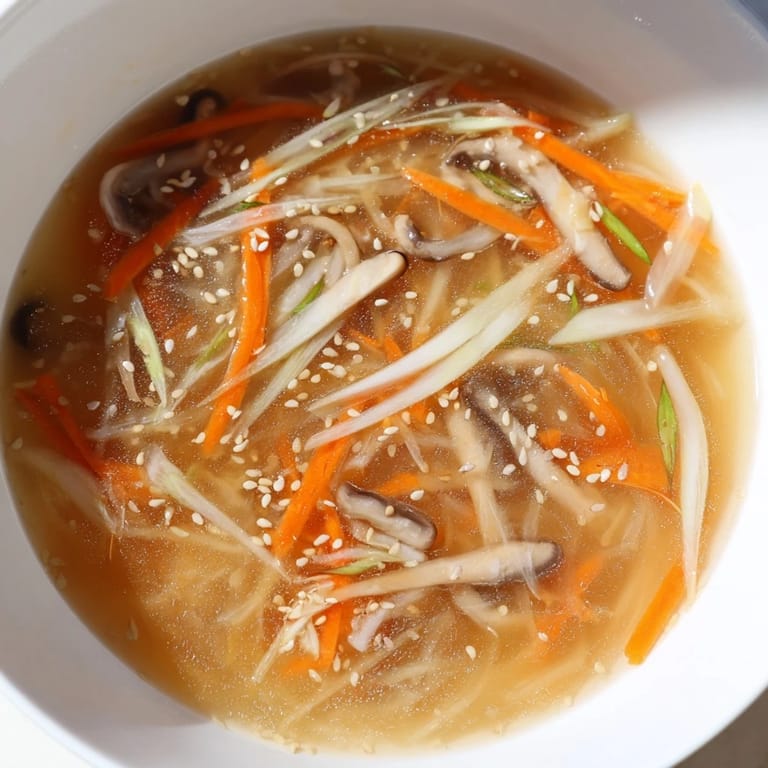
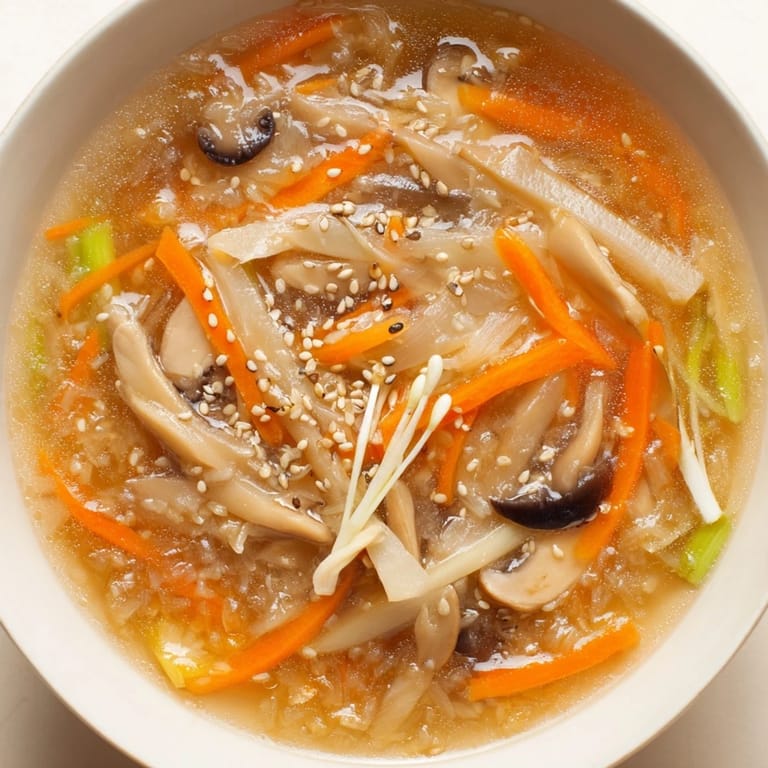
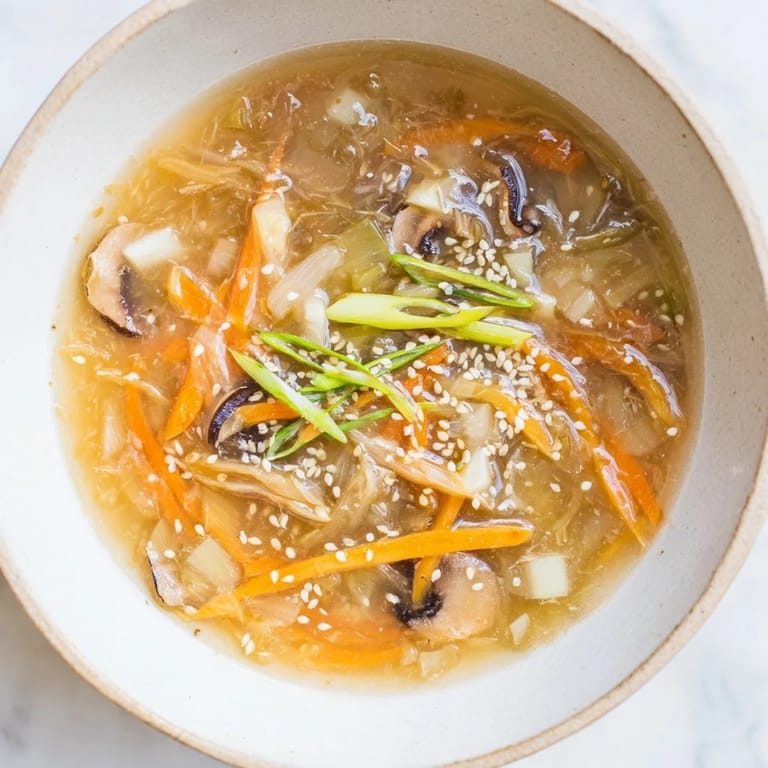
- Napa cabbage: It wilts down beautifully and has a delicate texture that doesn't overpower the broth.
- Carrot: Julienned carrots look pretty and cook quickly, plus they add a hint of natural sweetness.
- Shiitake mushrooms: These bring deep umami and a meaty texture that makes the soup feel more substantial.
- Scallions: I use them as a garnish for a fresh, sharp contrast to the warm, mellow broth.
- Toasted sesame seeds: A little crunch and nuttiness that makes each spoonful more interesting.
- Cilantro or parsley: Optional, but I love the brightness they add if you're in the mood for herbs.
- Chili oil or flakes: A tiny bit of heat wakes everything up, especially if you're feeling under the weather.
- Silken tofu: Adds protein and a silky, creamy texture without making the soup heavy.
- Soba or rice noodles: If you want to turn this into a full meal, cooked noodles make it hearty and satisfying.
Tired of Takeout? 🥡
Get 10 meals you can make faster than delivery arrives. Seriously.
One email. No spam. Unsubscribe anytime.
Instructions
- Infuse the broth:
- Bring your water or broth to a gentle simmer in a large pot, then add the sliced ginger and garlic. Let it bubble quietly for about ten minutes so the flavors seep into every corner of the liquid.
- Add the vegetables:
- Toss in the napa cabbage, carrot, and shiitake mushrooms, and let them simmer for five to seven minutes until they're tender but still have a little bite. The kitchen will start to smell incredible at this point.
- Stir in the miso:
- Take the pot off the heat, scoop some miso paste into a small bowl, and whisk it with a ladle of hot broth until it's completely smooth. Stir this back into the soup, and whatever you do, don't let it boil again or you'll kill the good probiotics.
- Finish and serve:
- If you're adding tofu or noodles, drop them in now and give them a couple of minutes to warm through. Ladle the soup into bowls and top with scallions, sesame seeds, herbs, and a drizzle of chili oil if you like a little kick.
 Save It
 One rainy evening, I made a big batch of this soup and invited a few friends over without much planning. We sat around my tiny kitchen table, slurping from mismatched bowls, and someone said it felt like being taken care of. That stuck with me because it's exactly what this soup does, it's not fancy or complicated, but it makes people feel seen and warm. I've made it dozens of times since, and it never fails to create that same quiet, contented feeling.
How to Choose Your Miso
White and yellow miso are milder and slightly sweet, which is what I reach for when I want the ginger to shine through without too much competition. Red miso is saltier and more intense, so if that's all you have, start with a tablespoon and taste as you go. I once used too much red miso and the soup turned out so salty I had to dilute it with more water, which taught me to always err on the side of caution. You can also mix different misos together if you're feeling adventurous, sometimes a blend gives you more complexity.
Vegetable Swaps and Add-Ins
This soup is forgiving and practically begs you to use whatever vegetables you have on hand. I've thrown in bok choy, spinach, daikon, and even leftover roasted sweet potato, and it always works. Enoki mushrooms are beautiful if you can find them, they add this delicate, almost ethereal texture. The key is to add heartier vegetables early and leafy greens at the very end so nothing gets mushy.
Storing and Reheating
I usually make extra because this soup tastes even better the next day once the flavors have had time to meld. Store it in the fridge for up to three days, but if you've added noodles, keep them separate or they'll soak up all the broth and turn to mush. When you reheat, do it gently over low heat and avoid boiling, especially if there's miso in there.
- Add a splash of water or broth if it's thickened up overnight.
- Taste and adjust with a little more miso or soy sauce if needed.
- Fresh garnishes like scallions and sesame seeds are best added right before serving.
 Save It
 This soup has become my winter ritual, the thing I make when I need to reset or when someone I love needs comfort. It's proof that the simplest recipes, the ones that don't ask much of you, can end up meaning the most.
Common Questions About Recipes
- → Why do you add miso paste after removing from heat?
Miso contains beneficial probiotics that are destroyed at high temperatures. Adding it to the hot broth off-heat preserves these living cultures while allowing the flavors to fully incorporate into the soup.
- → Can I make this ahead of time?
Prepare the broth and vegetables up to 24 hours ahead. Store separately and combine just before serving. Add the miso paste only when reheating to maintain probiotic benefits.
- → What vegetables work best as substitutes?
Bok choy, spinach, daikon radish, enoki mushrooms, and button mushrooms all work wonderfully. Add softer greens like spinach in the final minutes to prevent overcooking.
- → Is this suitable for a gluten-free diet?
Most of the soup is naturally gluten-free, but check your miso paste and tamari labels carefully, as some brands contain gluten. Use certified gluten-free soba or skip noodles entirely.
- → How do I enhance the umami flavor?
Add a dash of soy sauce or tamari during the final seasoning. Using shiitake mushrooms, which are naturally rich in umami compounds, also deepens the overall flavor profile significantly.
- → Can I double this for meal prep?
Absolutely. The broth and vegetables freeze well for up to three months. Thaw and reheat gently, then add fresh miso paste when serving to preserve probiotics and maintain the best flavor.