 Save It
 The first time I made bulgogi, I wasn't trying to recreate my grandmother's version or chase some Pinterest-perfect moment. I was standing in my kitchen on a Thursday evening, looking at a sale price on ribeye and remembering how a friend's simple stir-fry had left me wanting more complexity. What started as an experiment with soy sauce and brown sugar turned into the kind of dish that makes you forget you're cooking and just start enjoying the smells—the caramelized beef, the sesame hitting heat, the brightness of fresh vegetables about to hit the bowl.
I made this for a small dinner party last summer, and my friend who usually picks at Korean food loaded his bowl three times. He kept saying he couldn't figure out why it tasted so much like the place on Fifth Street until I showed him the ingredient list. That moment of recognition—when someone tastes something and suddenly understands why it works—that's when I knew this recipe had become something I'd make again and again.
Ingredients
- Beef sirloin or ribeye, thinly sliced: The cut matters more than you'd think—you want something tender enough to cook through in seconds but with enough fat to stay juicy. If your butcher can slice it for you, they will.
- Soy sauce: This is your base note, the thing that makes it recognizable as bulgogi.
- Brown sugar: Unlike white sugar, this brings a subtle molasses depth that plays well with the umami.
- Sesame oil: Use it sparingly—a little goes very far, and it's what gives this that distinctive toasty finish.
- Rice vinegar: The acid that keeps everything bright and prevents the sauce from feeling heavy.
- Garlic and ginger: Minced and grated respectively—fresh ones, always. Garlic powder will disappoint you.
- Asian pear or apple: This is the secret weapon that balances sweet and savory without tasting like dessert. A ripe apple works in a pinch, but pear is worth seeking out.
- Gochujang: The optional ingredient that I usually include because a whisper of heat makes everything taste more interesting.
- Scallions and sesame seeds: They look like garnish but they're actually flavor—don't skip them.
- Jasmine or short-grain rice: Something that can hold onto sauce without falling apart.
- Vegetables for assembly: Carrots, cucumber, and bean sprouts give you crunch and freshness against the warm, rich beef.
Tired of Takeout? 🥡
Get 10 meals you can make faster than delivery arrives. Seriously.
One email. No spam. Unsubscribe anytime.
Instructions
- Build your marinade:
- Combine soy sauce, brown sugar, sesame oil, rice vinegar, minced garlic, grated ginger, grated pear, gochujang if using, half the scallions, sesame seeds, and black pepper in a large bowl. Stir until the sugar dissolves and everything smells incredible—you'll know when it's right because you'll want to taste it immediately.
- Coat the beef:
- Add your thinly sliced beef to the marinade and toss until every piece is glossy and coated. Cover and let it sit for at least 15 minutes while you prep vegetables, or up to an hour if you have time and patience.
- Get your pan screaming hot:
- Place a large skillet or wok over high heat and let it get seriously hot—you want that aggressive sizzle the moment beef hits the pan. If you're working with a lot of beef, cook it in batches; crowding the pan traps steam and ruins that beautiful caramelization.
- Stir-fry until just cooked:
- Working quickly, add the beef and marinade to the hot pan and keep it moving for 2 to 3 minutes. You're looking for the edges to turn dark and caramelized while the inside stays tender—don't walk away thinking you'll check in a minute because it happens fast.
- Assemble your bowls:
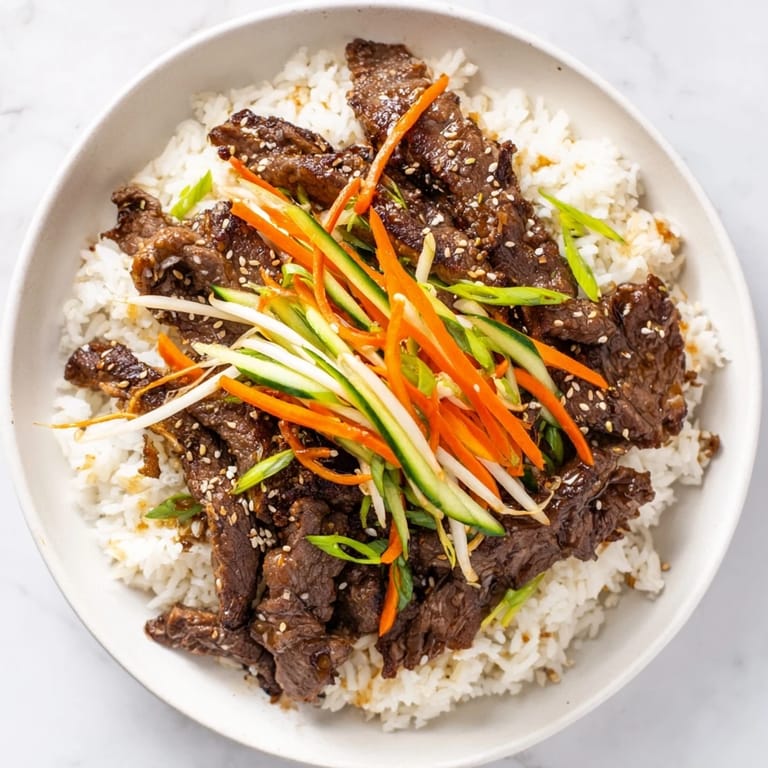
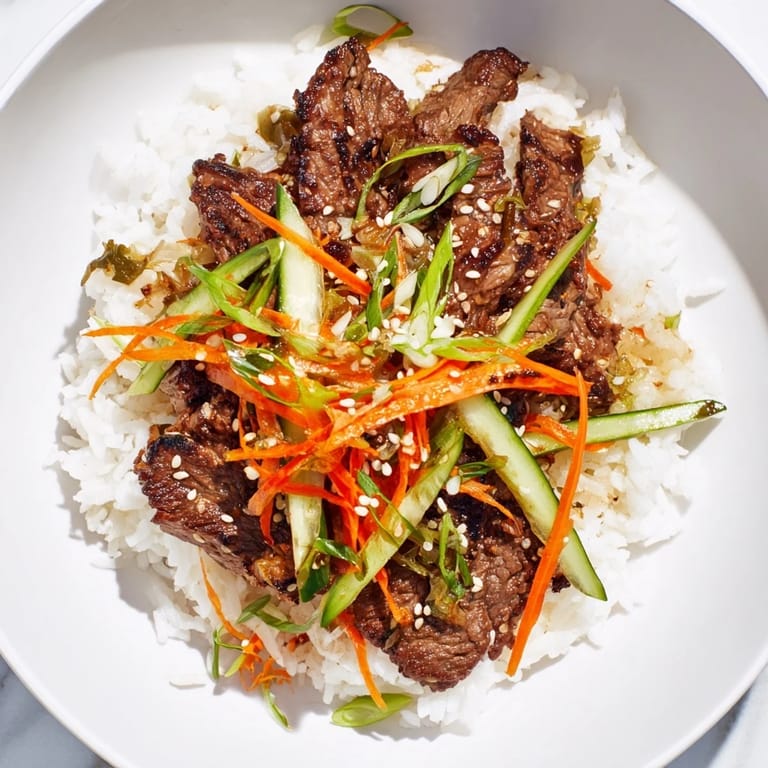
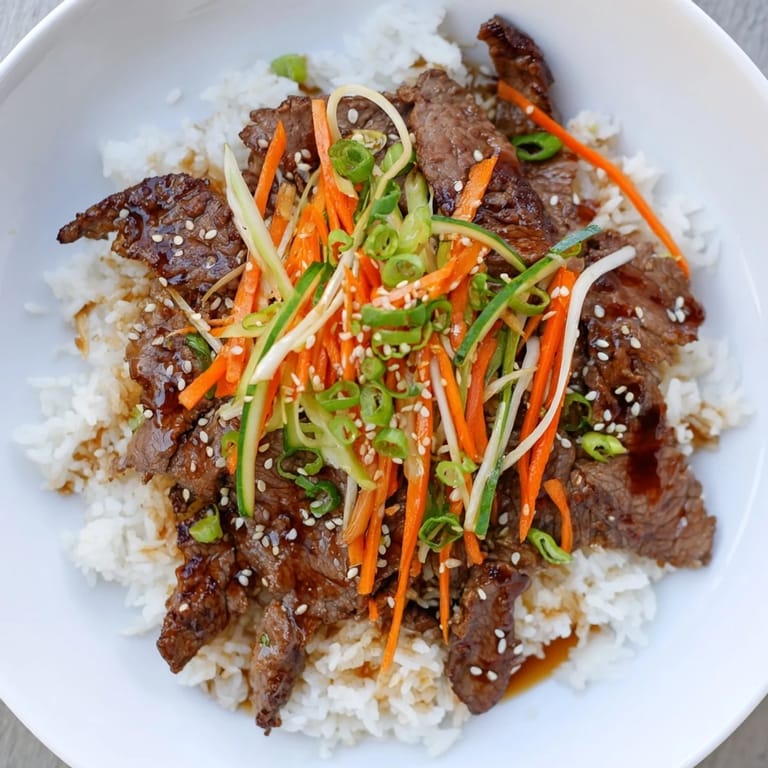
- Divide rice among four bowls, then arrange the beef, carrots, cucumber, and bean sprouts on top like you're creating something worth photographing. The arrangement matters less than having all the elements in each bowl.
- Finish and serve:
- Scatter the remaining scallions and sesame seeds on top, then serve immediately while the rice is still warm and the vegetables are still crisp.
 Save It
 What I love most about this dish is how it changed what I make on weeknights. It doesn't feel like a shortcut; it feels intentional and special, but it takes the same amount of time as heating up leftovers. That's when I knew it belonged in regular rotation.
Customizing Your Bowl
The beauty of bulgogi in a bowl format is that it adapts to whatever you have or whatever you're craving. Some nights I add a soft-boiled egg on top for richness; other times I trade cucumber for avocado when I'm feeling indulgent. The constants are the beef and rice, but everything else is negotiable. I've used spinach instead of bean sprouts, radish instead of carrot, and it's worked every single time because the marinade is doing all the heavy lifting.
Flavor Balance and Why It Matters
Bulgogi is a perfect example of how four distinct flavor notes create something greater than any single ingredient. You've got the salt from soy sauce, the sweetness from brown sugar and pear, the richness from sesame oil, and the brightness from vinegar and ginger. It's balanced enough that nothing overpowers, but complex enough that you taste something different in each bite. If your version feels flat, it's usually because one element is missing—taste as you go and adjust accordingly.
Rice and Vegetable Strategy
I learned early on that the rice needs to be slightly undercooked rather than perfectly fluffy when you're serving it in a bowl with sauce. It absorbs the marinade and becomes something closer to fried rice, which is absolutely what you want. For vegetables, I blanch the bean sprouts for texture, but I keep everything else raw for that contrast. The cold crispness against warm beef is what makes this dish feel less heavy despite being completely satisfying.
- Make your rice while the beef marinates—it's the only real time commitment in this recipe.
- Prep all vegetables before you start cooking because the beef moves fast and you won't have time to julienne carrots while something's sizzling.
- If you're cooking for more than four people, double the marinade but cook the beef in smaller batches to keep the heat consistent.
 Save It
 This is the kind of recipe that slips into your regular weeknight rotation without ceremony and becomes something people request. Make it once, and you'll understand why.
Common Questions About Recipes
- → What cut of beef works best for bulgogi?
Thinly sliced ribeye or sirloin are ideal due to their tenderness and quick cooking properties, ensuring juicy results.
- → How long should the beef marinate for optimal flavor?
Marinate the beef for at least 15 minutes, but up to one hour allows deeper absorption of the marinade's sweet and savory flavors.
- → Can I adjust the spiciness of the dish?
Yes, adding gochujang introduces a spicy kick. Start with a small amount and adjust according to your heat preference.
- → What are some suitable vegetable toppings?
Julienned carrots, sliced cucumber, blanched bean sprouts, and kimchi (optional) add texture and freshness to the bowl.
- → Is there a low-carb alternative to rice for this dish?
Cauliflower rice can be used as a low-carb substitute without compromising on flavor or texture.