 Save It
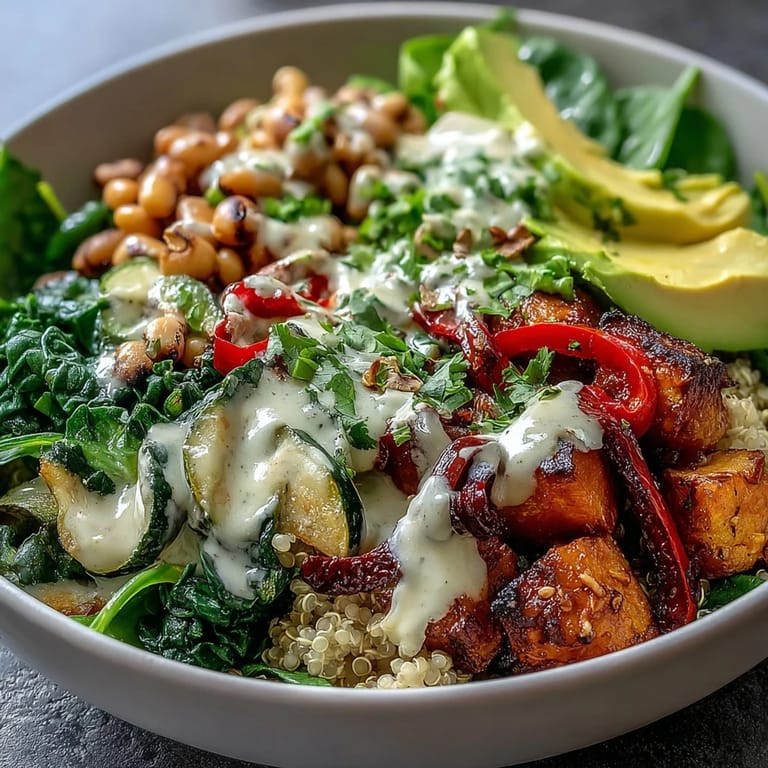
 My friend Marcus showed up at my door with a bag of fresh produce from the farmers market and zero dinner plans, which meant I had maybe thirty minutes to create something that felt both impressive and effortless. I remembered reading about Buddha bowls somewhere between scrolling and cooking, but what stuck with me was the idea of building something colorful enough to photograph and nourishing enough to actually feel good about eating. That afternoon, I discovered that black-eyed peas weren't just a Southern staple—they were the secret ingredient that transformed a jumble of roasted vegetables into something with real substance and soul.
I made this bowl for a potluck where I knew at least three people were vegan, and instead of the usual awkward separate-foods situation, everyone gathered around and started deconstructing mine to see what made it work. The combination of textures—crispy roasted edges, tender grains, creamy avocado—created this conversation that somehow turned into a cooking lesson right there at the table. That's when I realized this bowl wasn't just convenient; it was genuinely craveable.
Ingredients
- Quinoa: This ancient grain cooks quickly and holds its shape beautifully while adding a subtle nuttiness that won't compete with your other flavors.
- Sweet potato: The natural sweetness caramelizes at high heat, creating little golden edges that taste almost like candy alongside the savory elements.
- Black-eyed peas: They have a creamier texture than chickpeas and absorb spice beautifully without falling apart like some legumes do.
- Tahini: This sesame paste becomes silky when whisked with lemon juice and water, creating a dressing that tastes indulgent despite being completely plant-based.
- Red bell pepper and red onion: The red varieties add brightness and a slight sweetness that makes the bowl feel more vibrant than orange or yellow options.
- Fresh greens: Use whatever you have on hand, but kale holds up better if you're meal prepping than delicate spinach.
- Avocado: Save this for final assembly unless you're eating immediately, as it oxidizes quickly once sliced.
- Smoked paprika: This spice adds complexity and a hint of smokiness that elevates humble roasted vegetables into something restaurant-quality.
Tired of Takeout? 🥡
Get 10 meals you can make faster than delivery arrives. Seriously.
One email. No spam. Unsubscribe anytime.
Instructions
- Heat your oven properly:
- Preheat to 425°F and let it sit for at least ten minutes so your vegetables roast instead of steam. You want that dry, concentrated heat that creates golden, caramelized edges.
- Prepare and season your vegetables:
- Toss the sweet potato, bell pepper, red onion, and zucchini with olive oil, smoked paprika, salt, and pepper, then spread them in a single layer on your baking sheet. Roast for twenty-five minutes, stirring halfway through, until everything is tender and the edges are turning golden brown.
- Cook your grain base:
- While vegetables roast, rinse your quinoa thoroughly under cold water to remove any bitterness, then combine with water and salt in a saucepan. Bring to a boil, reduce heat to low, cover, and simmer for exactly fifteen minutes without peeking.
- Let the grain rest:
- Remove from heat and leave covered for five minutes, which allows the quinoa to absorb any remaining water and become perfectly fluffy. Fluff gently with a fork before serving.
- Warm your black-eyed peas:
- In a small skillet over medium heat, add your drained black-eyed peas with ground cumin and garlic powder, stirring occasionally for three to four minutes until heated through and fragrant. This gentle warming releases the spices into the peas without cooking them into mush.
- Make the tahini dressing:
- In a bowl, whisk together tahini, fresh lemon juice, maple syrup, water, minced garlic, and salt until completely smooth. Add water gradually until you reach a drizzle consistency, as tahini thickens as it sits.
- Assemble your bowls:
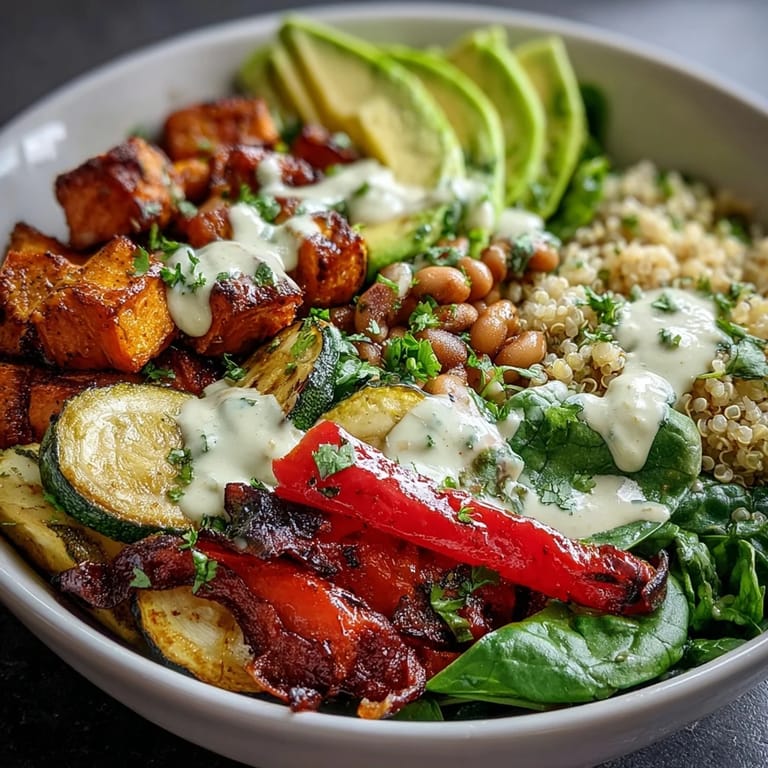
- Divide the cooked quinoa among four bowls, then arrange roasted vegetables, warmed black-eyed peas, and fresh greens on top in sections. This approach makes for a beautiful presentation and lets people choose their bite ratios.
- Finish and serve:
- Drizzle generously with tahini dressing, then top with avocado slices and your choice of fresh cilantro or parsley. Serve immediately while the warm grains and vegetables still have their temperature contrast against cool, creamy avocado.
 Save It
 There was a quiet moment when I was assembling the bowls where I realized I wasn't stressed about impressing anyone or following rules—I was actually excited to eat something I'd made that tasted this good. That's the moment this recipe stopped being a weeknight dinner solution and became something I genuinely wanted to make again.
Building Your Bowl Philosophy
The beauty of a Buddha bowl is that it's less about rigid rules and more about understanding the five elements: a grain, a protein, roasted vegetables, raw fresh elements, and a dressing that ties everything together. Once you grasp this framework, you can substitute almost anything based on what's in season or what you're craving. I've made versions with farro instead of quinoa, roasted chickpeas instead of black-eyed peas, and even added roasted beets for earthiness. The architecture stays the same, but the flavors shift with your mood and your market.
Timing and Meal Prep Strategy
The genius of this bowl is that almost everything can be made ahead without sacrificing quality. I often roast vegetables on Sunday evening and store them in the fridge, then cook the grain the night before. The black-eyed peas keep perfectly for three days, and the tahini dressing actually tastes better after a few hours as the flavors meld together. The only components that need last-minute attention are the avocado, fresh greens, and herbs, which takes less than five minutes to assemble into four bowls.
Why This Dressing Changes Everything
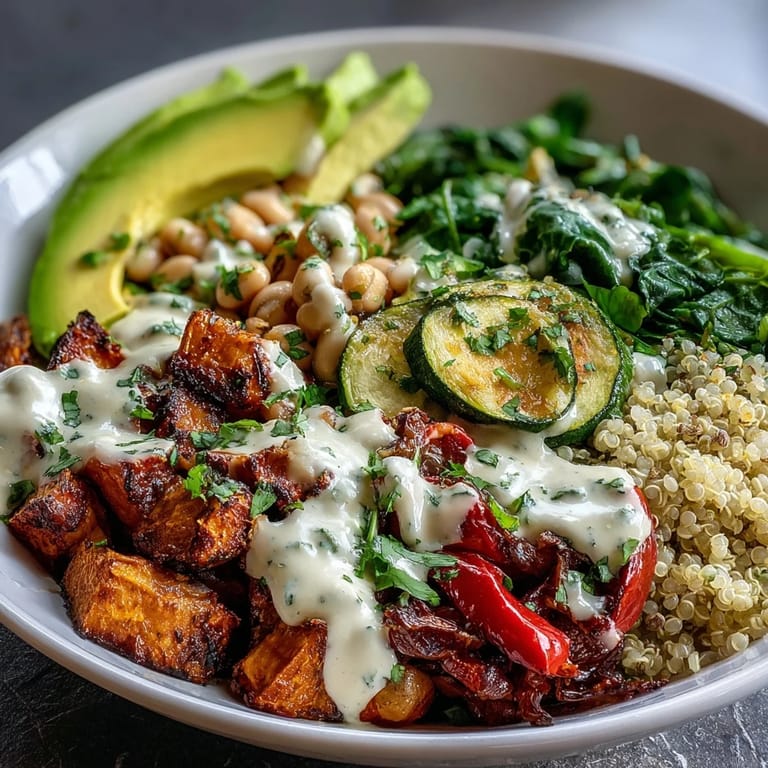
I used to think tahini dressing was intimidating until I realized it's just three elements in harmony: something fatty (tahini), something acidic (lemon juice), and something slightly sweet (maple syrup) whisked together with water until it flows. The maple syrup balances the earthiness of tahini while the lemon brightness cuts through richness, creating a dressing that tastes indulgent and balanced simultaneously. This ratio works for other bowls too, so once you master it, you've unlocked a whole vocabulary of plant-based eating.
- Make extra dressing and store it in a jar for drizzling over salads, roasted vegetables, or even using as a dip for crudités throughout the week.
- If you don't have maple syrup, use agave nectar or even a pinch of sugar dissolved in the lemon juice for similar results.
- Taste the dressing before assembling—it should be assertively flavored since it's diluting across multiple components and won't taste as strong once on the bowl.
 Save It
 This bowl taught me that plant-based eating isn't about restriction or sacrifice—it's about understanding how to build something that tastes genuinely satisfying. Every time I make it, I'm reminded why good food brings people together.
Common Questions About Recipes
- → Can I use dried black-eyed peas instead of canned?
Absolutely. Soak 1 cup dried peas overnight, then simmer for 45-60 minutes until tender. You'll need about 2 cups cooked peas for this bowl.
- → What other grains work well in this bowl?
Brown rice, farro, wheat berries, or even cauliflower rice for a lighter option. Adjust cooking time accordingly.
- → How long does this keep in the refrigerator?
Store components separately for up to 5 days. Keep the dressing in a sealed container and add fresh just before serving.
- → Is this bowl freezer-friendly?
The quinoa, roasted vegetables, and black-eyed peas freeze well for up to 3 months. Add fresh greens and avocado after thawing.
- → Can I make the tahini dressing ahead?
Yes, it keeps refrigerated for up to a week. You may need to thin it with additional water as it thickens when cold.
- → What vegetables can I substitute seasonally?
Try roasted Brussels sprouts in winter, cherry tomatoes in summer, or butternut squash in fall. The seasoning works with most vegetables.