 Save It
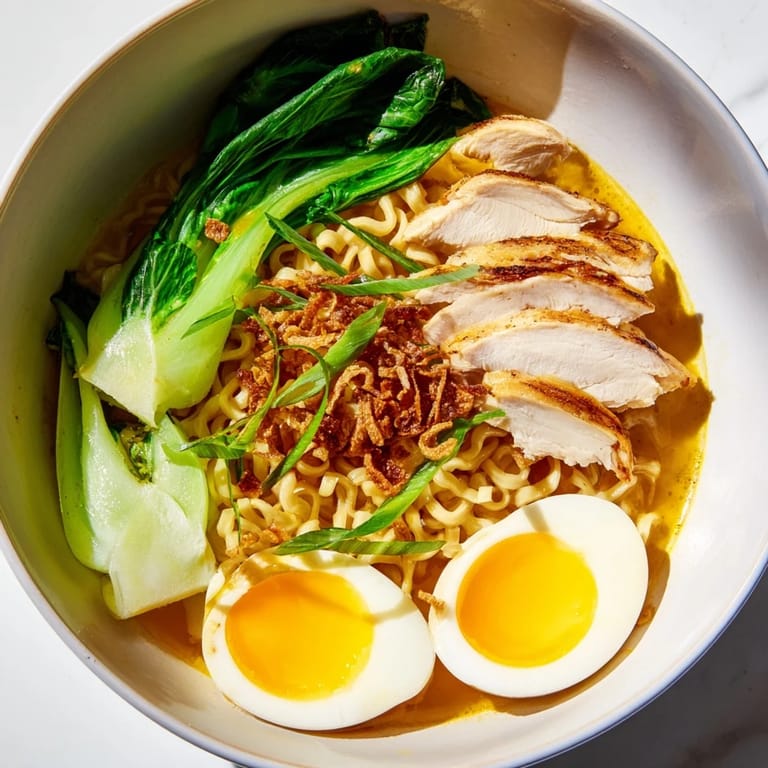
 There's something about the smell of miso hitting hot broth that transported me back to a random Tuesday night when my friend Maya showed up at my apartment with a bag of Thai curry paste, insisting we fusion-ify her favorite ramen. Two hours later, we had this bowl—fragrant, steaming, and so good we made it three more times that week. Now whenever I make it, that kitchen chaos comes rushing back: the hiss of chicken hitting the pan, the way cilantro keeps slipping out of my fingers, Maya's laugh when she burned the first batch of shallots. It's become my go-to when I want something that tastes like both travel and home.
I made this for my sister's book club once, and honestly the ramen stole the show from whatever novel they were discussing. One person asked for seconds before finishing their first bowl, and someone else wanted the recipe before dessert even came out. That's when I realized it wasn't just delicious—it had that rare quality of making people slow down and actually taste what's in front of them.
Ingredients
- Vegetable oil: Just enough to get a good sear on the chicken and build flavor in the broth base; don't be shy with it.
- Onion: Finely chopped so it melts into the broth and gives you that subtle sweetness without chunks.
- Garlic and ginger: Fresh is non-negotiable here—they're the backbone of everything aromatic that happens next.
- Thai red curry paste: This is your secret weapon for depth; it adds heat and complexity that plain broth never could.
- Chicken broth: Low sodium matters because you're adding soy and fish sauce, which are already salty.
- White miso paste: The quiet hero that makes this taste sophisticated; it dissolves better than red and doesn't overpower.
- Soy sauce and fish sauce: Umami amplifiers that make you wonder why every soup doesn't have them.
- Sesame oil: Just a little at the end for that toasted, nutty whisper.
- Chicken breasts: Boneless and skinless cook faster and shred beautifully into the broth.
- Fresh ramen noodles: If you can find them, they're infinitely better than dried; they have more texture and soak up broth like they were meant to.
- Bok choy: Add it in the last minutes so it stays tender-crisp and bright green.
- Eggs: Seven minutes gives you that jammy, runny yolk that breaks into the broth like liquid gold.
- Crispy fried shallots: Store-bought is fine, but homemade stays crunchier longer if you're patient enough to make them.
- Scallions, cilantro, and chili: These are your fresh-element finishers that wake up your palate with every bite.
- Lime wedges: A squeeze of brightness that ties everything together.
Tired of Takeout? 🥡
Get 10 meals you can make faster than delivery arrives. Seriously.
One email. No spam. Unsubscribe anytime.
Instructions
- Sear the chicken:
- Season your chicken breasts generously and get them into a hot pot with a little oil until they're golden on both sides, about 2–3 minutes per side. You're not cooking them through yet; you're just building color and flavor. Set them aside on a plate.
- Build your aromatic base:
- In the same pot, add onion and let it soften for a couple minutes, then add your minced garlic and ginger, letting them bloom for about a minute until your kitchen smells incredible. Stir in the Thai red curry paste and let it cook for another minute so the flavors deepen and the raw edge softens.
- Simmer the chicken in broth:
- Pour in your chicken broth, bring it to a simmer, then add the chicken back in. Let it gently cook for 12–15 minutes until the chicken is cooked all the way through. When it's done, pull it out to cool slightly before shredding or slicing.
- Whisk in the miso magic:
- Here's the tricky part that matters: whisk your white miso paste with a little broth first to dissolve it smoothly, then add it back to the pot along with soy sauce, fish sauce, sugar, and sesame oil. Keep the heat medium so the broth stays hot but doesn't boil, which would kill some of the miso's complexity.
- Soft-boil your eggs:
- While the broth is doing its thing, bring water to a boil in a small pot, gently add your eggs, and cook for exactly 7 minutes. This timing gives you that runny yolk and set whites—the sweet spot. Immediately into ice water to stop the cooking, then peel them under cool running water and halve them right before serving.
- Cook noodles and bok choy:
- In a separate pot, follow your noodle package's instructions, but add the bok choy halves in the last 1–2 minutes so they're tender but still have a little snap. Don't overcrowd the pot; the noodles need room to move around and cook evenly.
- Assemble with intention:
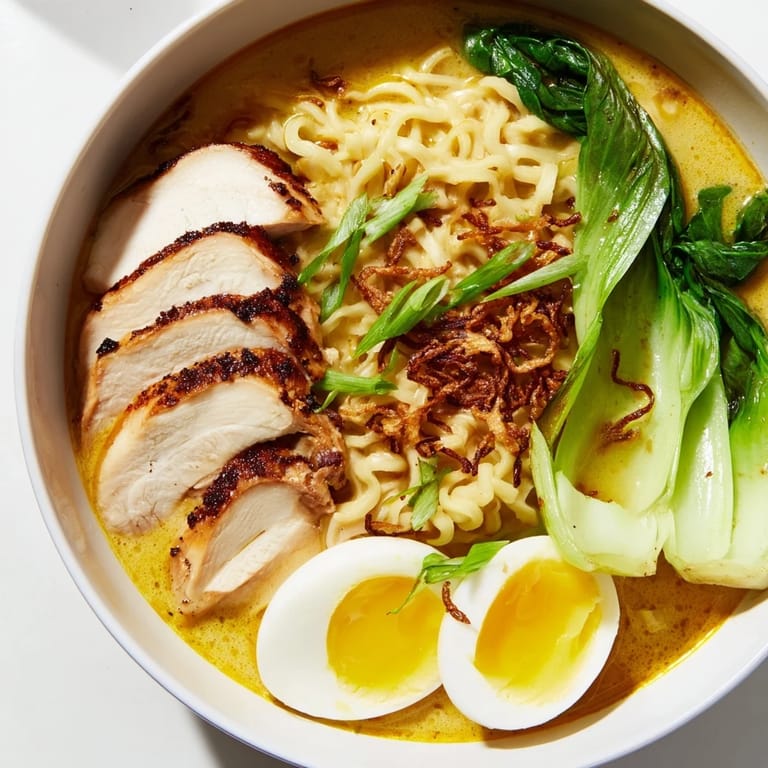
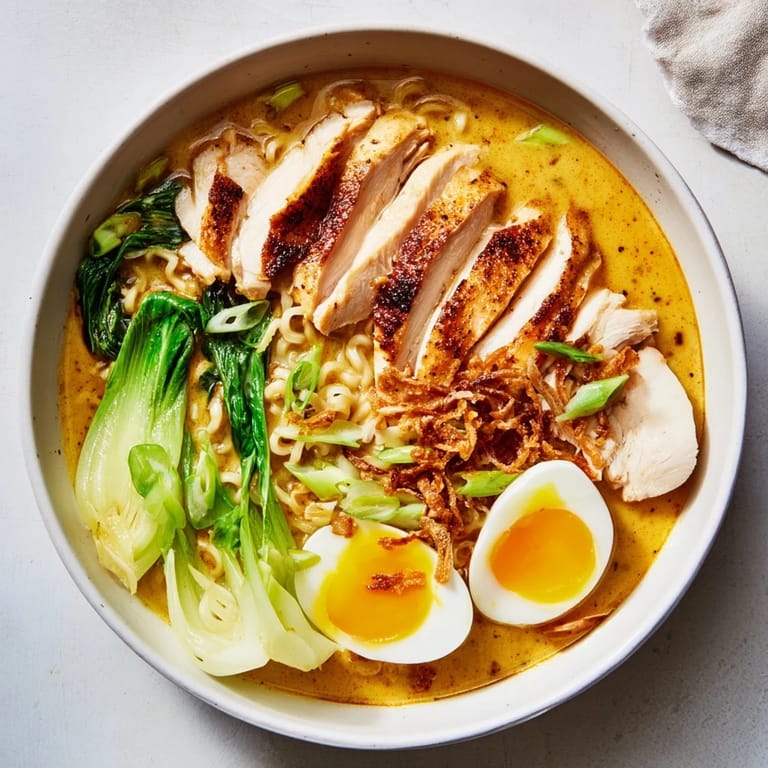
- Divide your noodles and bok choy into four bowls, then carefully ladle the hot broth over them. Top each bowl with shredded chicken, a halved egg, a handful of crispy shallots, some thinly sliced scallions, fresh cilantro, and chili if you like heat. Serve lime wedges on the side so people can adjust the brightness to their taste.
 Save It
 What I love most about this bowl is how it brought my Thai-obsessed friend and my ramen-loving partner together in the same meal, no compromises. It's one of those rare dishes where fusion doesn't feel forced—it just feels right, like two cuisines that were always meant to meet halfway.
Why This Fusion Works
Japanese miso and Thai curry paste might seem like they're coming from totally different playbooks, but they're actually both about building layers of umami and spice. The miso brings that deep, fermented complexity that makes you want another sip, while the Thai curry paste adds a hit of brightness and heat that keeps things from feeling heavy. Together, they create a broth that tastes both grounded and alive, which is exactly what you want when you're eating noodles on a weeknight or trying to impress people at a dinner table.
Making It Your Own
The beauty of this recipe is how forgiving it is about customization. Want it spicier? Add more curry paste or fresh chili, or leave the red pepper flakes on the side so people can adjust. Going vegetarian? Swap the chicken for crispy tofu, use vegetable broth instead of chicken, and skip the fish sauce—add an extra teaspoon of sesame oil to keep that umami richness. You can also prep components ahead: the broth keeps in the fridge for three days, and the toppings can be prepped in the morning and stored separately until you're ready to assemble.
- Make the broth the night before and you've already done the heavy lifting.
- Store crispy shallots in an airtight container so they stay crunchy until the last second.
- Have all your toppings prepped and within arm's reach before you start cooking the noodles.
The Science of Soft-Boiled Eggs
Seven minutes is the magic number for a soft-boiled egg with a runny yolk and fully set whites. But here's what I've learned: it matters whether your eggs are cold from the fridge or closer to room temperature—cold eggs might need 30 extra seconds. The ice bath is non-negotiable because it stops the cooking immediately, keeping that yolk from becoming chalky. I used to skip this step thinking I was saving time, and I'd end up with overcooked eggs that looked sad floating in my beautiful broth.
 Save It
 There's something comforting about a bowl of ramen that tastes like adventure—this one delivers that feeling every single time. Make it once and it becomes part of your rotation, the dish you come back to when you want something that feels both cozy and exciting.
Common Questions About Recipes
- → Can I substitute chicken with a vegetarian option?
Yes, replace chicken and fish sauce with vegetable broth and add tofu for protein while maintaining rich flavors.
- → How do I achieve perfectly soft-boiled eggs?
Boil eggs gently for 7 minutes, then transfer to ice water to stop cooking and ease peeling.
- → What is the best way to prepare the broth?
Sauté aromatic onion, garlic, and ginger, then incorporate red curry paste before simmering chicken in broth to build layered flavors.
- → Can I use dried ramen noodles instead of fresh?
Dried noodles work well; just follow package cooking times and blanch bok choy in the final 2 minutes.
- → How can I adjust the spice level in this dish?
Modify the amount of Thai red curry paste or add sliced chili to increase spiciness according to taste.
- → What toppings add the best texture contrast?
Crispy fried shallots and fresh scallions provide crunch that complements the tender chicken and soft eggs.