 Save It
 There's something about arranging a mezze platter on a warm afternoon that makes you feel like you're throwing open the doors to somewhere Mediterranean, even if you're just in your own kitchen. My first real encounter with this kind of casual, gorgeous spread happened at a friend's garden party where the host simply let everything speak for itself—no fussy plating, just honest ingredients arranged with breathing room and sunlight catching the olive oil. I've been chasing that exact feeling ever since, and I finally realized it's not about complexity; it's about giving each element room to shine.
I made this for my sister's birthday brunch last spring, and I'll never forget how people just naturally gathered around the board, picking thoughtfully like they were selecting from an art gallery rather than eating. Someone said the spacing made it feel less chaotic than a typical cheese board, and that's when I understood—restraint and negative space are just as much ingredients as the feta.
Ingredients
- Feta cheese: The salty anchor that ties everything together; I always use good-quality feta packed in brine because it stays creamy and bright.
- Fresh mozzarella balls: These mild, tender spheres balance the feta's intensity and add a delicate richness that feels almost luxurious.
- Cucumber: Slice it just before serving so it stays crisp and cool, almost ice-like against the warmth of the cheese.
- Cherry tomatoes: Choose the sweetest ones you can find; they're the little flavor jewels of this platter.
- Yellow bell pepper: The bright color matters as much as the sweet crunch it brings to every other element.
- Red onion: Thin slicing makes it feel refined rather than aggressive; soak it in cold water for five minutes if you want it gentler.
- Radishes: These peppery rounds add bite and visual intrigue in a way most people don't expect from a mezze.
- Kalamata olives: Use pitted ones so guests don't have to wrestle with them; they're salty little anchors throughout.
- Hummus and tzatziki: These creamy bases catch the eye and give people something to anchor their bites to.
- Extra virgin olive oil: A good oil tastes like itself; don't waste an average one here.
- Fresh mint and dill: These aren't garnish—they're flavor contributors that wake up every single element on the board.
- Crispbreads or pita: Gluten-free works beautifully here if needed, and honestly makes the whole thing feel more accessible.
Tired of Takeout? 🥡
Get 10 meals you can make faster than delivery arrives. Seriously.
One email. No spam. Unsubscribe anytime.
Instructions
- Map out your board:
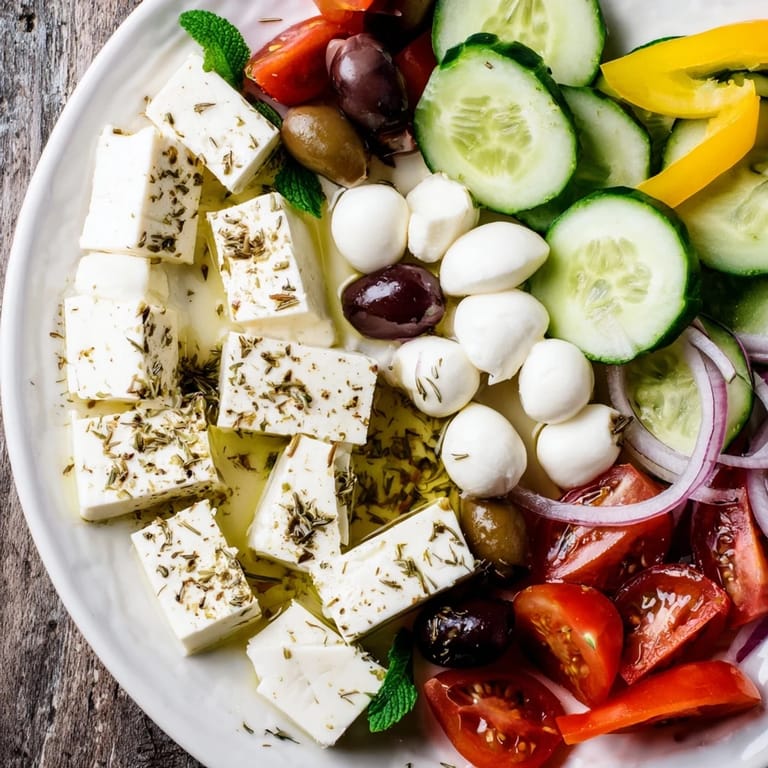
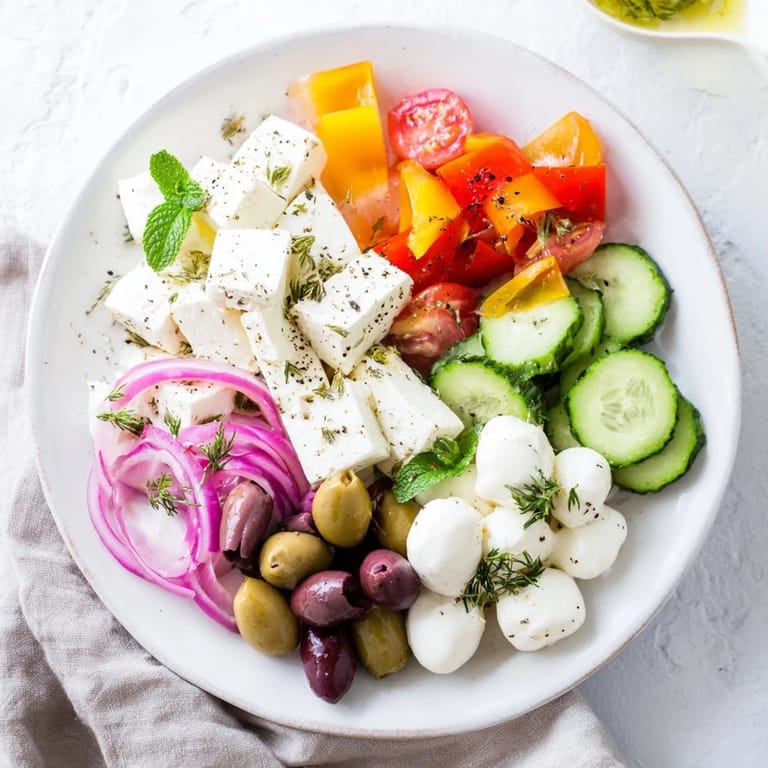
- Look at your platter like you're designing a landscape, not filling it. Place the feta and mozzarella first in separate zones, leaving generous white space because those gaps are what make this feel intentional rather than crowded.
- Cluster the vegetables:
- Fan the cucumbers in one small area, pile the tomatoes nearby, then arrange the pepper strips, onion, and radishes in their own little neighborhoods. Think of it like creating mini conversations between colors and textures.
- Position the olives:
- A small bowl or even a little heap works beautifully, giving people a focal point and a reason to reach across the board.
- Add the dips:
- Set hummus and tzatziki in small bowls right on the board, treating them as part of the landscape rather than afterthoughts.
- Dress it with care:
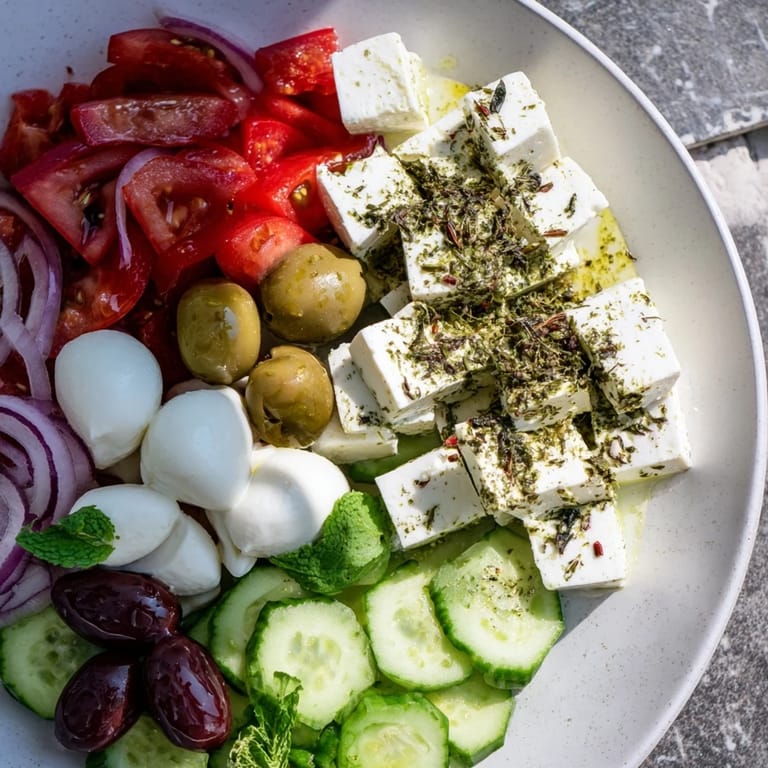
- A light drizzle of olive oil across the feta and a few vegetable pieces, then a pinch of salt and pepper—this is the moment everything comes alive visually and flavor-wise.
- Garnish with herbs:
- Scatter mint and dill across the whole thing right before serving, letting people see fresh green against the jewel tones below.
 Save It
 What struck me most while testing this platter was watching how differently people ate from it compared to regular appetizer spreads. They slowed down, made intentional choices, built little flavor combinations rather than just grabbing. That's when food stops being just sustenance and becomes this small moment of presence.
The Art of Spacing
I learned from a food stylist friend that negative space isn't empty—it's actually doing work, making colors pop and letting your eye rest. On a mezze board, those gaps between ingredients aren't laziness; they're confidence. They say you planned this, you thought about it, you respect your ingredients enough not to crowd them. The first time I deliberately left white space instead of filling my entire platter, people commented on how fresh and inviting it looked, and that's when I understood that sometimes doing less is actually doing more.
Building Flavor Combinations
The beauty of a mezze spread is that everyone becomes their own chef, building bites that speak to their particular mood. A radish slice with feta and dill hits completely different than a tomato with hummus and a crispbread, and someone else might pair cucumber with mozzarella and a pinch of salt. I love watching this happen because it means the platter isn't prescriptive—it's an invitation to play.
Seasonal Swaps and Twists
This platter is forgiving in the best way, a blank canvas that shifts beautifully with seasons. In summer, I load it with tomatoes and keep it simple; in spring, young radishes and tender lettuces feel right; in cooler months, roasted vegetables or thinned slices of fresh apple add unexpected depth. The core of feta, olive oil, and fresh herbs stays constant while everything else can dance around it.
- Sprinkle the feta with dried oregano or sumac for extra dimension and color.
- Toss in some roasted beets, fresh figs, or grapes if you want to experiment with sweetness.
- A scatter of toasted pine nuts or za'atar adds a whisper of texture that surprises people pleasantly.
 Save It
 This platter has become my go-to for almost every gathering because it honors the ingredient, respects the time people have to spend with food, and tastes like sunshine tastes if that makes any sense. Once you make it once, you'll reach for it again and again.
Common Questions About Recipes
- → What cheeses are best for this mezze board?
Feta and fresh mozzarella (bocconcini) provide creamy, tangy flavors that complement fresh vegetables beautifully.
- → Can I make this gluten-free?
Yes, serve with gluten-free crispbreads or pita wedges to keep it gluten-free.
- → How should the vegetables be prepared?
Slice cucumber, cherry tomatoes, bell pepper, red onion, and radishes into bite-sized pieces for easy serving and visual appeal.
- → What herbs enhance the presentation and flavor?
Fresh mint and dill sprigs add a sun-kissed look and refreshing aroma to the platter.
- → Are there any suggested accompaniments?
Hummus and tzatziki add creamy texture and tang, perfectly complementing the vegetables and cheeses.
- → Can this platter be adapted for vegan diets?
Yes, substitute plant-based feta and vegan mozzarella alternatives, omitting dairy-based dips if needed.