 Save It
 The steam from this soup always transports me back to my grandmother's tiny kitchen, where snow pressed against the windowpanes and a ham bone simmered on the stove for hours. I stood on a step stool just to reach the counter, watching the split peas break down and transform into something magical. She taught me that good soup requires patience and a heavy wooden spoon for stirring. Now every winter, when the wind howls, I find myself reaching for dried split peas and remembering that cozy afternoon.
Last January, my neighbor texted that her husband had brought home a massive ham from work and they couldn't possibly finish it all. I walked over with my largest pot, and she handed me this beautiful meaty bone wrapped in butcher paper. We stood in her kitchen drinking coffee while I described exactly how I'd transform it into soup. Three days later, I returned two mason jars filled with the finished soup, and she called me within an hour to say it was the best thing she'd eaten all winter.
Ingredients
- 1 meaty ham bone or 2 cups diced cooked ham: The bone adds incredible depth to the broth, but leftover ham works perfectly fine too
- 1 pound (450 g) dried split peas, rinsed and sorted: I always spread them on a white plate to catch any small stones or debris
- 1 large onion, diced: Yellow onions work best here as they sweeten as they cook
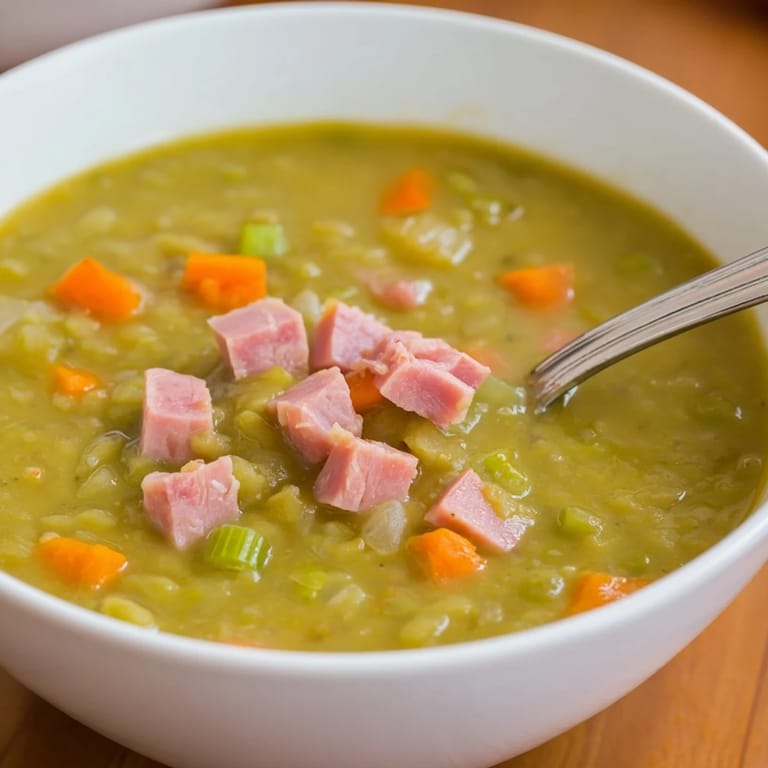
- 2 carrots, peeled and diced: These add natural sweetness and beautiful orange flecks throughout
- 2 celery stalks, diced: Essential for that classic soup base flavor foundation
- 2 cloves garlic, minced: Add this right before the liquids so it doesn't burn
- 1 bay leaf: Don't forget to remove this before serving
- 8 cups (2 liters) low-sodium chicken or vegetable broth: Low-sodium lets you control the salt level since ham is already salty
- 2 cups (480 ml) water: This helps prevent the soup from becoming too salty as it reduces
- 1 teaspoon dried thyme: Fresh thyme works too if you have it on hand
- ½ teaspoon freshly ground black pepper: Freshly ground makes a noticeable difference
- Salt, to taste: Wait until the end since the ham adds significant saltiness
Tired of Takeout? 🥡
Get 10 meals you can make faster than delivery arrives. Seriously.
One email. No spam. Unsubscribe anytime.
Instructions
- Sauté your foundation:
- In a large stockpot or Dutch oven, heat a splash of oil over medium heat. Add the onion, carrots, and celery. Cook, stirring, for 5–6 minutes until softened.
- Add the aromatics:
- Stir in the garlic and cook for 1 minute more until fragrant.
- Build the soup base:
- Add the split peas, ham bone (or diced ham), bay leaf, thyme, broth, and water. Stir to combine.
- Start the simmer:
- Bring to a boil, then reduce heat to low. Cover and simmer for 1 hour, stirring occasionally.
- Thicken it up:
- Remove the lid and continue simmering for an additional 20–30 minutes, or until the peas are completely tender and the soup is thickened to your liking.
- Finish the ham:
- Discard the bay leaf and remove the ham bone. If using a ham bone, pick off any meat, chop it, and return it to the soup.
- Season and adjust:
- Season with black pepper and salt to taste. For a creamier texture, partially mash the peas or use an immersion blender for a smoother consistency.
- Serve it up:
- Serve hot, garnished with fresh herbs if desired.
 Save It
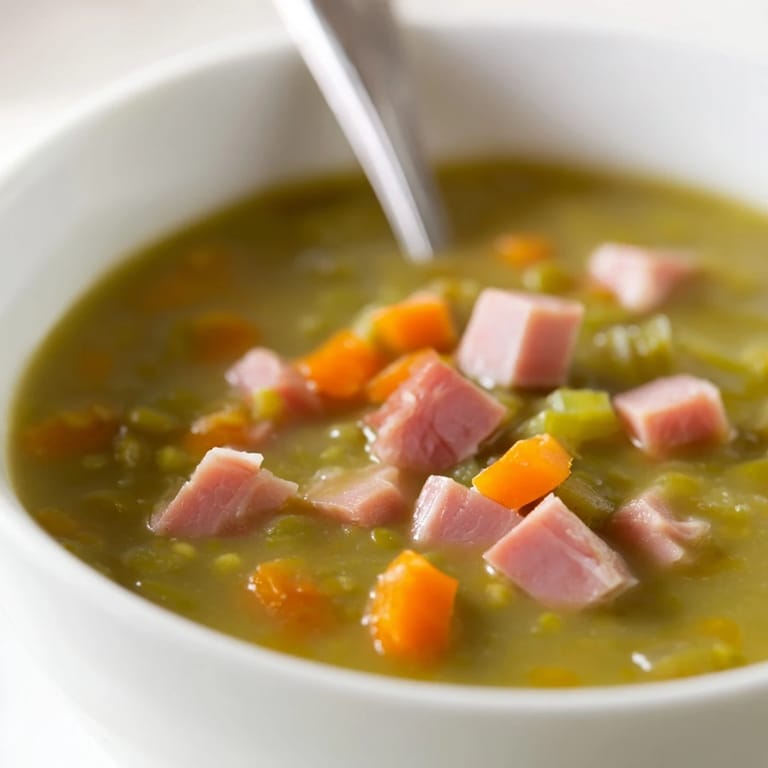
 My daughter claimed she hated pea soup until she tasted this version at age seven. Now she requests it every time the temperature drops below freezing, watching with wide eyes as the yellow peas dissolve into creamy comfort. I caught her teaching her friend the recipe over FaceTime last winter, explaining that the secret is patience and a good ham bone.
Making It Your Own
This soup adapts beautifully to what you have on hand or personal preferences. Sometimes I throw in diced potatoes for extra heartiness, especially when feeding teenagers. Other times I'll add a parsnip or two for subtle sweetness. The recipe remains essentially the same, but small tweaks make it feel new each time.
The Leftover Situation
This soup is arguably better on day two or three, giving you an excellent meal prep option. The flavors meld and intensify, while the peas continue breaking down into an even creamier texture. I portion it into glass containers and keep some in the refrigerator for quick lunches and freeze the rest for busy weeks ahead.
Serving Suggestions
A thick slice of crusty bread is the classic accompaniment, perfect for dunking into those last spoonfuls. I've also served it alongside cornbread on cold nights, or over a baked potato for an incredibly filling meal. My favorite addition is a sprinkle of fresh parsley or thyme right before serving, which adds a bright pop of color and flavor.
- Try crumbling some crispy bacon on top for extra smokiness
- A splash of cream or dollop of Greek yogurt adds luxurious richness
- Red pepper flakes bring a gentle heat that cuts through the richness
 Save It
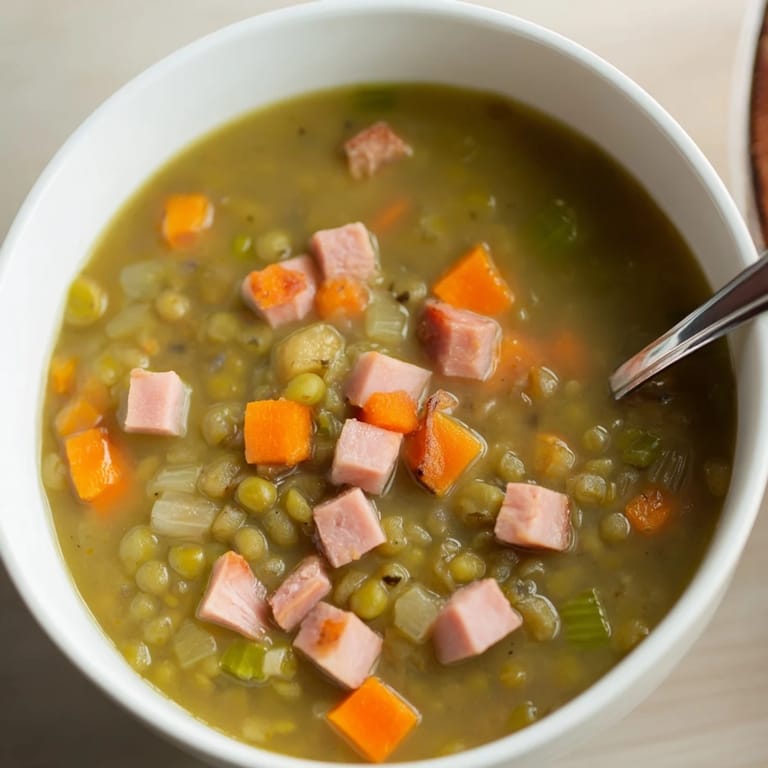
 There's something deeply satisfying about transforming a handful of dried peas and a leftover bone into a pot of nourishing comfort. This soup has become my winter default, the thing I make when I need to feel grounded and nourished.
Common Questions About Recipes
- → Can I make split pea soup with dried ham?
Yes, you can use dried ham or salt pork, though you'll need to soak it first and adjust your seasoning accordingly. Fresh ham bone or cooked diced ham provides the best balance of flavor without excessive saltiness.
- → Do split peas need to be soaked before cooking?
No, split peas don't require soaking like dried beans. They naturally break down during cooking, creating the soup's characteristic creamy texture. Just rinse and sort them before adding to your pot.
- → How long does split pea soup keep in the refrigerator?
Properly stored in an airtight container, split pea soup lasts 4-5 days in the refrigerator. The flavors often improve after a day or two as they have time to meld together.
- → Can I freeze split pea and ham soup?
Absolutely. This soup freezes beautifully for up to 3 months. Cool completely before transferring to freezer-safe containers, leaving some space for expansion. Thaw overnight in the refrigerator before reheating.
- → How can I make split pea soup vegetarian?
Simply omit the ham bone and use vegetable broth instead of chicken broth. Add smoked paprika or liquid smoke to replicate the smoky depth that ham traditionally provides.
- → Why is my split pea soup too thin?
If your soup hasn't thickened enough, continue simmering uncovered to reduce the liquid. You can also mash some peas against the side of the pot or use an immersion blender for a creamier consistency.