 Save It
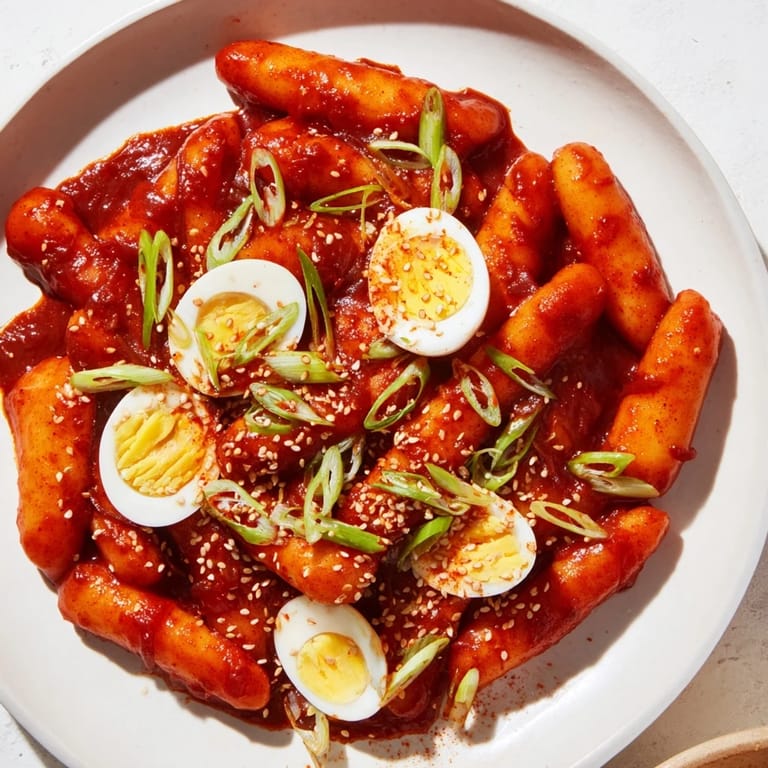
 The first time I tasted tteokbokki was at a night market in Seoul, standing between food stalls with my hands wrapped around a warm paper cup, watching this vendor work the sauce with practiced efficiency. Those pillowy rice cakes glistening in that deep red sauce stopped me mid-conversation with a friend—I had to try it. Years later, I realized I wasn't chasing the memory of that vendor's version so much as that specific moment of discovery, when one bite proved comfort food didn't need to be complicated to be unforgettable.
I made this for a group of friends on a cold evening, and what struck me was how quickly the kitchen filled with that unmistakable gochujang aroma—deep, fermented, alive. Someone said it smelled like Korea, and I laughed because that's exactly what it smelled like to me too, even though my version was made in a tiny apartment kitchen thousands of miles away. It became the kind of dish that brought people together without any fanfare, just hungry hands and happy faces.
Ingredients
- Korean cylindrical rice cakes (tteok), 500 g: These are the heart of the dish—look for vacuum-sealed packages in the frozen section of Korean markets, and soak them briefly so they absorb the sauce evenly without falling apart.
- Large eggs, 4: Boiled until just set with a whisper of creaminess in the center, they're the cooling counterpoint to the heat.
- Gochujang (Korean chili paste), 3 tablespoons: This fermented foundation carries umami that store-bought chili sauce simply doesn't have—don't skip or substitute it.
- Gochugaru (Korean chili flakes), 2 tablespoons: Coarser than the paste, it adds texture and a cleaner heat that builds as you eat.
- Soy sauce, 2 tablespoons: Adds saltiness and depth; use a good quality one if you can.
- Sugar and honey, 1 tablespoon each: Together they round out the spice and create that signature sweet-hot balance without making it dessert-like.
- Garlic, 2 cloves minced: Adds sharpness that cuts through the richness of the sauce.
- Toasted sesame oil, 1 teaspoon: A small amount brings nuttiness and prevents the sauce from feeling one-dimensional.
- Water, 3 cups and dried kombu plus anchovies: This broth base is worth making from scratch—it gives the whole dish a subtle seafood depth that elevates it beyond simple chili paste and water.
- Onion (sliced) and green onion (sliced): Fresh onion softens into the sauce, while green onion adds a last-minute bite and color.
- Fish cake (optional), 1 sheet sliced: Adds chewiness and umami, but leave it out for vegetarian versions.
- Toasted sesame seeds, 1 tablespoon: The final garnish that says you paid attention to the small things.
Tired of Takeout? 🥡
Get 10 meals you can make faster than delivery arrives. Seriously.
One email. No spam. Unsubscribe anytime.
Instructions
- Prep the foundational broth:
- In a medium saucepan, add water, kombu, and anchovies, then bring to a gentle boil. Let it simmer for 10 minutes—you'll notice the broth turning slightly golden and smelling unexpectedly clean and oceanic. Remove the kombu and anchovies, leaving behind a clear, flavored base that makes everything else taste better.
- Soften those rice cakes:
- While the broth simmers, soak the rice cakes in warm water for 10 minutes if they're hard or from the fridge. This step is invisible but essential—it keeps them from falling apart during cooking.
- Boil the eggs to creamy perfection:
- Time 8–9 minutes from when the water reaches a rolling boil, aiming for a just-set white and a barely jammy center. Plunge them straight into cold water and peel while cool enough to handle without burning yourself.
- Build the sauce:
- Add gochujang, gochugaru, soy sauce, sugar, honey, minced garlic, and sesame oil directly to your warm broth and stir everything together until you can't see any paste clumps. Taste a tiny spoonful—this is your moment to adjust if you want it spicier or sweeter before committing.
- Simmer the rice cakes into submission:
- Add your soaked rice cakes, sliced onion, and fish cake to the sauce and stir gently over medium heat for 10–12 minutes, stirring occasionally so nothing sticks. You'll watch the sauce gradually thicken and darken as the rice cakes release their starch into it—this is how it becomes glossy and clings to each piece.
- Finish with the eggs:
- Nestle your boiled eggs into the pan and let them warm through for 2–3 minutes, then scatter green onions and sesame seeds on top before serving.
 Save It
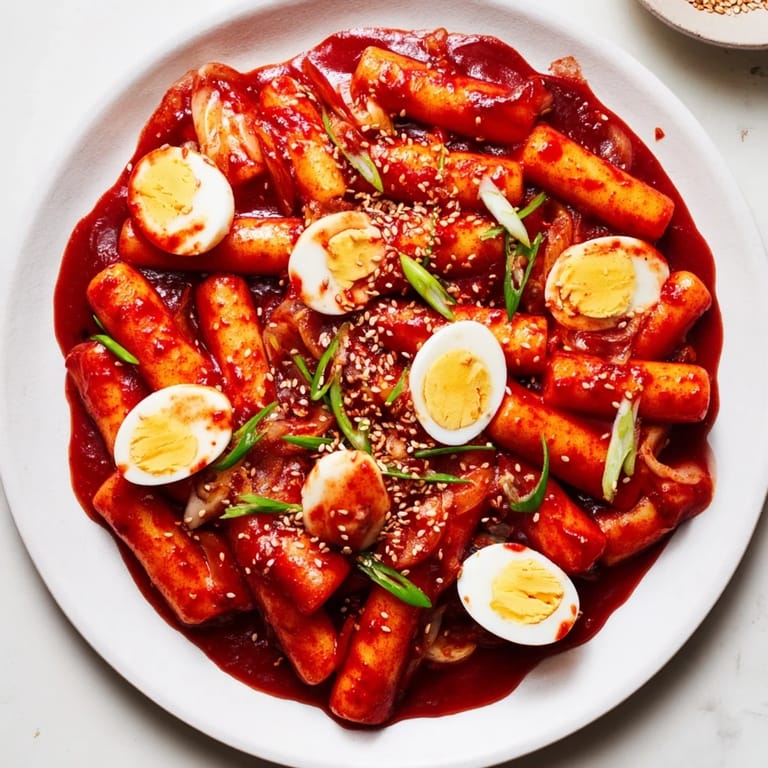
 There was an evening when my partner reached for a second bowl without asking, and I realized this dish had done what food should do—it stopped being about technique and became about comfort. That's when I knew I'd gotten it right.
The Magic of Gochujang and Gochugaru
Most people think these two are interchangeable, but they're more like siblings with different personalities. Gochujang is fermented and smooth, giving you umami and a rounded heat, while gochugaru is bright and direct, with a texture that catches on the rice cakes. Using both together creates a sauce that's complex instead of one-note, and that complexity is what keeps you coming back for another spoonful. Start with the amounts listed and adjust to your heat tolerance—this dish is meant to be enjoyed, not survived.
Why Soft-Boiled Eggs Matter
I used to hard-boil my eggs for this and wondered why the result felt flat. Then I tried soft-boiled, and suddenly each bite had a moment of cool, creamy yolk breaking into the spicy sauce. It sounds like a small thing, but that contrast in temperature and texture is the difference between a good tteokbokki and one you'll actually want to make again. The eggs aren't decoration—they're the palate reset built into every serving.
Customizing Without Losing the Soul
This recipe is forgiving enough to accommodate what you have and what you crave. I've added cabbage for crunch, ramen noodles for substance, and thin-sliced carrots for sweetness without any apologies. The core—the broth, the gochujang, the rice cakes—stays steady while everything else can shift based on your mood or what's in your fridge. Just remember that you're building on a foundation, not starting from scratch.
- Ramen noodles add heft and soak up the sauce like they were born for this.
- Cabbage wilts into the broth and adds an unexpected sweetness that balances the heat.
- For vegetarian versions, skip the anchovies and fish cake, and use vegetable broth or just water with extra garlic and ginger.
 Save It
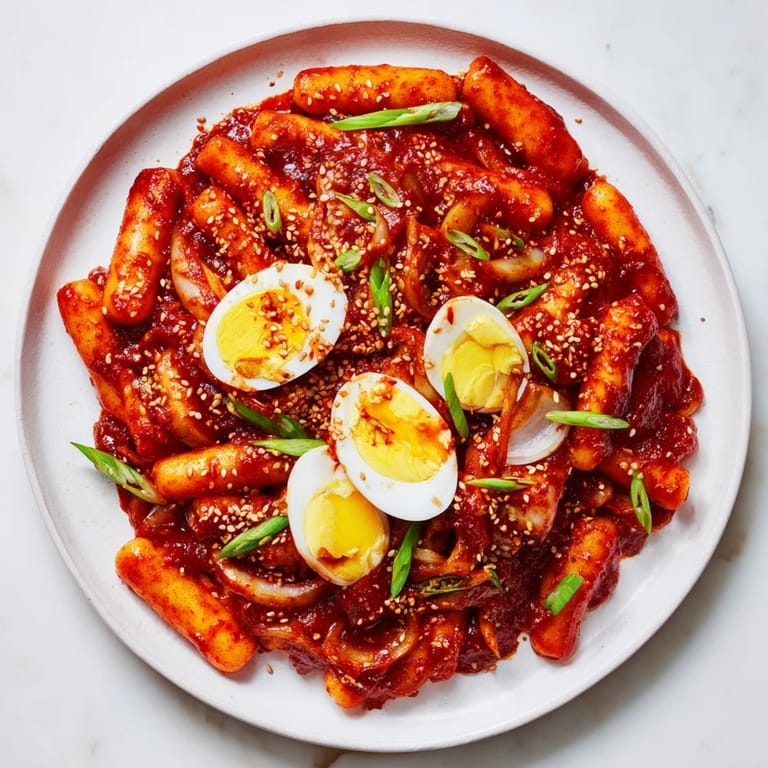
 Tteokbokki isn't fancy, and it doesn't pretend to be. It's the kind of food that knows exactly what it is and does it without apology, which might be why it feels so satisfying.
Common Questions About Recipes
- → How do I soften the rice cakes before cooking?
Soak the rice cakes in warm water for about 10 minutes if they are hard or refrigerated to achieve a soft, chewy texture during cooking.
- → Can I make this dish vegetarian?
Yes, omit anchovies and fish cake, and use vegetable broth instead to keep the dish flavorful and vegetarian-friendly.
- → What sauce components create the dish’s unique flavor?
The blend of gochujang, gochugaru, soy sauce, honey, sugar, garlic, and toasted sesame oil forms a spicy, sweet, and savory sauce with rich umami notes.
- → How are the boiled eggs prepared?
Boil large eggs for 8–9 minutes, cool in cold water, peel, and add to the simmering dish for additional protein and texture.
- → What are possible variations for extra texture?
Add vegetables such as cabbage or carrots, or include ramen noodles to enhance the dish with additional layers of texture.