 Save It
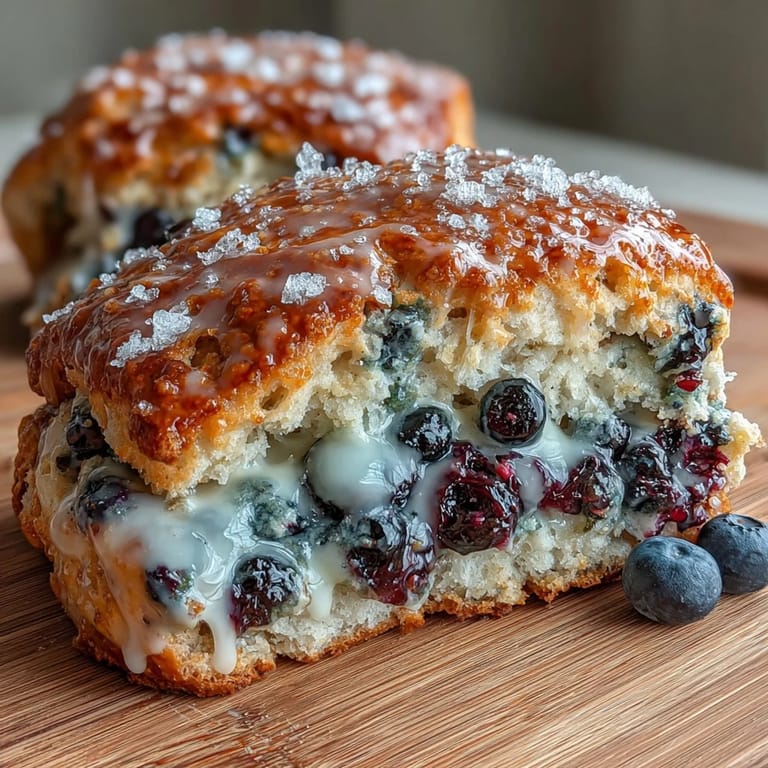
 My sourdough starter had been sitting neglected in the back of my fridge for weeks, and I was determined not to waste it. A friend mentioned she'd been using her discard to make scones, and the moment she described those tender, buttery wedges studded with blueberries, I knew exactly what my starter's second life would be. The tanginess of the discard cuts through the richness in the most unexpected way, making each bite feel special without any fuss.
I tested these one Saturday morning when my partner's parents were visiting unexpectedly, and I had maybe thirty minutes to pull something impressive from thin air. The kitchen smelled incredible while they baked—that warm, wheaty, slightly sour aroma that made everyone drift toward the oven. When we split one open and watched the steam rise, revealing those pockets of jammy blueberries, the whole moment felt like I'd actually planned ahead instead of improvising.
Ingredients
- All-purpose flour (2 cups): This is your structure, your foundation—make sure it's not packed down when you measure or you'll end up with dense scones instead of those tender, crumbly ones we're after.
- Granulated sugar (1/4 cup): Just enough sweetness to let the fruit shine without making these taste like dessert masquerading as breakfast.
- Baking powder and baking soda (2 tsp and 1/2 tsp): This combination gives you lift and helps the sourdough tang shine through—don't skip either one.
- Fine sea salt (1/2 tsp): A pinch that makes everything taste more like itself, especially important when you're using acidic discard.
- Unsalted butter, cold and cubed (1/2 cup): The cold matters more than you'd think—those little pockets of butter create steam in the oven and give you flakiness.
- Sourdough discard, unfed and cold (1 cup): Use the liquid consistency that pools on top of your starter, not the thick fed version—this is exactly what discard was meant for.
- Heavy cream (1/3 cup plus more for brushing): This adds richness and helps create a tender crumb; the extra bit on top gives you that gorgeous golden finish.
- Large egg: Your binding agent that also contributes to that beautiful color on top.
- Vanilla extract (1.5 tsp): A quiet background note that rounds out the sourdough's tanginess.
- Fresh blueberries (1 cup): Frozen works just as well if you don't thaw them first, which actually helps them stay intact during mixing.
- Coarse sugar for topping (2 tbsp, optional): If you use it, the scones catch the light and look bakery-worthy—I rarely skip this step.
Tired of Takeout? 🥡
Get 10 meals you can make faster than delivery arrives. Seriously.
One email. No spam. Unsubscribe anytime.
Instructions
- Heat your oven and prepare:
- Set your oven to 400°F and line a baking sheet with parchment paper while it preheats. This takes just a minute but saves you from scrambling later.
- Mix the dry team:
- Whisk together flour, sugar, baking powder, baking soda, and salt in a large bowl, making sure everything is evenly distributed. This prevents random pockets of baking soda that would taste harsh.
- Work in the butter:
- Add your cold, cubed butter and use a pastry cutter, two forks, or your fingertips to break it into pea-sized pieces throughout the flour. You should see distinct butter flecks, not a uniform paste—this is what gives you those tender layers.
- Combine the wet ingredients:
- In a separate bowl, whisk together sourdough discard, heavy cream, egg, and vanilla extract until smooth. This prevents lumps from your discard, which can be thick and stubborn.
- Bring it together gently:
- Pour the wet ingredients into the dry and stir with a spatula until just combined—stop as soon as you don't see dry flour. Overmixing develops gluten and makes everything tough, which is the opposite of what we want.
- Fold in the blueberries with care:
- Add your blueberries last and fold them in gently to keep them whole and prevent them from staining the entire dough purple. If using frozen blueberries, don't thaw them first.
- Shape the dough:
- Turn the dough onto a lightly floured surface and pat it into a 7-inch circle about 1 inch thick, like you're making a flat hockey puck. Use a knife or bench scraper to cut it into 8 wedges, like cutting a pizza.
- Arrange and brush:
- Place the wedges on your prepared baking sheet with a little space between each one, then brush the tops lightly with heavy cream. Sprinkle with coarse sugar if you have it—it adds texture and looks beautiful.
- Bake until golden:
- Bake for 20 to 22 minutes until the tops are golden brown and a toothpick inserted into the thickest part comes out clean. Your kitchen will smell so good you'll want to stay in it.
- Cool slightly before serving:
- Let them rest on the baking sheet for about 10 minutes, then transfer to a wire rack. They firm up just enough to handle without falling apart, but are still warm enough to enjoy with butter or clotted cream.
 Save It
 There's something quietly satisfying about turning kitchen waste into something so beautiful and delicious that people ask for the recipe. My partner now saves his sourdough discard specifically for scone days, which tells you everything you need to know about how good these are.
The Sourdough Discard Advantage
Using sourdough discard instead of regular milk or buttermilk changes the entire character of these scones. The natural acids in the discard tenderize the gluten and add a subtle complexity that regular scones just don't have. It's like the difference between plain butter and brown butter—both are good, but one has this depth that makes you pause and notice.
Serving Ideas and Pairings
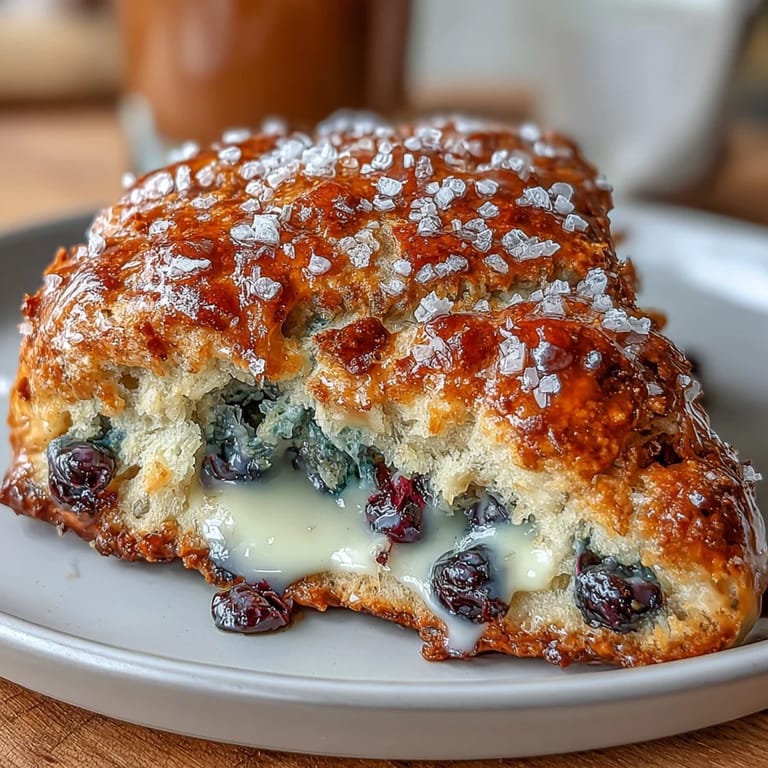
These scones are genuinely happy on their own with just a cup of tea, but they also sing with clotted cream and jam or a smear of lemon curd. I've served them warm at brunch with honey whipped cream, and I've packed them cold for picnics where they held up beautifully. The sourdough tang means they don't feel heavy even after a couple of hours at room temperature.
Storage and Make-Ahead Tips
These are at their absolute best the day you make them, when they're still tender and the blueberries are plump and juicy. You can store them in an airtight container for up to two days, though they're wonderful cold or warmed briefly in a 300°F oven. If you're thinking ahead, you can even freeze the shaped dough wedges before baking and add a few extra minutes to the baking time when they're still frozen.
- Wrap cooled scones individually in parchment before storing to keep them from sticking together.
- A quick 5-minute warm-up in the oven brings them back to nearly fresh-baked texture.
- Don't refrigerate them—the cold actually makes them stale faster than room temperature storage.
 Save It
 These scones are proof that the best recipes come from using what you have on hand, not throwing it away. Every time I make them, I'm grateful my starter has a second purpose besides sitting in my fridge and making me feel slightly guilty.
Common Questions About Recipes
- → Can I use frozen blueberries instead of fresh?
Yes, frozen blueberries work well. Add them directly without thawing to prevent excess moisture in the dough.
- → What does sourdough discard add to the scones?
Sourdough discard introduces a subtle tangy flavor and helps create a moist, tender crumb in the scones.
- → How do I avoid overmixing the dough?
Stir the wet and dry ingredients gently until just combined to maintain a flaky texture without toughening the dough.
- → Can I add lemon zest for extra flavor?
Absolutely! Adding a teaspoon of lemon zest to the dough brightens the flavor profile and pairs beautifully with blueberries.
- → What’s the best way to serve these scones?
Serve warm or at room temperature, complemented by clotted cream, butter, or lemon curd for an indulgent touch.
- → How should I store leftover scones?
Keep scones in an airtight container at room temperature for up to two days to maintain freshness.