 Save It
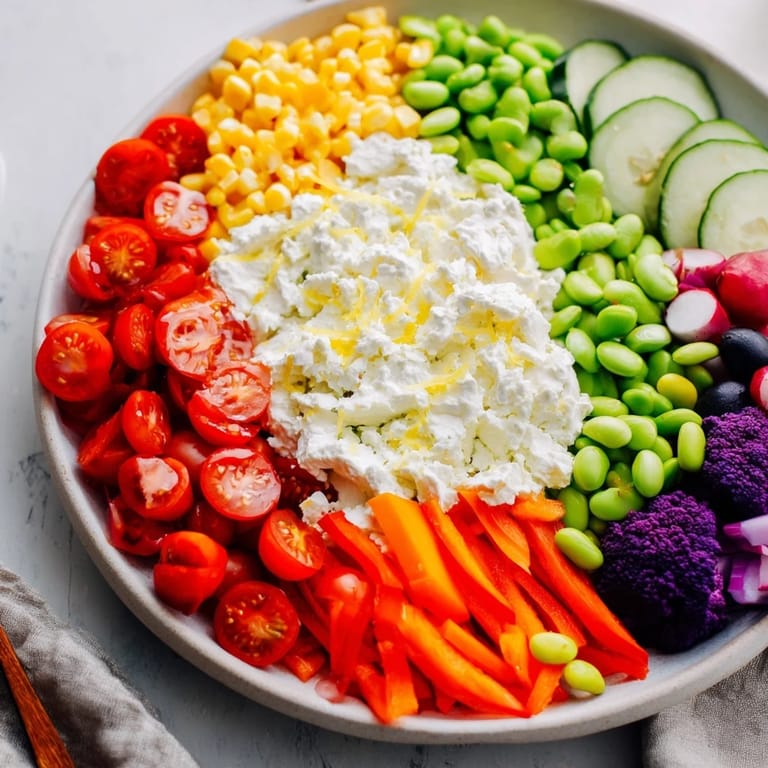
 I discovered The Prism Burst by accident on a sunny afternoon when my neighbor brought over a massive platter that caught the light so perfectly I nearly dropped my coffee mug. She'd arranged vegetables in these radiating stripes of pure color—it was like someone had painted with produce. Before I even tasted it, I understood why she seemed so proud, and after that first bite, I was completely hooked on how the creamy ricotta center melted into the crisp, bright layers.
I made this for my daughter's birthday potluck last spring, and it was the only dish that came home completely empty. One of the other parents kept circling back, grabbing handful after handful, muttering something about how it was the first salad that actually made her excited about vegetables.
Ingredients
- Ricotta cheese: The creamy white center is non-negotiable—it acts as both anchor and contrast to all those bright colors, and a dollop of Greek yogurt works beautifully if you want something tangier.
- Cherry tomatoes: Halved so they nestle prettily into the arrangement and burst with sweet acidity when you bite them.
- Bell peppers (red, orange, yellow): The backbone of your color story—buy them firm and unblemished, slice them thin so they fan elegantly, and use them the same day for maximum crunch.
- Cucumber: Slice it thin on a mandoline if you have one so the pieces stay crisp and delicate.
- Corn kernels: Fresh or frozen and thawed work equally well; the sweetness matters more than the source.
- Blueberries and red grapes: These are your blue and violet layers—their natural juices will stain the white base slightly over time, so arrange them last.
- Edamame: Adds a pop of protein and that satisfying texture that makes people linger over this salad.
- Lemon zest and fresh herbs: These finish the ricotta base with brightness that pulls everything together.
Tired of Takeout? 🥡
Get 10 meals you can make faster than delivery arrives. Seriously.
One email. No spam. Unsubscribe anytime.
Instructions
- Build your white anchor:
- Mix the ricotta with olive oil, lemon zest, salt, and pepper until it's creamy and just slightly loose. Spread it gently onto the center of your platter—you want a small circle about the size of your fist, because this base will hold everything visually together.
- Prep your color groups:
- Arrange each layer of vegetables and fruits into separate bowls before you start the fan. This makes the actual assembly feel less frantic and helps you see which colors work best together.
- Fan out like a prism:
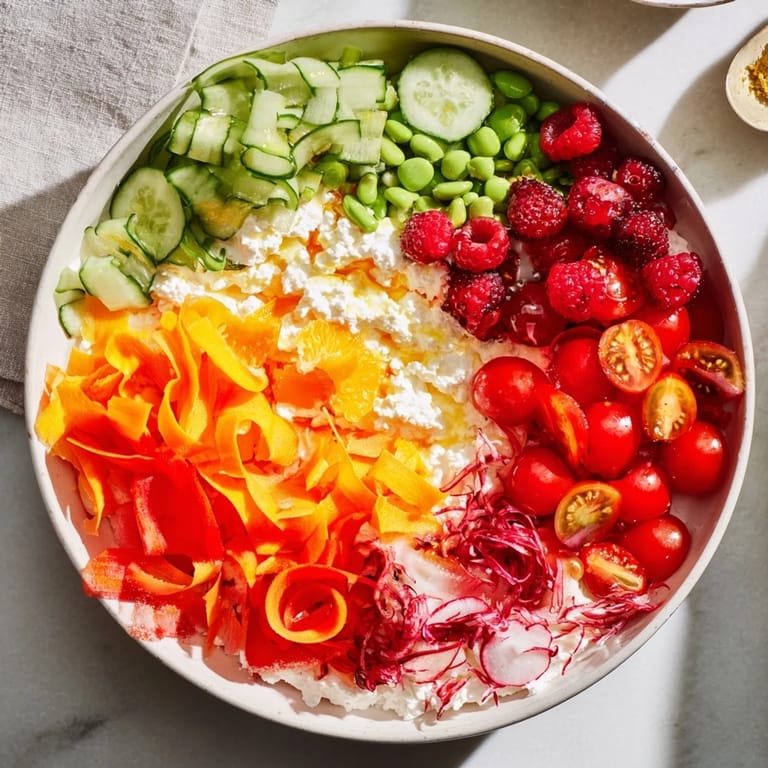
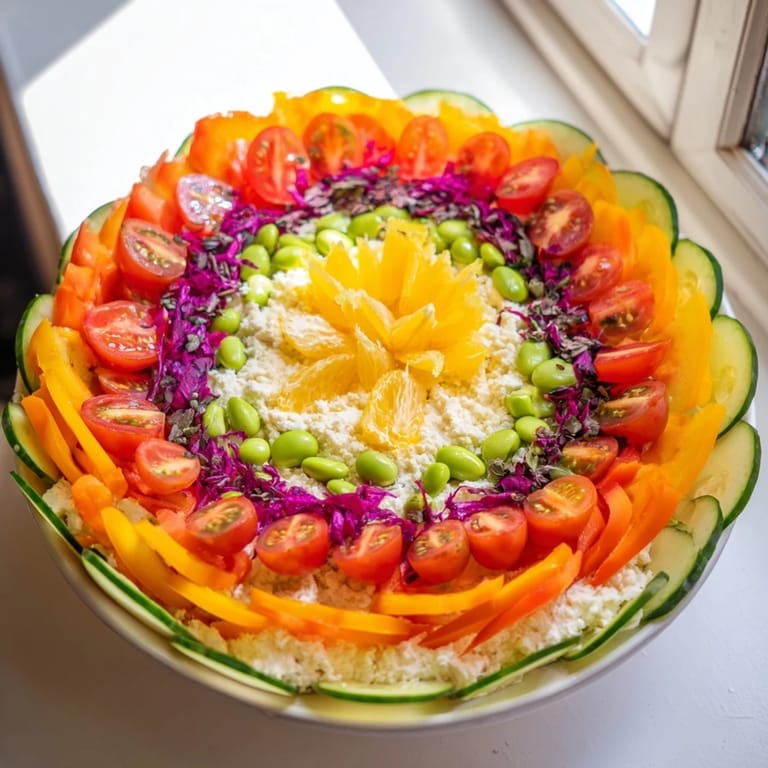
- Starting right at the ricotta center, begin laying out your red layer in curved strips radiating outward, then orange, yellow, green, blue, and finally violet. Keep the colors distinct by using your hands or a small spoon to nudge things into place—this is where the magic happens.
- Make the dressing:
- Whisk together olive oil, lemon juice, and honey in a small bowl. The honey matters because it balances the tartness and helps everything feel cohesive rather than just a collection of raw vegetables.
- Finish and serve:
- Drizzle the dressing lightly just before people eat, or pass it on the side if you're worried about the colors bleeding. A shower of fresh herbs and cracked black pepper makes it feel intentional and complete.
 Save It
 The moment that really stuck with me was watching my eight-year-old refuse to eat it at first because she was convinced something this pretty shouldn't be eaten, only admired. After I broke the spell and she tasted it, she went quiet, then asked if we could make it again for her school lunch. That's when I knew this wasn't just a salad—it was something that changed how she thought about food and beauty.
Why Presentation Matters Here
This salad wins half its battle before anyone takes a bite. The geometry, the color progression, the way light hits those shiny surfaces—it all triggers something in people that makes them want to eat it even if they normally skip salads. I've learned that plating matters most when you're trying to make vegetables exciting, and this particular arrangement feels less like a chore and more like a revelation.
Swapping and Improvising
The beauty of this salad is that you can riff on it endlessly while keeping the core prism concept intact. Roasted beets work gorgeously in the red layer, thinly shaved fennel adds delicate sweetness, and if you want to go vegan, cashew cream or silken tofu replaces the ricotta without missing a beat. I once made it with microgreens scattered across the entire surface instead of contained within layers, and the effect was somehow even more prismatic and wild.
Pairing and Serving Wisdom
This salad holds its own as a standalone lunch, but it also plays beautifully with other dishes. A crisp Sauvignon Blanc is the obvious choice, though a light rosé or even sparkling water with fresh mint works if wine isn't in the picture. Serve it on your biggest, most beautiful platter because the whole point is that this should feel like an occasion, not an afterthought.
- Make sure your serving platter is completely dry before you start arranging, or your vegetables will slide around.
- If you're transporting this anywhere, arrange it loosely and keep the dressing in a jar separate until the last moment.
- Leftover components stay fresh in containers for a couple days, but only reassemble what you'll actually eat.
 Save It
 Every time I make this, I remember why I fell in love with it—that combination of edible art and genuine deliciousness that makes people happy just by looking at it. It's become one of those recipes I reach for when I want to turn an ordinary meal into something that feels a little bit like magic.
Common Questions About Recipes
- → What is the base used in this salad?
The base is a creamy mixture of ricotta cheese or Greek yogurt blended with olive oil, lemon zest, salt, and pepper, spread centrally to anchor the colorful layers.
- → How are the colorful layers arranged?
The vegetables and fruits are arranged in a fan shape radiating from the center base in rainbow order: red, orange, yellow, green, blue, and violet.
- → Can this salad be made vegan?
Yes, by substituting the ricotta with a vegan cream cheese alternative, the salad becomes suitable for a vegan diet.
- → What dressing complements the salad?
A light dressing of olive oil, lemon juice, honey or agave syrup, salt, and pepper is whisked and drizzled over the salad to enhance its fresh flavors.
- → Are there any suggestions to add texture?
Adding toasted nuts or seeds like pumpkin, sunflower, or pine nuts can introduce a pleasant crunch to the salad.