 Save It
 I discovered Million Dollar Spaghetti quite by accident at a potluck where someone's casserole dish arrived half-empty and completely ravaged. The person next to me caught my eye and whispered, 'That's the one everyone fought over.' I asked for the recipe, and when I made it that first time, the kitchen filled with this incredible smell of browning meat and garlic that made everyone suddenly appear in doorways asking when dinner would be ready. It became the dish I reach for when I want to feel like I've done something special without spending hours at the stove, because honestly, layering is less intimidating than it sounds.
My neighbor brought this to a rough week when we'd just moved, and I remember sitting on boxes with a fork, tears streaming down my face—not from sadness but from pure comfort. There's something about the way the crispy cheese top gives way to that creamy middle layer that just feels like someone wrapped you in a hug. That casserole taught me that sometimes the most meaningful gestures taste like melted mozzarella and meat sauce.
Ingredients
- Spaghetti: One pound of regular spaghetti works beautifully here—you want it slightly al dente because it'll continue cooking in the oven and absorb all those sauces without turning to mush.
- Ground beef and Italian sausage: Using both gives you savory depth that one meat alone can't achieve; the sausage adds a subtle seasoning that makes people wonder what your secret is.
- Onion and garlic: Fresh and minced fine means they dissolve into the meat sauce and create that foundational flavor that makes everything taste homemade.
- Marinara sauce: A quality jarred sauce (about 24 ounces) saves time without sacrificing taste, and it's the backbone of your meat layer.
- Italian herbs, salt, and pepper: These simple seasonings tie the meat sauce together; don't skip them even if you think the sausage has enough flavor.
- Ricotta cheese: The creamy Alfredo layer gets its texture from ricotta mixed with store-bought Alfredo sauce, which is genius because you're not making a roux from scratch.
- Alfredo sauce, sour cream, and egg: Together these create a silky middle layer that binds everything and adds richness; the egg helps it set without becoming rubbery.
- Mozzarella and Parmesan: Three cups total of cheese (two mozzarella, one Parmesan) means every bite has that gooey, melted cheese that makes this dish special.
Tired of Takeout? 🥡
Get 10 meals you can make faster than delivery arrives. Seriously.
One email. No spam. Unsubscribe anytime.
Instructions
- Heat and prepare:
- Preheat your oven to 350°F and grease a 9x13-inch baking dish with butter or oil so nothing sticks to the bottom. Getting your mise en place ready before you start cooking makes the assembly go smoothly.
- Cook the pasta:
- Boil the spaghetti according to package directions but stop just short of tender—it should still have a tiny bit of resistance when you bite it. Drain it well and set it aside so it's ready when you need it.
- Build the meat sauce:
- In a large skillet over medium-high heat, brown the ground beef and sausage together, breaking them into small pieces as they cook and stirring occasionally. Once the meat is no longer pink, drain off excess fat so your sauce won't be greasy.
- Flavor the meat:
- Add the diced onion and minced garlic to the cooked meat and let them soften for a few minutes until fragrant, which usually takes about 3-4 minutes. Stir in the marinara sauce, Italian herbs, salt, and pepper, then let it simmer gently for 5 minutes so the flavors marry together.
- Mix the creamy layer:
- In a separate bowl, combine the ricotta cheese, store-bought Alfredo sauce, sour cream, and one large egg, stirring until the mixture is smooth and spreadable. This is your luxurious middle layer that binds everything together.
- Layer one:
- Spread half of the cooked spaghetti across the bottom of your prepared baking dish, then spread half of the Alfredo mixture evenly over it. Top this with half of your meat sauce, then sprinkle on 1 cup of mozzarella and 1/2 cup of Parmesan cheese.
- Layer two:
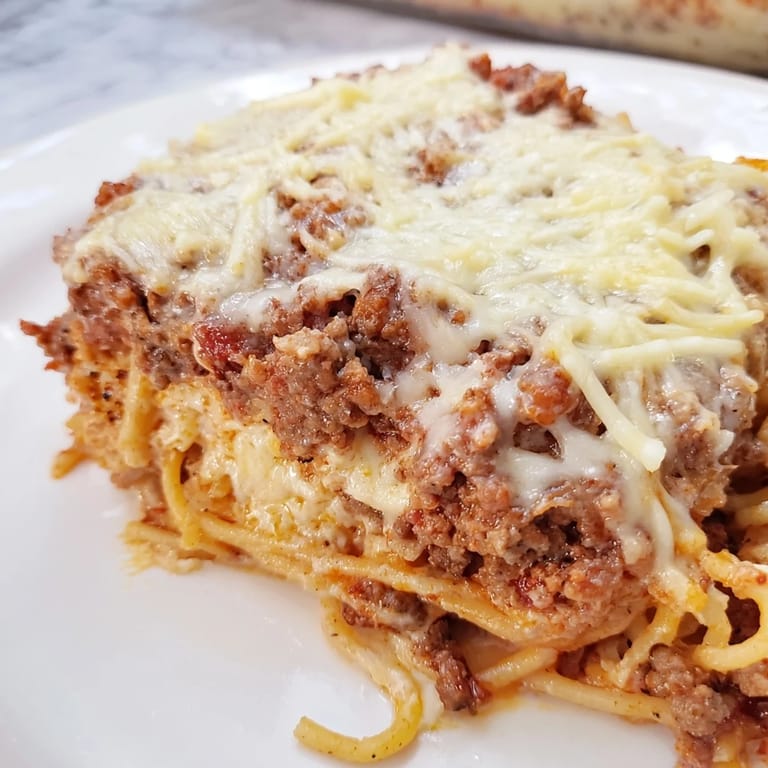
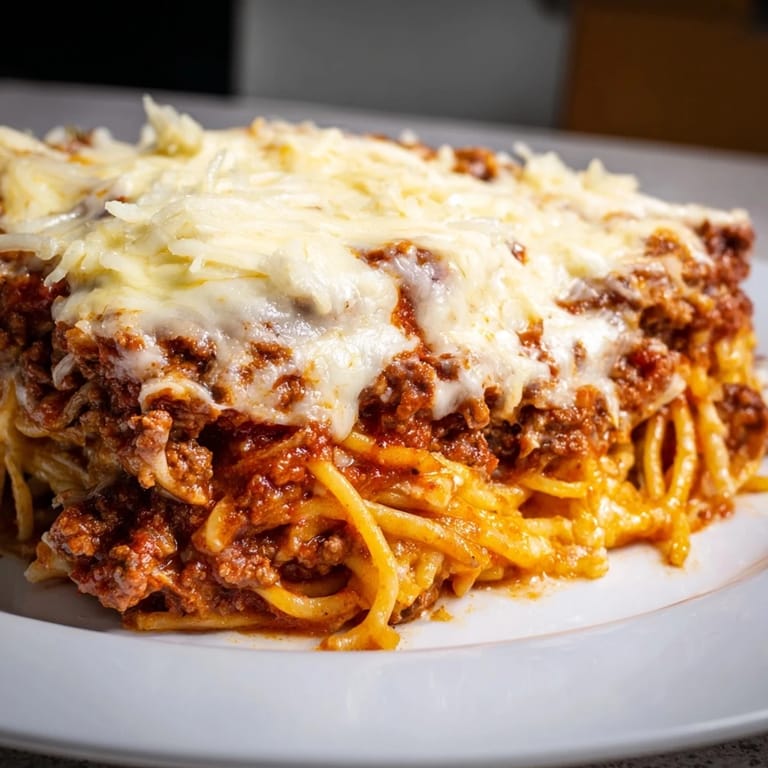
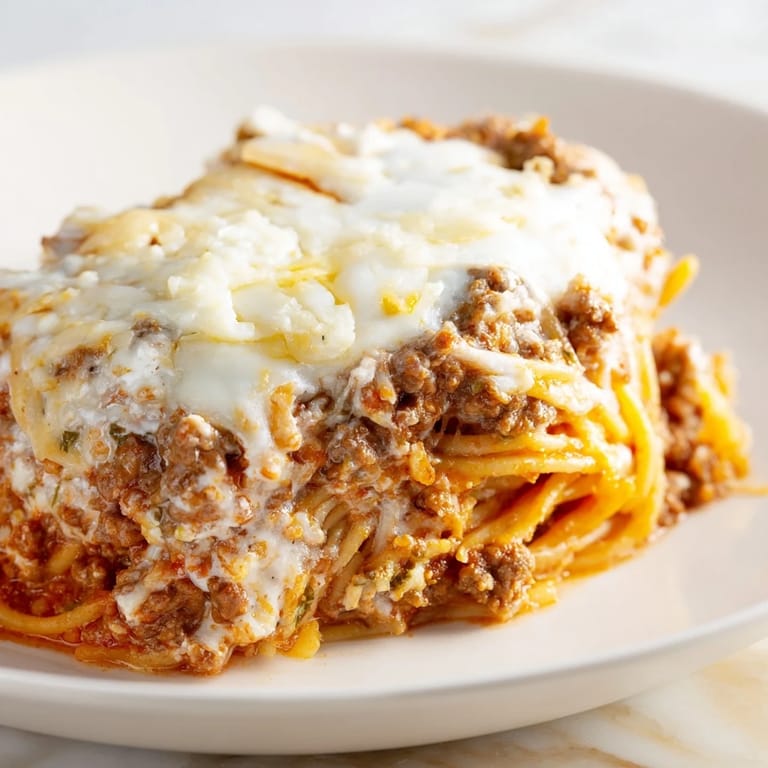
- Repeat the layers: remaining spaghetti, the rest of the Alfredo mixture, the remaining meat sauce, and finish with the rest of your cheeses on top. This should create a beautiful, full baking dish with at least three distinct layers visible.
- Bake covered:
- Cover the dish with foil and slide it into the 350°F oven for 30 minutes, which allows everything to meld together and heat through gently. The foil prevents the top from browning too quickly before everything underneath is hot.
- Brown the top:
- Remove the foil and bake for another 10 minutes until the cheese on top turns golden brown and bubbly around the edges, which means it's ready. This short uncovered time gives you that crispy, appealing surface while keeping the inside creamy.
- Rest before serving:
- Let the casserole sit for about 10 minutes after coming out of the oven, which allows the layers to set slightly so it doesn't fall apart when you cut into it. Use a spatula to slice it into squares rather than a spoon so each piece holds together.
 Save It
 I made this for my daughter's college roommates when they came home for a weekend, and watching eight people go silent and just eat was the highest compliment I could get. That's when I understood why this casserole has 'million dollar' in the name—it's not about the price of ingredients, but about how rich and special it makes people feel when they're eating it.
Why This Works So Well
The genius of Million Dollar Spaghetti lies in how it combines three distinct flavors without any of them fighting for attention. You've got the savory umami punch from the meat sauce, the creamy indulgence of the Alfredo, and the crispy-melted charm of the cheese top, all building on each other in every bite. The layering technique looks fancier than it actually is, and that gap between perception and effort is what makes it feel like such a victory when you pull it out of the oven.
Making It Your Own
The beauty of casseroles is that they're flexible enough to bend toward what you actually have on hand or what you're craving. I've added sautéed mushrooms and spinach on nights when I wanted something a little less heavy, and it didn't diminish the dish one bit—it just made it feel seasonal and personal. You can also swap ground turkey for the beef if you want something lighter, or use light Alfredo sauce, and the result is still genuinely delicious.
Serving and Storage Wisdom
This casserole actually improves after a day in the refrigerator, which means making it ahead is genuinely smart planning rather than a compromise. Leftovers keep beautifully for up to 4 days refrigerated, and reheating covered in a 325°F oven brings them back to near their original glory without drying them out. It also freezes wonderfully before baking, so you can assemble it, wrap it tightly, and bake from frozen by adding about 20 extra minutes to the cooking time.
- Pair it with a bright green salad to cut through the richness and balance the meal.
- Garlic bread alongside turns it into a restaurant-quality dinner without the restaurant bill.
- Let people serve themselves if it's a casual gathering, because everyone has strong opinions about their cheese-to-pasta ratio.
 Save It
 There's something deeply satisfying about pulling a bubbling casserole out of the oven knowing you've created something that will make people happy. This dish has taught me that the simplest pleasures often come from combining familiar ingredients in ways that feel new.
Common Questions About Recipes
- → How do I prevent the spaghetti from becoming mushy?
Cook spaghetti just until al dente according to package directions before layering. This helps it hold texture during baking.
- → Can I prepare this casserole ahead of time?
Assemble the layers and refrigerate covered for up to 24 hours. Add extra baking time if baking from cold.
- → What can I use instead of Italian sausage?
Ground turkey or chicken are great lean alternatives that keep flavors mild but satisfying.
- → Are there suggestions for adding vegetables?
Sautéed spinach, mushrooms, or bell peppers mix well into the meat sauce or between layers for added nutrition.
- → How should leftovers be stored and reheated?
Keep leftovers covered in the fridge up to 4 days and reheat gently in the oven to retain texture.