 Save It
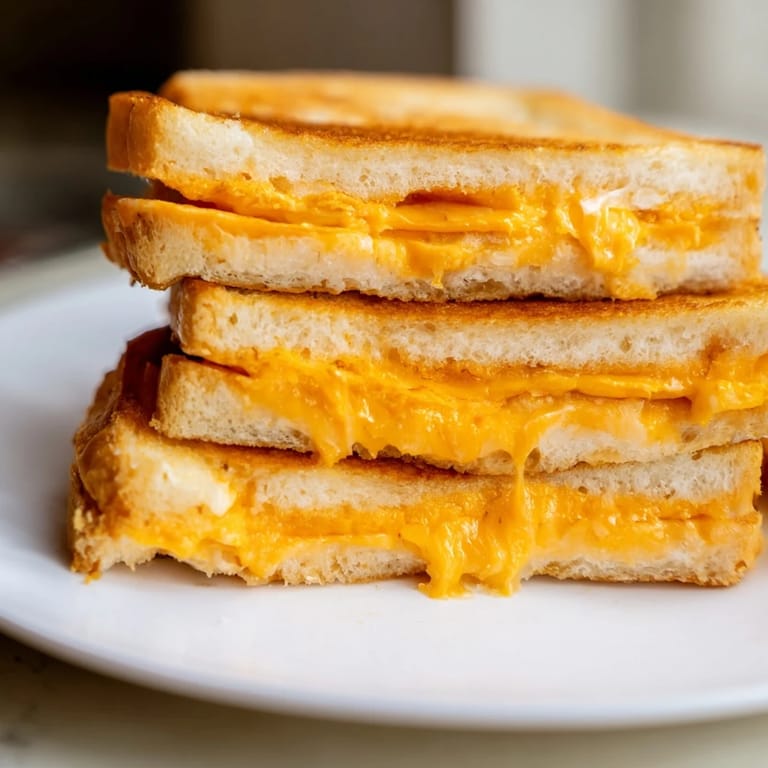
 There's something about the sizzle of a grilled cheese hitting a hot skillet that just makes everything feel manageable. My roommate in college showed me the mayo trick one lazy Sunday when we were out of butter, and I've never looked back. The mayo browns into this impossibly golden crust while keeping the bread impossibly soft inside, and somehow it tastes even richer than the traditional method. It became my go-to lunch when I needed comfort in under fifteen minutes. Now I make it whenever I want to remind myself that the best discoveries often happen by accident.
I made these for my dad during one of his quick visits home, and he kept asking if I'd learned it from some fancy cooking show. There was something quietly satisfying about watching him bite into that crispy exterior and realize it was just bread, cheese, and mayo. He ate two in a row without saying much, which for him meant everything.
Ingredients
- Bread: Four slices of white or sourdough work beautifully; sourdough gives you a sturdier structure and deeper flavor if you're feeling fancy.
- Cheddar cheese: Four slices of a good melting cheese (Monterey Jack and Gruyère are also wonderful if you want to experiment).
- Mayonnaise: Two and a half tablespoons spread on the outsides creates that golden-brown magic that butter never quite achieves.
- Dijon mustard (optional): A thin layer adds a sharp note that wakes up the whole sandwich, so I usually add it.
Tired of Takeout? 🥡
Get 10 meals you can make faster than delivery arrives. Seriously.
One email. No spam. Unsubscribe anytime.
Instructions
- Gather and prep your stations:
- Lay your four bread slices out in front of you on a cutting board. Everything moves faster when you're not hunting for things mid-cook.
- Coat the outsides with mayo:
- Using a butter knife or small spatula, spread a thin, even layer of mayonnaise on one side of each slice. You're aiming for coverage without puddles; a light hand works best here.
- Add mustard if you're using it:
- On two of the slices (the ones that won't get mayo), spread that thin layer of Dijon mustard on the opposite side. It's optional, but it really does change the game.
- Build your sandwiches:
- Place two slices of cheese between two bread slices with the mayo-coated sides facing outward. Repeat for your second sandwich. You've just locked in the deliciousness.
- Heat your skillet low and slow:
- Set a nonstick skillet over medium-low heat for about a minute. Too high and your bread burns before the cheese melts; too low and you lose that golden crust.
- Cook the first side:
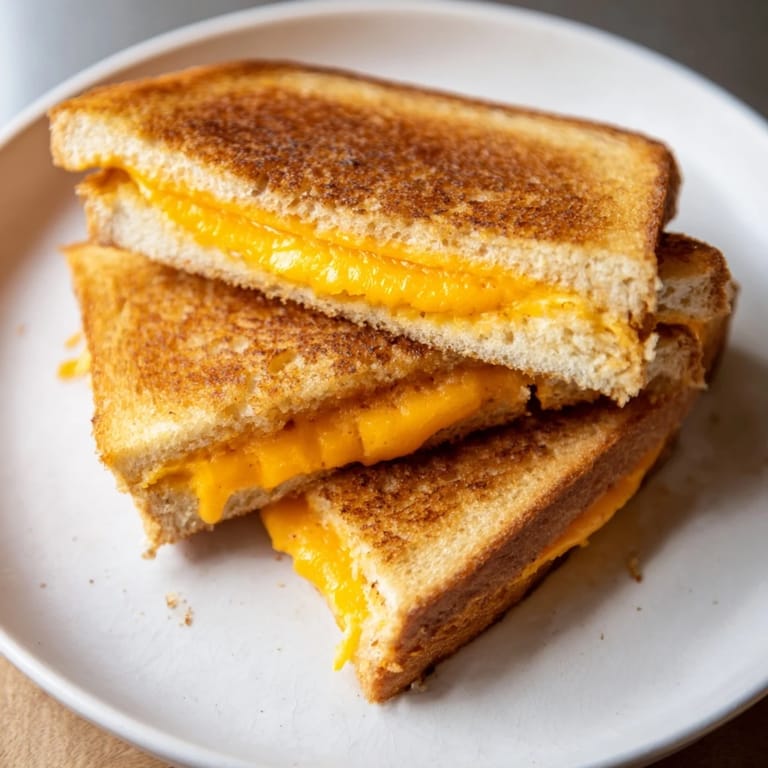
- Place both sandwiches mayo-side down in the warm skillet. You'll hear that first satisfying sizzle. Let them cook for three to four minutes, watching until the bottom edges start showing that gorgeous golden-brown color.
- Flip and finish:
- Using a sturdy spatula, flip each sandwich carefully. Cook the other side for another three to four minutes, and if you're feeling patient, gently press down with your spatula halfway through to help the cheese melt and the edges get crispier.
- Rest and serve:
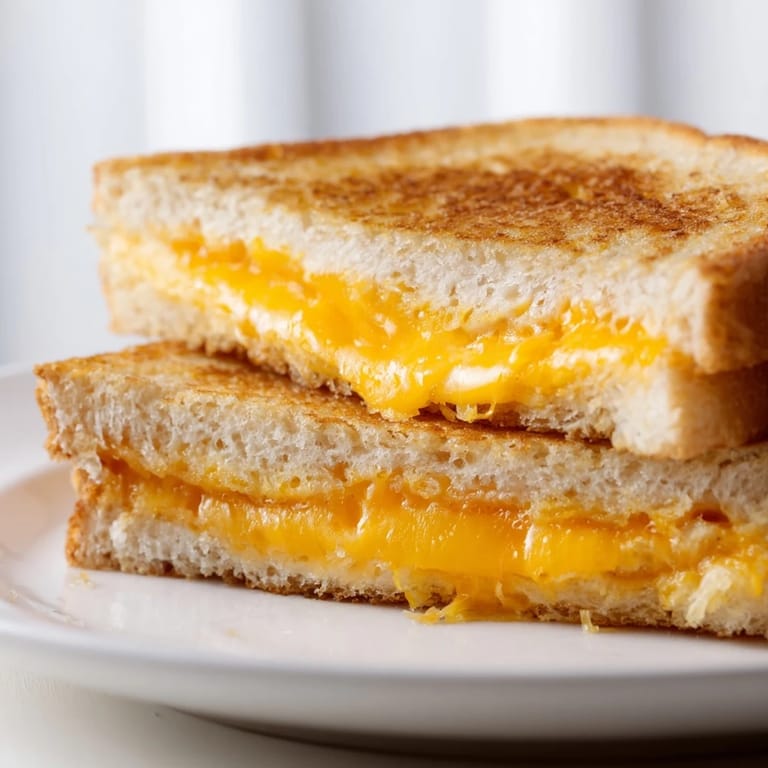
- Transfer to a plate and let them sit for one minute so the cheese sets up just slightly. Slice diagonally if you're feeling like it (it tastes better that way, somehow), then eat immediately while that contrast between crispy outside and creamy inside is at its peak.
 Save It
 I brought these to a potluck once as a joke—I mean, it's just grilled cheese, right? But people actually asked for the recipe, and three of them said they'd made it that same week. There's something universal about perfectly melted cheese and crispy bread that just works.
The Mayo Secret That Changed Everything
When I first heard about using mayo instead of butter, I was skeptical. But mayo is mostly oil anyway, and it has that subtle tang from the eggs that butter just can't match. It also browns at a lower temperature than butter, which means your bread gets golden before it burns. Once you taste the difference, you'll understand why some of the best cooking tricks come from just slightly reimagining what you already have in the kitchen.
Cheese Selection and Other Variations
Cheddar is the classic choice because it melts smoothly and brings a sharp, satisfying flavor. But Monterey Jack is creamier if you like a softer melt, and Gruyère adds an almost nutty complexity that makes this feel less like lunch and more like you're treating yourself. Some people add sliced tomato (which works great if you're quick about it), crispy bacon if you have it, or even a thin layer of caramelized onions for something special.
Serving Ideas and the Perfect Pairing
Grilled cheese demands something to cut through the richness; tomato soup is the obvious choice and it works for a reason. But it's also incredible alongside pickles, a simple green salad with vinegar, or even just with apple slices if you want something unexpected. I've even dunked it in sriracha mayo on days when I wanted heat, and honestly, that was a revelation.
- Tomato soup is classic, but any soup with acidity cuts the richness beautifully.
- Serve with pickles or pickled vegetables for a sharp contrast that makes every bite better.
- Eat it while it's still warm; that's when the texture contrast really sings.
 Save It
 This sandwich has become my answer to almost any kitchen question about simplicity and technique. Sometimes the best meals come from understanding the one or two things that actually matter, and then doing them well.
Common Questions About Recipes
- → Why use mayonnaise instead of butter?
Mayonnaise creates an even browning on bread with a slightly tangy flavor, resulting in a crispy crust and creamy texture.
- → Can I use other cheeses besides cheddar?
Yes, melting cheeses like Monterey Jack, Gruyère, or mozzarella work well and offer different flavor profiles.
- → How long should I cook the sandwich?
Cook for 3–4 minutes per side on medium-low heat until the bread is golden and cheese fully melts.
- → What optional flavors can I add?
Dijon mustard adds tanginess; sliced tomatoes, caramelized onions, or bacon bring extra depth and variety.
- → Are there any dietary tips?
Use gluten-free bread and egg-free mayonnaise for special diets, and always check allergen labels carefully.