 Save It
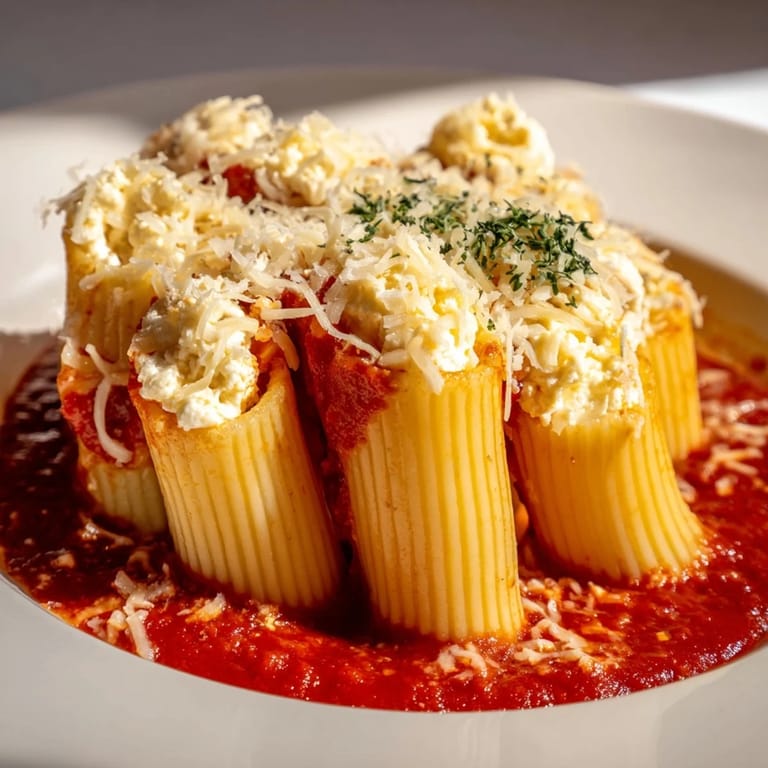
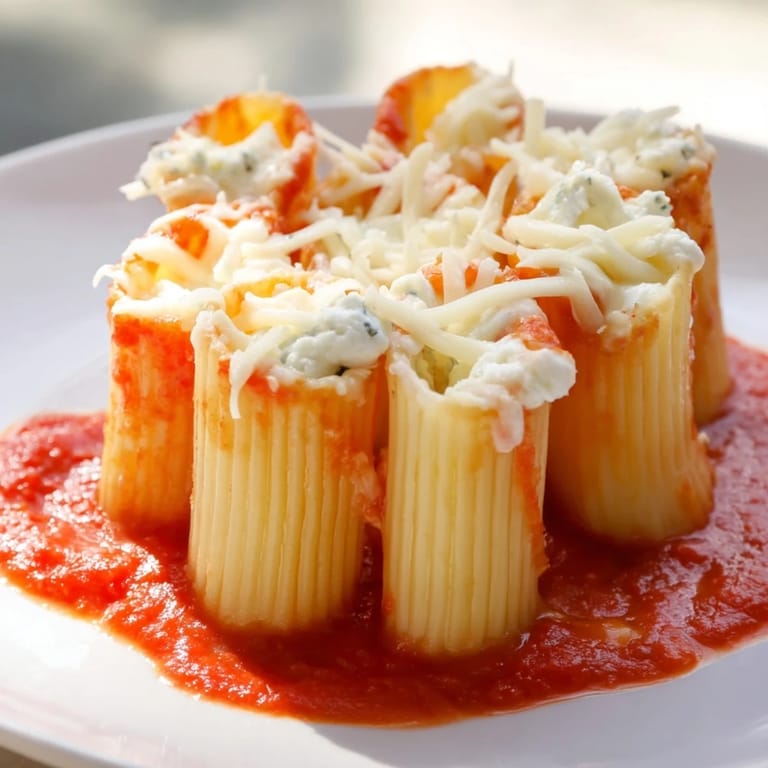
 The first time I stood a piece of pasta upright in a pan, I felt like I was building something rather than cooking. My friend Marco had just sent me a photo of his nonna's honeycomb pasta bake—tubes packed shoulder to shoulder, stuffed with creamy cheese, swimming in marinara—and I couldn't shake the image. It looked architectural, almost too pretty to eat, but when I tasted it at his family dinner, I understood why his grandmother had been making it for forty years. The crispy cheese edges, the way the sauce pooled between the tubes, the tender filling that stayed exactly where it was supposed to be—it was comfort and elegance at once.
I made this for my book club one autumn evening when someone asked me to bring a main dish. I remember panicking a little at the complexity of it, then realizing halfway through that it was actually just three simple things—pasta, cheese, sauce—arranged in a way that made everyone gasp when I pulled it from the oven. One friend asked if I'd taken a cooking class, and I laughed because I'd learned it three weeks earlier from a text message. That's when I knew this recipe was keeper material.
Ingredients
- Rigatoni pasta: You need tubes large enough to fill but not so big they topple—500 grams is the sweet spot for a 9-inch pan.
- Ricotta cheese: This is your base, and it should be creamy and smooth; avoid anything grainy or overly wet.
- Mozzarella cheese (grated): The 100 grams mixed into the filling keeps everything tender and prevents the ricotta from becoming heavy.
- Parmesan cheese (grated): A little goes a long way; it adds a sharpness that balances the richness.
- Large egg: This binds everything together and helps the filling stay inside the tubes where it belongs.
- Fresh basil and parsley: Don't skip these—dried herbs won't give you the brightness that makes people wonder what your secret is.
- Salt and black pepper: Taste as you go; remember the marinara and cheeses are already salty.
- Marinara sauce: Use something you'd actually eat on its own; this isn't the time to cut corners.
- Shredded mozzarella for topping: The 150 grams creates that golden, bubbly finish that makes it worth the effort.
- Olive oil: A drizzle on the cooked pasta prevents sticking, and a bit more for the pan keeps things from burning.
Tired of Takeout? 🥡
Get 10 meals you can make faster than delivery arrives. Seriously.
One email. No spam. Unsubscribe anytime.
Instructions
- Heat your oven and prepare the pan:
- Set it to 200°C and grease your springform or deep round baking pan with olive oil, then line the bottom with parchment paper so everything releases cleanly.
- Cook the pasta almost all the way:
- Boil your rigatoni for 2 minutes less than the package says—you want them bendable but still firm enough to stand upright without slouching. Drain and toss with a little olive oil immediately so they don't fuse together.
- Mix the creamy filling:
- Combine ricotta, mozzarella, Parmesan, egg, basil, parsley, salt, and pepper in a bowl, stirring until it's completely smooth with no lumps. This is where the magic starts—taste a tiny bit to make sure the seasoning feels right.
- Stand the tubes upright:
- Arrange your drained pasta tubes standing straight up in the prepared pan, packing them tightly together like they're a little pasta city. They'll hold each other up, and there won't be empty spaces for the sauce to escape through.
- Fill each tube with cheese:
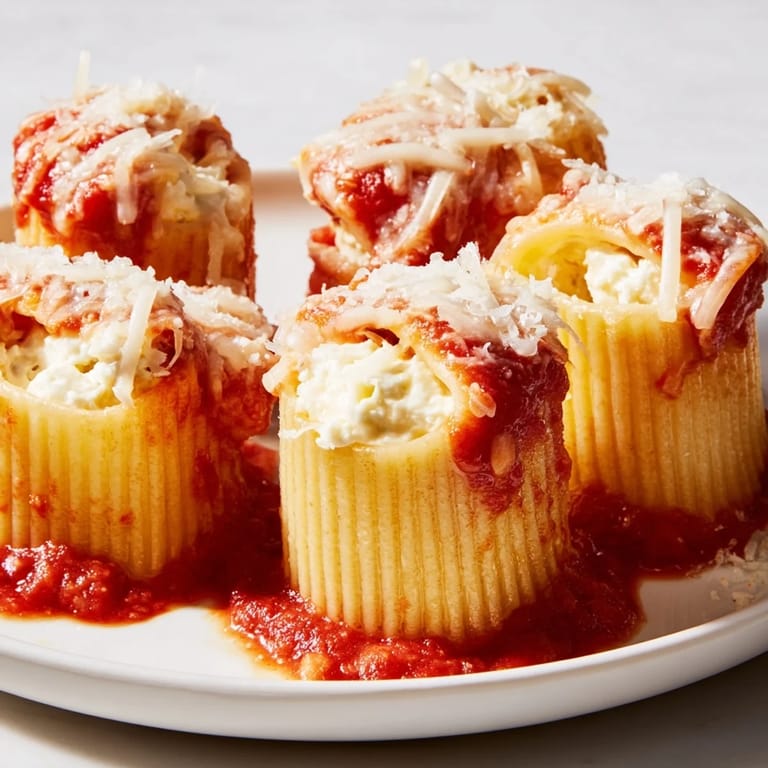
- Put your filling into a piping bag or a zip-top bag with one corner snipped off, then gently press the creamy mixture into each tube until it reaches near the top. You'll feel when each one is full.
- Pour the sauce carefully:
- Pour your marinara evenly over the filled pasta, then gently tap the pan on the counter to help the sauce settle between the tubes and coat the bottoms. You want enough sauce to nourish everything without drowning it.
- Top with cheese:
- Sprinkle the shredded mozzarella and grated Parmesan across the whole surface so every tube gets topped.
- Bake with and without foil:
- Cover loosely with foil and bake for 25 minutes to let everything heat through, then remove the foil and bake another 10 minutes until the cheese is bubbly and golden brown on top. You'll smell when it's done—that rich, caramelized cheese smell is your signal.
- Rest and serve:
- Let it stand for 10 minutes so everything sets slightly and becomes easier to slice. Release the springform gently and cut wedges, making sure each one has tubes running through it.
 Save It
 The moment that made this recipe feel important came when my neighbor—who'd been through a rough few months—took one bite and actually closed her eyes. She didn't say anything at first, just sat there with her fork halfway to her mouth, and then she asked for the recipe. I realized that sometimes food isn't just about hunger; it's about feeling like someone took time for you, and this bake does exactly that.
Why This Works as a Main Course
Most pasta dishes feel light or heavy depending on the sauce, but this one sits in a perfect middle ground. The rigatoni tubes create pockets that hold both sauce and creamy filling, so every bite has texture and richness without heaviness. It's substantial enough that you don't need much more than a green salad and maybe some bread, yet it feels fancy enough that you'd serve it to guests without apology.
Building Flavor Without Overcomplicating
I used to think that making something impressive meant adding more ingredients, but this recipe taught me that sometimes the best dishes are the ones where every element has a clear job. The ricotta fills and softens, the mozzarella creates creaminess and golden crust, the Parmesan adds a sharp edge, and the basil and parsley keep it tasting fresh instead of heavy. The marinara sauce is the workhorse that brings everything together and prevents it from being too rich. When you respect what each ingredient does, you don't need to overthink it.
Making It Your Own
The beauty of this bake is that it welcomes additions without demanding them. Some people layer sautéed spinach into the filling, which adds color and nutrition without changing the fundamental structure. Others stir crumbled Italian sausage into the cheese mixture for something more hearty. A friend of mine even added sun-dried tomatoes and called it perfect. The base is so solid that these additions feel like personal touches rather than necessary fixes.
- If you want extra vegetables, sauté them first and press out excess moisture before stirring them in, or they'll make the filling watery.
- Cottage cheese works as a ricotta swap if that's what you have, though the texture will be slightly different.
- Pair this with a dry red wine like Chianti or a bright white wine, and a simple green salad dressed with lemon and oil.
 Save It
 This is the kind of recipe that gets better every time you make it, because you stop thinking about the steps and start thinking about the people eating it. That shift is when cooking becomes something more than a task.
Common Questions About Recipes
- → How do I prevent the rigatoni from sticking during preparation?
After parboiling, toss the rigatoni with a small amount of olive oil to keep the tubes separated and make filling easier.
- → What cheese combination works best for the filling?
A blend of ricotta, mozzarella, and Parmesan provides a creamy, flavorful filling that melts well and complements the tomato sauce.
- → Can I prepare this dish ahead of time?
Yes, you can assemble the bake in advance, cover it tightly, and refrigerate. Bake just before serving for best results.
- → How is the pasta arranged for baking?
Cooked rigatoni tubes are stood upright, packed tightly in the pan, then filled with the cheese mixture before adding sauce and toppings.
- → What variations can enhance the flavor?
Add sautéed spinach or Italian sausage to the cheese filling or swap ricotta for cottage cheese for a different texture.