 Save It
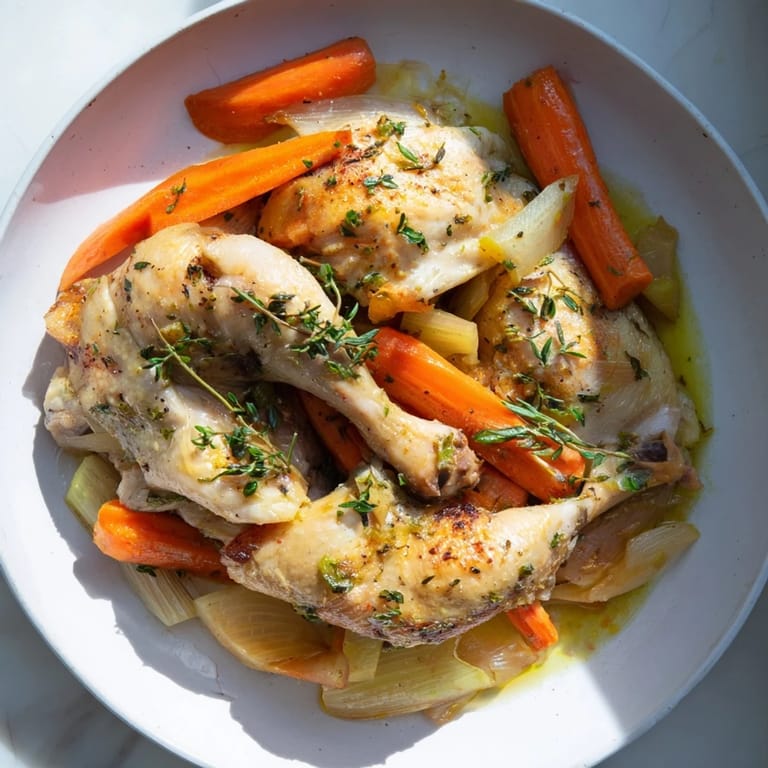
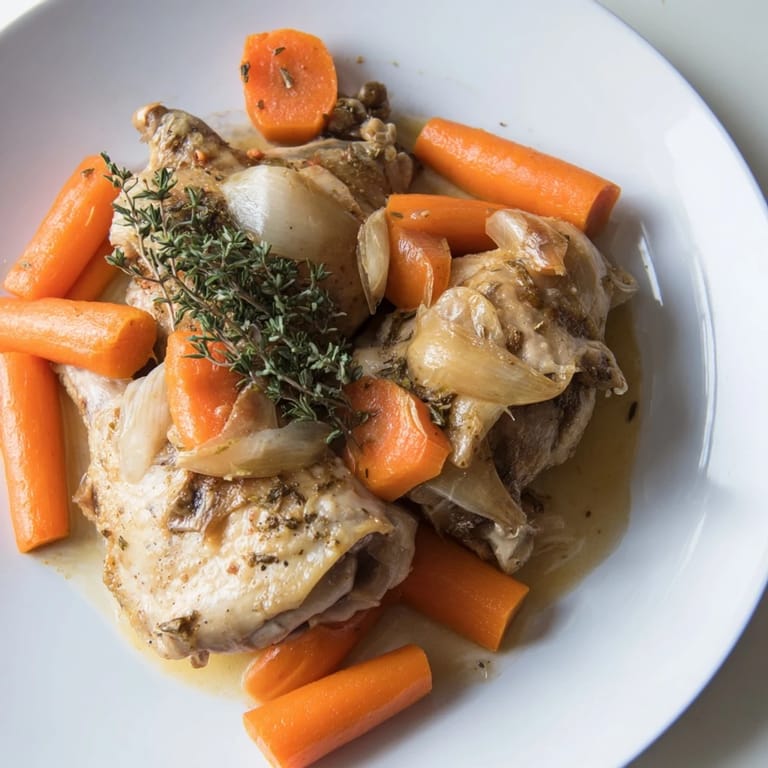
 There's something about a Dutch oven that feels like an invitation to slow down. Years ago, I discovered this Georgia pot roast chicken on an ordinary Tuesday when I was tired of fussing over dinner, and what emerged from that low, steady oven was pure comfort—tender chicken thighs swimming in a sweet, savory gravy with those pickled onions doing something almost magical to the broth. It's a gentler take on the bold Mississippi pot roast, the kind of dish that makes your kitchen smell like home before anyone even sits down to eat.
I made this for my aunt's Sunday dinner once, and I watched her face light up when she tasted it—she kept asking what restaurant it came from until I admitted it was born from a lazy afternoon and a craving for something warm. Now whenever she visits, she asks if I'm making "that chicken" again.
Ingredients
- Chicken thighs (2.5 lbs, bone-in and skinless): They stay impossibly moist during the long braise, unlike breasts which can dry out; the bone adds depth to the gravy.
- Jarred sweet pickled onions (16 oz): Don't skip draining them first—you want the sweetness without excess liquid, and always save that brine.
- Carrots and celery: These build the flavor foundation that nobody really notices until it's gone.
- Dijon mustard (1 tbsp): A small amount adds roundness to the sauce without making it taste mustardy.
- Worcestershire sauce (1 tbsp): Use gluten-free if that matters for your table, and check labels for soy if needed.
- Brown sugar (2 tbsp): This balances the savory notes and plays beautifully with the pickled onions.
- Butter or olive oil (2 tbsp): Butter creates richness; olive oil works if you're going dairy-free.
- Thyme and oregano: Dried herbs work perfectly here; fresh would be wasted in a three-hour braise.
- Chicken broth (1/4 cup): Just enough liquid to create that silky gravy without making it soupy.
Tired of Takeout? 🥡
Get 10 meals you can make faster than delivery arrives. Seriously.
One email. No spam. Unsubscribe anytime.
Instructions
- Heat your oven and prepare:
- Set the oven to 325°F—this gentle heat is the whole secret. Pat your chicken completely dry so it browns properly, not steams.
- Sear the chicken:
- Listen for that satisfying sizzle when chicken hits the hot butter; you're looking for golden-brown corners that lock in flavor. Work in batches if crowded, and don't rush this part—three to four minutes per side matters.
- Build the aromatics:
- Once the chicken rests, the vegetables hit the same pot and soften in those flavorful drippings, filling your kitchen with something magnificent.
- Create the sauce:
- Whisk together your brine, broth, brown sugar, mustard, and Worcestershire until smooth—this is where all the magic lives.
- Combine everything:
- Nestle the chicken back in, scatter those pickled onions like treasure, pour the sauce over, and cover tightly.
- Let time do the work:
- Two and a half to three hours in a covered pot transforms tough cuts into something that shreds with a fork. Resist peeking too often.
- Finish and taste:
- Adjust seasoning one last time, crack fresh parsley over the top if you have it, and serve immediately while everything's piping hot.
 Save It
 There was a night when someone I love was going through something hard, and this pot roast sat on my table for hours while we talked and the oven did its thing—when we finally ate, the food meant almost nothing and everything at once. Food like this becomes a language.
Why Pickled Onions Matter
When I first made this dish, I almost skipped the jarred onions thinking they'd be too sweet or too tangy, but three hours of braising rounds out those sharp edges into something almost floral. The liquid transforms the gravy into something you'd never achieve with fresh onions or plain chicken broth alone—it's the backbone of what makes this feel different.
Serving and Pairing
Creamy mashed potatoes are the obvious move, soaking up every drop of that gravy, but rice or warm biscuits work just as well depending on your mood. One friend always tears open a biscuit and makes a sandwich with the chicken, which I used to think was chaos until I tried it myself.
Make It Your Own
This recipe feels solid as written, but your kitchen is yours. Some people add a pinch of crushed red pepper for warmth, and I've seen folks stir in fresh thyme at the end for brightness. If your gravy feels too thin after braising, pull the chicken out carefully and simmer the sauce uncovered for ten minutes, or whisk a slurry of cornstarch and water right into it for immediate body.
- A splash of hot sauce at the table lets everyone adjust heat to their preference without overpowering the base.
- Leftovers shred beautifully and work in sandwiches, grain bowls, or folded into a quick pie.
- Make this a day ahead if you can—the flavors actually deepen overnight.
 Save It
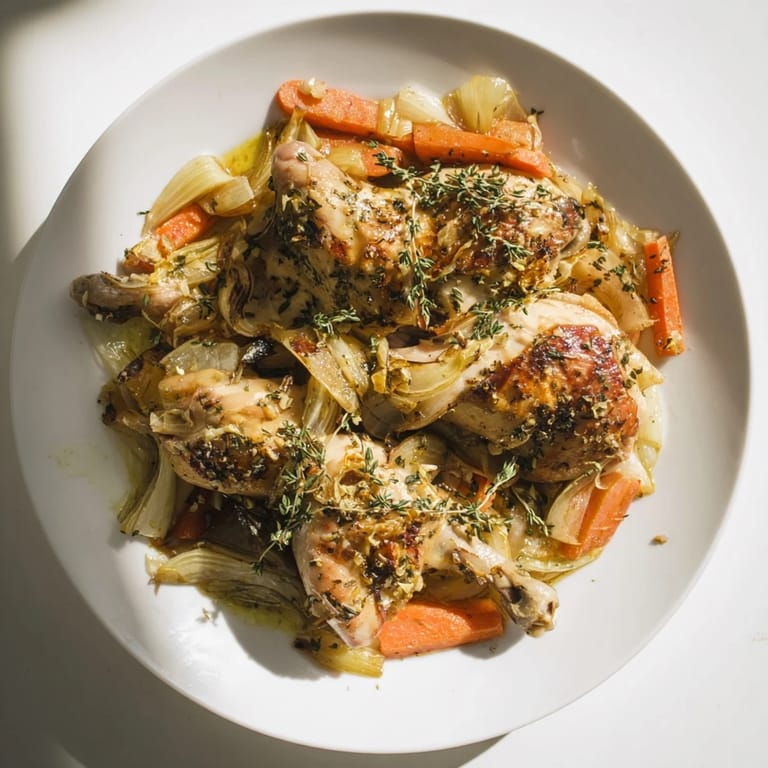
 This is the kind of food that asks nothing of you except patience and a decent pot. Once you've made it once, you'll make it again.
Common Questions About Recipes
- → What cut of chicken works best for this dish?
Bone-in, skinless chicken thighs are ideal as they stay moist and tender during the slow braising process.
- → Can I use fresh onions instead of jarred pickled onions?
Jarred sweet pickled onions lend a unique sweet and tangy flavor, but fresh onions can be caramelized with added sugar to approximate the taste.
- → How do I achieve a thicker gravy?
After cooking, remove the chicken and simmer the sauce uncovered for 10 minutes or stir in a cornstarch slurry to thicken it.
- → Is it possible to make this dish dairy-free?
Yes, substitute unsalted butter with olive oil to keep the dish dairy-free without sacrificing richness.
- → What sides complement this braised chicken dish?
Traditional sides such as mashed potatoes, warm biscuits, or steamed rice pair perfectly to soak up the flavorful gravy.
- → Can I add heat to this dish?
A pinch of crushed red pepper added during cooking provides a subtle spicy kick without overpowering the dish.