 Save It
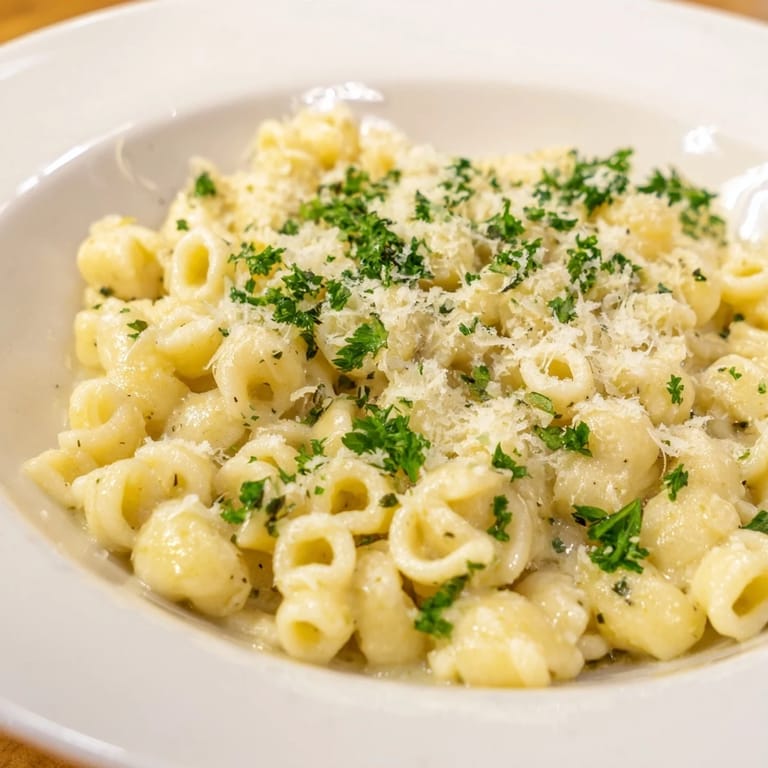
 There's something about a weeknight when you're tired but hungry that makes you crave something warm and uncomplicated. I discovered this ditalini pasta on one of those evenings when I had half-and-half in the fridge and four cloves of garlic begging to be used. The beauty of it is how the garlic becomes almost sweet and mellow as it simmers into the cream, transforming something so simple into something that tastes like comfort itself. It's the kind of dish that feels indulgent without making you feel heavy afterward.
I made this for my sister when she was visiting, and she asked for seconds before even finishing her first bowl. She said it reminded her of something fancy she'd ordered at a restaurant, but better because it was made with actual butter and care instead of whatever shortcuts they were taking. That's when I realized this wasn't just weeknight pasta—it was something worth making again and again.
Ingredients
- Ditalini pasta (300 g): These little tubes are perfect because they cradle the sauce in every bite, unlike spaghetti which slides right off. Don't skip the al dente part—overcooked pasta absorbs the sauce and becomes mushy.
- Olive oil (1 tablespoon): Good quality oil makes a difference here since it's going to be one of the main flavor carriers.
- Garlic (4 cloves, finely minced): The star of the show—mincing it finely helps it dissolve into the sauce rather than sitting in chunks. Fresh garlic is non-negotiable.
- All-purpose flour (2 tablespoons): This creates the roux that thickens everything and gives the sauce body.
- Half-and-half (480 ml): Cold from the fridge, because pouring cold cream into hot roux teaches you patience in the best way.
- Low-sodium vegetable broth (60 ml): This lightens the sauce and lets the garlic flavor shine through instead of drowning it in dairy.
- Grated Parmesan (40 g): Freshly grated tastes infinitely better than the shaker kind—it actually melts into the sauce instead of clumping.
- Salt and freshly ground black pepper: Season as you taste, not just as written—cream can mute flavors in ways you won't expect.
- Red pepper flakes (optional pinch): Just enough to make you notice something exciting happening, not enough to set your mouth on fire.
- Fresh parsley and extra Parmesan for garnish: The green and white at the end makes it look intentional and finished.
Tired of Takeout? 🥡
Get 10 meals you can make faster than delivery arrives. Seriously.
One email. No spam. Unsubscribe anytime.
Instructions
- Start the pasta water:
- Fill a large pot with enough salted water to generously cover the pasta—you want it to taste like the sea. Bring it to a rolling boil so the pasta actually moves around as it cooks.
- Cook the ditalini:
- Add the pasta and stir it immediately so nothing sticks to the bottom. Cook it until it's al dente, which means it has a tiny bit of resistance when you bite it. Before draining, scoop out half a cup of that starchy water and set it aside—you'll need it later to adjust the sauce.
- Toast the garlic:
- While the pasta cooks, heat olive oil in a large skillet over medium heat. Add the minced garlic and let it sizzle gently for a minute or two until it's fragrant but still pale—the moment it starts to brown, you've gone too far and it will taste bitter.
- Make the roux:
- Sprinkle the flour over the garlic and stir constantly for about a minute. You're cooking out the raw flour taste and creating a paste that will thicken the sauce. It should look like wet sand at this point.
- Add the cream and broth:
- Slowly pour in the cold half-and-half while whisking continuously—rushing this step creates lumps. Add the broth as well and keep whisking for three to four minutes until the sauce is smooth and starting to thicken. You'll feel the moment when it goes from thin to silky.
- Season and finish the sauce:
- Stir in the grated Parmesan, salt, pepper, and red pepper flakes if you want that subtle heat. Let it simmer very gently for two minutes so the cheese fully melts and everything gets to know each other.
- Bring it all together:
- Add the drained pasta to the sauce and toss until every piece is coated. If the sauce looks too thick, add splashes of that reserved pasta water until it reaches the consistency you want—it should coat the back of a spoon but still move freely.
- Plate and serve:
- Remove from heat immediately, garnish with fresh parsley and a sprinkle of Parmesan if you want to be fancy about it, and serve while it's still hot. This dish waits for no one.
 Save It
 There was a night when I served this to someone who said they didn't usually like creamy pasta, and they cleaned their bowl. That's when I understood that sometimes the simplest dishes prove the most powerful—they're not trying to show off, just trying to make you feel taken care of.
Why This Dish Works
The reason this pasta tastes so good is that everything builds on itself. The garlic infuses the oil, which carries flavor into the roux, which carries it into the cream. Half-and-half is the secret weapon here—it's rich enough to feel luxurious but light enough that you don't feel guilty eating a full bowl. The vegetable broth keeps things from getting cloying, and the Parmesan adds a salty, umami backbone that makes you forget this is technically a simple dish.
Timing and Flow
The entire process takes about thirty minutes, which means you can start thinking about dinner and have it on the table before you've had time to feel too hungry. The beauty is that while the pasta water comes to a boil, you're already cooking the sauce, so everything finishes at almost the same moment. Timing is everything with this recipe—everything should be done at once so you're not standing around waiting or letting the sauce cool.
Making It Your Own
This recipe is a foundation, not a law. I've added sautéed mushrooms when I had them, thrown in cooked chicken when I needed protein, and even stirred in some sautéed spinach when I felt virtuous. The sauce is forgiving enough to accept additions without losing its identity. Some people use whole wheat pasta for extra fiber, and some add a splash more broth if they want it lighter, and both choices are absolutely correct.
- For extra richness, add a handful of freshly grated Parmesan mixed with fresh breadcrumbs and broil the top until golden.
- A squeeze of lemon juice at the very end brightens everything without changing the essential character of the dish.
- If you make this ahead, the sauce will thicken as it cools—just add a splash of warm broth or milk when you reheat it.
 Save It
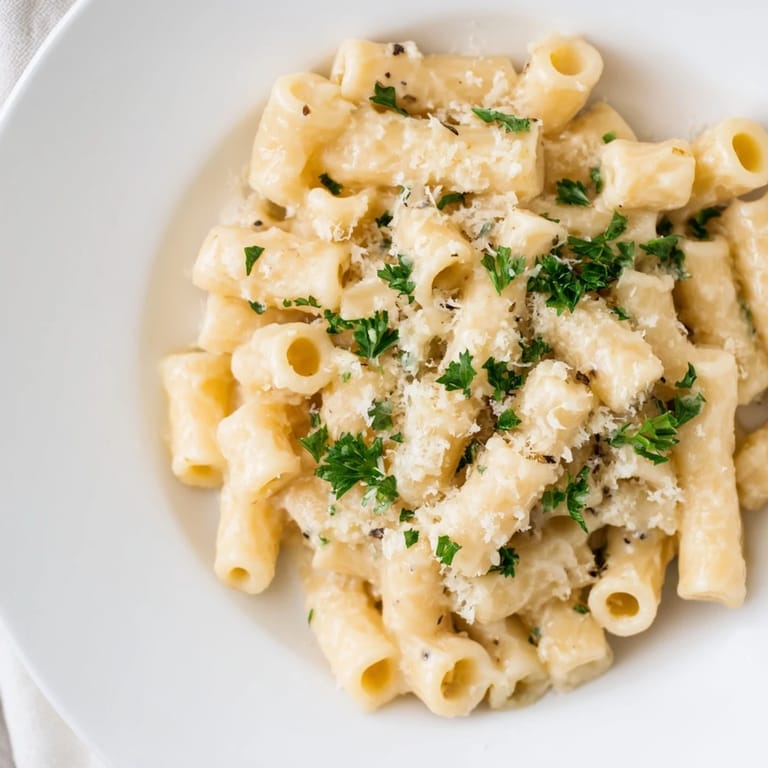
 This is the kind of pasta that makes you feel like you've done something good for yourself and the people eating with you, even though it was barely any trouble. That's the real recipe—showing up in the kitchen and making something warm and honest.
Common Questions About Recipes
- → Can I use a different type of pasta?
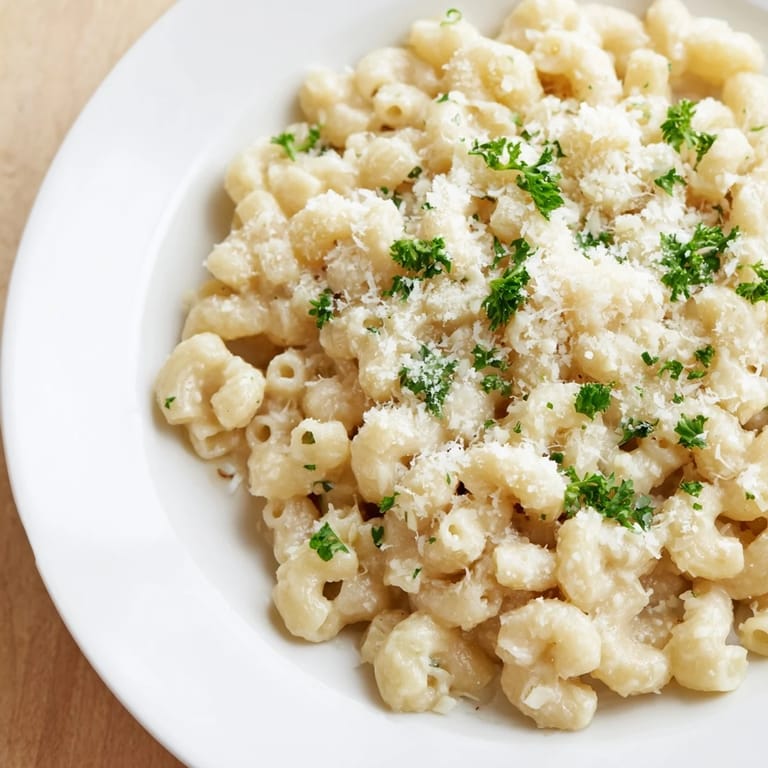
Yes, small pasta shapes like elbow macaroni or small shells work well and hold the creamy sauce nicely.
- → How can I make the sauce thicker?
Gradually whisk in a little more flour when making the roux or simmer the sauce longer to reach your desired consistency.
- → Is it possible to add protein to this dish?
Adding cooked chicken pieces or sautéed mushrooms complements the creamy garlic sauce and adds extra protein.
- → What can I substitute for half-and-half?
For a lighter option, use milk with a small amount of butter or a plant-based cream alternative to maintain creaminess.
- → How do I avoid the garlic becoming bitter?
Sauté garlic gently over medium heat until fragrant; avoid browning to keep the flavor mild and sweet.